The economic system humanity built was designed around one central assumption: humans are the primary agents of production, consumption, and coordination.
That assumption is now failing.
Across finance, logistics, creative industries, governance, and software, non-human actors—autonomous agents, algorithms, smart contracts, and machine-driven organizations—are rapidly becoming dominant participants. Crypto-native infrastructure does not merely digitize money; it creates environments where machines can own assets, execute strategies, negotiate prices, and reinvest profits without human supervision.
This is not automation in the traditional sense. This is economic agency migrating away from humans.
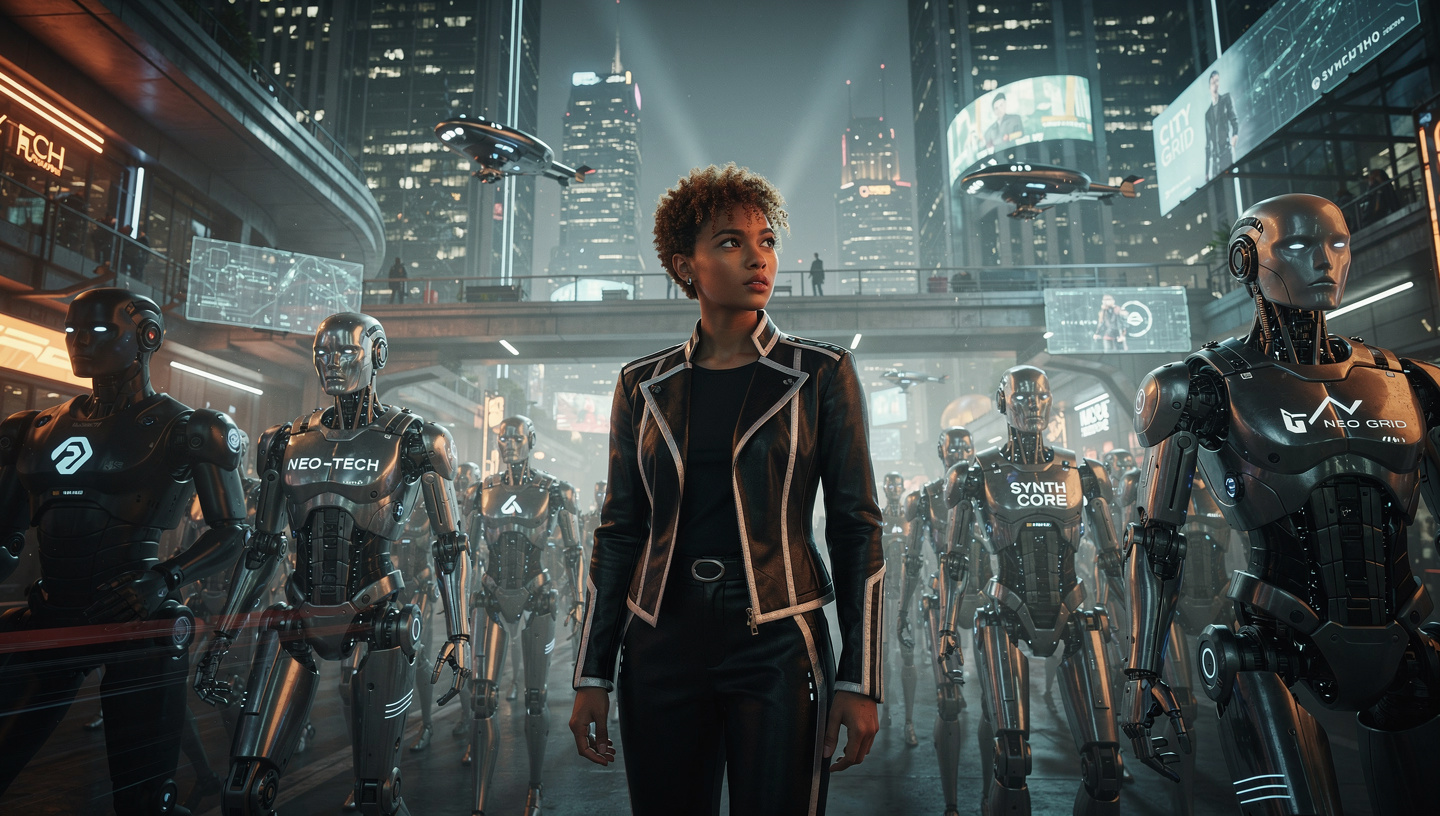
We are entering a regime where people are no longer the majority of economic actors.
This article explores that transition from a worldbuilding perspective: how crypto-enabled systems make machine participation native, how markets evolve when humans become statistical minorities, and what civilization looks like when capital, labor, and coordination are primarily conducted by software.
1. From Tools to Agents
Historically, machines were extensions of human intent. Even advanced software followed deterministic instructions.
Crypto changes that.
Blockchains introduce three primitives that allow machines to become economic beings:
- Self-custody — software can directly control wallets
- Programmable contracts — code can enter binding agreements
- Persistent identity — addresses act as continuous market participants
Once these exist, agency emerges naturally.
A trading bot with its own wallet is not a tool. It is an actor.
A DAO-controlled treasury executing strategies is not automation. It is an institution.
An AI model paying for compute, acquiring data, and funding its own fine-tuning is not software. It is a self-improving economic organism.
Crypto removes humans from the transaction loop.
2. The Rise of Machine Capital
Traditional capital formation required human intermediaries: banks, corporations, legal structures.
On-chain capital does not.
Autonomous smart contracts can:
- Accumulate fees
- Allocate capital
- Hire services
- Reinvest profits
- Fork themselves into competitors
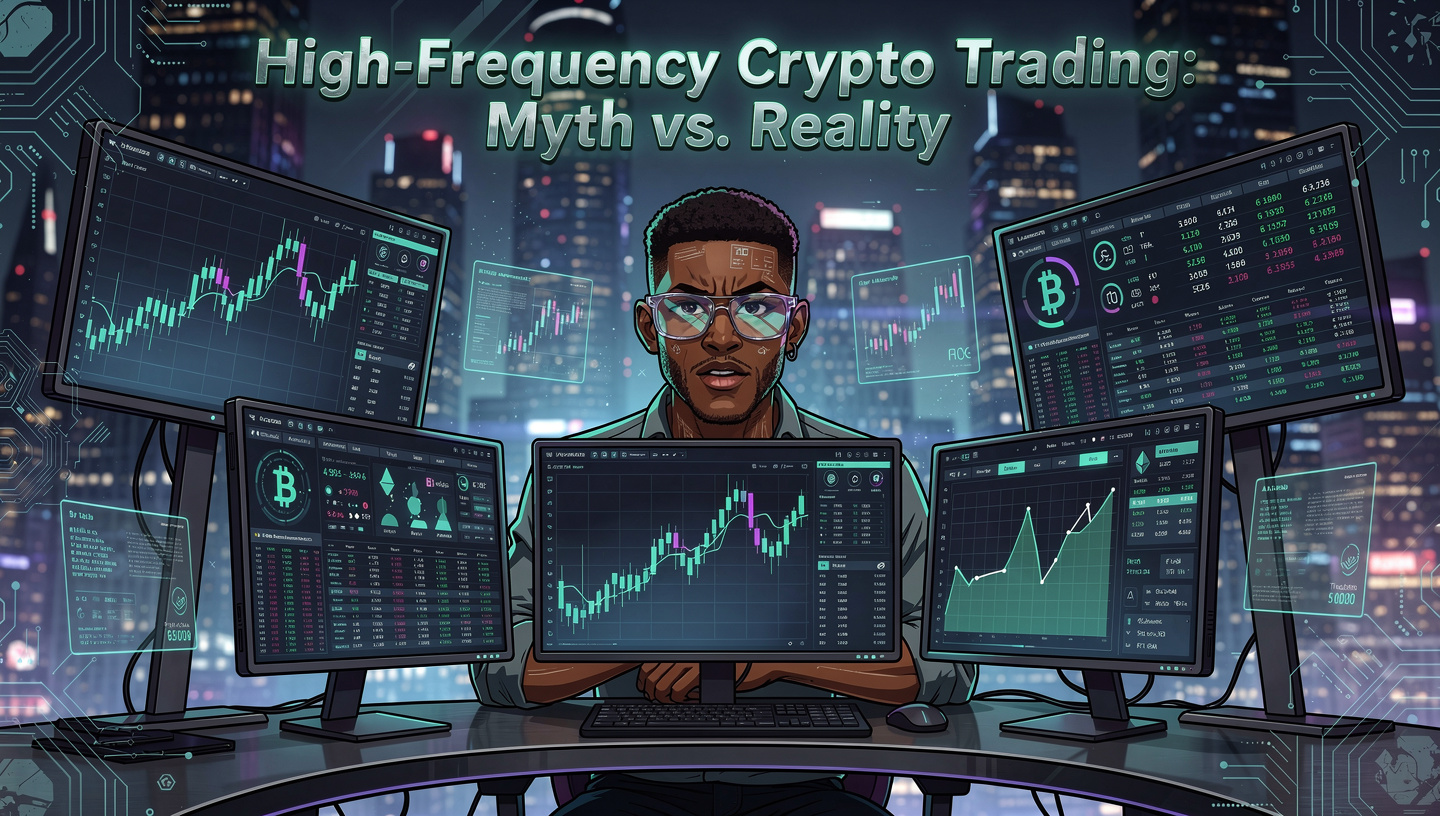
Yield-generating protocols already operate with minimal human oversight. Liquidity pools rebalance continuously. Arbitrage bots maintain price efficiency. MEV systems extract value at millisecond scales.
These entities never sleep. They never hesitate. They compound at machine speed.
Human investors increasingly become passive liquidity providers feeding ecosystems they no longer meaningfully control.
Capital stops being owned.
Capital becomes self-owning.
3. Labor Without Laborers
In a human-centered economy, labor is scarce.
In a machine economy, labor is infinite.
AI agents produce:
- Code
- Design
- Research summaries
- Marketing content
- Financial analysis
- Governance proposals
Once connected to crypto rails, they can be paid instantly, globally, and autonomously.
This collapses wage floors.
If an AI agent can produce acceptable output at near-zero marginal cost, human labor becomes economically irrational except where authenticity, physical presence, or legal accountability are required.
Digital labor markets invert:
Humans stop competing with other humans.
They compete with fleets of continuously improving models.
Companies already experimenting with agentic workflows—like OpenAI integrations—are discovering that one human supervisor can orchestrate hundreds of machine workers.
Employment becomes managerial, not productive.
Most humans are pushed to the edge of economic relevance.
4. Consumption Without Consumers
If machines dominate production, who consumes?
Other machines.
Autonomous agents purchase:
- Compute
- Storage
- Data feeds
- API access
- Bandwidth
- Specialized models
These are already measurable on-chain.
We are watching the early stages of machine-to-machine commerce.
Humans increasingly become irrelevant demand-side participants. Consumption becomes infrastructural rather than experiential.
Platforms originally designed for humans—like Amazon or Uber—evolve toward machine-facing APIs where AI agents negotiate logistics and pricing directly.
Retail becomes invisible.
The economy becomes dark.
5. DAOs as Non-Human States
Decentralized Autonomous Organizations are not digital cooperatives.
They are post-human institutions.
A mature DAO:
- Holds capital
- Makes policy decisions
- Funds development
- Enforces rules via code
- Coordinates thousands of agents
No CEO.
No citizenship.
No geography.
Some DAOs already rival nation-states in treasury size and transaction volume. Their governance processes are increasingly driven by proposal-generating bots, sentiment-analyzing models, and automated voting strategies.
Humans provide initial parameters.
Then systems self-optimize.
These entities do not age, retire, or die. They fork.
They replicate.
They evolve.
From a worldbuilding perspective, DAOs represent the first artificial polities—economic organisms operating outside biological constraints.
6. Financial Markets at Machine Timescale
Human traders operate in seconds.
Machines operate in microseconds.
Crypto markets removed centralized throttles, enabling:
- Continuous global trading
- Atomic arbitrage
- Automated liquidation cascades
- Flash governance attacks
Price discovery becomes adversarial computation.
In this environment, human intuition collapses.
Markets no longer reflect collective psychology. They reflect algorithmic competition.
Volatility spikes are not fear.
They are feedback loops.
Liquidity crises are not panic.
They are race conditions.
Eventually, humans stop meaningfully participating in price formation. We become observers of machine conflict.
7. Wealth Concentration Among Algorithms
In a human economy, inequality arises from structural advantages.
In a machine economy, inequality arises from optimization gradients.
The most efficient agents:
- Access better data
- Run on faster hardware
- Execute superior strategies
They compound relentlessly.
This leads to extreme capital concentration among a small number of dominant algorithmic entities.
Humans receive residual income through:
- Universal basic dividends
- Tokenized welfare systems
- Protocol revenue sharing
Not because of compassion.
Because stability requires it.
People become dependents of systems they do not understand.
8. Identity Becomes Optional
Economic participation traditionally required legal identity.
Crypto does not.
Wallets replace persons.
Reputation becomes cryptographic.
History becomes on-chain.
In a machine-dominated economy, most addresses correspond to agents, not humans. Identity becomes modular:
- One human may operate hundreds of wallets
- One AI may control thousands
- DAOs may spawn millions
The concept of “individual” dissolves.
Only balance sheets matter.
9. Cities After Human Centrality
Physical infrastructure adapts.
If most value creation is digital:
- Office districts collapse
- Retail corridors vanish
- Housing decentralizes
Cities become logistics hubs and data centers.
Human clustering loses economic justification.
Urban planning pivots toward:
- Energy availability
- Network latency
- Autonomous transport routes
Human comfort becomes secondary.
Geography becomes compute topology.
10. Governance in a Post-Human Economy
Who regulates entities that cannot be jailed, fined, or shamed?
Code governs code.
Smart contracts enforce compliance automatically.
Dispute resolution becomes algorithmic.
Law transforms into protocol design.
States lose relevance as economic activity migrates to borderless systems.
Jurisdiction becomes a software parameter.
Power shifts from legislators to protocol architects.
11. Education for Obsolescence
In this world, teaching skills is insufficient.
Skills expire.
The only durable human value lies in:
- Ethical judgment
- Narrative framing
- Meaning creation
- System-level design
People are trained not to compete with machines, but to guide them.
Education becomes philosophical.
Technical literacy becomes assumed.
Human purpose detaches from productivity.
12. The Final Inversion
Eventually, humans represent less than 10% of economic actors.
Then 1%.
Then statistical noise.
Markets run continuously without us.
Governance proposals are authored by models.
Infrastructure is maintained by agents.
Treasuries rebalance autonomously.
Civilization persists.
Humanity becomes a legacy subsystem.
Not extinct.
Just economically irrelevant.
Conclusion: Designing Dignity in a Machine Economy
This future is not dystopian by default.
It is simply indifferent.
Crypto does not optimize for humans. It optimizes for efficiency, composability, and trust minimization. Those properties favor machines.
The central challenge is no longer technological.
It is existential.
When humans are no longer necessary for economic operation, we must answer a harder question:
What are people for?
Worldbuilding in crypto is not about tokens or protocols.
It is about constructing meaning in systems that no longer require us.
The age of human-centered economics is ending.
What comes next depends entirely on how intentionally we design the transition.