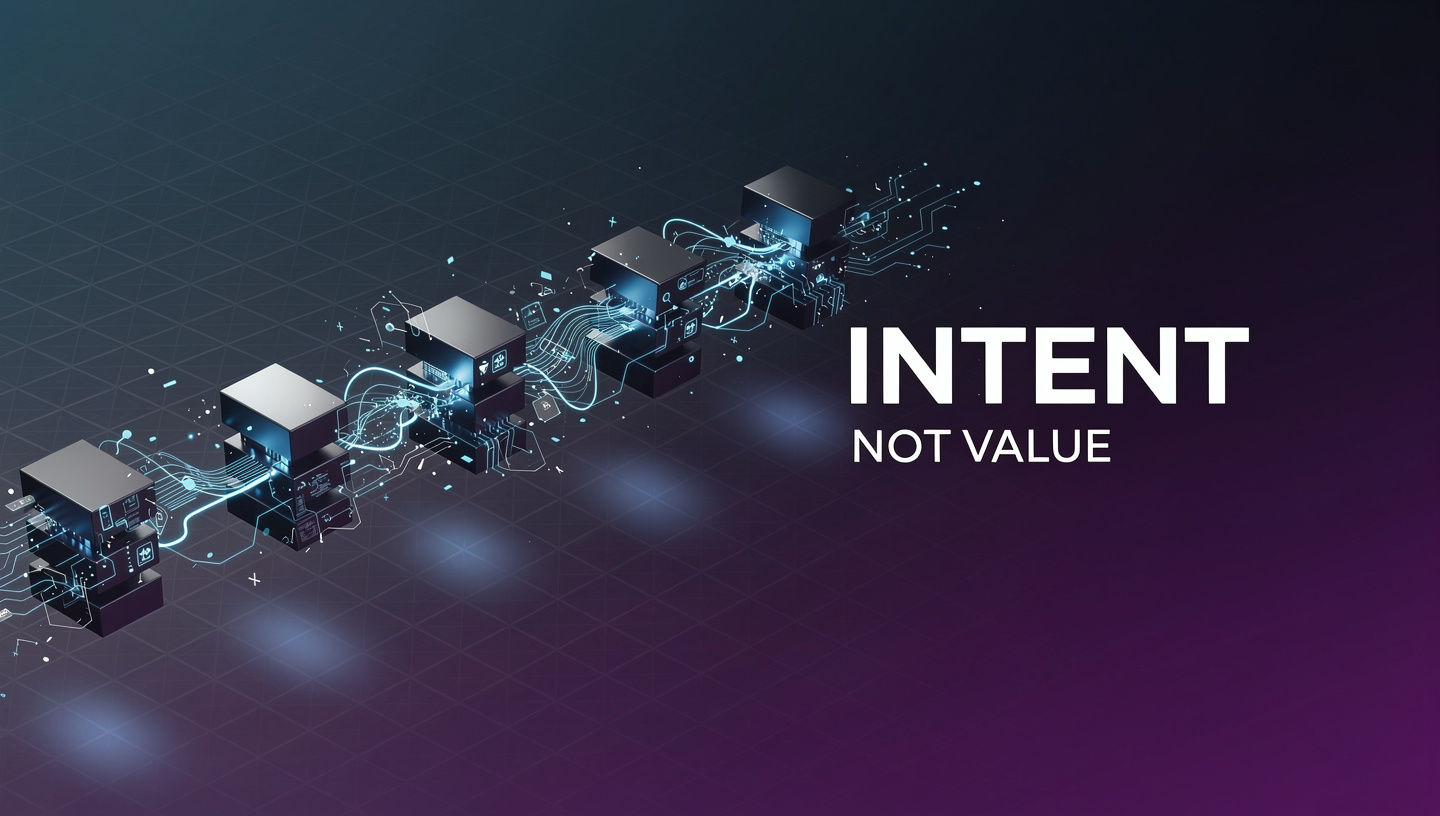
For most of its short history, crypto has lived in abstraction—ledgers, hashes, wallets, and governance forums. Yet a quiet transition is underway. Decentralized Autonomous Organizations (DAOs) are moving beyond purely digital coordination and beginning to own, operate, and govern physical infrastructure: wireless networks, data centers, energy assets, real estate, logistics nodes, and even manufacturing capacity.
This is not a marketing slogan. It is a structural evolution of capitalism.
Once capital formation becomes programmable, and governance becomes composable, the boundary between digital coordination and material production collapses. DAOs stop being “online communities” and become sovereign economic actors with real-world footprints.
This article explores that transition in depth: the technical stack, governance mechanics, legal interfaces, incentive systems, and societal implications of DAO-owned infrastructure. Consider this a worldbuilding analysis of a near-future economy—one where protocols own power plants, token holders vote on fiber routes, and smart contracts dispatch maintenance crews.
1. What It Actually Means for a DAO to “Own” Something
Ownership in DAO contexts is often misunderstood.
A DAO does not “own” an asset the way a human does. Instead:
- A smart contract controls keys to capital.
- That capital acquires equity, land titles, equipment, or operating companies.
- Governance rules encoded on-chain determine how those assets are used.
Practically, this usually looks like:
- A DAO treasury (multi-sig or contract-controlled).
- A legal wrapper (LLC, foundation, trust, or cooperative).
- Token-weighted or role-based governance.
- Service providers who execute real-world actions.
The DAO is the decision engine. Legal entities are its limbs.
This separation—code for intent, law for enforcement—is the core architectural pattern of physical DAOs.
2. Why Physical Infrastructure Is the Next Frontier
Digital protocols already coordinate billions in value. Physical infrastructure is simply the next logical layer because:
- It generates predictable cash flow
- It creates defensible moats
- It anchors tokens to productive assets
- It converts speculation into utility
Crypto-native coordination has three advantages over traditional firms:
a. Global Capital Aggregation
Anyone can contribute capital permissionlessly.
No banks. No geographic restriction. No accredited investor gatekeeping.
b. Programmable Incentives
Tokens can reward:
- Deployment
- Maintenance
- Usage
- Governance participation
Incentives become fine-grained, continuous, and automated.
c. Composable Governance
DAOs can fork policies, import modules, and experiment with economic rules at software speed.
This combination makes DAOs uniquely suited to bootstrap distributed infrastructure where centralized ownership fails or stagnates.
3. Early Signals: Proto-Infrastructure DAOs
Several projects already demonstrate fragments of this model.
The Ethereum Foundation seeded the ecosystem with programmable money and composable governance primitives. From there, application-layer DAOs emerged.
The MakerDAO pioneered decentralized balance sheet management at scale, proving that algorithmic governance could control billions in collateral.
Uniswap Labs showed how protocols can dominate entire market categories through open liquidity coordination.
Aragon built governance frameworks that allow DAOs to form and operate with minimal friction.
These organizations began in purely digital domains. But the same primitives now extend outward—into towers, cables, batteries, and buildings.
4. Physical-Native Crypto Networks
Some protocols are already designed around real-world assets from day one.
Wireless and Edge Networks
Helium Systems demonstrated a radical idea: instead of a telecom company building towers, users deploy hotspots and earn tokens. Coverage emerges bottom-up.
This flips infrastructure economics:
- Capital expenditure becomes crowdsourced.
- Maintenance is incentive-aligned.
- Expansion follows demand, not corporate planning cycles.
Storage and Compute
Protocol Labs, via Filecoin and related systems, coordinates distributed storage markets where independent operators provide capacity and receive cryptographic guarantees of performance.
Here, hardware becomes an extension of protocol logic.
5. The Full Stack of DAO-Owned Infrastructure
To understand how this scales, you need to think in layers.
Layer 1: Capital Formation
- Token issuance
- Bonding curves
- NFT-based ownership
- Revenue-backed tokens
This replaces IPOs and project finance with programmable capital markets.
Layer 2: Asset Acquisition
DAOs acquire assets through:
- Direct purchase
- Joint ventures
- Special purpose vehicles
- Tokenized real estate
- Equipment leasing contracts
Everything is abstracted into on-chain representations.
Layer 3: Operations
Operations are handled by:
- Contractors paid via smart contracts
- Service DAOs
- Local operators staking tokens
- Automated IoT reporting
Performance becomes machine-verifiable.
Layer 4: Governance
Governance modules manage:
- Budget approvals
- Expansion plans
- Risk parameters
- Emergency responses
Votes are weighted by stake, reputation, or contribution.
Layer 5: Revenue Distribution
Cash flows return to:
- Token holders
- Reinvestment pools
- Maintenance funds
- Public goods treasuries
This creates closed economic loops.
6. Real Estate, Energy, and the DAO City
Once DAOs own physical assets, urban economics changes.
Imagine neighborhoods where:
- Housing is fractionalized into NFTs.
- Utilities are operated by token holders.
- Roads are funded via usage-based smart contracts.
- Zoning is governed by on-chain votes.
This is not speculative fantasy. It is a logical extension of programmable property.
Energy is particularly ripe.
Solar arrays, battery farms, and microgrids can be:
- Financed by DAOs
- Operated autonomously
- Priced dynamically
- Governed locally
Energy becomes a community-owned protocol rather than a centralized monopoly.
7. Legal Reality: DAOs Meet Nation-States
Code alone cannot enforce property rights.
Physical DAOs must interface with existing legal systems through:
- Foundations
- Limited liability companies
- Cooperative structures
- Trust frameworks
This introduces friction, but also hybridization.
Jurisdictions compete to attract DAO capital by offering:
- Regulatory clarity
- Tax efficiency
- Asset protection
- Flexible corporate law
Over time, we should expect DAO-native legal frameworks—statutes written specifically for protocol-governed entities.
8. Labor in a DAO-Owned World
Infrastructure requires human work.
But DAOs reorganize labor markets:
- Tasks become bounties.
- Roles become modular.
- Compensation becomes continuous.
- Reputation becomes portable.
Instead of employees, there are contributors.
Instead of salaries, there are streams.
Instead of managers, there are governance algorithms.
This is not precarious gig work. It is programmable labor coordination, where economic participation is granular and global.
9. Risk Surfaces and Failure Modes
DAO infrastructure is not automatically superior.
Key risks include:
Governance Capture
Large token holders can dominate decisions.
Mitigations:
- Quadratic voting
- Delegation markets
- Contribution-based weighting
Physical Sabotage
Hardware can be stolen, damaged, or sabotaged.
Mitigations:
- Insurance pools
- Slashing mechanisms
- Redundant deployments
Regulatory Intervention
States may seize assets or criminalize operations.
Mitigations:
- Jurisdictional diversification
- Distributed ownership
- Legal abstraction layers
Coordination Collapse
Low participation can paralyze governance.
Mitigations:
- Automated defaults
- Guardian councils
- Time-locked emergency powers
DAO design becomes a discipline of socio-technical resilience engineering.
10. Macroeconomic Implications
If DAOs scale into infrastructure, several systemic shifts occur:
Capital Becomes Fluid
Assets trade 24/7 globally.
Liquidity replaces illiquidity premiums.
Ownership Fragments
Millions can own micro-shares of power plants, data centers, and transit systems.
Cities Become Protocols
Urban services become composable modules rather than bureaucratic departments.
States Compete with Networks
Jurisdictional monopolies weaken as capital migrates to better-governed protocols.
This is not decentralization for its own sake. It is market-driven reconfiguration of institutional power.
11. The Endgame: Autonomous Economic Zones
The logical conclusion is the emergence of DAO-operated regions:
- Industrial parks
- Energy corridors
- Logistics hubs
- Research campuses
These zones are:
- Capitalized on-chain
- Governed by token holders
- Operated by autonomous systems
- Interfaced with states via treaties
They are not countries.
They are economic organisms.
Closing: From Organizations to Organisms
Traditional infrastructure is built by corporations and governed by states.
DAO infrastructure is built by networks and governed by code.
This transition replaces hierarchical ownership with distributed stewardship. It converts passive shareholders into active governors. It embeds economic rules directly into operational logic.
When DAOs own physical infrastructure, crypto stops being a financial experiment and becomes a civilization-scale coordination layer.
The implications extend far beyond blockchain.
They redefine what it means to build, to own, to work, and to govern.
We are not watching the digitization of assets.
We are witnessing the emergence of programmable reality.