For most of human history, wealth has been opaque.
Ledgers lived in vaults. Assets sat behind institutions. Ownership required trust in intermediaries. Even today, nearly everything we call “wealth” depends on private databases, regulatory frameworks, and legal enforcement.
A fully on-chain world breaks that model.
In such a world, value is not inferred—it is directly observable. Property rights are encoded. Transfers settle globally in minutes. Reputation accumulates across wallets. Capital becomes programmable. Identity fragments into cryptographic proofs. And the meaning of wealth itself mutates.
This is not merely a technological shift. It is a civilizational redesign.
This article examines what “wealth” becomes when finance, ownership, coordination, and identity move onto public blockchains—using worldbuilding as a framework, but grounding every concept in real crypto primitives already in motion.
1. From Hidden Ledgers to Public Capital
Traditional wealth operates behind closed doors:
- Bank balances are private.
- Equity ownership requires brokers.
- Real estate lives in registries.
- Creditworthiness is scored by centralized agencies.
By contrast, blockchains expose value flows by default.
On networks like Bitcoin and Ethereum, every transaction is recorded on a public ledger. Anyone can inspect balances, track transfers, and analyze capital movements in real time.
This changes the first principle of wealth:
Wealth becomes legible.
In an on-chain world, opacity is optional. Privacy must be engineered intentionally (via zero-knowledge proofs or mixers), rather than assumed. This creates a new baseline: assets are transparent unless explicitly shielded.
The consequences are profound:
- Capital allocation becomes auditable.
- Corruption becomes harder to hide.
- Influence becomes measurable.
- Inequality becomes quantifiable down to the wallet.
Wealth stops being a black box and starts behaving like infrastructure.
2. Money Is No Longer a Thing—It’s a Protocol
Fiat currency is a product of state authority. Crypto-native money is a product of code.
In a fully on-chain society, money is not issued—it is deployed.
It comes with:
- Built-in settlement logic
- Native composability
- Permissionless integration
- Programmable behavior
Stablecoins rebalance treasuries automatically. DAOs distribute revenue via smart contracts. Yield strategies execute continuously without human intervention.
What matters is not denomination—it is mechanism design.
Money becomes:
- A coordination layer
- A routing system for incentives
- A programmable policy surface
This reframes wealth from having funds to controlling financial logic.
Those who design protocols shape economies.
This is why figures like Vitalik Buterin matter more than traditional bankers—and why the pseudonymous Satoshi Nakamoto remains one of the most economically consequential actors in history.
They didn’t create companies.
They created monetary architectures.
3. Assets Become Smart, Liquid, and Atomic
In legacy systems, assets are siloed:
- Real estate is illiquid.
- Art is subjective.
- Private equity is gated.
- Royalties require intermediaries.
On-chain, everything becomes tokenizable.
Land titles, revenue streams, intellectual property, compute credits, carbon offsets—any asset that can be defined can be encoded.
Once tokenized, assets gain three properties:
a) Composability
They plug into DeFi protocols automatically.
b) Atomicity
Trades settle fully or not at all—no partial failures.
c) Liquidity by Design
Markets can be spun up permissionlessly.
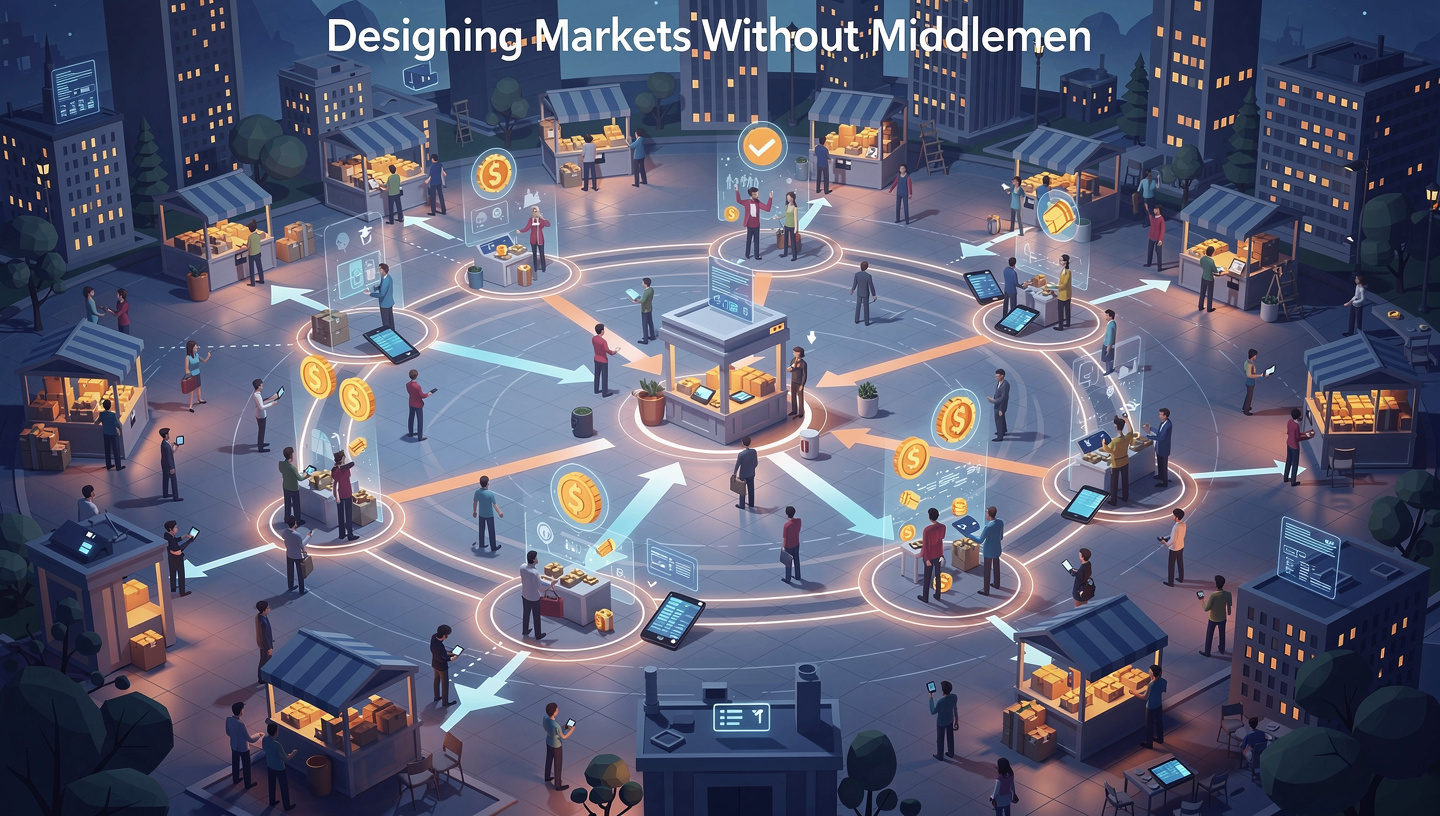
Platforms like Uniswap and OpenSea already demonstrate this dynamic: anyone can create a market, anyone can provide liquidity, anyone can participate.
Wealth stops being locked.
It flows.
4. Ownership Evolves from Legal Right to Cryptographic Fact
Today, ownership is enforced by courts.
On-chain, ownership is enforced by keys.
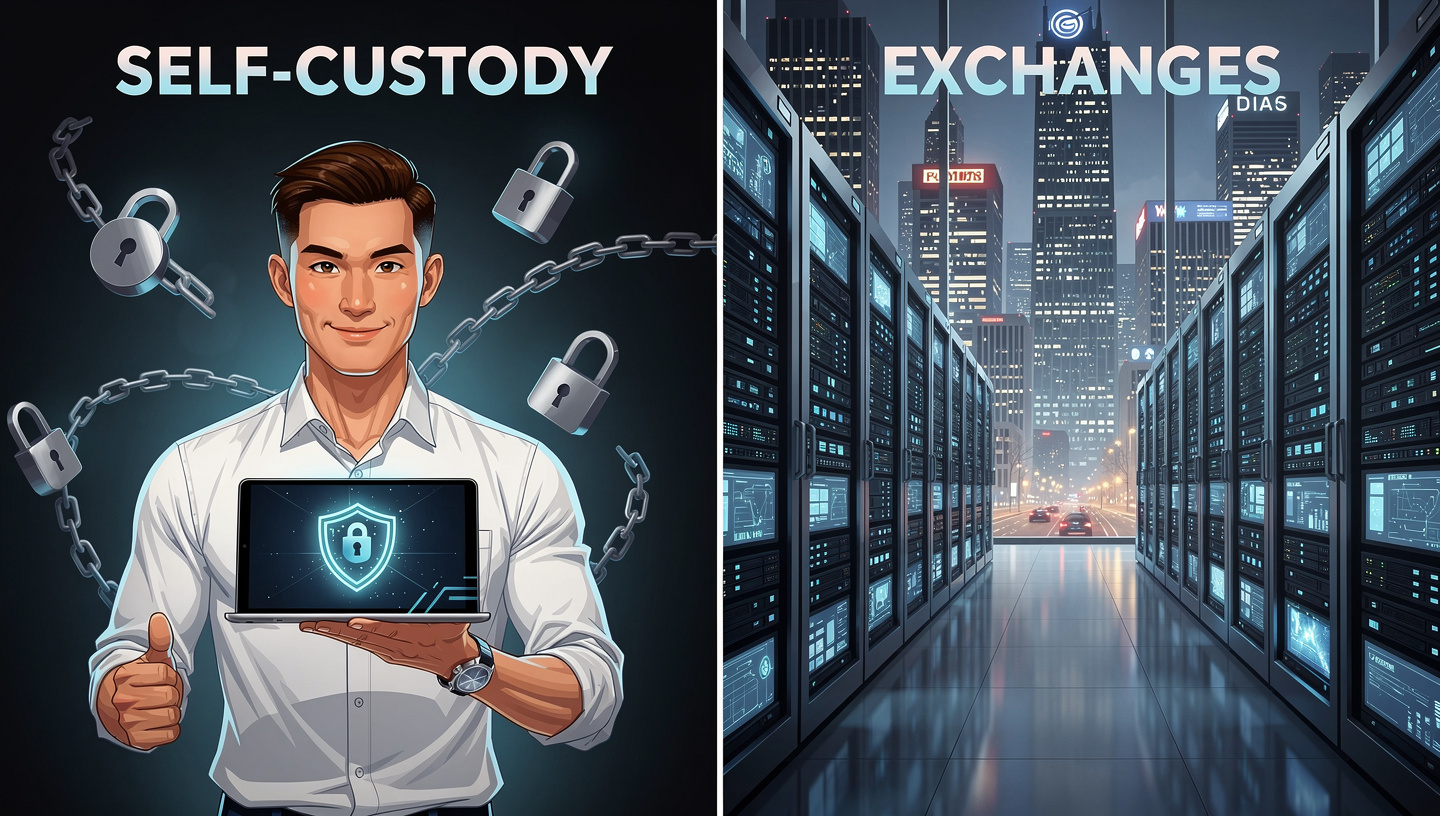
If you control the private key, you control the asset. No escrow agent. No registrar. No appeal process.
This introduces a radical property regime:
- Assets are bearer instruments.
- Custody is self-sovereign.
- Transfers are irreversible.
- Inheritance requires pre-coded logic.
In a fully on-chain world, wealth is inseparable from operational competence.
Key management becomes a life skill.
Estate planning becomes smart contract engineering.
Security becomes personal.
This also means:
Wealth without responsibility disappears.
There is no help desk for lost keys.
5. Reputation Becomes a Balance Sheet
Traditional wealth measures capital.
On-chain systems also measure behavior.
Every wallet leaves a trail:
- Transaction history
- Governance votes
- Protocol participation
- Lending reliability
- Contribution patterns
From this emerges a new asset class:
Reputation capital.
In a mature on-chain society:
- Credit is issued based on wallet history.
- Jobs are offered based on contribution graphs.
- Governance weight derives from participation quality.
- Social trust is algorithmic.
Wealth is no longer purely financial.
It is financial + reputational + relational, all indexed on-chain.
This collapses the boundary between money and identity.
Your wallet becomes your résumé.
6. The Rise of Network-Native Elites
Legacy elites derive power from:
- Land ownership
- Political access
- Corporate equity
- Institutional leverage
On-chain elites derive power from:
- Early protocol participation
- Governance token concentration
- Infrastructure ownership (validators, bridges, oracles)
- Social graph centrality
These actors do not sit atop corporations.
They sit inside networks.
Their influence is visible in DAO votes, liquidity positions, and protocol upgrades.
This produces a new ruling class:
Network capitalists.
They accumulate wealth not by extracting rents from geography, but by embedding themselves in digital ecosystems.
Borders become irrelevant.
Latency becomes strategic.
7. Wealth Is No Longer Local
In a fully on-chain world, geography dissolves.
A developer in Hanoi, a trader in Lagos, and a designer in Buenos Aires interact in the same financial plane.
There are no correspondent banks.
No FX desks.
No settlement delays.
Capital moves at internet speed.
This creates:
- Global labor markets
- Borderless entrepreneurship
- Stateless treasuries
- Portable livelihoods
Wealth becomes:
Location-agnostic, permissionless, and continuously liquid.
The nation-state loses its monopoly on economic membership.
8. Programmable Inequality
Blockchains do not eliminate inequality.
They formalize it.
Because everything is transparent, disparities become visible in real time. Whales are known. Concentration ratios are public. Governance capture is measurable.
But unlike legacy systems, on-chain inequality is parameterized.
Protocols can choose:
- Progressive token emissions
- Quadratic voting
- Retroactive public goods funding
- Universal basic distributions
- Slashing mechanisms for malicious actors
Inequality becomes a design choice.
Economics becomes software.
9. Capital Becomes Autonomous
Smart contracts do not sleep.
They:
- Rebalance portfolios
- Distribute rewards
- Enforce covenants
- Execute trades
- Liquidate positions
Once deployed, they operate independently.
This gives rise to autonomous capital—wealth that manages itself.
In a fully on-chain world, vast portions of economic activity run without human oversight.
Treasuries optimize yield.
DAOs fund proposals.
Insurance pools settle claims.
The role of humans shifts from operators to architects.
10. Cultural Wealth: Memes, Identity, and Digital Status
Not all wealth is monetary.
On-chain culture introduces:
- NFT-based identity
- Token-gated communities
- Meme economies
- Status signaling via wallet holdings
Digital artifacts become social markers.
Membership is cryptographic.
Belonging is provable.
Cultural capital merges with financial capital.
Owning the right token grants access to communities, events, governance, and narrative power.
Status is portable.
11. What Dies in a Fully On-Chain World
Several legacy concepts collapse:
- Credit bureaus
- Clearing houses
- Custodial banks
- Geographic monopolies
- Manual reconciliation
They are replaced by:
- Smart contracts
- Automated market makers
- Self-custody
- Global liquidity pools
- Cryptographic settlement
Entire industries compress into protocols.
Middlemen evaporate.
12. Redefining Wealth: A Working Model
In a fully on-chain civilization, wealth is no longer a single metric.
It is a stack:
- Financial Capital – tokens, NFTs, yield positions
- Reputation Capital – wallet history, contributions, trust scores
- Governance Power – voting rights, proposal influence
- Network Centrality – social graph position
- Operational Competence – key custody, protocol fluency
- Cultural Capital – community membership, symbolic assets
True wealth emerges from alignment across all six layers.
Someone with money but no reputation is fragile.
Someone with reputation but no capital is constrained.
Someone who masters both becomes structurally powerful.
Conclusion: Wealth Becomes a System, Not a Number
A fully on-chain world does not merely digitize finance.
It rewrites the grammar of value.
Wealth becomes transparent.
Ownership becomes cryptographic.
Reputation becomes measurable.
Capital becomes autonomous.
Identity becomes composable.
What replaces the old idea of wealth is not just “more crypto.”
It is an integrated socio-economic operating system where money, trust, coordination, and culture run on shared infrastructure.
In that world, the richest actors are not necessarily those with the largest balances.
They are the ones who understand the system deeply enough to shape it.
And that is the final shift:
Wealth stops being something you hold.
It becomes something you participate in.
If you want, next we can explore adjacent worldbuilding layers—on-chain citizenship, DAO-based welfare systems, or how generational inheritance works when everything is programmable.