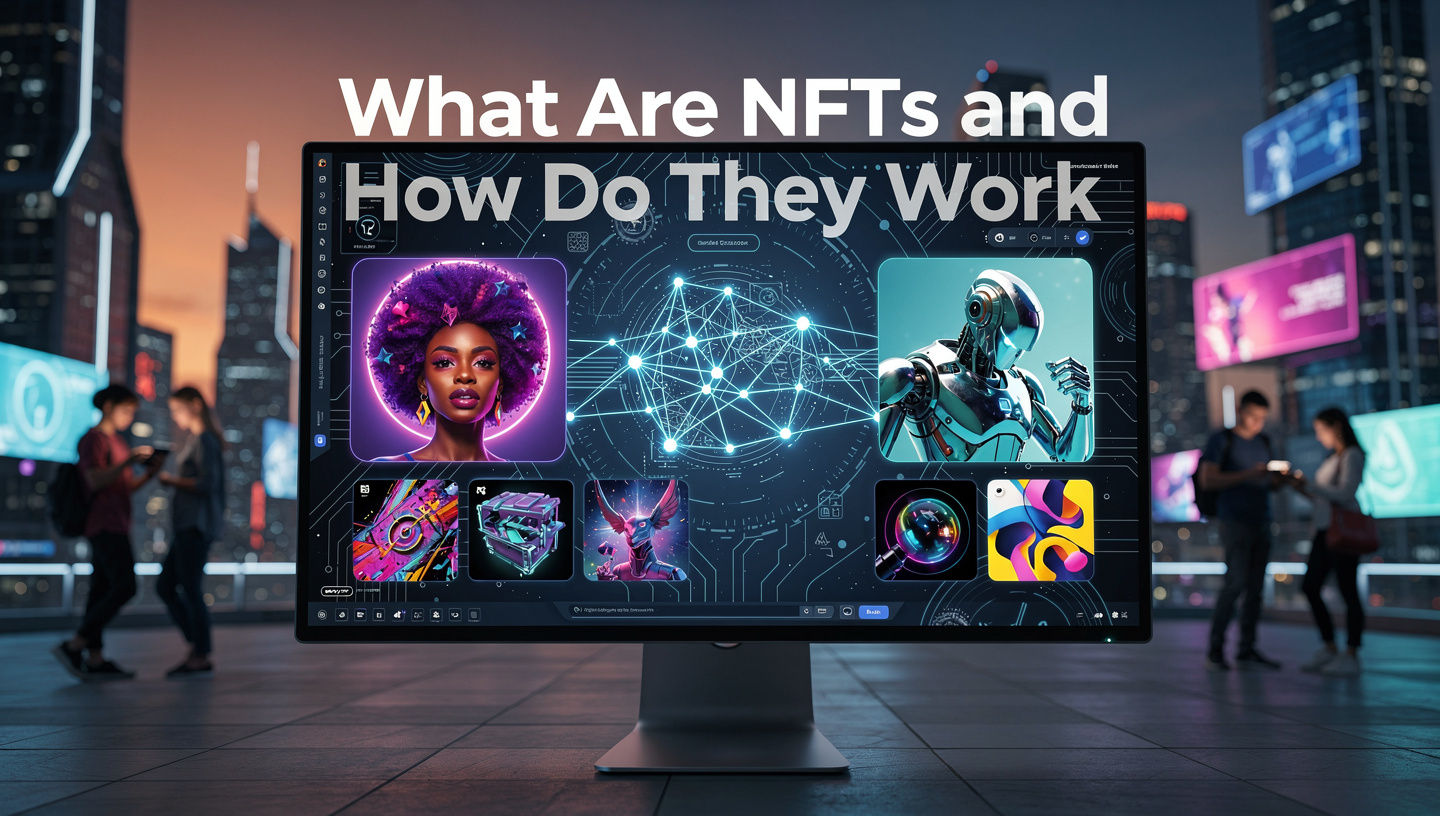
A few years ago, the acronym “NFT” seemed to come out of nowhere and dominate headlines.
Digital art selling for millions. Musicians launching collections. Game items becoming assets. Brands experimenting with “digital collectibles.”
For many, it felt confusing — even absurd.
Why would anyone pay real money for something you can right-click and save?
Yet, behind the hype is a meaningful technological shift: NFTs changed the way we think about digital ownership.
This article explains — clearly and in depth:
- What NFTs actually are
- Why they matter
- How they technically work
- Where they are used today
- The risks, limitations, and future outlook
By the end, you will understand NFTs beyond buzzwords, speculation, and headlines.
1. NFT Defined: What Does “Non-Fungible Token” Mean?
NFT stands for Non-Fungible Token.
Let’s break that down.
Fungible vs. Non-Fungible
- Fungible means interchangeable.
- One dollar equals another dollar.
- One Bitcoin equals another Bitcoin.
If you trade them, nothing changes.
- Non-Fungible means unique.
- A rare baseball card
- A painting
- A signed book
Each has its own identity and value.
Token
A token is a digital asset recorded on a blockchain.
So:
An NFT is a unique digital token that represents ownership of something (usually digital), recorded on a blockchain.
NFTs do NOT mean the image itself is “inside” the blockchain.
Instead, the blockchain stores:
- Ownership record
- Metadata
- Links to the asset
- Transaction history
2. How NFTs Actually Work (Step by Step)
NFTs are powered by smart contracts on blockchains such as:
- Ethereum
- Polygon
- Solana
- Binance Smart Chain
The key concept:
1. Minting an NFT
“Minting” means creating the NFT on the blockchain.
During minting:
- Metadata is created (title, description, creator, media link)
- The NFT receives a unique ID
- Ownership is assigned to the creator
- Everything is permanently recorded on the blockchain
2. Ownership and Wallets
NFTs live in digital wallets such as:
- MetaMask
- Trust Wallet
- Phantom
- Ledger (hardware)
When you own an NFT, your wallet address is recorded as the owner.
You can:
- Hold it
- Transfer it
- Sell it
- Gift it
3. Smart Contracts Control the Rules
Smart contracts define:
- Royalties (creator gets paid on resales)
- Transfer permissions
- Special access rules (events, communities, content)
This automation is why NFTs became powerful.
3. What Do NFTs Represent?
NFTs can represent almost any unique digital or tokenized physical item.
Common Use Cases Today
1. Digital Art
Artists tokenize artwork, sell limited editions, and earn royalties on every resale.
2. Collectibles
Trading cards, avatars, and brand collectibles.
3. Gaming Assets
In-game items that players can own and trade:
- Skins
- Weapons
- Characters
- Land
4. Music & Media
Musicians tokenize albums and limited releases.
5. Tickets & Memberships
NFTs can prove access to:
- Clubs
- Events
- Exclusive content
6. Real-World Assets
In the future, NFTs may represent:
- Property titles
- Certifications
- Identity credentials
- Supply chain records
This transforms ownership management.
4. Why NFTs Became Valuable
NFTs solved three long-standing digital problems:
Problem 1: Digital Files Can Be Copied Infinitely
But ownership historically could not be proven.
NFT solution:
Ownership becomes verifiable and traceable.
Problem 2: Creators Lost Control
Artists relied on third parties and rarely earned resale royalties.
NFT solution:
Smart contracts automate creator royalties.
Problem 3: Marketplaces Controlled Everything
Platforms dictated rules and fees.
NFT solution:
Ownership exists independently of platforms.
5. Misconceptions About NFTs
Let’s clarify frequent misunderstandings.
“I can screenshot an NFT, so it’s worthless.”
You can also take a photo of the Mona Lisa — but that does not make you the owner.
Screenshots copy pixels.
NFTs represent ownership rights recorded publicly.
“NFTs are only for art.”
False — art was simply the first popular use case.
“NFTs store images on the blockchain.”
Usually they do not. Storage often sits on:
- IPFS
- Decentralized storage (Arweave)
- Traditional servers
The blockchain stores references and ownership, not full files.
6. Where NFTs Are Headed Next
The hype cycle cooled — and that is healthy.
Now, NFTs are shifting from speculation to utility.
Key emerging directions:
- Digital Identity
- Event tickets and proof of attendance
- Gaming economies
- Brand loyalty programs
- Tokenized real estate and assets
- Certification and credentials
Over the next decade, NFTs will likely feel less like “collectibles” and more like digital infrastructure.
7. Risks and Limitations
NFTs are not perfect.
Market Speculation
Prices fluctuate heavily. Many projects collapse.
Scams and Fraud
Fake collections. Phishing. Rug pulls.
Environmental Concerns
Legacy proof-of-work systems consumed significant energy, though newer chains reduced this drastically.
Regulatory Uncertainty
Taxation and legal frameworks are still evolving.
Permanence Issues
If external storage disappears, media may become inaccessible.
Prudent users should research before participating.
8. How to Evaluate an NFT Project (Simple Framework)
Ask these questions:
- Does it solve a real problem?
- Is there long-term utility beyond hype?
- Who is behind it? Transparent team?
- Is the community authentic or botted?
- Is the smart contract audited?
- Is storage decentralized?
- Are royalties and rights clearly defined?
If most answers are unclear — reconsider.
Conclusion: NFTs Are Not a Trend — They Are a Building Block
NFTs are not magic.
They are not guaranteed investments.
They are not just JPEGs.
They are a foundational technology that brings:
- Ownership
- Scarcity
- Verifiability
- Programmability
to the digital world.
As speculative hype fades, more practical and responsible applications will remain.
Ownership — once purely physical — is becoming programmable.
That is the real revolution NFTs introduced.