Token sales transformed digital capital formation. What began as a technical innovation—blockchain-based tokens issued directly to a distributed network—rapidly evolved into a global fundraising mechanism. Initial Coin Offerings (ICOs), Security Token Offerings (STOs), Initial Exchange Offerings (IEOs), and decentralized token generation events have collectively raised tens of billions of dollars. Yet the same characteristics that make token sales efficient—borderless distribution, pseudonymity, programmability, and retail accessibility—also place them squarely within the scope of financial regulation.
Token sales are not legally novel because they use blockchain technology. They are legally complex because they replicate or approximate regulated financial activities: securities issuance, collective investment schemes, derivatives distribution, commodities trading, payments services, and even deposit-taking in some structures. As regulators from the U.S. Securities and Exchange Commission (SEC) to the European Securities and Markets Authority (ESMA) have made clear, technological form does not override economic substance.
This article provides a comprehensive, research-oriented examination of token sales and legal compliance. It analyzes regulatory classification, jurisdictional approaches, disclosure obligations, anti-money laundering requirements, tax implications, enforcement trends, and practical compliance architecture. The objective is not theoretical commentary but operational clarity.
1. Defining Token Sales: Legal Taxonomy and Structural Variants
1.1 ICOs, STOs, IEOs, and Beyond
Token sales fall into multiple structural categories:
- Initial Coin Offerings (ICOs): Direct sale of newly minted tokens by an issuer to the public.
- Security Token Offerings (STOs): Tokenized securities explicitly structured to comply with securities laws.
- Initial Exchange Offerings (IEOs): Sales conducted via centralized exchanges acting as intermediaries.
- Token Generation Events (TGEs): Distribution events typically associated with protocol launches.
- Decentralized Launchpad Sales: Smart contract-driven public offerings without centralized intermediaries.
Despite branding differences, regulators analyze the economic reality: Are purchasers investing capital in expectation of profit derived from the efforts of others?
2. Securities Law Classification: The Central Legal Risk
2.1 The Investment Contract Framework
In the United States, the dominant test arises from SEC v. W.J. Howey Co. (1946). The Howey Test examines whether there is:
- An investment of money
- In a common enterprise
- With a reasonable expectation of profits
- Derived from the efforts of others
The SEC has repeatedly applied this test to token sales, including in enforcement actions involving projects such as Telegram Group Inc. and Ripple Labs Inc..
If a token sale satisfies this framework, the offering must either be registered under the Securities Act of 1933 or qualify for an exemption (e.g., Regulation D, Regulation S, Regulation A+).
2.2 Substance Over Labels
Calling a token a “utility token” does not prevent securities classification. Regulators evaluate:
- Marketing language emphasizing investment returns
- Pre-functional network status
- Token distribution concentration
- Ongoing managerial efforts
- Secondary market promotion
Even post-launch tokens may retain securities characteristics if managerial efforts remain essential to price appreciation.
3. Global Regulatory Approaches
Token sales are inherently cross-border. Compliance must therefore consider multi-jurisdictional exposure.
3.1 United States
The SEC and the Commodity Futures Trading Commission (CFTC) divide oversight:
- SEC: Securities tokens
- CFTC: Commodities and derivatives
- FinCEN: Money services businesses (MSB) classification
Additionally, state-level blue sky laws may apply.
3.2 European Union
Under the Markets in Crypto-Assets Regulation (MiCA), token issuers face:
- Whitepaper disclosure requirements
- Authorization for asset-referenced tokens
- Capital reserve requirements
- Governance standards
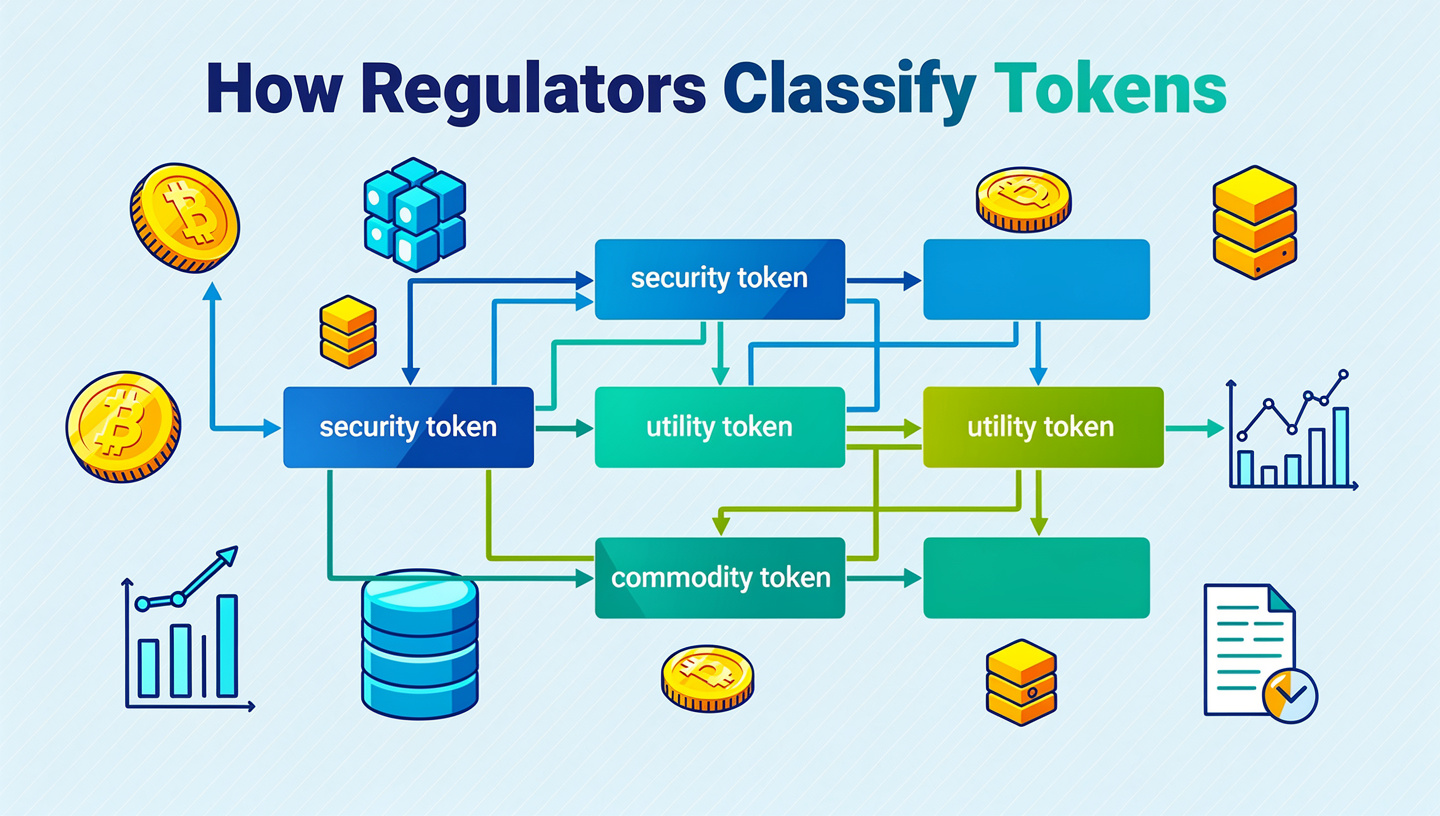
MiCA formalizes classification categories:
- Utility tokens
- Asset-referenced tokens
- E-money tokens
This harmonization reduces fragmentation across EU member states.
3.3 Singapore
The Monetary Authority of Singapore (MAS) applies securities law under the Securities and Futures Act if tokens represent capital markets products. Payment token services require licensing under the Payment Services Act.
3.4 United Kingdom
The Financial Conduct Authority (FCA) distinguishes:
- Security tokens
- E-money tokens
- Unregulated exchange tokens
Financial promotions rules frequently apply, even if the token is not itself a regulated instrument.
4. Disclosure and Prospectus Requirements
If classified as securities, token issuers must comply with:
- Prospectus registration
- Periodic reporting
- Financial statement audits
- Risk factor disclosure
- Governance transparency
STOs attempt to operationalize compliance through:
- Transfer restrictions encoded into smart contracts
- Accredited investor gating
- On-chain compliance controls
Failure to disclose material information can trigger antifraud liability under Rule 10b-5 in the U.S.
5. Anti-Money Laundering (AML) and KYC Obligations
Token sales frequently trigger AML obligations, especially when involving fiat on-ramps or exchange listings.
Key requirements:
- Customer identification procedures (KYC)
- Sanctions screening
- Suspicious activity reporting
- Travel Rule compliance
The Financial Action Task Force (FATF) classifies many token issuers or intermediaries as Virtual Asset Service Providers (VASPs). Non-compliance risks severe penalties and banking exclusion.
6. Jurisdictional Reach and Extraterritorial Risk
Blockchain distribution does not eliminate jurisdiction. Regulators assert authority based on:
- Location of purchasers
- Marketing targeting
- Server infrastructure
- Use of domestic exchanges
- Effects-based jurisdiction
The Telegram enforcement action demonstrated that private sales to foreign investors can still fall within U.S. jurisdiction if resale into U.S. markets is foreseeable.
7. Secondary Market Implications
Even if a primary token sale avoids securities classification, secondary trading can alter regulatory exposure:
- Exchange listing may imply securities distribution
- Broker-dealer registration may be required
- Alternative Trading System (ATS) registration may apply
Exchanges facilitating trading in securities tokens without registration have faced enforcement scrutiny.
8. Tax Compliance Considerations
Token sales implicate:
- Income recognition at receipt
- Capital gains on disposal
- VAT/GST treatment in some jurisdictions
- Withholding obligations
Issuers must determine whether token sale proceeds constitute taxable income or deferred revenue. Accounting treatment depends on token functionality and legal characterization.
9. Governance, Tokenomics, and Legal Risk
Token design affects legal classification:
- Fixed supply vs inflationary models
- Governance rights
- Revenue sharing mechanisms
- Staking rewards
Revenue-sharing tokens often resemble equity or profit-participation instruments. Governance tokens may trigger securities analysis if they imply managerial dependency.
10. Enforcement Trends
Regulators increasingly prioritize:
- Retail investor protection
- Disclosure accuracy
- Anti-fraud enforcement
- Unregistered broker-dealer activity
Settlements frequently involve:
- Disgorgement
- Civil penalties
- Token rescission offers
- Registration undertakings
Reputational damage often exceeds monetary penalties.
11. Practical Compliance Architecture for Token Issuers
A legally robust token sale requires structured planning:
11.1 Pre-Issuance Legal Analysis
- Multi-jurisdictional classification review
- Exemption strategy design
- Entity structuring
11.2 Documentation
- Comprehensive whitepaper
- Risk disclosure statement
- Terms and conditions
- Privacy policy
11.3 Operational Controls
- Geofencing
- KYC gating
- Smart contract compliance restrictions
- Ongoing reporting mechanisms
11.4 Post-Issuance Monitoring
- Secondary market surveillance
- Continuous disclosure updates
- Regulatory engagement
12. Common Compliance Failures
Recurring patterns include:
- Marketing emphasizing token price appreciation
- Inadequate investor verification
- Failure to restrict U.S. participation
- Poor documentation of exemption reliance
- Overreliance on legal opinions without structural compliance
13. The Evolving Future of Token Sales Regulation
Global regulators are converging toward structured oversight rather than blanket prohibition. Institutional capital participation increases pressure for clarity and formal compliance pathways.
Future developments likely include:
- On-chain compliance automation
- Tokenized securities integration into traditional capital markets
- Greater harmonization of cross-border standards
- Enhanced AML analytics integration
Regulatory maturation does not eliminate risk; it formalizes it.
Conclusion: Compliance as Infrastructure
Token sales are not inherently unlawful. They are legally contingent. The difference between innovation and enforcement lies in structural compliance.
Issuers must approach token distribution as a regulated capital markets activity, not a technological experiment. Legal analysis must precede technical deployment. Compliance must be embedded into token architecture, governance design, investor onboarding, and ongoing operations.
In the current regulatory climate, token sales are viable only when designed with securities law, AML regulation, tax compliance, and cross-border jurisdictional exposure in mind. Regulatory arbitrage is no longer a sustainable strategy.
The maturation of token sales signals a broader transformation: blockchain-based capital formation is moving from experimental frontier to regulated financial infrastructure. Those who treat compliance as core infrastructure—rather than post-launch remediation—will define the next phase of digital asset markets.