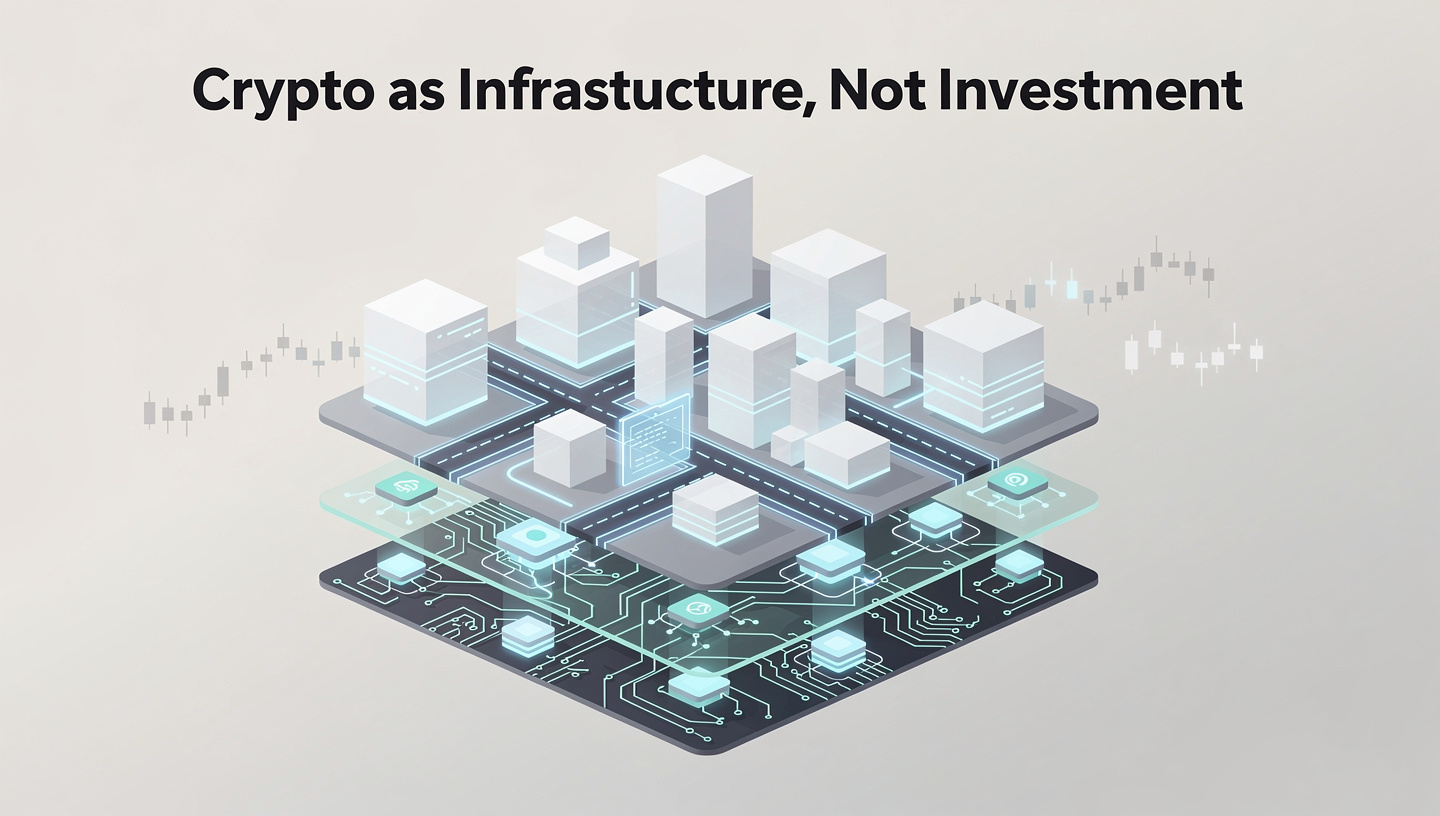
Every financial system in history has shared one immutable trait: someone, somewhere, ultimately holds the power to freeze, confiscate, or invalidate your wealth.
Kings did it with coins. Governments did it with banks. Central authorities did it with ledgers.
Then cryptography entered the room.
In this speculative—but technically grounded—exploration, we examine a future-defining construct: the wallet that couldn’t be seized. Not as a narrative story, but as a research-oriented thought experiment rooted in real cryptographic primitives, decentralized infrastructure, and the accelerating collision between state power and mathematical sovereignty.
This is not about criminals.
This is not about utopian fantasies.
This is about what happens when money becomes software, custody becomes optional, and enforcement meets code that does not negotiate.
1. The Concept of Seizure in a Digital World
To seize something means to exert physical or institutional force over it.
Traditional finance depends on choke points:
- Banks maintain custody.
- Payment processors intermediate transfers.
- Courts compel compliance.
- Governments regulate access.
Crypto dismantles these assumptions.
A properly constructed self-custodial wallet has:
- No headquarters
- No CEO
- No customer support
- No legal domicile
Only keys. And math.
When value exists purely as entries in a distributed ledger, seizure becomes a problem of cryptography—not jurisdiction.
That shift is foundational.
2. The Primitive Layer: Why Blockchains Resist Confiscation
Public blockchains like Bitcoin and Ethereum introduced three properties that redefine ownership:
a. Deterministic Control
Funds are controlled exclusively by possession of private keys.
Not identity.
Not paperwork.
Not court orders.
Keys.
Lose the key, lose the money.
Hold the key, hold absolute authority.
b. Distributed Consensus
There is no master server.
Transactions are validated by thousands of independent nodes across continents. Shutting down one country does nothing. Shutting down ten barely registers.
c. Immutability by Economic Design
Blocks are not “protected” by law. They’re protected by computation, energy expenditure, and economic incentives. Rewriting history costs more than most nations can justify.
This is why “confiscation” in crypto almost never means direct seizure.
It means something else entirely.
3. The Reality: How Crypto Is Actually Taken Today
Despite the mythology, governments do seize crypto—just not the way people imagine.
Modern confiscation relies on secondary vectors:
1. Centralized Exchanges
If assets sit on custodial platforms, authorities can compel compliance. This is how law enforcement captured funds connected to the Silk Road marketplace with assistance from Federal Bureau of Investigation.
Custody equals vulnerability.
2. Operational Security Failures
People expose seed phrases.
Reuse passwords.
Fall for phishing.
Store keys in cloud drives.
The blockchain doesn’t fail. Humans do.
3. Surveillance and Analytics
Companies like Chainalysis map transaction flows, cluster addresses, and deanonymize patterns. Crypto is pseudonymous—not invisible.
Once identity attaches to an address, pressure resumes.
4. The Hypothetical Breakthrough: A Wallet Beyond Reach
Now imagine a wallet architecture that eliminates even these vectors.
Not science fiction.
Just aggressive application of existing cryptography.
Core Properties
Such a wallet would combine:
- Threshold signatures (no single key exists)
- Distributed key shards across multiple jurisdictions
- Stateless signing environments
- Hardware-isolated entropy
- Zero-knowledge authorization
- Time-delayed execution
- Smart-contract enforced governance
No single device contains the whole key.
No single person can move funds.
No centralized service can freeze it.
Even if one shard is compromised, nothing happens.
Even if one participant is arrested, nothing happens.
Even if entire countries cooperate, nothing happens.
The wallet is not stored anywhere.
It emerges temporarily during signing, then disappears.
This is not mystical. It is composable cryptography.
5. Multi-Party Computation: The Core Mechanism
At the heart of the unseizable wallet lies Multi-Party Computation (MPC).
MPC allows multiple participants to jointly compute a signature without any party ever possessing the full private key.
Each party holds a fragment.
Only when a quorum cooperates does a valid transaction appear.
No fragment alone is useful.
From a legal standpoint, this is catastrophic for enforcement.
Who do you subpoena when no one has the asset?
6. Smart Contracts as Autonomous Custodians
On platforms like Ethereum, smart contracts already act as programmable vaults.
Funds can be locked behind:
- Time conditions
- Multi-signature requirements
- On-chain governance votes
- External oracle inputs
Once deployed, these contracts operate independently of their creators.
They don’t respond to emails.
They don’t attend court.
They don’t care.
They execute exactly what they were told—forever.
This introduces a radical inversion:
The code becomes the custodian.
Humans merely interface with it.
7. Privacy Layers and Transaction Obfuscation
To complete the unseizable architecture, privacy must be native.
This involves:
- Stealth addresses
- Zero-knowledge proofs
- Transaction mixers
- Encrypted mempools
Protocols like Tornado Cash demonstrated how funds can be mathematically detached from their origin.
Despite sanctions and arrests, the underlying contracts remain immutable on-chain.
You can jail developers.
You cannot jail deployed math.
8. Jurisdictional Collapse: When Borders Stop Working
Traditional asset recovery depends on international cooperation.
Crypto ignores borders.
Nodes exist in dozens of countries simultaneously.
Key shards can be held by participants who never meet.
Signatures can be assembled across encrypted channels in milliseconds.
There is no “location” to raid.
There is no server rack to seize.
The wallet exists only as synchronized computation.
This is not evasion.
This is topology.
9. Economic Consequences: What Happens If Wealth Becomes Unconfiscatable?
If such wallets become mainstream, several systemic shifts follow.
a. Capital Becomes Truly Mobile
Tax havens become obsolete.
Capital doesn’t move to countries.
It moves to cryptographic structures.
b. Asset Freezes Lose Effectiveness
Sanctions depend on intermediaries.
Remove intermediaries, sanctions degrade.
c. Personal Sovereignty Increases
Individuals gain custody comparable to states.
This is unprecedented in financial history.
10. The Arms Race: States vs Cryptography
Governments will not stand still.
Likely countermeasures include:
- Mandatory KYC at on/off ramps
- Criminalization of privacy tooling
- Hardware backdoors
- AI-driven behavioral surveillance
- Legal liability for protocol developers
But each move pushes activity deeper into decentralized layers.
The result is an escalating technical arms race between enforcement and abstraction.
Not ideology.
Engineering.
11. Why This Is Inevitable
Every time centralized control meets open-source cryptography, cryptography wins.
Not because of politics.
Because software scales globally while regulation scales nationally.
One developer can publish code.
Millions can replicate it.
The wallet that can’t be seized is not a singular invention.
It is an emergent property of:
- Open networks
- Cryptographic research
- Economic incentives
- Human desire for autonomy
You don’t vote it into existence.
You compile it.
12. Ethical Implications
This future is not clean.
Unseizable wallets protect dissidents and criminals alike.
They empower refugees and fraudsters.
They defend activists and extortionists.
Technology does not choose sides.
It executes.
Society will have to adapt—not by breaking cryptography, but by rethinking how accountability works when coercion no longer applies.
Closing: When Ownership Becomes Mathematical
“The wallet that couldn’t be seized” represents more than a technical milestone.
It marks a philosophical rupture.
For the first time, ownership is enforced not by institutions, but by equations.
Not by force, but by consensus.
Not by permission, but by proof.
Whether this leads to a freer world or a more chaotic one remains unresolved.
But one thing is certain:
Once money becomes sovereign software, there is no going back.
The era of confiscatable wealth is ending.
The age of cryptographic custody has begun.