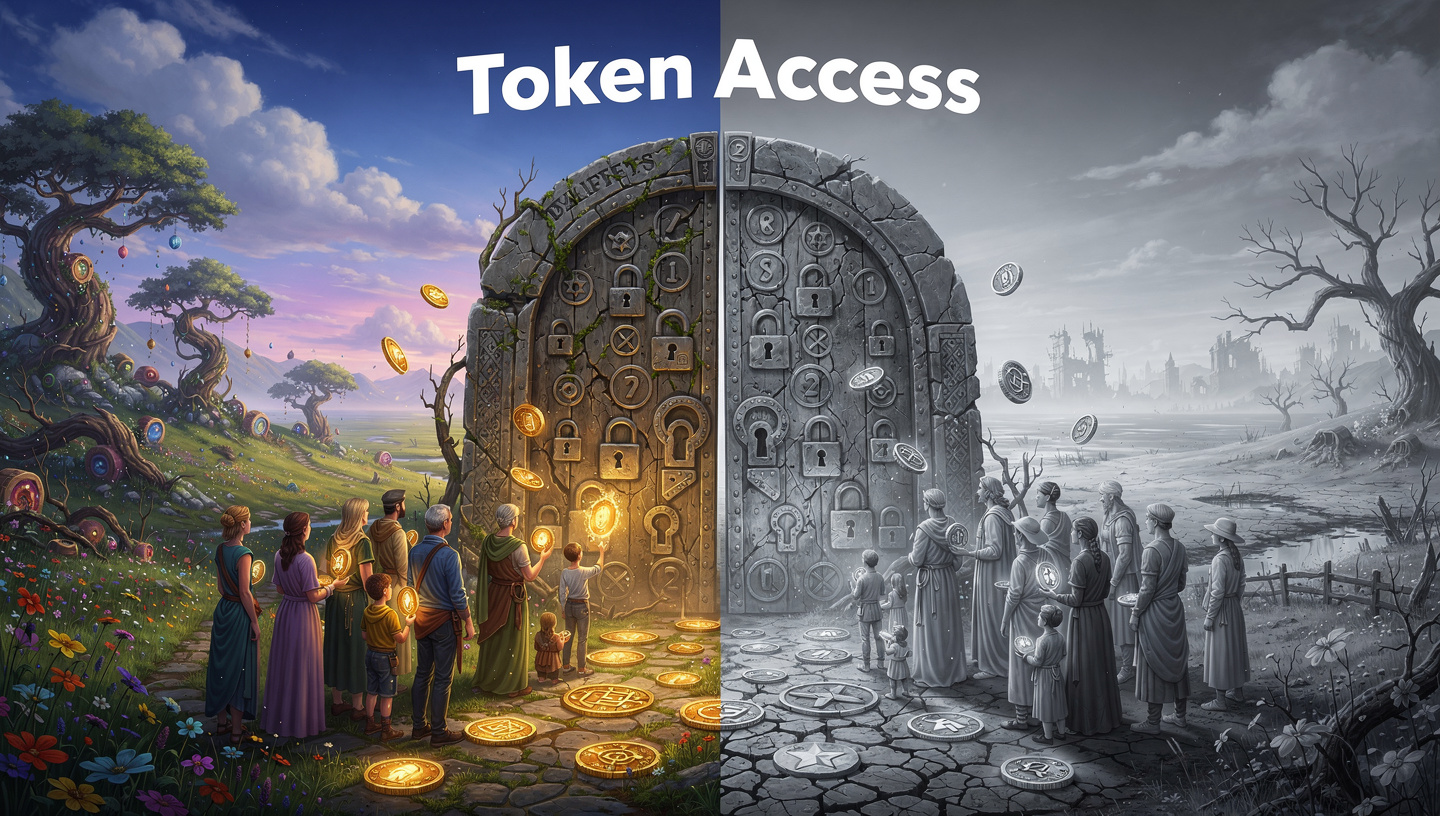
For centuries, treaties have been paper instruments—drafted in closed rooms, ratified by parliaments, enforced by political will, and violated when incentives shift. International law evolved around ambiguity by necessity. Clauses are negotiated precisely because they can be interpreted flexibly later.
Blockchain changes that premise.
In this speculative—but technically grounded—analysis, we examine a near-future paradigm: international treaties executed as smart contracts. Not metaphorically. Literally. Agreements whose obligations are encoded, deployed on public ledgers, and enforced automatically by cryptographic consensus.
This is not a story. It is a research-oriented exploration of how decentralized systems could reshape geopolitics, compliance, and sovereignty.
From Signatures to State Machines
Traditional treaties rely on:
- Human enforcement
- Political pressure
- Courts and arbitration
- Sanctions regimes
Smart contracts replace these with:
- Deterministic execution
- On-chain escrow
- Oracle-fed condition checks
- Programmatic penalties
A smart contract is a finite state machine. Inputs change state. State changes trigger outputs. There is no interpretation layer.
Once deployed, the code becomes law.
Public blockchains such as Ethereum have already demonstrated this model at scale for finance: automated lending, derivatives, and decentralized exchanges operate without centralized administrators. Extending this machinery to treaties is conceptually straightforward—even if politically radical.
The core shift is this:
Obligations become executable.
Anatomy of a Smart-Contract Treaty
A treaty implemented as a smart contract would typically include five layers.
1. Identity Layer
Each participating state is represented by cryptographic keys controlled by sovereign institutions (central banks, treasury departments, or designated diplomatic authorities). These keys sign transactions and authorize actions.
No signature, no participation.
2. Asset Escrow
Funds or resources are locked into the contract at inception.
This can include:
- Stablecoin reserves
- Tokenized commodities
- Carbon credits
- Energy derivatives
- Security deposits
Once escrowed, assets cannot be withdrawn unilaterally.
This is structurally different from traditional guarantees.
3. Conditional Logic
Treaty clauses are expressed as code:
- If emissions exceed X → penalty Y executes
- If inspection data confirms compliance → funds release
- If deadline passes without proof → automatic sanctions
There is no appeal process inside the contract.
The code does exactly what it was written to do.
4. Oracle Infrastructure
Smart contracts cannot observe the physical world. They require oracles—trusted data feeds providing inputs such as:
- Satellite imagery
- Customs data
- Power grid telemetry
- Shipping manifests
These feeds become critical geopolitical infrastructure.
Control the oracles, influence the treaty.
5. Enforcement Mechanisms
Instead of diplomatic notes or UN resolutions, enforcement is mechanical:
- Assets are redistributed
- Access privileges revoked
- Escrow slashed
- Voting power reduced
No emergency summit required.
Why States Would Even Consider This
At first glance, surrendering discretion to code appears irrational.
It is not.
Smart-contract treaties offer several strategic advantages.
Credible Commitment
Game theory rewards defectors. Smart contracts remove the option.
Once funds are locked, cheating becomes expensive by design.
This mirrors how decentralized finance achieved trustless coordination between anonymous actors. The same principle applies to states.
Reduced Monitoring Costs
Instead of massive bureaucracies verifying compliance, contracts consume oracle data and self-audit continuously.
Verification becomes automated.
Capital Efficiency
Idle guarantees become productive collateral. Locked funds can be yield-bearing, redirected dynamically, or reallocated based on performance metrics.
Diplomacy becomes capital-aware.
Speed of Resolution
Disputes that once took years of arbitration resolve in blocks.
Finality is measured in minutes.
The First Use Cases: Not War, But Trade
Despite popular imagination, the earliest smart-contract treaties would not govern ceasefires or borders.
They would emerge in:
- Cross-border energy agreements
- Carbon offset frameworks
- Infrastructure financing
- Maritime logistics corridors
These domains already operate on quantifiable metrics and financial flows.
Consider a multilateral renewable energy pact:
- Each country escrows funds.
- Power generation data feeds into the contract.
- Underperforming participants automatically subsidize overperformers.
- Excess emissions trigger immediate compensation.
No committees. No delays.
Just execution.
Sovereignty in the Age of Immutable Agreements
The philosophical rupture is profound.
Traditional sovereignty assumes:
- The right to reinterpret commitments
- The option to breach under extraordinary circumstances
- Political override
Smart contracts eliminate these escape hatches.
Once deployed, even presidents cannot halt execution.
This creates a new category of governance: algorithmically constrained sovereignty.
States remain politically independent, but economically bound by code.
This mirrors how monetary sovereignty already weakened under globalization—now extended to treaty compliance.
The Role of Global Institutions
Legacy organizations would not disappear. They would mutate.
Bodies such as United Nations or World Bank would likely become:
- Oracle certifiers
- Contract auditors
- Key custodians
- Dispute mediators outside the chain
Instead of enforcing agreements, they would validate inputs and oversee deployment standards.
Power shifts from interpretation to infrastructure.
Security, Failure Modes, and Hard Lessons from Crypto
Smart contracts are brittle.
History on public blockchains has shown:
- Bugs can freeze billions
- Oracle manipulation is feasible
- Governance attacks happen
- Code audits miss edge cases
A treaty contract containing a logic flaw could cascade across economies.
Unlike traditional treaties, there is no pause button.
This is why early implementations would be heavily sandboxed, limited in scope, and backed by layered fail-safes—multi-sig overrides, time locks, and kill switches controlled by consensus.
Still, absolute safety does not exist.
That is the price of determinism.
Monetary Rails: Why Crypto Is Essential
None of this works without native digital settlement.
Fiat systems cannot provide:
- Atomic transfers
- Programmable escrow
- Instant cross-border finality
Blockchain networks like Bitcoin demonstrated censorship-resistant value transfer. Ethereum generalized it to programmable agreements.
Smart-contract treaties require both properties.
This is why central bank digital currencies alone are insufficient. They remain permissioned and reversible.
Treaties demand neutrality.
Only open networks provide that substrate.
A New Diplomatic Primitive
Historically, treaties were promises.
In the smart-contract era, they become mechanisms.
This is not a utopian vision. It is a structural evolution driven by:
- Rising multipolarity
- Declining trust in institutions
- Increasing demand for automated compliance
- The maturation of decentralized infrastructure
The same forces that produced decentralized finance will eventually reshape international coordination.
Not because it is ideal.
Because it is efficient.
Final Thoughts: Code as the Ultimate Arbiter
The treaty signed as a smart contract represents a shift from diplomacy as persuasion to diplomacy as protocol.
Words give way to logic.
Intent gives way to execution.
Whether this leads to greater stability or new forms of fragility remains unresolved. What is certain is that once states experience the advantages of programmable agreements—credible commitment, automated enforcement, and capital efficiency—there is no return to paper promises.
The future of treaties is not ink.
It is bytecode.