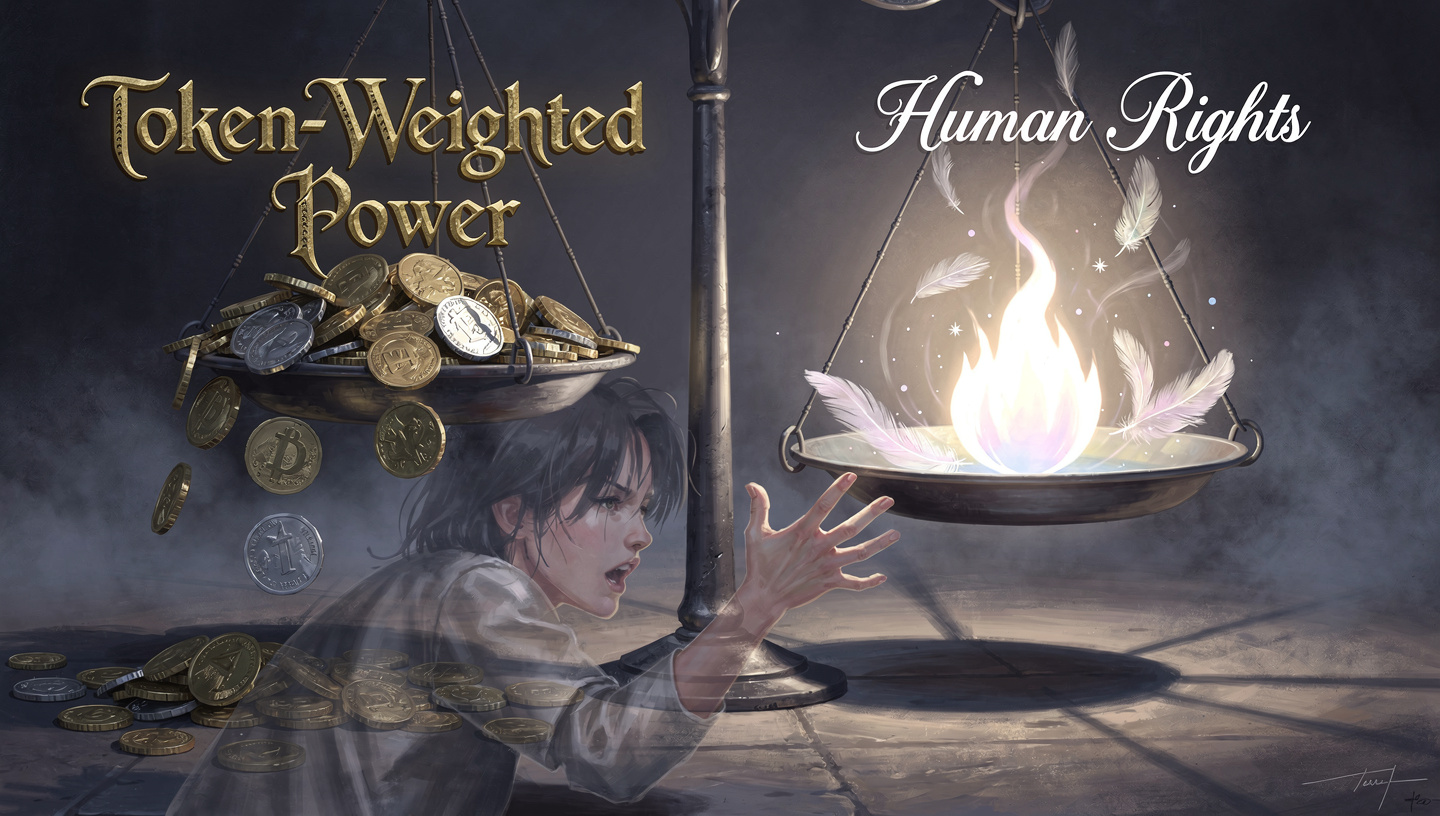
Every civilization leaves behind artifacts.
Some leave pyramids. Some leave libraries. Some leave ruins swallowed by forests and sand.
Ours may leave something stranger: a final cryptographic signature embedded in a global ledger that no one remains alive to verify.
Long after the last government dissolves, long after the last market closes, long after the last human breath fogs cold air, a distributed network may still be quietly agreeing on state.
Blocks will continue to hash. Validators will continue to attest. Consensus will continue to form.
And somewhere inside that machine memory will exist a record:
the last transaction ever made.
Not a dramatic farewell. Not a poetic message. Just an ordinary movement of value across an extraordinary system.
This article explores that possibility—not as science fiction storytelling, but as a research-driven thought experiment at the intersection of cryptography, economics, governance, and post-human infrastructure.
What does it mean for money to outlive its creators?
What does it mean for a blockchain to become a fossilized institution?
And what does the final transaction tell us about ourselves?
1. The Architecture of Permanence
Blockchain systems were designed to solve a specific historical problem: trust in adversarial environments.
They do this through three core primitives:
- Distributed consensus
- Cryptographic immutability
- Economic incentives
Together, they create a structure that is not merely resilient—it is anti-fragile. Unlike centralized databases, blockchains do not require institutional continuity. They require only:
- A minimum number of active nodes
- Energy or stake
- A rule set
As long as these conditions persist, the ledger persists.
This is why early systems like Bitcoin were so radical. They removed human intermediaries entirely. Monetary history before that point depended on empires, banks, and legal frameworks. Bitcoin depends on mathematics and game theory.
Even if every central bank vanished overnight, Bitcoin would continue producing blocks.
Even if every court ceased functioning, ownership would still be defined by private keys.
This is not metaphorical permanence. It is computational permanence.
Later platforms such as Ethereum extended this concept from money to logic itself, allowing smart contracts to persist as autonomous economic agents.
These systems are not just financial networks.
They are self-maintaining institutions.
2. Value Without Society
Money traditionally requires social context.
A dollar has meaning because governments enforce it. Gold has meaning because cultures agree on its scarcity. Even shells and beads depended on collective belief.
Cryptocurrency breaks that model.
On-chain value exists independently of civilization.
A wallet address does not care if courts exist.
A validator does not care if cities burn.
A smart contract does not care if its creators are extinct.
Value becomes a purely mechanical property.
This creates a new philosophical category: post-social money.
If humanity disappears, fiat currencies collapse immediately. Their issuing authorities vanish.
But decentralized crypto does not.
As long as at least two nodes remain operational—and energy exists to power them—the system continues.
Ownership still exists.
Balances still update.
Finality still resolves.
At that point, money is no longer a human agreement. It becomes an emergent property of computation.
3. Who Authorizes the Final Transfer?
The last transaction ever made raises an unsettling question:
Who initiates it?
Possibilities include:
3.1 A Human
A lone survivor submitting a transfer from a dying settlement. A final act of agency in a collapsing biosphere.
3.2 An Autonomous System
AI-driven treasury managers already exist. DAOs already execute transactions without human approval. In the future, planetary infrastructure—satellites, power grids, climate control systems—may interact directly with blockchains.
The final transaction may be initiated by software fulfilling an obligation to another machine.
3.3 A Failsafe Protocol
Some systems include dead-man switches: time-locked releases, automated migrations, self-settling contracts. The last transaction might simply be a scheduled event finally reaching maturity.
In all cases, the sender may not understand what it is doing.
It simply executes code.
4. The Economics of Extinction
If humanity declines gradually, crypto markets do not disappear instantly. They decay.
Liquidity dries up.
Exchanges shut down.
Validators drop offline.
Block times slow.
Eventually, networks reach a tipping point where security assumptions fail.
But not all chains fail at the same rate.
Proof-of-work systems require energy. Proof-of-stake systems require participants. Hybrid models require both.
Which lasts longest depends on infrastructure.
A solar-powered mining array on an abandoned orbital station could continue hashing for centuries.
A proof-of-stake chain with automated validators could persist as long as hardware survives.
What emerges is selective blockchain survival.
Some ledgers fossilize.
Others fragment.
A few continue.
The last transaction does not necessarily occur on the most famous chain. It occurs on the last operational one.
5. The Archaeology of Blockchains
Future intelligences—whether alien, artificial, or evolved—may discover blockchains the way we discover ancient tablets.
They will find:
- Account balances with no owners
- Contracts executing meaningless logic
- NFTs referencing missing files
- Tokens with no markets
To them, blockchains will appear as ritualized mathematics.
They will infer that a species once used these systems to coordinate resources, resolve disputes, and encode identity.
They may never understand memes.
They will not care about market cycles.
But they will see something remarkable:
A civilization attempted to preserve economic truth forever.
And almost succeeded.
6. The Ghost of Satoshi
The origin of decentralized crypto traces back to Satoshi Nakamoto, whose identity remains unknown.
Satoshi disappeared after launching Bitcoin, leaving behind code, ideas, and roughly one million dormant coins.
Those coins have never moved.
If they remain untouched until the end of humanity, they will represent the largest unspent fortune in history—forever locked.
They are already a monument.
In the context of extinction, they become something else:
A cryptographic tomb.
7. What Makes a Transaction “Last”?
Technically, a blockchain has no concept of “last.”
It simply continues until it cannot.
The final transaction is defined retroactively: it is the last state change before permanent halt.
That halt may occur due to:
- Validator count dropping below quorum
- Energy infrastructure collapse
- Hardware degradation
- Network partition beyond repair
Once that happens, the ledger freezes.
No dramatic shutdown.
No global notification.
Just silence.
Blocks stop appearing.
Mempools empty.
Time moves on.
The last transaction is whatever happened immediately before entropy won.
8. The Metadata of Finality
Every transaction contains metadata:
- Timestamp
- Sender
- Recipient
- Amount
- Fee
That data will remain, immutable.
If future systems recover the ledger, they will see:
- What asset moved
- How much it cost to move it
- How congested the network was
- How urgently the sender wanted inclusion
From this, they can infer the state of the dying system.
High fees suggest scarcity of validators.
Long confirmation times suggest collapsing infrastructure.
Tiny transfers suggest automated systems settling residual balances.
The last transaction is not just a transfer.
It is a diagnostic snapshot of the end.
9. The Ethics of Building Eternal Systems
No previous civilization built institutions intended to outlive biology.
Blockchains may.
This creates ethical questions we barely discuss:
- Should economic systems persist without people?
- Should autonomous finance exist without oversight?
- Are we creating immortal structures that no longer serve living beings?
Crypto culture often celebrates censorship resistance and permanence.
But permanence without purpose is just machinery.
The last transaction forces us to confront this.
If value persists after meaning disappears, what was value ever for?
10. The Quiet Ending
There will be no fireworks.
No headline.
No global alert saying this was the final block.
Somewhere in a data center, or a satellite, or a forgotten bunker, a machine will validate a block.
It will propagate.
Other machines will agree.
Consensus will finalize.
And then nothing else will happen.
No next block.
No retries.
No recovery.
Just a ledger frozen in time.
The last transaction ever made will sit there indefinitely, a single line of structured data marking the boundary between economic activity and cosmic silence.
Conclusion: A Civilization Written in Hashes
We often imagine our legacy in art, architecture, or exploration.
But the most durable artifact humanity may produce is a cryptographic ledger.
Not because it is beautiful.
Not because it is wise.
But because it is relentless.
Blockchains do not forget.
They do not forgive.
They do not care.
They simply record.
The last transaction ever made will not commemorate humanity.
It will merely prove that we were here—and that we tried to build systems strong enough to survive us.
Whether that is triumph or tragedy remains an open question.