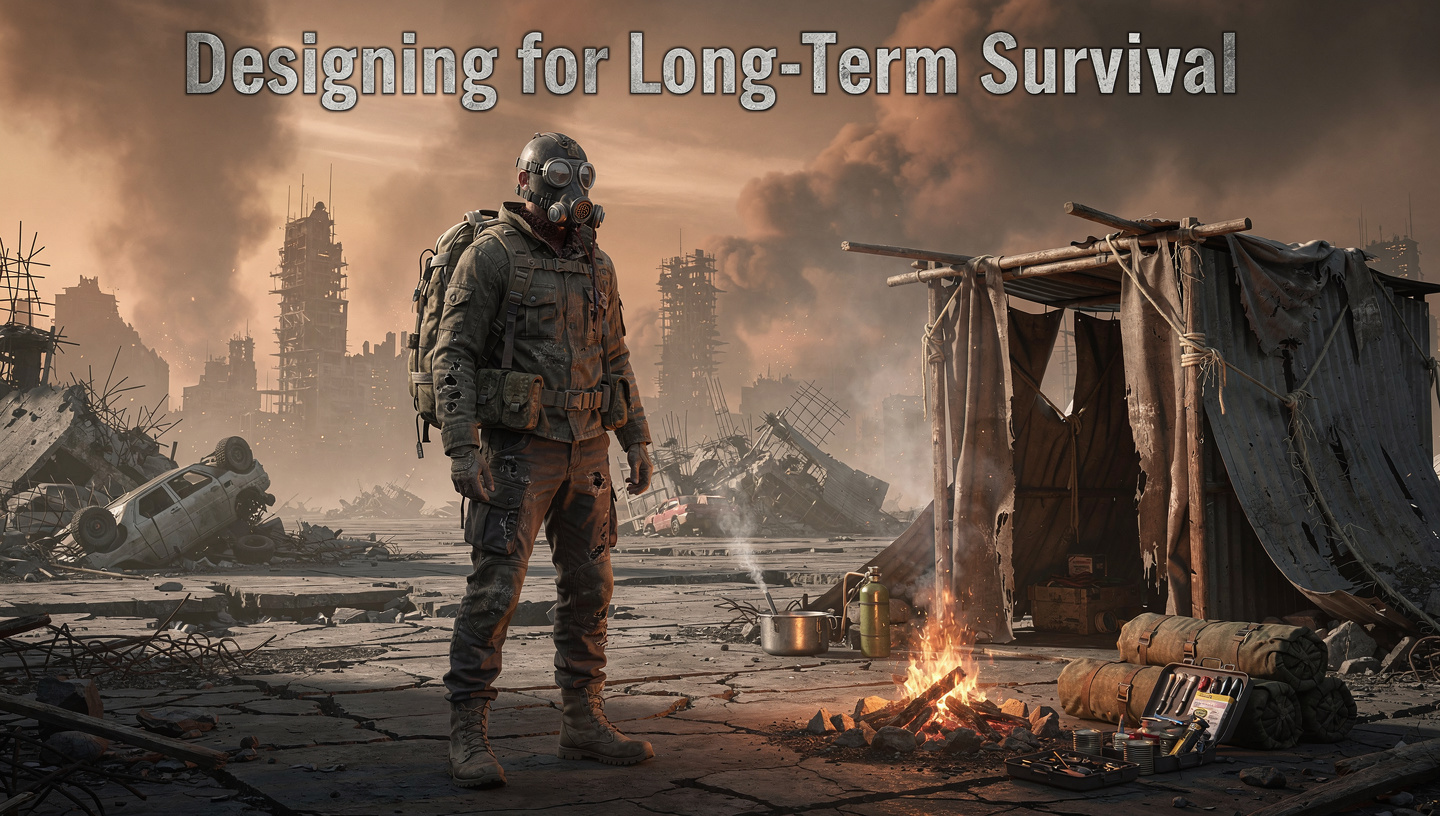
Every technological revolution carries a myth of inevitability.
Steam would remake industry. Electricity would dissolve distance. The internet would flatten power. And crypto—so the story went—would decentralize trust itself.
But this article is not about the triumph of blockchain.
It is about a hypothetical failure so systemic that it reshaped a nation’s economy, fractured its social contract, and forced the world to confront an uncomfortable truth: when financial infrastructure becomes software, software failure becomes national destiny.
This is a research-oriented speculative analysis—fictional in outcome, factual in mechanics—of what happens when a country binds itself to a single dominant blockchain, and that chain collapses.
Not a story. A case study from an imagined future, constructed from real-world incentives, architectures, and fragilities.
1. When a Ledger Becomes a State
In the early phases of mass crypto adoption, most governments treated blockchains as external systems—alternative rails for remittances, speculative assets for citizens, experimental platforms for startups.
Then came Phase Two.
Phase Two was integration.
Tax collection moved on-chain. Welfare distribution became programmable. Land registries adopted immutable ledgers. Central banks experimented with tokenized reserves. Ministries issued bonds directly to wallets. Identity systems began anchoring proofs to smart contracts.
What began as “crypto-friendly policy” became structural dependence.
The justification was efficiency:
- Reduced corruption via transparent ledgers
- Lower transaction costs for public services
- Near-instant settlement for trade
- Programmable fiscal policy
In theory, the state had become leaner, faster, more accountable.
In practice, something more radical occurred.
A blockchain became critical infrastructure.
Not just finance.
Everything.
2. The Architectural Bet
The fictional country at the center of this collapse—let’s call it Aurora—did not diversify across multiple chains.
It made a deliberate architectural bet.
Aurora selected a single high-throughput smart contract network as its national settlement layer.
Why?
Because it promised:
- Sub-second finality
- Near-zero fees
- Massive transaction capacity
- A mature developer ecosystem
Aurora’s policymakers framed it as a pragmatic choice: one canonical ledger avoids fragmentation, reduces complexity, and enables composability across government services.
From an engineering standpoint, this made sense.
From a risk standpoint, it was catastrophic.
They had effectively created a digital monoculture.
The same mistake agriculture made with single-crop farming.
Only this time, the crop was sovereignty.
3. The Incentive Alignment Trap
The blockchain ecosystem is driven by incentives, not ideals.
Validators seek yield. Developers chase grants. Venture capital demands growth. Foundations optimize for network metrics. Users follow liquidity.
Aurora’s government assumed that by becoming the largest institutional user of the chain, it would gain influence over its evolution.
What it actually gained was exposure.
As national usage exploded, so did the network’s token price. Local banks tokenized deposits. Pension funds allocated reserves. Payroll ran on smart contracts. Small businesses priced goods directly in on-chain units.
GDP itself began to correlate with block production.
The state did not control the chain.
The chain controlled the state.
And beneath the surface, fragilities accumulated.
4. The Hidden Fault Lines
The collapse did not come from a single bug.
It emerged from overlapping structural weaknesses.
a. Validator Concentration
Despite the rhetoric of decentralization, 62% of validation power was controlled by eight entities—mostly offshore infrastructure providers and crypto-native funds.
Aurora had no legal jurisdiction over them.
Its courts were irrelevant.
b. Governance Capture
Protocol upgrades were technically decided by token-weighted voting.
Over time, speculative capital accumulated governance power.
Long-term national interests lost to short-term market incentives.
c. Oracle Dependency
Government systems relied on price feeds and identity attestations provided by external oracle networks.
These oracles became choke points.
d. Composability Risk
Thousands of contracts—taxation, licensing, subsidies—were interdependent.
A failure in one propagated instantly across others.
Aurora had built a financial Rube Goldberg machine.
Elegant.
Brittle.
5. The Trigger Event
The immediate catalyst was mundane.
A popular decentralized finance protocol suffered a subtle logic flaw during a routine upgrade. Arbitrage bots exploited the discrepancy, draining liquidity pools tied directly into Aurora’s treasury management contracts.
Within 17 minutes:
- Government stablecoin reserves depegged
- Automated payroll contracts halted
- Municipal bond collateralization failed
- Welfare disbursement paused
Markets reacted faster than ministries.
Token prices collapsed.
Validators began dropping offline as staking yields evaporated.
Transaction finality slowed.
Then stopped.
The chain did not “die.”
It entered a degraded state: blocks produced intermittently, forks unresolved, governance frozen.
Aurora’s national ledger became inconsistent.
Which meant the state itself became inconsistent.
6. Day One: Administrative Paralysis
The first 24 hours revealed what “on-chain government” truly meant.
Civil servants could not:
- Issue permits
- Record property transfers
- Process customs documentation
- Pay contractors
Hospitals reverted to paper intake forms.
Fuel distributors demanded cash.
Retailers stopped accepting digital wallets.
The banking system, deeply entangled with on-chain settlement, froze withdrawals.
ATMs ran dry.
Not because money vanished—but because reconciliation systems depended on a ledger that could no longer agree with itself.
7. Day Three: Monetary Fragmentation
By the third day, informal currencies emerged.
Local communities began using IOUs, foreign cash, and commodity barter.
Businesses repriced hourly.
Black markets flourished.
Cross-border trade halted entirely; counterparties refused settlement in assets tied to Aurora’s chain.
Credit ratings agencies downgraded sovereign debt to junk.
Capital controls were imposed.
They failed.
When your money lives on a global network, borders are advisory.
8. The International Response
Aurora appealed to multilateral institutions for emergency liquidity.
The International Monetary Fund offered conditional assistance.
So did the World Bank.
But negotiations stalled over one central issue:
Who controlled the chain?
Aurora could not guarantee protocol stability.
It could not enforce validator compliance.
It could not roll back transactions.
It could not even prove, with cryptographic certainty, which version of the ledger represented legal reality.
For international creditors, this was unprecedented.
They were accustomed to dysfunctional governments.
They were not accustomed to dysfunctional blockchains.
9. A Parallel from History
Years earlier, smaller-scale experiments had foreshadowed this risk.
Countries like El Salvador had tested crypto integration at the monetary level. City-states experimented with tokenized governance. Special economic zones ran on smart contracts.
But Aurora went further.
It did not merely adopt crypto.
It embedded it.
What collapsed was not a currency.
It was an operating system.
10. The Legal Vacuum
One of the most underestimated aspects of the crisis was jurisprudence.
Aurora’s laws referenced on-chain state as authoritative.
Property rights were NFTs.
Corporate registries were Merkle trees.
Identity proofs were zero-knowledge attestations.
When the chain forked, so did legality.
Two incompatible versions of reality existed simultaneously.
Courts had no precedent for adjudicating between cryptographic histories.
Judges could not subpoena validators.
Police could not seize smart contracts.
The concept of enforcement dissolved.
11. Social Consequences
Within weeks:
- Unemployment doubled
- Inflation exceeded 400% annually
- Brain drain accelerated as engineers emigrated
- Public trust collapsed
Protests erupted, not against politicians, but against infrastructure.
Citizens demanded the “restart” of the chain, as if it were a router.
They had been taught that blockchain was immutable.
Now they begged for mutability.
12. Why Recovery Was So Hard
Traditional financial crises follow familiar playbooks:
- Central bank liquidity
- Fiscal stimulus
- Debt restructuring
- Regulatory reform
Aurora’s crisis was different.
You cannot print blocks.
You cannot legislate hash power.
You cannot nationalize anonymous validators.
The government attempted to fork the chain unilaterally.
Markets ignored it.
Liquidity followed the original network.
Aurora discovered too late that legitimacy in crypto is not granted by states.
It is granted by users.
13. The Reconstruction Phase
After eighteen months of economic contraction, Aurora began rebuilding on hybrid infrastructure:
- Partial re-centralization of critical services
- Offline identity backups
- Multi-chain redundancy
- Human override mechanisms
Paper records returned.
So did bureaucracy.
Efficiency gave way to resilience.
The new system was slower, messier, and far less elegant.
It was also survivable.
14. Lessons from the Collapse
This fictional catastrophe yields concrete, transferable insights.
1. Blockchains Are Not Neutral
They embed economic incentives.
Those incentives will eventually dominate governance.
2. Decentralization Is Not Binary
Validator topology matters more than marketing language.
3. Composability Magnifies Failure
Interconnected contracts propagate errors at machine speed.
4. Legal Systems Cannot Be Fully Automated
Code does not interpret intent.
Judges still matter.
5. Sovereignty Requires Control
Outsourcing your ledger is outsourcing your state.
15. The Deeper Meaning
Aurora did not fail because it embraced crypto.
It failed because it mistook a financial protocol for a social institution.
Blockchains are excellent at enforcing rules.
They are terrible at negotiating change.
Nations require both.
Crypto promised trustlessness.
But societies require trust.
That tension remains unresolved.
Conclusion: The Chain Was Never the Foundation
The collapse of Aurora’s blockchain did not merely expose technical vulnerabilities.
It exposed philosophical ones.
For decades, technologists argued that code could replace institutions. That cryptography could substitute for governance. That incentives could outperform culture.
Aurora proved the limits of that belief.
A country is not a database.
A people are not nodes.
And a ledger—no matter how elegant—cannot carry the full weight of civilization.
The future will still include blockchains.
But after Aurora, no serious government will confuse infrastructure with legitimacy again.
Because the real foundation of any nation is not consensus algorithms.
It is human agreement.
And that has never been fully programmable.