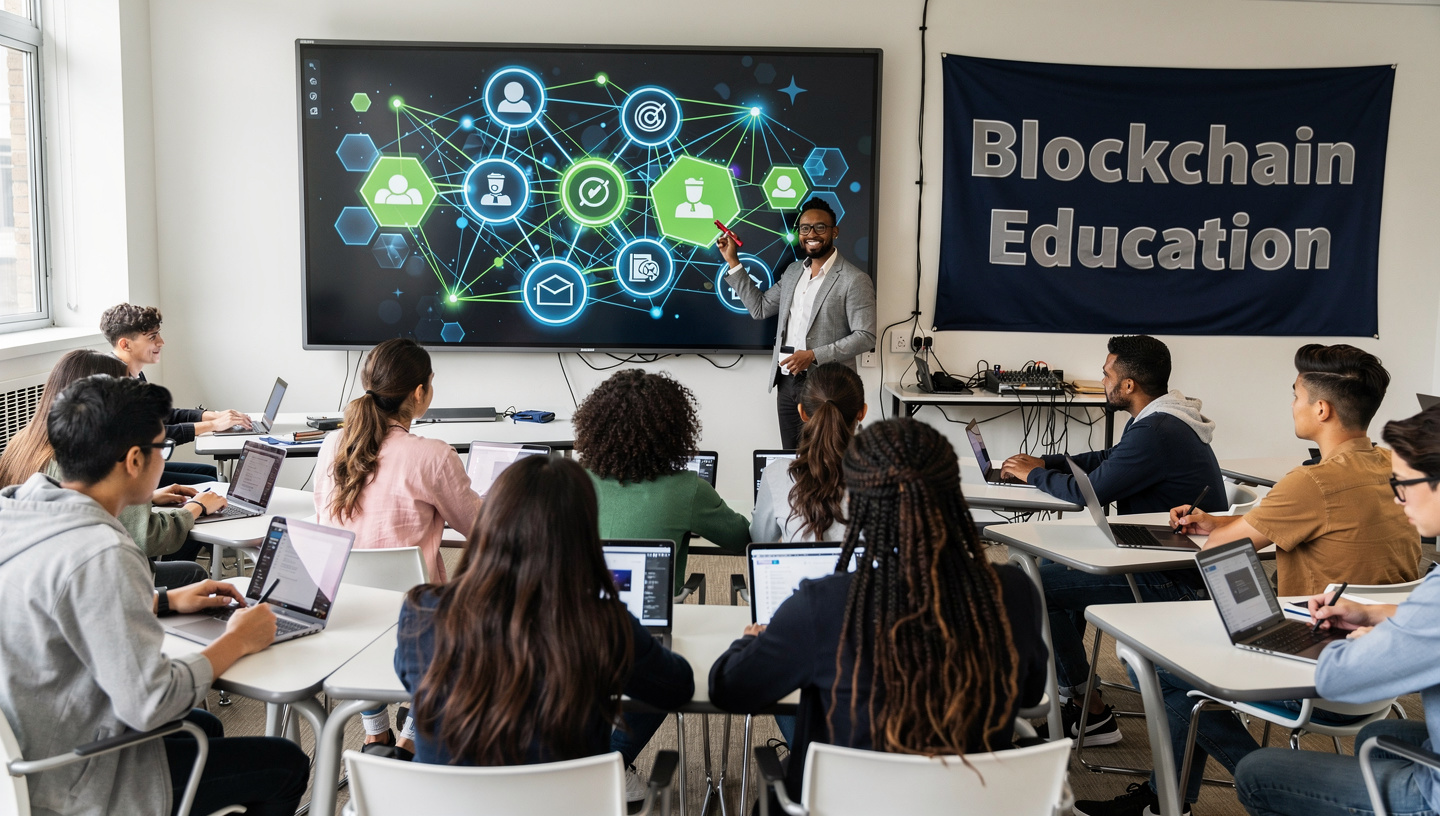
In the early days of the internet, schools hesitated to teach networking, programming, and digital literacy because the technologies seemed too new, too technical, or too specialized. History proved that hesitation costly. Today, a similar moment is unfolding with blockchain technology. Once dismissed as a niche topic associated only with cryptocurrencies, blockchain has matured into a multidisciplinary field spanning computer science, economics, law, cybersecurity, supply chains, digital identity, and public governance. Teaching blockchain in high schools is no longer a futuristic idea—it is an educational necessity.
This article provides a comprehensive, research-oriented framework for integrating blockchain education into secondary curricula. It examines pedagogical theory, curriculum design, cognitive development, interdisciplinary relevance, classroom implementation strategies, policy implications, and future outlook. Designed for educators, policymakers, curriculum developers, and academic researchers, this guide offers both conceptual depth and practical guidance for building a robust blockchain education program for adolescents.
1. Understanding Blockchain as a Foundational Literacy
Blockchain should not be treated merely as a technical elective. It is better understood as a new layer of digital infrastructure literacy, comparable to how students learn about databases, networks, and encryption.
At its core, blockchain combines:
- Distributed systems
- Cryptographic verification
- Consensus algorithms
- Economic incentive design
- Immutable data structures
These concepts intersect with multiple traditional subjects:
| Discipline | Blockchain Connection |
|---|---|
| Computer Science | Algorithms, hashing, distributed computing |
| Mathematics | Probability, game theory, cryptography |
| Economics | Incentives, scarcity, tokenomics |
| Civics | Governance models, voting systems |
| Law | Contracts, compliance, digital identity |
Teaching blockchain in high school therefore does not replace existing subjects—it strengthens them by providing real-world applications.
2. Cognitive Readiness of High School Students
Adolescents aged 14–18 possess the abstract reasoning ability required to grasp blockchain principles. According to developmental psychology frameworks, this age group enters the formal operational stage, where they can understand:
- Hypothetical systems
- Logical abstractions
- Symbolic representations
- Multi-variable causality
Blockchain concepts such as distributed consensus or cryptographic verification actually enhance these cognitive skills. Students must reason about trustless systems, adversarial scenarios, and decentralized coordination—skills aligned with higher-order thinking competencies.
Importantly, blockchain education also cultivates systems thinking, a mental model increasingly emphasized by global institutions such as UNESCO as critical for navigating complex modern societies.
3. Pedagogical Rationale: Why Teach Blockchain Early?
3.1 Preparing Students for Future Labor Markets
Industry demand for blockchain literacy is growing across sectors including finance, logistics, healthcare, and public administration. Major corporations such as IBM and Microsoft have invested heavily in blockchain platforms, signaling long-term relevance.
Teaching blockchain early ensures students graduate with conceptual familiarity rather than encountering it for the first time in university or the workforce.
3.2 Promoting Digital Citizenship
Blockchain forces students to confront questions about:
- Privacy vs transparency
- Centralization vs decentralization
- Trust vs verification
- Authority vs consensus
These are not just technical questions—they are civic questions. Understanding them strengthens democratic literacy.
3.3 Encouraging Interdisciplinary Learning
Traditional education often isolates subjects. Blockchain unifies them. A lesson about mining can simultaneously involve:
- Physics (energy consumption)
- Economics (incentives)
- Ethics (environmental impact)
- Computer science (algorithms)
4. Curriculum Design Principles
An effective blockchain curriculum must be structured progressively. It should move from conceptual foundations to applied experimentation.
Level 1 — Conceptual Foundations
Students learn:
- What a ledger is
- How trust works in institutions
- Why decentralization matters
- Basic cryptography concepts
No programming required.
Level 2 — Technical Fundamentals
Students explore:
- Hash functions
- Digital signatures
- Peer-to-peer networks
- Block formation
Hands-on simulations are essential here.
Level 3 — Applied Blockchain
Students engage with:
- Smart contracts
- Token systems
- Decentralized applications
- Governance mechanisms
Simple coding exercises may be introduced.
Level 4 — Real-World Analysis
Students evaluate case studies such as:
- Supply chain tracking
- Identity verification
- Voting systems
- Intellectual property protection
This stage emphasizes critical thinking over memorization.
5. Teaching Methods That Work
5.1 Simulation-Based Learning
Instead of lecturing about consensus algorithms, teachers can simulate them.
Example activity:
Students represent nodes in a network and must agree on transaction validity. Some students act as malicious actors. The class observes how consensus protocols resist manipulation.
This transforms abstract concepts into lived experiences.
5.2 Project-Based Instruction
Research consistently shows that students retain knowledge longer when they build something.
Possible student projects:
- Design a classroom cryptocurrency
- Create a paper blockchain ledger
- Model a voting system
- Build a supply chain tracker
Project-based learning mirrors real blockchain development workflows.
5.3 Visual Learning Approaches
Visual representations significantly improve comprehension of distributed systems.
Effective visual tools:
- Block diagrams
- Transaction flow charts
- Node network maps
- Consensus animations
Organizations like Khan Academy have demonstrated how visual pedagogy improves conceptual retention in technical subjects.
5.4 Debate and Ethical Discussion
Blockchain raises real ethical dilemmas:
- Should financial systems be decentralized?
- Can anonymity coexist with accountability?
- Who governs decentralized networks?
Structured debates develop analytical reasoning and public speaking skills while reinforcing subject mastery.
6. Sample Semester Curriculum
Below is a model 16-week high school course outline.
Weeks 1–2: Digital trust and the history of ledgers
Weeks 3–4: Cryptography basics
Weeks 5–6: Distributed systems
Weeks 7–8: Blockchain architecture
Weeks 9–10: Consensus mechanisms
Weeks 11–12: Smart contracts
Weeks 13–14: Real-world applications
Week 15: Ethics and regulation
Week 16: Final project presentations
Assessment methods:
- Concept quizzes
- Group projects
- Reflective essays
- Simulation participation
7. Teacher Training Requirements
One major barrier to blockchain education is teacher readiness. Most current educators did not study blockchain during their own training. Professional development programs are therefore essential.
Recommended training structure:
- Introductory workshops
- Technical boot camps
- Curriculum integration seminars
- Ongoing support communities
Universities such as MIT have already launched blockchain research initiatives that can serve as academic partners for secondary schools.
8. Infrastructure Needs for Schools
Fortunately, blockchain education does not require expensive hardware.
Minimum requirements:
- Internet access
- Basic computers
- Simulation software
- Open-source tools
Optional enhancements:
- Cloud environments
- Coding platforms
- Virtual lab environments
The accessibility of blockchain education makes it feasible even for under-resourced schools.
9. Addressing Common Concerns
Concern 1 — “Blockchain Is Too Complex”
Reality: When taught progressively, blockchain is no more complex than algebra or chemistry. Complexity arises only when instruction begins at an advanced level.
Concern 2 — “It’s Just About Cryptocurrency”
Blockchain extends far beyond digital money. It is used for:
- Medical record management
- Land registries
- Logistics tracking
- Identity verification
Reducing it to currency misunderstands the technology.
Concern 3 — “It Encourages Speculation”
Properly designed curricula emphasize:
- Technology
- Ethics
- Economics
- Risk awareness
Education reduces reckless speculation by replacing hype with understanding.
10. Ethical and Social Dimensions
Teaching blockchain responsibly requires addressing its controversies.
Environmental Impact
Students should examine debates around energy consumption and compare consensus models.
Privacy vs Surveillance
Blockchain can protect privacy or enable tracking depending on implementation.
Financial Inclusion
Decentralized finance can expand access—or create new inequalities.
Discussing these topics ensures students develop balanced perspectives rather than ideological bias.
11. Global Trends in Blockchain Education
Countries worldwide are beginning to integrate blockchain into secondary education strategies. Governments increasingly recognize blockchain as a strategic technology similar to artificial intelligence or cybersecurity.
Private sector organizations such as Coinbase and Binance have launched educational initiatives aimed at younger audiences, reflecting industry recognition that literacy drives adoption.
This trend suggests that blockchain education may soon become as standard as computer literacy courses.
12. Assessment Strategies for Blockchain Courses
Traditional exams alone cannot measure blockchain mastery. Effective evaluation should include:
Conceptual Understanding
Students explain systems in their own words.
Application Skills
Students build or simulate systems.
Analytical Thinking
Students critique real implementations.
Collaborative Ability
Students solve distributed problems in teams.
Rubrics should prioritize reasoning, not memorization.
13. Policy Recommendations for Education Systems
To successfully implement blockchain education at scale, policymakers should:
- Develop national curriculum frameworks
- Fund teacher training programs
- Support open educational resources
- Encourage university-school partnerships
- Promote interdisciplinary courses
Government support ensures consistency and equity across schools.
14. The Role of Open Educational Resources
Open-source materials are particularly valuable in blockchain education because the technology itself is rooted in openness and transparency. Freely available lesson plans, simulation tools, and datasets allow schools to adopt blockchain curricula without licensing barriers.
This approach aligns philosophically with decentralized systems: knowledge should be distributed, not centralized.
Conclusion: Educating for a Decentralized World
Blockchain is not just a technology—it is a new paradigm for organizing trust, value, and information. High schools have a responsibility to prepare students for the systems they will inherit, shape, and govern. Ignoring blockchain in education risks producing graduates who can use digital platforms but cannot understand their underlying mechanics.
Teaching blockchain in high schools cultivates technical literacy, ethical reasoning, interdisciplinary thinking, and future readiness. It transforms students from passive technology users into informed participants in the digital economy.
Education has always been society’s most powerful infrastructure. As blockchain reshapes global systems, integrating it into secondary education is not optional—it is essential.