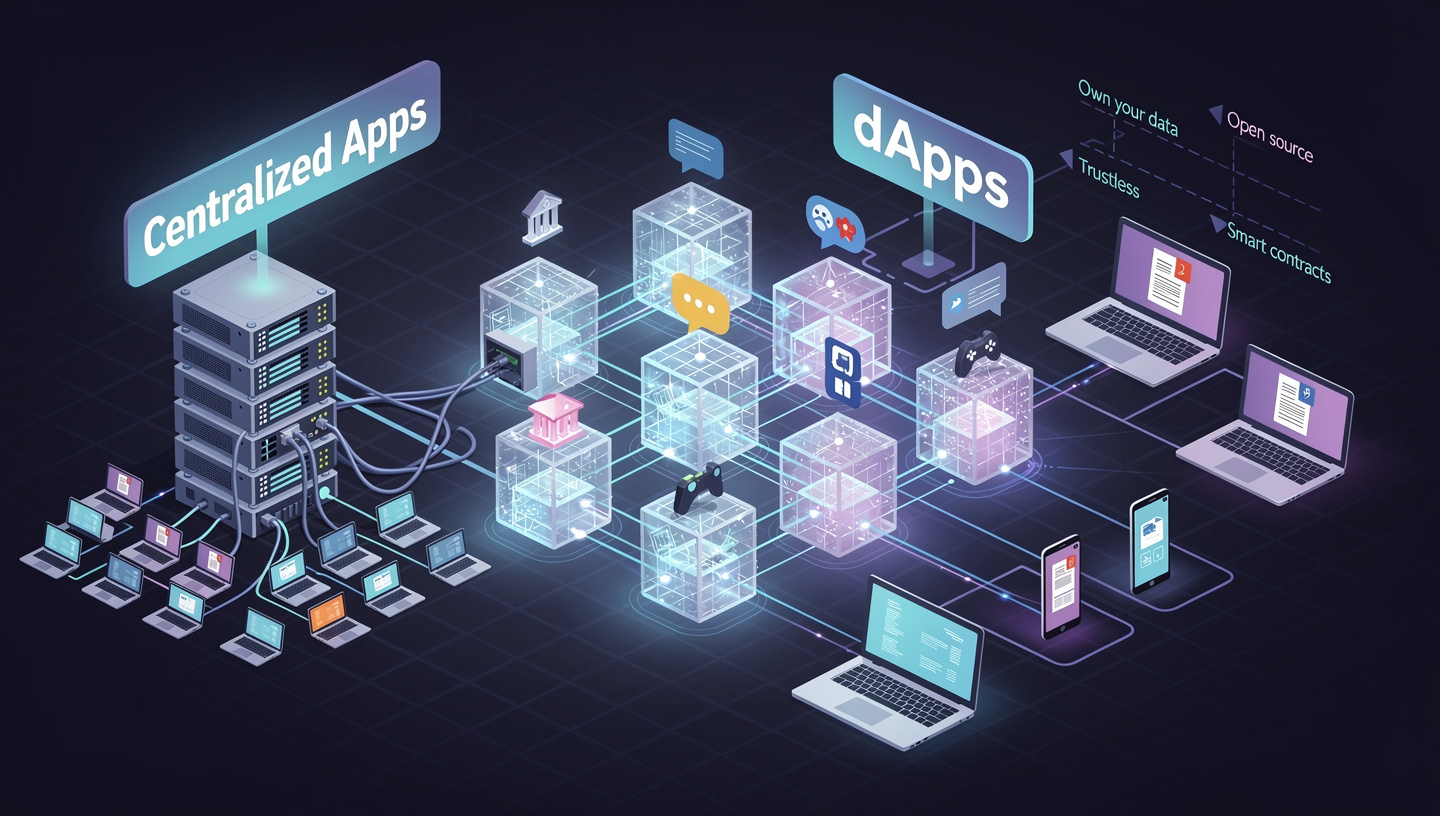
Cryptocurrency and blockchain technologies have evolved from obscure experiments into a multi-trillion-dollar global sector encompassing decentralized finance (DeFi), tokenized assets, non-fungible tokens (NFTs), decentralized autonomous organizations (DAOs), and sovereign digital currency initiatives. Since the publication of the Bitcoin: A Peer-to-Peer Electronic Cash System by Satoshi Nakamoto, the ecosystem has expanded from a single protocol to thousands of interoperable and competing networks, including Ethereum and Solana.
Yet the infrastructure layer has scaled faster than the educational layer. Code repositories proliferate, venture capital accelerates experimentation, and governments debate regulatory classification—but structured, high-quality crypto education remains uneven, fragmented, and frequently conflated with marketing. If the next decade of blockchain development depends on secure architecture, informed governance, and regulatory literacy, then scaling quality crypto education is not ancillary—it is foundational.
This article examines how to scale crypto education without degrading rigor. It defines what “quality” means in this context, analyzes current deficiencies, and proposes operational models for delivering high-integrity education at global scale.
1. Defining Quality in Crypto Education
Before addressing scale, one must define quality. In the crypto domain, quality education satisfies five criteria:
- Technical Accuracy – Concepts such as consensus algorithms, cryptographic primitives, tokenomics, and smart contract execution must be correctly described, grounded in peer-reviewed research or audited codebases.
- Contextual Depth – Learners must understand economic, legal, and governance dimensions—not just price speculation.
- Security Literacy – Risk management, private key custody, attack vectors, and smart contract vulnerabilities must be core components.
- Critical Thinking Orientation – Education must equip learners to evaluate whitepapers, token models, and claims independently.
- Ethical and Regulatory Awareness – Compliance frameworks, investor protection principles, and jurisdictional variations must be addressed.
Quality crypto education is not equivalent to trading tutorials. It is interdisciplinary, blending cryptography, distributed systems, monetary economics, and law.
2. The Structural Challenges of Scaling Crypto Education
2.1 Rapid Technological Evolution
Blockchain protocols iterate quickly. Network upgrades (e.g., hard forks), changes in token standards, and evolving layer-2 scaling mechanisms can render course material obsolete within months.
Educational content must therefore be:
- Modular and updatable.
- Version-controlled.
- Aligned with primary documentation rather than derivative commentary.
2.2 Information Asymmetry and Marketing Noise
Crypto markets incentivize narrative-driven content. Influencer ecosystems often blur lines between education and promotion. Scaling education without compromising integrity requires strict separation between curriculum and token marketing incentives.
2.3 Skill Stratification
Learners range from:
- Non-technical retail participants.
- Software engineers transitioning into Web3.
- Legal professionals specializing in digital assets.
- Institutional analysts.
A scalable system must accommodate varied entry points without diluting content for advanced participants.
2.4 Global Regulatory Fragmentation
Jurisdictions diverge significantly in digital asset treatment. Frameworks from the U.S. Securities and Exchange Commission differ from European frameworks under Markets in Crypto-Assets Regulation (MiCA). Education must incorporate comparative legal literacy without overwhelming beginners.
3. Core Domains of Crypto Education
Scaling quality requires clarity about domain segmentation. A comprehensive curriculum includes:
3.1 Cryptographic Foundations
- Hash functions (e.g., SHA-256).
- Public/private key cryptography.
- Digital signatures.
- Merkle trees.
- Zero-knowledge proofs.
Without cryptographic literacy, blockchain mechanics remain opaque abstractions.
3.2 Distributed Systems and Consensus
- Proof-of-Work.
- Proof-of-Stake.
- Byzantine Fault Tolerance.
- Network propagation and latency trade-offs.
Understanding consensus design clarifies decentralization trade-offs and attack surfaces.
3.3 Smart Contract Architecture
- Deterministic execution environments.
- Gas models.
- Upgrade patterns.
- Formal verification.
Educational modules should reference production platforms such as Ethereum for contextual grounding while maintaining vendor neutrality.
3.4 Tokenomics and Monetary Design
- Supply schedules.
- Inflation vs. deflation mechanics.
- Governance tokens.
- Utility vs. security classifications.
Learners must analyze token incentives critically rather than accepting marketing framing.
3.5 Security and Risk Management
- Custodial vs. non-custodial wallets.
- Smart contract exploits.
- Phishing vectors.
- Key management protocols.
Security literacy reduces systemic fragility.
3.6 Regulatory and Compliance Frameworks
- Securities classification tests.
- Anti-money laundering (AML) obligations.
- Know-your-customer (KYC) requirements.
- Tax implications.
Scalable education must reflect ongoing regulatory evolution without providing jurisdiction-specific legal advice.
4. Models for Scaling Crypto Education
4.1 Open-Access Modular Curricula
A scalable model leverages modular learning units:
- Micro-credentials in consensus design.
- Tokenomics certification tracks.
- Smart contract auditing bootcamps.
Each module should be independently updatable and interoperable.
4.2 University Partnerships
Traditional institutions provide credibility and peer review. Collaborations between blockchain foundations and universities can ensure:
- Research-driven course design.
- Academic oversight.
- Standardized assessment mechanisms.
However, institutional integration must avoid capture by specific token ecosystems.
4.3 On-Chain Credentialing
Blockchain-native credential systems can issue verifiable certificates. Properly implemented, this reduces fraud and enhances portability of qualifications.
4.4 Community-Led Education with Governance Oversight
DAOs can fund educational initiatives. Governance mechanisms must include:
- Transparent grant criteria.
- Curriculum review committees.
- Conflict-of-interest disclosures.
Scaling community-driven education requires robust governance safeguards.
5. Instructional Design for Technical Rigor at Scale
Scaling education without losing rigor requires instructional architecture:
5.1 Layered Complexity
Courses should adopt a progressive model:
- Layer 1: Conceptual overview.
- Layer 2: Technical deep dive.
- Layer 3: Applied lab exercises.
- Layer 4: Code review and audits.
This preserves accessibility while supporting advanced expertise.
5.2 Simulation and Sandboxed Environments
Learners require practical exposure without financial risk. Simulated testnets and local blockchain environments enable experimentation with:
- Smart contract deployment.
- Node operation.
- Validator participation.
5.3 Assessment Standardization
Objective evaluation methods include:
- Code-based assignments.
- Threat-modeling exercises.
- Protocol analysis reports.
- Tokenomics modeling.
Quality at scale depends on measurable competency, not passive video consumption.
6. Governance and Ethical Safeguards in Scaled Education
Scaling crypto education introduces governance risks:
- Sponsored curriculum bias.
- Token-funded academic distortion.
- Undisclosed financial incentives.
Mitigation strategies include:
- Mandatory funding disclosures.
- Curriculum audit trails.
- Independent review boards.
Ethical architecture is integral to educational credibility.
7. Technology Infrastructure for Delivery
7.1 Version-Controlled Learning Repositories
Educational material should mirror open-source practices:
- Git-based documentation.
- Transparent change logs.
- Peer-reviewed pull requests.
7.2 Multilingual Localization
Crypto adoption is global. Scaling quality requires translation workflows that preserve technical precision. Poor translation can distort cryptographic terminology.
7.3 Data-Driven Iteration
Analytics should measure:
- Completion rates.
- Assessment pass rates.
- Concept retention.
- Security comprehension benchmarks.
Scaling requires feedback loops, not static content.
8. Institutional and Industry Incentives
Why would institutions invest in quality crypto education?
- Reduced systemic risk.
- Improved developer competency.
- Regulatory clarity.
- Institutional capital confidence.
Industry players benefit from an informed user base less susceptible to scams and technical misinterpretation.
9. Measuring Success in Scaled Crypto Education
Success metrics include:
- Reduction in user-driven security incidents.
- Increased smart contract audit quality.
- Improved regulatory compliance among startups.
- Cross-disciplinary research output.
Education scaling must correlate with ecosystem resilience.
Conclusion: Education as Infrastructure
Blockchains scale through sharding, rollups, and optimized consensus. Education scales through structured design, institutional credibility, ethical governance, and technological infrastructure.
The crypto sector does not primarily suffer from lack of innovation; it suffers from uneven comprehension. Without scalable, high-quality education, technical complexity will outpace user competence, amplifying systemic risk.
Scaling quality crypto education is therefore not a marketing function, nor an onboarding funnel. It is infrastructure—human infrastructure—necessary for sustaining decentralized networks, regulatory legitimacy, and long-term technological viability.
If the next era of blockchain development is to mature beyond speculative cycles, it will be built not only on cryptographic primitives, but on disciplined, scalable, and ethically grounded education.