For centuries, income has been structurally rigid. Wages are paid on fixed cycles. Royalties are reconciled quarterly. Dividends are distributed at board discretion. Revenue shares depend on intermediaries, paperwork, and trust. Cash flow is episodic, opaque, and administratively heavy.
Crypto infrastructure challenges this paradigm at the protocol layer.
On programmable blockchains such as Ethereum and Solana, income is no longer merely transferred—it can be codified, automated, fractionated, streamed, redirected, collateralized, and recomposed in real time. Instead of treating income as a periodic event, crypto-native systems treat it as a programmable process.
“Programmable income streams” represent a structural innovation in financial architecture. They are not speculative tokens or yield gimmicks. They are deterministic, on-chain financial flows defined by code and executed autonomously. They alter how individuals, creators, DAOs, startups, and institutions receive, distribute, and manage value.
This article provides a comprehensive research-oriented examination of programmable income streams: their technical foundations, economic implications, design models, regulatory considerations, and long-term transformative potential.
1. Defining Programmable Income Streams
1.1 Conceptual Definition
A programmable income stream is a recurring or continuous financial flow encoded into a smart contract that executes according to predefined rules without reliance on discretionary intermediaries.
Core characteristics:
- Deterministic execution
- Real-time or scheduled streaming
- Composable with other protocols
- Transparent and verifiable
- Programmable distribution logic
In contrast to traditional standing bank orders or payroll systems, programmable income is not controlled by centralized institutions. It is enforced by blockchain consensus.
1.2 The Protocol Substrate
Programmable income streams depend on smart contract infrastructure pioneered by platforms like Ethereum, and later optimized on high-throughput networks including Solana and Avalanche.
Key enablers:
- Smart contracts (Turing-complete execution environments)
- Token standards (e.g., ERC-20 equivalents)
- Stablecoins
- Decentralized identity primitives
- Layer-2 scaling
Without programmable execution and persistent state, income automation cannot exist in trustless form.
2. From Transactions to Streams
2.1 Discrete Payments vs Continuous Finance
Traditional finance operates in discrete events:
- Salary → monthly
- Royalties → quarterly
- Dividends → annually
Crypto-native systems allow continuous settlement, sometimes called “money streaming.”
Instead of $3,000/month paid on the 1st, a worker could receive $0.069 per minute continuously.
This shift produces structural effects:
- Eliminates payment cliff risk
- Reduces working capital strain
- Enables instant stop/start logic
- Allows real-time performance-based compensation
2.2 Streaming Protocol Infrastructure
Early experiments in money streaming demonstrated feasibility on Ethereum-based infrastructure. Modern iterations operate across multiple chains and L2 networks.
Technically, a stream consists of:
- Sender address
- Recipient address
- Token type
- Flow rate (tokens per second)
- Duration or termination condition
Smart contracts maintain internal accounting, updating withdrawable balances continuously.
3. Architectural Patterns in Programmable Income
Programmable income streams are not monolithic. They can be structured through distinct architectural models.
3.1 Linear Streaming
Fixed rate over time.
Use cases:
- Payroll
- Subscription refunds
- Grants
- Contributor compensation
Characteristics:
- Predictable
- Transparent
- Low volatility
3.2 Conditional Streaming
Income flows triggered by conditions:
- Milestone completion
- Oracle-triggered data events
- Governance votes
- Performance metrics
This requires oracle integration and robust data feeds.
3.3 Revenue Share Splitting
Automated distribution of incoming funds among multiple stakeholders.
Example logic:
- 60% to creator
- 20% to development fund
- 10% to community treasury
- 10% to liquidity pool
This is particularly powerful in creator economies and DAO governance structures.
3.4 Recursive Streams
Streams that feed into yield protocols or collateral positions.
For example:
- Incoming stream auto-deposited into lending protocol
- Yield redirected into secondary stream
- Collateralized future income minted into stable liquidity
This composability transforms income into programmable capital infrastructure.
4. Economic Implications
4.1 Liquidity Transformation
Future income can be:
- Tokenized
- Discounted
- Collateralized
- Sold
Programmable income streams allow deterministic modeling of expected cash flow, enabling structured financial products.
This resembles securitization but without opaque balance sheets.
4.2 Risk Reduction Through Transparency
On-chain income logic is publicly verifiable.
Benefits:
- Reduced counterparty uncertainty
- Lower reconciliation costs
- Automated enforcement
- Immutable audit trails
The reduction of administrative overhead is not marginal—it is structural.
4.3 Time Preference Compression
Continuous income alters economic behavior:
- Reduced payday-induced volatility
- Improved micro-liquidity management
- Dynamic budgeting models
- Decreased reliance on short-term credit
This is particularly impactful in emerging markets where payday lending dominates.
5. Creator Economies and Programmable Royalties
Programmable income streams fundamentally reshape creator monetization.
5.1 Royalty Automation
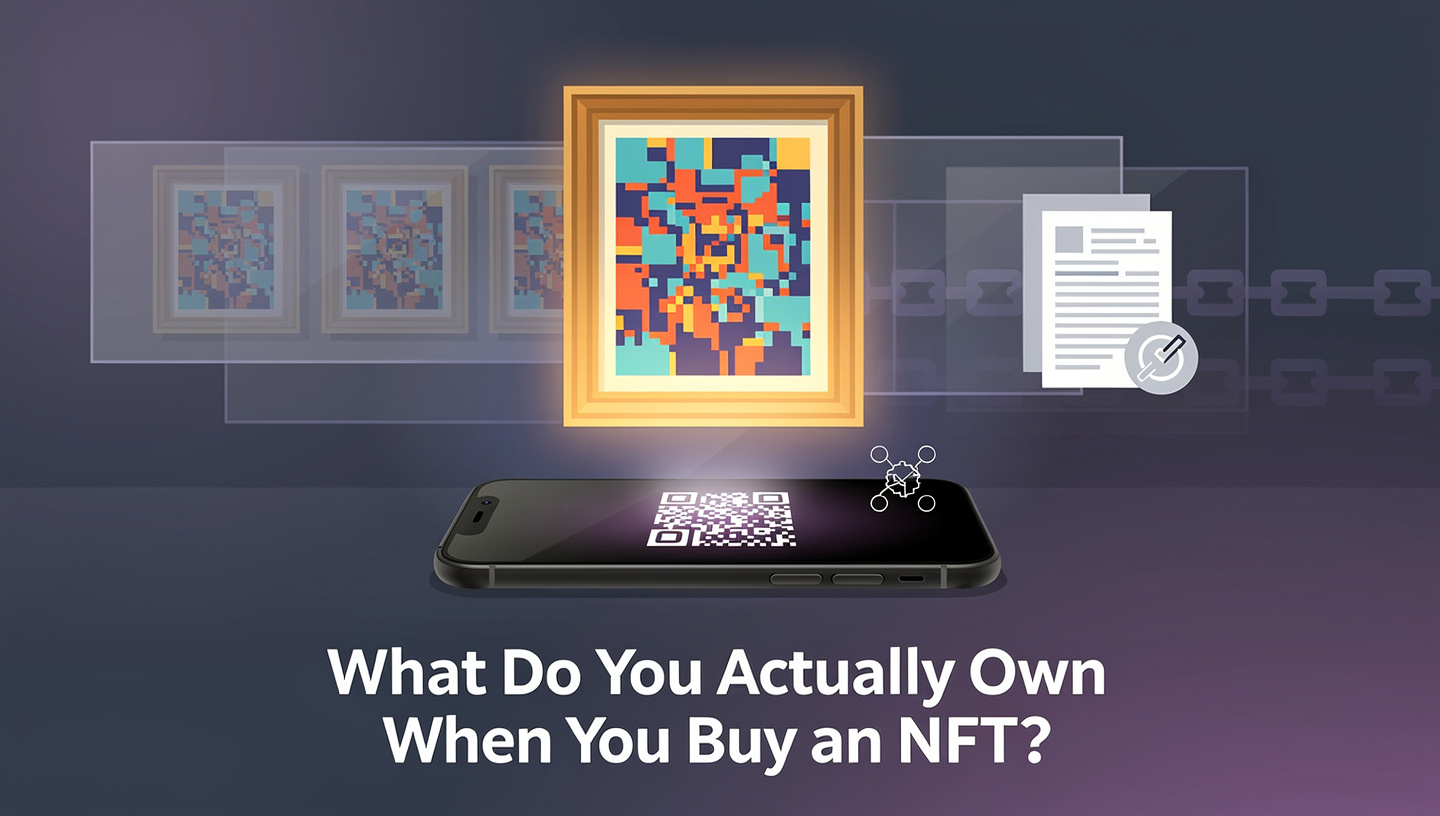
On NFT-enabled marketplaces, royalties can be embedded at mint time. Platforms leveraging token standards enforce royalty splits at each resale.
However, enforcement depends on marketplace compliance. Truly programmable royalty streams require protocol-level guarantees.
5.2 Fractional Ownership Models
Income-generating assets (music catalogs, digital art, subscription revenues) can be split among token holders.
Each token holder receives:
- Continuous proportional income
- Transparent accounting
- Automatic distribution
This removes manual royalty reporting structures.
6. DAO Compensation Infrastructure
Decentralized autonomous organizations operate without HR departments. Programmable income streams replace payroll operations.
6.1 Contributor Streams
DAOs can:
- Allocate budget
- Initiate streams
- Adjust rates via governance
- Terminate automatically upon proposal failure
This aligns incentives without bureaucratic overhead.
6.2 Treasury Automation
Incoming revenue can auto-route:
- Operations fund
- Risk reserve
- Ecosystem grants
- Governance staking pools
All governed by code.
7. Enterprise and B2B Applications
Programmable income streams are not limited to crypto-native startups.
7.1 Subscription Infrastructure
Instead of charging monthly upfront:
- Charge per-second usage
- Allow real-time cancellation
- Avoid disputes over billing cycles
This reduces churn friction.
7.2 Supplier Financing
Manufacturers receiving predictable streaming payments can collateralize them for working capital without bank intermediaries.
7.3 Cross-Border Settlement
On-chain streaming bypasses SWIFT delays and correspondent banking inefficiencies.
Stablecoin streams remove currency friction.
8. Stablecoins as the Settlement Layer
Programmable income streams rely heavily on stable digital currencies.
Major stablecoins such as USD Coin and Tether provide price stability necessary for income predictability.
Without stable units of account, streaming income would introduce unacceptable volatility for payroll or contractual obligations.
9. Security and Smart Contract Risk
Programmable income streams introduce new attack surfaces.
9.1 Smart Contract Vulnerabilities
Potential failures include:
- Reentrancy attacks
- Arithmetic overflow
- Oracle manipulation
- Governance capture
Formal verification and audits are essential.
9.2 Key Management
If recipients lose private keys, income becomes inaccessible. Social recovery wallets and multi-sig solutions mitigate this risk.
10. Regulatory and Legal Considerations
Programmable income intersects with:
- Employment law
- Taxation frameworks
- Securities regulations
- Anti-money laundering compliance
Key challenges:
- Defining employment relationships
- Determining tax timing for continuous income
- Classification of tokenized revenue shares
Jurisdictions vary widely in interpretation.
11. Composability: The Meta-Layer Advantage
The defining strength of crypto infrastructure is composability.
Income streams can:
- Fund liquidity pools
- Collateralize lending positions
- Trigger automated insurance
- Participate in DAO governance
Each stream becomes a programmable building block in a larger financial architecture.
This is not incremental innovation. It is financial Lego.
12. Macroeconomic Implications
12.1 Continuous GDP Flows
If large-scale payroll systems adopt streaming models, macroeconomic liquidity patterns shift:
- Smoother consumption curves
- Reduced paycheck shock cycles
- Increased financial resilience
12.2 Disintermediation of Financial Services
Banks earn fees from:
- Payroll processing
- Reconciliation
- Cross-border settlement
Programmable income eliminates many of these functions at protocol level.
13. Challenges to Mass Adoption
Despite its structural advantages, programmable income faces barriers:
- UX complexity
- Wallet onboarding friction
- Regulatory uncertainty
- Volatility concerns
- Smart contract literacy gaps
Until interfaces abstract technical complexity, adoption remains niche.
14. Future Directions
14.1 AI-Integrated Income Logic
Smart contracts can integrate AI-generated performance metrics, enabling:
- Dynamic salary adjustments
- Automated contractor evaluation
- Adaptive revenue splits
14.2 Identity-Linked Streams
Decentralized identity frameworks allow income streams tied to verified credentials without centralized databases.
14.3 Tokenized Human Capital Markets
Future income could be fractionalized and sold via transparent on-chain markets, creating new capital formation mechanisms.
Ethical governance will determine whether this becomes empowerment or exploitation.
15. Strategic Outlook
Programmable income streams are not a peripheral crypto feature. They represent a foundational shift:
- From periodic settlement to continuous finance
- From trust-based agreements to cryptographic enforcement
- From opaque accounting to real-time transparency
- From static salaries to dynamic programmable cash flow
The evolution parallels the shift from analog communication to packetized internet data. Once value flows are modular and programmable, financial systems become software-native.
The transformation is not immediate. It is infrastructural.
But as blockchain scalability improves and stablecoin frameworks mature, programmable income will move from experimental DAO tooling to mainstream financial architecture.
Conclusion: Income as Code
Finance historically relied on institutions to intermediate trust. Programmable income streams replace institutional enforcement with cryptographic determinism.
The innovation is not about speculation. It is about execution.
When income becomes programmable, financial relationships become composable. Labor contracts, royalty structures, subscriptions, and revenue shares transition from static agreements to executable logic.
This is the quiet revolution of crypto infrastructure: not creating new money, but rewriting how money moves.
In the long arc of financial history, programmable income streams may prove more transformative than token speculation. They redefine the nature of cash flow itself—continuous, autonomous, and encoded.
That is not a feature. It is a rearchitecture of economic time.