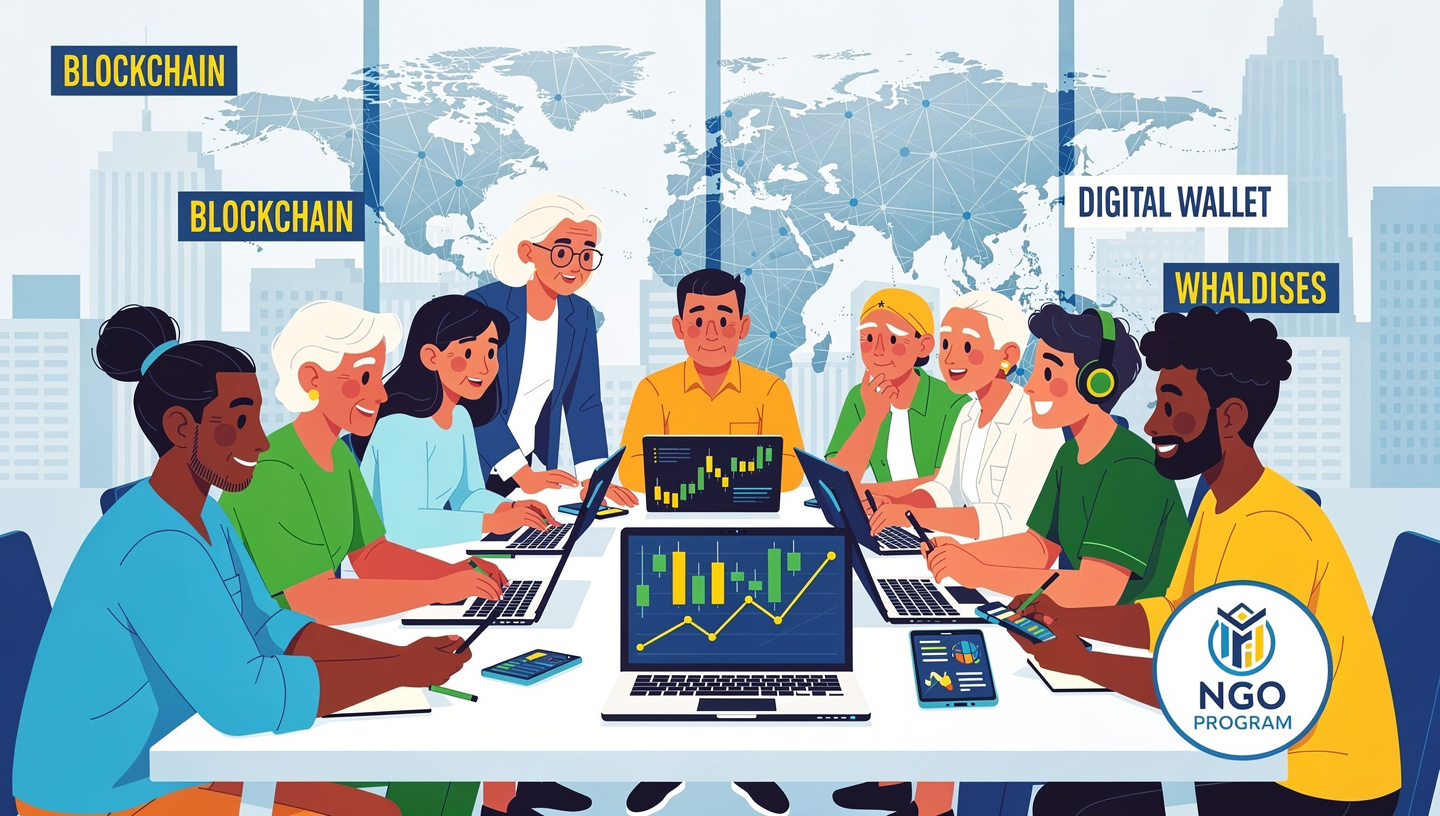
In the wake of rapid digital transformation, financial literacy has become a cornerstone of economic inclusion and empowerment. Traditional financial education, long centered on banking, savings, and credit, is no longer sufficient in an era where decentralized finance (DeFi), digital wallets, and blockchain technology are reshaping how people interact with money. At the forefront of this paradigm shift are non-governmental organizations (NGOs) that integrate cryptocurrency education into their financial literacy programs.
This article explores the intersection of nonprofit initiatives and cryptocurrency education, examining how NGOs globally are helping individuals—particularly underserved populations—navigate the complexities of digital finance. We will discuss the motivations behind these initiatives, the curricula and pedagogical approaches used, measurable outcomes, challenges faced, and future trends. Ultimately, this research reveals that teaching financial literacy through the lens of crypto is not merely about understanding Bitcoin or Ethereum; it’s about fostering digital empowerment and long-term economic resilience.
1. Understanding the Need for Crypto-Integrated Financial Literacy
1.1 The Global Financial Literacy Gap
Despite advances in economic inclusion, financial literacy remains alarmingly low worldwide. According to global financial literacy surveys, only about one in three adults can correctly answer basic financial questions regarding inflation, interest rates, and diversification. This gap is more pronounced in developing regions where formal education and access to financial services are limited.
Traditional financial literacy efforts have made progress, but they often fail to account for the digitization of money—an oversight that underprepares individuals for emerging financial ecosystems.
1.2 Cryptocurrency: A New Frontier in Finance
Cryptocurrencies—digital assets built on decentralized ledger technologies like blockchain—have rapidly transitioned from fringe innovation to mainstream finance. With over billions of dollars in market capitalization and increasing institutional adoption, understanding digital currencies and blockchain systems is becoming essential. However, the complexity of these technologies poses significant barriers to comprehension, even for educated adults.
This convergence of low financial literacy and the rising prominence of crypto markets makes a compelling case for integrating crypto education into broader financial literacy initiatives.
2. The Role of NGOs in Financial Education
2.1 Why Nonprofits Are Well-Positioned
NGOs have long played a crucial role in advancing financial literacy, especially in vulnerable and traditionally excluded populations. These organizations operate with missions rooted in equity, community development, and education—not profit. This focus enables them to tailor programs that are accessible, culturally relevant, and designed around learners’ needs.
When it comes to digital finance and cryptocurrency, NGOs are uniquely positioned to:
- Identify underserved communities with limited access to fintech resources.
- Deliver unbiased education, unencumbered by commercial product incentives.
- Collaborate with local partners to contextualize curriculum for specific populations.
- Pilot and iterate educational models before scaling.
2.2 Case Examples of NGOs Embracing Crypto Literacy
Across Africa, Asia, Europe, and Latin America, various nonprofits have launched crypto literacy initiatives. These range from workshops aimed at youth and women entrepreneurs to broad public educational campaigns about blockchain basics, wallet security, and decentralized finance.
Some programs focus on equipping participants with the skills to:
- Use digital wallets and manage private keys securely.
- Understand the differences between centralized financial systems and decentralized alternatives.
- Evaluate investments with critical thinking, avoiding scams and fraud.
- Leverage blockchain tools for remittances and cross-border transactions.
3. Core Components of Effective Crypto Education Programs
3.1 Curriculum Design
A well-structured crypto education curriculum addresses both foundational financial concepts and advanced blockchain mechanics. Successful programs often organize content into layered modules, such as:
3.1.1 Financial Fundamentals
Before diving into crypto, learners revisit core financial literacy topics:
- Budgeting, saving, and investing basics
- Risk management and diversification
- Credit scores and debt
- Traditional vs. digital financial systems
3.1.2 Crypto and Blockchain Concepts
Once foundational knowledge is established, programs introduce digital finance:
- Introduction to blockchain technology and decentralized networks
- Cryptocurrencies vs. tokens: use cases and characteristics
- Smart contracts and decentralized applications (dApps)
- The role of miners, validators, and consensus mechanisms
3.1.3 Practical Skills
Hands-on learning is essential, and many programs include interactive elements:
- Setting up and using crypto wallets (non-custodial)
- Securing private keys and understanding security best practices
- Using decentralized exchanges (DEXs) and peer-to-peer (P2P) platforms
- Navigating mobile apps for crypto payments
3.2 Pedagogical Approaches
To effectively teach complex digital concepts, NGOs use a wide range of instructional strategies:
3.2.1 Participatory Workshops
Interactive sessions encourage learners to engage, ask questions, and practice skills in real time.
3.2.2 Peer-Led Learning
Experienced participants help facilitate, fostering local ownership and community trust.
3.2.3 Blended Learning
Programs combine in-person sessions with digital resources, online tutorials, and mobile learning modules.
3.2.4 Gamification
Learning platforms sometimes use gamified elements—such as quizzes, badges, and simulations—to enhance engagement and retention.
4. Impact and Outcomes
4.1 Measuring Success
Impact evaluation is critical for understanding the efficacy of crypto literacy programs. NGOs employ a mixture of quantitative and qualitative measures, including:
- Knowledge assessments before and after program participation
- Surveys tracking changes in attitudes toward financial management
- Behavioral indicators, such as wallet usage, savings patterns, and adoption of new financial services
- Longitudinal studies that measure financial outcomes over time
4.2 Documented Benefits
Across varied contexts, programs that integrate crypto into financial literacy efforts have shown promising results:
4.2.1 Increased Financial Agency
Participants report greater confidence managing digital financial tools and making informed decisions.
4.2.2 Access to New Economic Opportunities
Crypto education opens doors to:
- Micro-entrepreneurship through decentralized marketplaces.
- Cost-effective remittance options.
- Participation in innovation ecosystems, including digital freelancing and tokenized asset markets.
4.2.3 Reduction in Vulnerability to Scams
With targeted awareness strategies, learners are better equipped to recognize and avoid crypto fraud and phishing threats.
5. Challenges in Educating About Crypto
5.1 Technological Barriers
Digital literacy is uneven globally. Limited internet access, low smartphone penetration, and infrastructure gaps hinder participation in crypto education.
5.2 Regulatory Uncertainty
Cryptocurrency remains subject to evolving legal frameworks. NGOs must navigate a patchwork of regulations regarding digital assets, which can influence curriculum content and program delivery.
5.3 Mistrust and Misconceptions
Public perceptions of cryptocurrency are often shaped by sensational headlines, scams, and market volatility. NGOs face the dual challenge of teaching technical concepts while also building trust and dispelling misinformation.
5.4 Sustainability and Funding
Securing long-term funding for education initiatives is a perennial challenge for nonprofits. Adding crypto components—often viewed as niche or experimental—can complicate fundraising unless aligned with broader financial inclusion goals.
6. Partnerships Driving Innovation
6.1 Collaboration With Tech Organizations
NGOs frequently partner with technology companies, blockchain foundations, and educational platforms to access tools, expertise, and content development resources.
6.2 Local Government Involvement
Some programs work with municipal authorities or public education systems to integrate digital finance literacy into formal curricula.
6.3 Intersection With Gender and Development Goals
Specialized programs target women, youth, and marginalized groups to address the compound effects of economic exclusion and digital divides.
7. Future Trends and Opportunities
7.1 Web3 and Decentralized Learning Ecosystems
Emerging Web3 educational platforms—leveraging blockchain credentials and token incentives—could expand the accessibility and scalability of crypto education initiatives.
7.2 AI-Driven Personalized Learning
Artificial intelligence stands poised to deliver adaptive learning experiences tailored to learners’ proficiency levels and learning styles.
7.3 Tokenized Incentives for Financial Learning
Some models experiment with token-based rewards that incentivize learners for completing modules, demonstrating mastery, or applying knowledge in practical settings.
7.4 Cross-Sector Integration
Crypto literacy will increasingly intersect with:
- Environmental sustainability (e.g., learning about energy usage in blockchain networks)
- Digital identity frameworks
- Smart city and public service applications
Conclusion
NGOs teaching financial literacy with a crypto lens are pioneering educational interventions designed to prepare individuals for a rapidly changing financial landscape. By fusing foundational financial principles with digital asset knowledge, these programs empower learners to participate meaningfully in modern economic systems—whether through better money management, access to new forms of value exchange, or informed engagement with emerging technologies.
The importance of such initiatives cannot be overstated. As global finance continues to evolve, digital and decentralized systems will play an increasingly central role. Ensuring that all individuals—not just early adopters or technologists—are equipped to navigate this evolution is both a practical necessity and a moral imperative. NGOs, with their mission-driven focus and grassroots reach, are uniquely positioned to lead this critical educational movement.