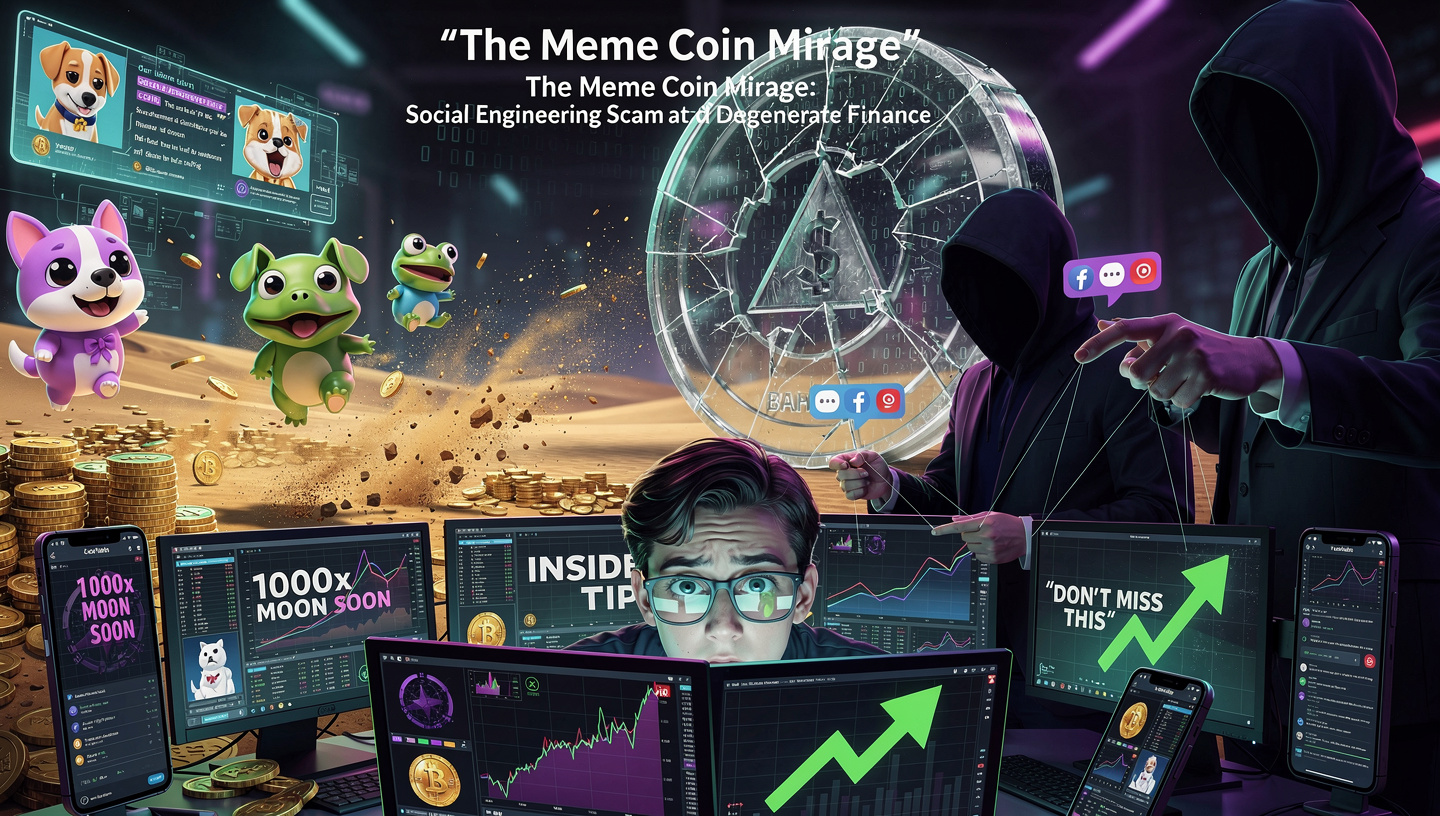
Most discussions about meme coins collapse into the same lazy axis:
“It’s hype.”
“It’s community.”
“It’s luck.”
All three are intellectually insufficient.
Meme coins are not accidents. They are not random. And they are definitely not brandless.
The reason most meme coins fail is not because the space is irrational — it’s because their branding is.
Branding in meme coins is not visual identity.
Not logos.
Not mascots.
Not funny names.
Branding is the compression algorithm that turns attention into belief.
This article dissects meme coin branding as a system — not a vibe — and explains why only a microscopic fraction of projects manage to imprint themselves into collective crypto memory while the rest dissolve into liquidity dust.
If you still think meme coins succeed because of “virality,” you are already several layers behind the market.
1. Meme Coins Are Not Products — They Are Symbols
This is the first filter most founders fail.
A meme coin is not selling utility.
It is not selling yield.
It is not selling roadmap promises.
It is selling symbolic alignment.
People do not buy meme coins because they “believe in the tech.”
They buy because the coin represents something they want to signal — irony, rebellion, nihilism, insider status, or temporal dominance.
This is why traditional branding logic fails when applied directly.
In Web2, branding answers:
“Why should I choose you over alternatives?”
In meme coins, branding answers:
“What does owning this say about me right now?”
That distinction is fatal if misunderstood.
A meme coin brand is not a promise of future value.
It is a statement of present identity.
2. The Attention-to-Belief Funnel (ABF): The Only Funnel That Matters
Every successful meme coin follows the same invisible funnel:
Stage 1: Pattern Interruption
The brand must violate expectations immediately.
Not clever.
Not polished.
Interruptive.
Names that sound wrong.
Visuals that feel unfinished.
Narratives that feel too blunt.
If it blends in, it dies.
Stage 2: Interpretive Ambiguity
The brand must resist full explanation.
People need just enough clarity to recognize it — but not enough to fully define it.
Ambiguity forces interpretation.
Interpretation creates ownership.
Ownership creates defense.
This is why over-explaining a meme coin is lethal.
Stage 3: Social Proof Before Rational Proof
Belief does not come from whitepapers.
It comes from who else is paying attention.
Screenshots outperform arguments.
Momentum outperforms logic.
The brand must appear inevitable before it appears reasonable.
Stage 4: Myth Lock-In
Once belief forms, the brand must crystallize into myth.
Not history.
Not facts.
Myth.
Myth is what survives market cycles.
3. Why Most Meme Coin Branding Fails Instantly
Let’s be precise.
Mistake #1: Treating Branding as Decoration
Most projects think branding is a layer added after token creation.
Wrong.
In meme coins, branding is the product.
If the name, symbol, and narrative cannot carry the entire market cap on their own, nothing else matters.
Mistake #2: Over-Designing
High-effort visuals signal corporate intent.
Corporate intent signals exit liquidity.
Successful meme coin branding looks accidental — even when it’s not.
Rough edges increase credibility.
Mistake #3: Copying Surface-Level Virality
Forking a dog.
Forking a frog.
Forking a joke.
This creates recognition without resonance.
Resonance requires contextual relevance, not visual similarity.
Mistake #4: Talking Too Much
The more a project explains itself, the weaker the brand becomes.
Strong meme brands let the market explain them for the project.
4. Branding as Compression: Saying More by Saying Less
The strongest meme brands operate like high-density files.
They compress:
- Cultural references
- Market sentiment
- Emotional posture
- Tribal cues
…into a single symbol.
A good meme coin brand can be understood in under two seconds and debated for months.
That asymmetry is intentional.
If your branding requires a Medium article to “get it,” it’s already dead.
5. The Role of Timing: Branding Is Temporal, Not Eternal
Traditional brands aim for longevity.
Meme coin brands aim for perfect timing.
A meme coin brand must align with:
- Market mood
- Collective fatigue or euphoria
- Cultural moments
- Platform-native humor cycles
This is why reviving old memes usually fails.
The brand must feel inevitable now, not clever historically.
Timing is not luck.
It is sensitivity.
6. Community Is Not the Brand — Community Is the Amplifier
This is another common misbelief.
Community does not create the brand.
The brand creates the community.
People rally around clarity, not chaos.
A strong meme coin brand gives holders:
- Language
- Tone
- Behavioral boundaries
Without that, “community” becomes noise, not signal.
7. Meme Coin Branding vs. Utility Coin Branding
Let’s draw the line clearly.
| Utility Coin Branding | Meme Coin Branding |
|---|---|
| Value-driven | Identity-driven |
| Roadmap-focused | Moment-focused |
| Rational framing | Emotional compression |
| Long explanation | Instant recognition |
| Consistency | Strategic inconsistency |
Applying utility-brand logic to meme coins is category error.
8. The Uncomfortable Truth: Most Meme Coins Should Never Brand Themselves
Here is the part most won’t say.
Not every meme deserves a coin.
Not every joke deserves liquidity.
Not every viral idea deserves permanence.
Great meme coin branding is selective.
It filters participants rather than welcoming everyone.
If your brand tries to be liked by all, it will be defended by none.
9. What “Real” Meme Coin Branding Actually Looks Like
Real meme coin branding is:
- Minimal but intentional
- Culturally fluent
- Resistant to explanation
- Aggressively specific
- Unapologetically temporal
It does not chase legitimacy.
It forces recognition.
And once recognition locks, belief follows.
Branding Is the Only Moat Meme Coins Have
There is no IP moat.
No tech moat.
No execution moat.
The only defensible asset in a meme coin is collective belief — and belief is engineered through branding.
Not branding as aesthetics.
Not branding as marketing.
Branding as cognitive architecture.
Most meme coins fail because they try to manufacture hype.
The few that win manufacture meaning.