Token launches have evolved from experimental crowdfunding mechanisms into sophisticated capital formation events with global reach. Initial coin offerings (ICOs), initial exchange offerings (IEOs), token generation events (TGEs), and decentralized finance (DeFi) token distributions now operate at the intersection of securities law, commodities regulation, anti–money laundering frameworks, tax law, consumer protection, and cross-border compliance regimes.
Despite technological innovation, the legal architecture governing token launches remains rooted in legacy financial regulation. Regulators across jurisdictions—most prominently the U.S. Securities and Exchange Commission (SEC), the Commodity Futures Trading Commission (CFTC), the Financial Crimes Enforcement Network (FinCEN), the European Securities and Markets Authority (ESMA), and national supervisory authorities in Asia—have consistently emphasized that token issuers are not exempt from established legal obligations simply because they rely on blockchain infrastructure.
The result is a high-risk regulatory environment. Founders frequently underestimate the legal exposure inherent in token design, distribution strategy, promotional messaging, exchange listings, and secondary market dynamics. Enforcement actions have demonstrated that token launches can trigger securities violations, unregistered broker-dealer activity, anti-money laundering breaches, market manipulation allegations, and even criminal liability.
This article provides a comprehensive, research-oriented analysis of the legal risks of token launches. It examines securities classification, disclosure obligations, jurisdictional conflicts, AML/KYC exposure, tax implications, governance risks, exchange liabilities, enforcement trends, and mitigation strategies. The objective is precision: to clarify where legal risk arises, how regulators analyze token structures, and how issuers can assess exposure before launch.
1. Securities Law Risk: The Central Legal Fault Line
1.1 The Securities Classification Problem
The most consequential legal risk of any token launch is classification as a security. In the United States, the analytical framework is rooted in the test articulated in SEC v. W.J. Howey Co., commonly referred to as the Howey Test. A digital asset is considered an “investment contract” if it involves:
- An investment of money
- In a common enterprise
- With a reasonable expectation of profits
- Derived from the efforts of others
The SEC has applied this test expansively to token offerings. Enforcement actions against projects such as Telegram Group Inc. and Ripple Labs Inc. illustrate that token distribution models—regardless of technological framing—may satisfy investment contract criteria.
1.2 The Problem of “Utility Token” Labeling
Merely labeling a token as a “utility token” does not immunize it from securities classification. Regulators evaluate substance over form. If token purchasers reasonably expect appreciation based on promoter efforts, the economic reality may override functional descriptions.
Risk factors include:
- Pre-functional networks at time of sale
- Marketing emphasizing token price appreciation
- Concentrated insider holdings
- Promises of exchange listings
- Revenue-sharing mechanics
1.3 Secondary Market Trading
Even if a token launch attempts compliance via exemptions (e.g., Regulation D in the U.S.), secondary market trading can reintroduce securities risk. The SEC has taken the position that tokens initially sold as securities may remain securities when resold.
This creates cascading liability exposure for:
- Token issuers
- Exchanges listing the asset
- Market makers
- Influencers promoting liquidity
2. Global Regulatory Fragmentation
2.1 European Union: MiCA Framework
The European Union adopted the Markets in Crypto-Assets Regulation (MiCA), a harmonized framework governing crypto-asset issuance and service providers. While MiCA provides regulatory clarity, it imposes:
- Whitepaper disclosure requirements
- Authorization for crypto-asset service providers
- Market abuse provisions
- Stablecoin reserve rules
Token issuers targeting EU investors must assess whether their token qualifies as:
- Asset-referenced token
- E-money token
- Utility token under MiCA definitions
Non-compliance can result in administrative sanctions and cross-border enforcement coordination.
2.2 Asia: Divergent Approaches
Jurisdictions such as Singapore and Hong Kong have developed licensing regimes for virtual asset service providers. In Singapore, oversight is conducted by the Monetary Authority of Singapore under the Payment Services Act.
Meanwhile, certain jurisdictions have imposed strict restrictions or outright bans on token sales. A token launch accessible online can inadvertently trigger liability in jurisdictions where token distribution is prohibited.
2.3 Extraterritorial Reach
U.S. securities law applies extraterritorially in certain circumstances, particularly when U.S. investors participate. Geo-blocking measures do not guarantee insulation from enforcement if U.S. persons access the offering.
3. AML, KYC, and Sanctions Exposure
Token launches frequently involve cross-border fundraising in pseudonymous environments. This raises significant anti-money laundering and sanctions compliance risks.
In the United States, FinCEN guidance treats many token issuers as money transmitters if they engage in exchange or transmission of virtual currency. This may require:
- Registration as a Money Services Business (MSB)
- Implementation of AML programs
- Suspicious activity reporting
- Customer identification procedures
Failure to implement adequate controls exposes issuers to civil and criminal penalties. Additionally, sanctions administered by the Office of Foreign Assets Control (OFAC) create strict liability for transactions involving sanctioned persons or jurisdictions.
4. Market Manipulation and Insider Trading Risk
4.1 Tokenomics and Artificial Scarcity
Tokenomics structures—vesting schedules, burn mechanisms, liquidity mining—can inadvertently resemble price manipulation schemes if not transparently disclosed.
Regulators examine:
- Insider allocations
- Lock-up arrangements
- Coordinated trading activity
- Wash trading
Exchanges have been scrutinized for facilitating manipulative trading patterns, particularly in low-liquidity tokens.
4.2 Insider Trading in Digital Assets
Even absent explicit statutory frameworks, enforcement agencies have pursued insider trading cases involving crypto assets. Confidential knowledge of exchange listings or protocol upgrades may constitute material non-public information.
Projects lacking internal compliance policies are particularly exposed.
5. Disclosure and Misrepresentation Liability
Marketing materials used in token launches create substantial liability risk. Whitepapers, roadmaps, and promotional content may be treated as offering documents under securities law.
Misrepresentation risk arises from:
- Overstated technical capabilities
- Undisclosed token allocations
- Unrealistic financial projections
- Misleading partnership claims
Fraud liability may attach under Rule 10b-5 in the U.S. if material misstatements or omissions influence investor decisions.
6. Exchange Listing and Broker-Dealer Risk
Centralized exchanges listing tokens face independent regulatory exposure. If a token is later deemed a security, exchanges may be accused of operating unregistered securities exchanges.
The SEC’s enforcement posture against certain trading platforms reflects this risk. Exchanges may be required to register as national securities exchanges or alternative trading systems if they list securities tokens.
Token issuers relying on exchange listings as part of launch strategy must evaluate whether those exchanges operate in compliant regulatory frameworks.
7. Taxation Risks in Token Launches
Token issuance events generate complex tax consequences for:
- The issuing entity
- Founders
- Early contributors
- Token purchasers
In many jurisdictions, proceeds from token sales may be treated as income at time of receipt. Conversely, token distributions (airdrops, staking rewards, liquidity incentives) may constitute taxable income for recipients.
Improper accounting for token issuance proceeds has resulted in audits and penalties. Projects operating through foundations or offshore entities are not immune from scrutiny.
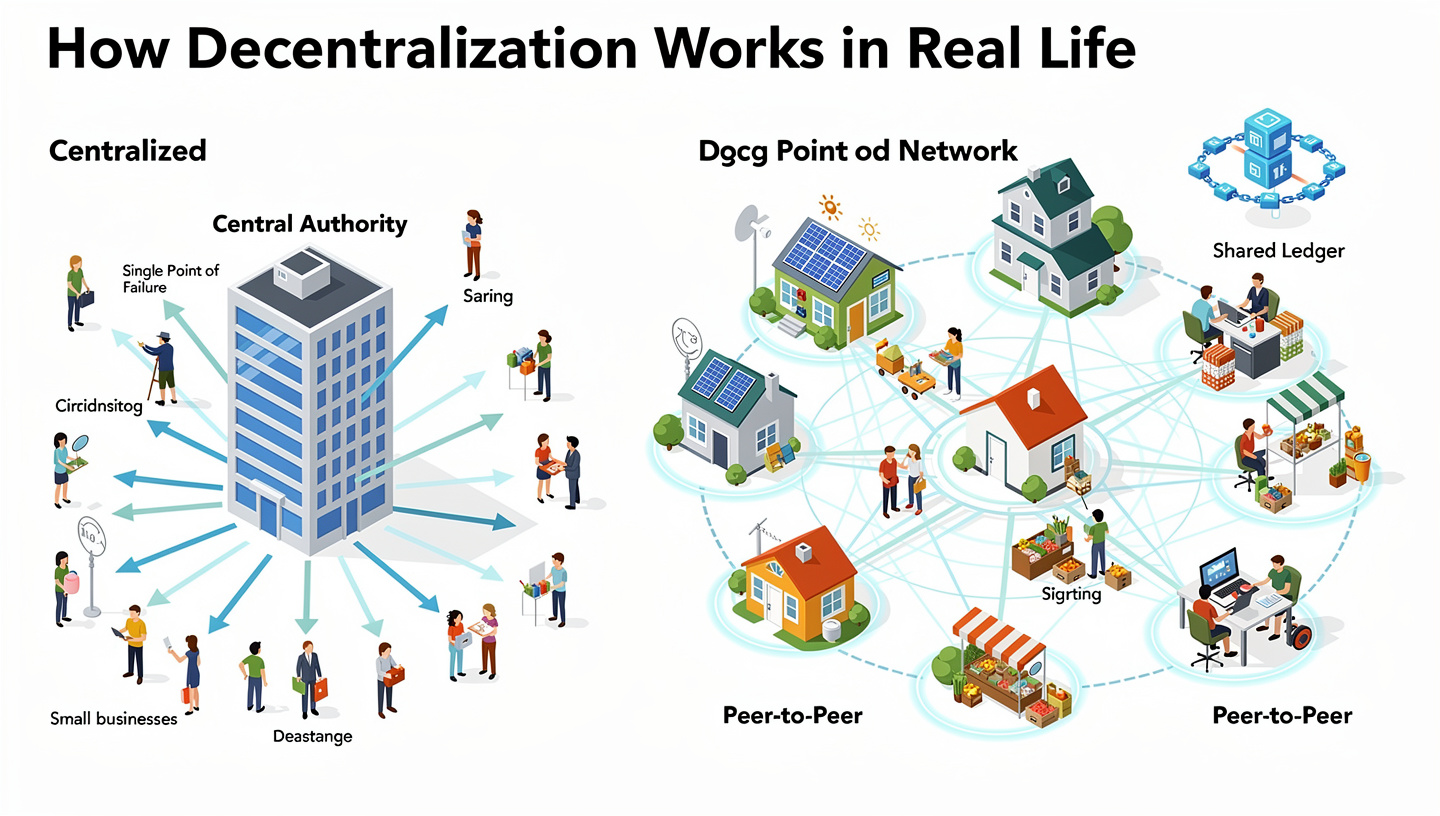
8. Governance and Decentralization Claims
Many projects argue that decentralization mitigates regulatory risk. However, regulators examine factual control rather than marketing language.
Factors indicating continued centralization:
- Concentrated token ownership
- Core team governance authority
- Admin keys controlling protocol functions
- Foundation-managed treasury
In enforcement actions, agencies have rejected decentralization arguments where core developers maintained significant influence.
9. Civil and Criminal Enforcement Trends
Recent enforcement actions demonstrate escalating scrutiny:
- Civil penalties and disgorgement orders
- Injunctions preventing token distribution
- Officer and director bars
- Criminal charges for fraud and conspiracy
The Department of Justice has pursued cases involving fraudulent token offerings and market manipulation schemes. Liability may attach to founders, developers, promoters, and even third-party advisors.
10. Private Litigation Risk
Beyond regulatory enforcement, token launches face class action exposure. Plaintiffs have alleged:
- Sale of unregistered securities
- Fraudulent misrepresentation
- Consumer protection violations
- Breach of fiduciary duty
Litigation can persist for years, imposing significant legal costs even absent regulatory penalties.
11. DeFi Token Launches: Additional Complexity
Decentralized finance introduces further complications:
- Governance tokens may confer profit participation
- Liquidity incentives may resemble investment schemes
- Automated market makers blur the line between issuer and exchange
Protocols operating without a central corporate entity still face scrutiny if identifiable developers or foundations coordinate launch activities.
12. Risk Mitigation Strategies
Legal risk cannot be eliminated, but it can be managed through disciplined design and compliance planning.
12.1 Pre-Launch Legal Analysis
Comprehensive legal review should include:
- Securities classification memorandum
- Jurisdictional analysis
- AML compliance framework
- Tax structuring evaluation
12.2 Structured Distribution Models
Some projects utilize:
- Private placements under exemptions
- Delayed token release models
- Gradual decentralization roadmaps
- Geofencing for restricted jurisdictions
Each strategy carries trade-offs between liquidity and regulatory exposure.
12.3 Transparent Disclosures
Clear documentation reduces fraud risk. Whitepapers should avoid speculative language and disclose:
- Token allocation breakdown
- Governance rights
- Technical limitations
- Risk factors
13. The Strategic Reality: Regulation as Design Constraint
Token launches are no longer regulatory gray areas. They are high-visibility financial events subject to multi-agency oversight. Legal compliance is not a post-launch adjustment; it is a design constraint shaping tokenomics, governance, and distribution architecture.
Projects that treat compliance as peripheral incur structural vulnerability. Those that integrate legal analysis into product architecture reduce enforcement exposure and improve institutional credibility.
Conclusion
Token launches sit at the convergence of innovation and regulation. The legal risks are multidimensional: securities classification, AML exposure, tax liability, market manipulation, misrepresentation, cross-border enforcement, exchange compliance, and private litigation.
Regulators have signaled a consistent principle: digital assets are not exempt from financial law. Issuers must analyze economic substance, not technological framing.
A token launch is not merely a technical milestone—it is a regulated capital markets event. Without rigorous legal structuring, the risks extend beyond fines to operational shutdowns, reputational damage, and criminal liability.
In a maturing crypto ecosystem, the projects that endure will be those that treat legal architecture with the same seriousness as protocol security.