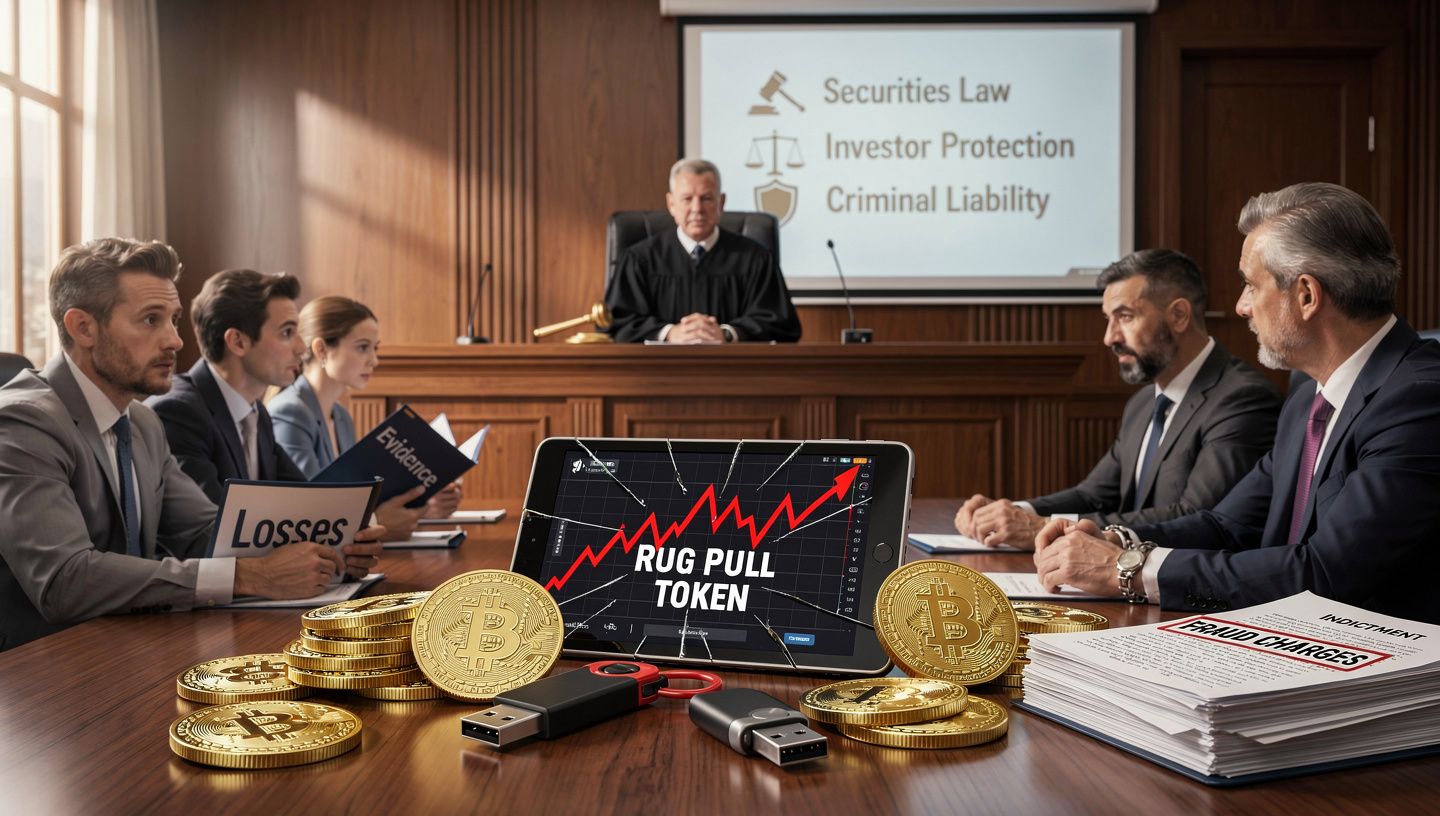
In decentralized finance, trust is often displaced by code. Smart contracts execute automatically, tokens trade globally within seconds, and project founders can raise millions without traditional intermediaries. Yet this technological efficiency has also enabled one of the most pervasive forms of crypto misconduct: the rug pull.
A rug pull occurs when developers or insiders of a crypto project abruptly extract liquidity, abandon the project, or manipulate token mechanics in a manner that destroys investor value. While the term originated as community slang, regulators, prosecutors, and courts now treat many rug pulls as classic fraud—repackaged in blockchain form.
This article provides a comprehensive, research-oriented analysis of the legal consequences of rug pulls. It examines how different jurisdictions classify rug pulls, which civil and criminal liabilities arise, how enforcement agencies build cases, and what victims can realistically recover. It also evaluates emerging regulatory frameworks and compliance strategies to mitigate risk.
The core conclusion is clear: despite the decentralized veneer of crypto infrastructure, rug pulls are rarely beyond the reach of the law.
1. What Is a Rug Pull? Legal Characterization
1.1 Technical Mechanics
A rug pull typically manifests in one of three structural forms:
- Liquidity withdrawal: Developers remove liquidity from decentralized exchanges such as Uniswap, causing token price collapse.
- Mint or dump scheme: Insiders mint excessive tokens or dump large allocations without disclosure.
- Abandonment fraud: Founders promise development milestones but disappear after fundraising.
These mechanics often occur on platforms built atop blockchains such as Ethereum or Binance Smart Chain. While the infrastructure is decentralized, project governance and control are usually not.
1.2 Legal Classification
From a legal standpoint, rug pulls are analyzed through established doctrines:
- Securities fraud
- Wire fraud
- Commodities fraud
- Market manipulation
- Theft or misappropriation
- Breach of fiduciary duty
- Unfair or deceptive trade practices
The classification depends on jurisdiction, token structure, investor expectations, and promotional conduct.
2. Securities Law Implications
2.1 The Howey Test and Investment Contracts
In the United States, the primary analytical framework derives from SEC v. W. J. Howey Co.. Under the Howey test, a transaction constitutes an investment contract if there is:
- An investment of money
- In a common enterprise
- With a reasonable expectation of profits
- Derived from the efforts of others
Many rug pull tokens meet all four prongs.
If classified as securities, projects fall under the jurisdiction of the U.S. Securities and Exchange Commission. Offering unregistered securities combined with deceptive conduct exposes founders to both civil enforcement and criminal referral.
2.2 Material Misrepresentation and Omission
Rug pulls often involve:
- False whitepapers
- Inflated roadmap claims
- Undisclosed token allocations
- Hidden developer privileges
Such misrepresentations constitute securities fraud under Rule 10b-5 of the Securities Exchange Act.
Civil penalties can include:
- Disgorgement of profits
- Prejudgment interest
- Civil monetary penalties
- Director and officer bans
Criminal prosecution may follow through the Department of Justice.
3. Criminal Fraud Exposure
3.1 Wire Fraud
In the United States, prosecutors frequently rely on federal wire fraud statutes. Because crypto transactions involve interstate or international communications networks, jurisdictional thresholds are easily met.
Penalties may include:
- Up to 20 years’ imprisonment (per count)
- Significant fines
- Asset forfeiture
3.2 Conspiracy and Money Laundering
When rug pulls involve multiple participants, conspiracy charges often accompany fraud counts. If stolen funds are routed through mixers or cross-chain bridges to obscure origin, prosecutors may add money laundering charges.
Blockchain analytics firms assist authorities in tracing flows—even across pseudonymous addresses.
4. Commodities Law and Market Manipulation
In certain contexts, tokens may be treated as commodities. The Commodity Futures Trading Commission has asserted authority over digital assets in spot and derivatives markets when fraud or manipulation occurs.
Rug pulls involving:
- Wash trading
- Artificial price pumping
- False liquidity representation
may violate anti-manipulation provisions under the Commodity Exchange Act.
5. International Regulatory Perspectives
5.1 European Union
The EU’s Markets in Crypto-Assets Regulation (MiCA) introduces harmonized disclosure requirements and liability standards for crypto asset issuers. Under MiCA:
- Issuers must publish whitepapers.
- Misleading information triggers civil liability.
- Supervisory authorities can impose administrative sanctions.
Where rug pulls involve fraud, member state criminal laws apply.
5.2 United Kingdom
The UK treats certain tokens as regulated investments under the Financial Services and Markets Act. Fraudulent conduct may result in:
- Criminal prosecution
- Unlimited fines
- Imprisonment
The Financial Conduct Authority has intensified scrutiny of token promotions.
5.3 Asia-Pacific
Jurisdictions such as Singapore and Japan apply securities and fraud frameworks depending on token functionality. Enforcement often hinges on:
- Whether tokens confer profit rights
- Whether marketing targeted domestic investors
- Whether licensing requirements were bypassed
6. Civil Liability and Private Litigation
6.1 Investor Lawsuits
Victims may pursue civil claims including:
- Fraudulent misrepresentation
- Negligent misstatement
- Breach of contract
- Unjust enrichment
Class actions are increasingly common in large-scale rug pulls.
6.2 Piercing the Veil of Anonymity
Developers frequently operate pseudonymously. Courts may authorize subpoenas to exchanges, hosting providers, and domain registrars to uncover identities.
Blockchain forensics often provide transactional evidence sufficient to establish probable cause.
7. Exchange and Platform Liability
7.1 Listing Due Diligence
Centralized exchanges may face liability if they:
- List tokens without reasonable diligence
- Ignore red flags
- Facilitate insider dumping
Regulatory bodies assess whether exchanges acted negligently or willfully blind.
7.2 Decentralized Exchanges
For protocols like Uniswap, liability is more complex. Because governance is decentralized and smart contracts operate autonomously, plaintiffs must establish:
- Control
- Knowledge
- Material contribution
Courts remain divided on the extent of developer liability for open-source protocol misuse.
8. DAO Structures and Liability
Projects frequently claim decentralized autonomous organization (DAO) status. However, legal analysis focuses on control and economic reality rather than labels.
If identifiable promoters exercise managerial authority, they may be deemed:
- General partners in an unregistered partnership
- Promoters of unregistered securities
- Fiduciaries to token holders
DAO governance does not immunize fraudulent conduct.
9. Enforcement Case Patterns
Authorities typically follow a predictable path:
- Identify abnormal token collapse.
- Trace wallet flows.
- Correlate off-chain communications.
- Subpoena exchange KYC records.
- Freeze assets where possible.
Blockchain transparency often accelerates evidence gathering compared to traditional fraud.
10. Asset Recovery Mechanisms
10.1 Freezing Orders
Courts may issue:
- Temporary restraining orders
- Asset freezes
- Injunctions against further transfers
If funds reach centralized exchanges, freezing is more feasible.
10.2 Forfeiture and Restitution
Criminal convictions may result in:
- Asset forfeiture
- Victim restitution orders
However, cross-border laundering significantly complicates recovery.
11. Cross-Border Jurisdictional Challenges
Rug pulls frequently involve:
- Offshore incorporations
- Globally distributed victims
- Cross-chain asset transfers
Jurisdiction depends on factors such as:
- Targeted marketing
- Investor location
- Server infrastructure
- Financial intermediaries involved
Mutual legal assistance treaties often become necessary.
12. Tax Consequences
Beyond fraud liability, perpetrators face tax exposure:
- Unreported income from illicit gains
- Capital gains mischaracterization
- Penalties for failure to file
Tax authorities independently investigate blockchain activity.
13. Compliance and Risk Mitigation
13.1 For Founders
To avoid regulatory exposure:
- Conduct securities analysis pre-launch
- Implement audited smart contracts
- Disclose token allocation structures
- Avoid misleading performance claims
- Maintain corporate formalities
13.2 For Investors
Due diligence should include:
- Contract audits
- Liquidity lock verification
- Tokenomics transparency
- Developer identity assessment
- Regulatory status review
14. Distinguishing Fraud from Failure
Not all failed projects constitute rug pulls. Courts distinguish between:
- Business failure
- Negligent mismanagement
- Intentional deception
Intent, representations, and insider conduct determine legal exposure.
15. Emerging Regulatory Trends
Regulators are shifting from reactive enforcement to proactive oversight:
- Mandatory disclosure regimes
- Advertising restrictions
- Stablecoin regulation
- Enhanced exchange obligations
Global harmonization is increasing, reducing regulatory arbitrage.
Conclusion: Decentralization Does Not Eliminate Accountability
Rug pulls exploit the asymmetry between technological sophistication and investor protection. However, the legal system applies enduring doctrines to new architectures. Fraud remains fraud, regardless of blockchain.
Civil liability, criminal prosecution, regulatory enforcement, and tax consequences form a comprehensive enforcement matrix. Pseudonymity offers delay—not immunity.
As crypto markets mature, enforcement sophistication will continue to increase. Projects that rely on opacity, hype, or structural deception will encounter escalating legal exposure. The era of consequence-free rug pulls is closing.