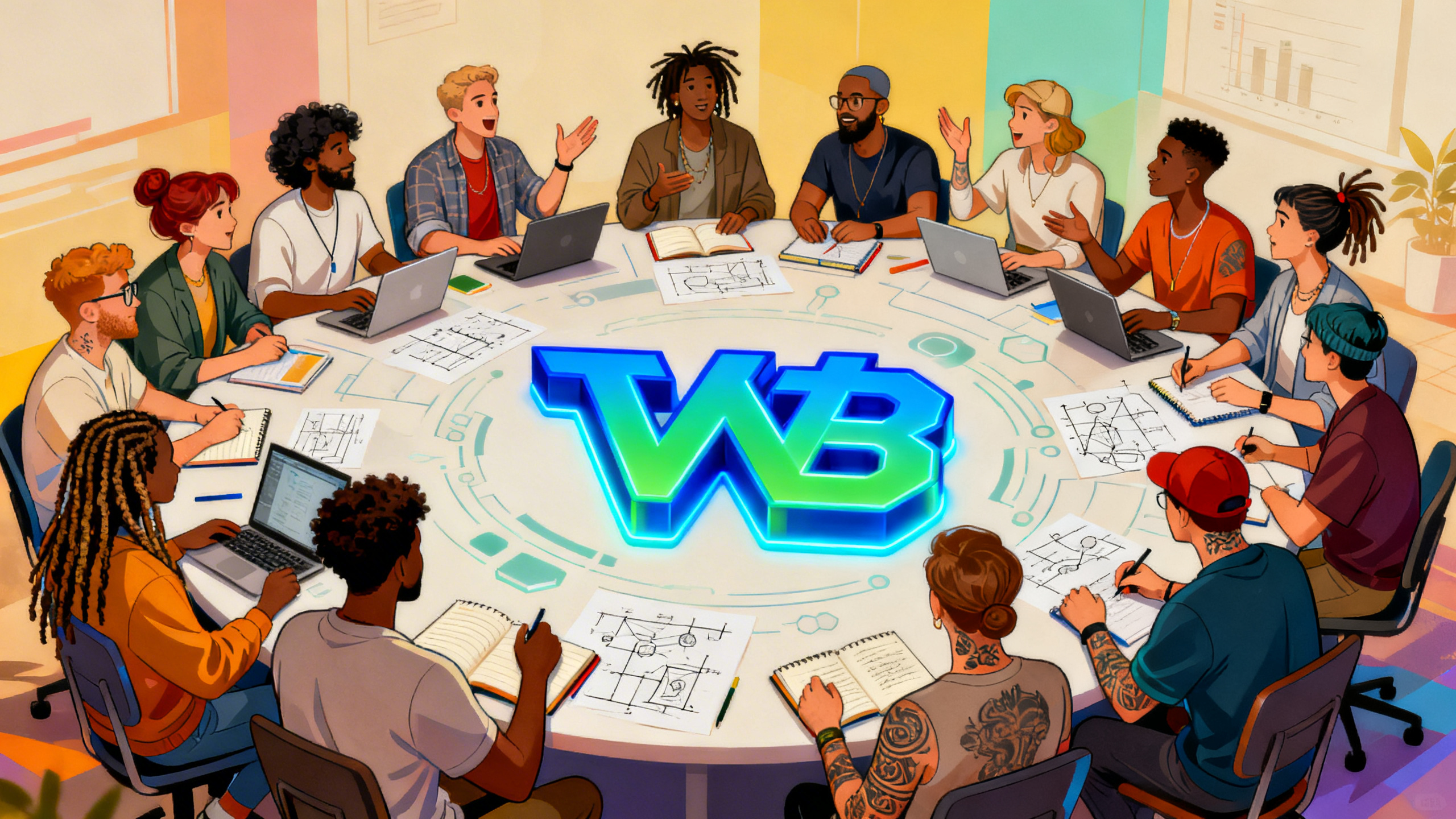
Cryptocurrency did not emerge from lecture halls, government committees, or traditional academic departments. It was born in open forums, cryptography mailing lists, and pseudonymous collaboration. When Satoshi Nakamoto released the Bitcoin whitepaper in 2008, there was no formal curriculum, no accredited degree, and no centralized institution responsible for teaching the world how to use or understand this new monetary system. What followed was something more radical: communities that educated themselves.
Today, crypto education is no longer confined to universities or corporate training programs. Instead, it thrives in decentralized autonomous organizations (DAOs), Discord servers, GitHub repositories, podcasts, governance forums, Telegram groups, hackathons, and community-driven documentation hubs. Platforms such as Ethereum Foundation support ecosystem learning, but the most transformative education still happens peer-to-peer.
This article explores how crypto communities teach themselves—systematically, organically, and often more effectively than centralized institutions. We will examine the mechanisms, structures, incentives, challenges, and future trajectories of decentralized crypto education. If education is the engine of adoption, then community-driven learning is the fuel powering Web3.
1. The Historical Roots of Self-Education in Crypto
1.1 From Cypherpunks to Open-Source Collaboration
The DNA of crypto education traces back to the cypherpunk movement. Before Bitcoin, cryptographers and privacy advocates gathered on mailing lists to debate encryption, digital cash, and censorship resistance. Knowledge circulated freely, archived publicly, and critiqued rigorously.
This culture shaped the early Bitcoin community. Developers did not wait for textbooks—they read source code. Users did not attend seminars—they studied forum threads. Contributors learned by doing: running nodes, testing transactions, and proposing improvements.
The ethos persists in modern ecosystems like Bitcoin.org and open repositories across the industry.
1.2 The Whitepaper as Curriculum
In traditional finance, monetary systems are opaque. In crypto, the whitepaper functions as both manifesto and syllabus. The Bitcoin whitepaper, followed by Ethereum’s documentation, became foundational texts. For instance, the Ethereum Foundation maintains extensive documentation that serves as a living curriculum for developers worldwide.
Crypto communities treat documentation not as marketing material but as educational infrastructure. Technical papers, improvement proposals, and governance drafts are debated publicly—transforming education into an ongoing conversation.
2. Core Mechanisms of Community-Driven Learning
2.1 Open-Source Code as a Classroom
GitHub repositories are the laboratories of crypto education. Developers learn by:
- Reviewing pull requests
- Examining commit histories
- Contributing minor fixes
- Participating in issue discussions
In projects like Bitcoin Core, education occurs through contribution. There is no professor—only peers, reviewers, and maintainers.
This apprenticeship model mirrors medieval guilds more than modern universities. Knowledge transfer is meritocratic and transparent.
2.2 Governance Forums as Policy Schools
DAOs and governance communities function as decentralized policy institutes. In ecosystems such as Uniswap Labs (through governance forums of the Uniswap protocol), token holders debate proposals affecting treasury allocation, protocol upgrades, and incentive structures.
Participants learn:
- Tokenomics
- Game theory
- Risk management
- Treasury governance
- Regulatory implications
The classroom is the forum. The exam is the vote. The feedback is on-chain.
2.3 Discord and Telegram: Real-Time Peer Instruction
Community chat platforms serve as interactive knowledge hubs. In Discord servers for projects like Polygon Labs, beginners ask wallet setup questions while developers troubleshoot smart contract errors.
This creates multi-layered learning:
- Beginner onboarding
- Intermediate technical assistance
- Advanced protocol design discussion
Unlike static courses, these spaces adapt dynamically to user needs.
3. Learn-by-Doing: The Practical Pedagogy of Web3
3.1 Hackathons as Accelerated Universities
Hackathons are immersive educational accelerators. Events sponsored by Solana Foundation or Ethereum Foundation combine workshops, mentorship, and project building.
Participants learn:
- Smart contract development
- UI integration
- Wallet connectivity
- Token deployment
- Security auditing basics
In 48 hours, participants often acquire more applied knowledge than months of theoretical study.
3.2 Bounties and Grants as Incentivized Learning
Crypto communities align education with economic incentives. Programs like Gitcoin grants (associated with the broader Ethereum ecosystem) reward contributors for solving issues or building tools.
This model transforms learning into a paid activity:
- Identify a problem
- Study relevant documentation
- Implement a solution
- Receive compensation
Unlike traditional internships, access is permissionless and global.
4. Token Incentives and Educational Gamification
4.1 Learn-to-Earn Models
Some projects experiment with token rewards for educational milestones. Completing tutorials, passing quizzes, or deploying test contracts can earn participants digital assets.
This approach blends:
- Behavioral psychology
- Tokenomics
- Curriculum design
However, sustainable models must ensure that incentives reinforce genuine understanding—not superficial engagement.
4.2 Reputation Systems as Credentials
On platforms such as GitHub, visible contributions serve as reputational capital. In crypto communities, wallets and contribution histories act as decentralized resumes.
Reputation is earned through:
- Code commits
- Governance participation
- Community moderation
- Educational content creation
This decentralized credentialing system challenges traditional diplomas.
5. Documentation as Living Infrastructure
5.1 Community-Edited Knowledge Bases
Projects increasingly adopt wiki-style documentation. Errors are corrected quickly. Outdated guides are flagged. Contributors update tutorials as protocols evolve.
The result is dynamic education that evolves alongside the codebase.
5.2 Transparency as a Pedagogical Tool
Blockchains are transparent by design. Explorers allow users to inspect transactions, contract interactions, and governance votes.
Learning is hands-on:
- Track transactions
- Analyze token distribution
- Study smart contract calls
The ledger itself becomes an educational interface.
6. The Role of Content Creators and Independent Educators
Crypto YouTubers, newsletter writers, and podcasters act as translators between technical builders and mainstream audiences. Influencers associated with ecosystems like CoinDesk or independent educators on X (formerly Twitter) shape discourse.
However, community-driven verification remains essential to prevent misinformation.
7. Peer Review and Collective Intelligence
Crypto communities self-correct through public critique. When proposals are flawed, they are dissected in forums. When vulnerabilities are found, security researchers publish analyses.
The open nature of discourse:
- Accelerates innovation
- Reduces information asymmetry
- Encourages intellectual rigor
Learning becomes a communal responsibility.
8. Risks and Challenges of Self-Taught Ecosystems
Despite strengths, decentralized education faces risks:
8.1 Misinformation and Hype
Without formal gatekeepers, inaccurate information can spread quickly.
8.2 Uneven Quality
Some documentation is excellent; others lack clarity or structure.
8.3 Accessibility Barriers
Technical jargon can alienate non-technical users.
Communities mitigate these risks through moderation, structured onboarding programs, and increasingly professionalized documentation.
9. Localization and Global Participation
Crypto is global by default. Communities translate whitepapers, documentation, and governance proposals into multiple languages.
This localization enables participation from regions with limited access to traditional financial education. Self-education scales globally because it is internet-native.
Conclusion: The Self-Taught Revolution
Crypto communities teach themselves because they must. Innovation outpaces institutions. Protocols evolve faster than academic departments can update syllabi. In this environment, self-education is not optional—it is survival.
From the early days of Satoshi Nakamoto to today’s global ecosystems, knowledge in crypto flows horizontally rather than vertically. The most powerful universities in Web3 are not campuses—they are communities.
This model challenges conventional assumptions about authority, credentialing, and expertise. It suggests that learning can be decentralized, meritocratic, and economically aligned.
As the industry matures, the question is not whether crypto communities can teach themselves. They already do. The real question is whether traditional education systems will adapt—or be left behind by a generation that learned finance, cryptography, governance, and digital economics not from institutions, but from each other.
Crypto education is no longer a service delivered from the top down. It is a protocol—open, evolving, and collectively maintained.