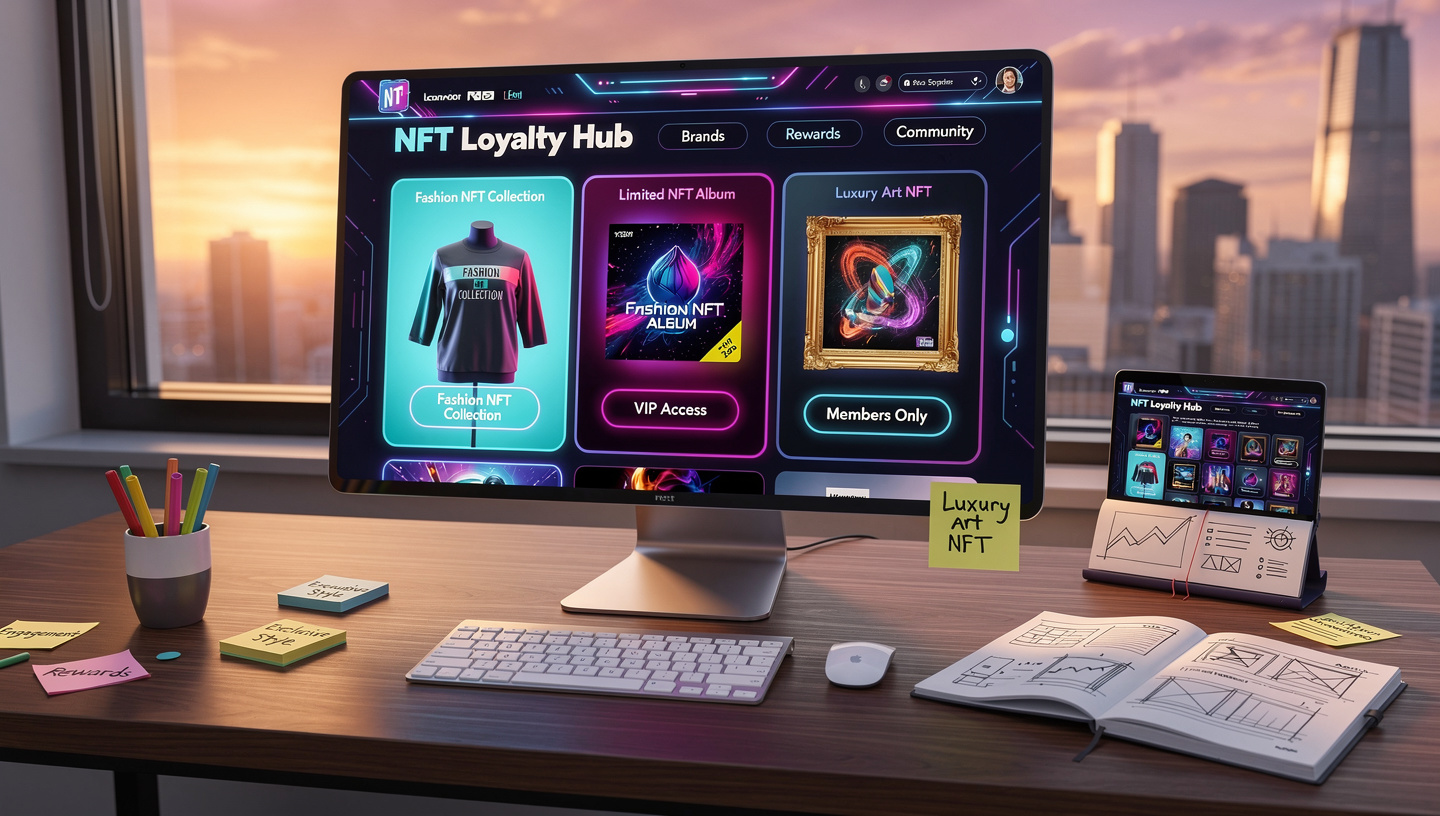
For decades, marketing has been built on a simple equation: grab attention, convert interest, retain customers. Loyalty programs offered points, discounts, plastic cards, and emails that most people ignored. Digital advertising grew louder, faster, more intrusive. Consumers learned to scroll past banners, mute ads, and distrust slogans.
Then NFTs arrived.
At first, they seemed like little more than speculative JPEGs—digital art selling for absurd prices, fueled by crypto hype and internet chaos. Many brands watched from the sidelines, skeptical and confused. But beneath the surface noise, something quietly revolutionary was forming.
NFTs were not just assets.
They were relationships.
Today, forward-thinking brands are using NFTs not to chase trends, but to redefine marketing itself—shifting from persuasion to participation, from transactions to belonging, from rented attention to owned communities.
This is the story of how brands are using NFTs for marketing and loyalty—and why this shift may permanently change how businesses connect with people.
1. NFTs as a New Marketing Primitive
To understand why NFTs matter to brands, we must stop thinking of them as “digital collectibles” and start seeing them as programmable ownership tokens.
An NFT can represent:
- Access to a private community
- Membership status
- Event tickets
- Digital + physical rewards
- Voting rights
- Identity and reputation
- Proof of early support
Unlike traditional marketing assets, NFTs are:
- Transferable (users truly own them)
- Programmable (they can unlock evolving benefits)
- Scarce (supply can be controlled)
- Persistent (they live beyond platforms)
For the first time, brands can create marketing assets that customers keep, not just consume.
2. From Points to Pride: The Evolution of Loyalty
Traditional loyalty programs are built on extrinsic motivation:
“Buy more, get discounts.”
NFT-based loyalty flips this model.
Instead of asking:
How can we incentivize purchases?
Brands now ask:
How can we reward belief, identity, and participation?
NFTs turn loyalty into status, not math.
Digital Badges with Real Meaning
Owning a brand NFT can signal:
- “I was here early.”
- “I belong to this culture.”
- “I support this mission.”
This taps into human psychology far deeper than coupons ever could. People don’t just want savings—they want recognition.
3. Case Study Archetypes: How Brands Actually Use NFTs
Rather than listing companies, let’s examine patterns—because the strategy matters more than the logo.
A. Membership NFTs
Brands issue limited NFTs that act as lifetime or seasonal passes.
Benefits may include:
- Early product access
- Exclusive content
- Private Discord or community
- Invitations to real-world events
The NFT becomes a key, not a product.
The result?
Customers stop feeling like buyers and start feeling like insiders.
B. NFT-Powered Loyalty Tiers
Instead of bronze, silver, gold points:
- Tier 1 NFT = supporter
- Tier 2 NFT = contributor
- Tier 3 NFT = ambassador
These NFTs can:
- Upgrade automatically based on engagement
- Unlock higher rewards over time
- Be visibly displayed in wallets or profiles
Loyalty becomes visible and portable, not locked inside a database.
C. Event & Experience NFTs
Brands mint NFTs as:
- Tickets to concerts, pop-ups, launches
- Proof of attendance (POAPs)
- Memory artifacts from experiences
These NFTs outlive the event.
Months or years later, holders can still:
- Access future perks
- Prove attendance
- Relive moments digitally
Marketing becomes memory engineering, not just promotion.
4. NFTs as Storytelling Devices
Great brands are not built on products.
They are built on stories.
NFTs allow brands to tell stories that unfold over time.
Narrative Campaigns
Instead of one-off ads, brands can:
- Release NFT chapters
- Unlock story arcs based on community actions
- Reward participants with evolving NFTs
Each holder becomes a character in the brand’s universe.
This transforms passive consumers into co-authors.
5. Community Ownership vs. Audience Rental
Social media taught brands a painful lesson:
You don’t own your audience.
Algorithms change. Platforms collapse. Reach disappears overnight.
NFTs give brands something radical:
Direct, permissionless relationships.
When a customer holds a brand NFT:
- No algorithm can block access
- No platform can revoke the connection
- No email spam filter can interfere
This is not marketing reach—it is marketing sovereignty.
6. Co-Creation: Turning Customers into Contributors
NFTs allow brands to reward not just spending, but creation.
Examples include:
- NFTs for fan-generated designs
- Tokens for community moderators
- Rewards for referrals, feedback, or ideas
Customers are no longer endpoints.
They become value creators.
This blurs the line between brand and community—and that’s exactly the point.
7. Digital + Physical: Bridging Two Worlds
One of the most powerful uses of NFTs is connecting digital ownership to physical reality.
NFTs can unlock:
- Limited-edition merchandise
- Custom products
- Physical upgrades
- Personalized experiences
The NFT acts as a passport between worlds.
Marketing stops being “online vs offline” and becomes continuous identity.
8. Data Without Surveillance
Traditional marketing relies heavily on tracking, cookies, and behavioral surveillance.
NFTs offer an alternative:
- On-chain ownership is transparent
- No invasive data collection required
- Customers opt-in by holding assets
Brands can design loyalty systems that respect privacy while still rewarding engagement.
Trust becomes a feature, not a slogan.
9. The Emotional Economics of NFTs
The most underestimated aspect of NFTs is emotion.
People don’t just buy NFTs for utility.
They buy them because:
- They feel early
- They feel chosen
- They feel seen
When brands design NFT campaigns correctly, customers feel emotionally invested, not manipulated.
And emotionally invested customers:
- Stay longer
- Defend the brand
- Forgive mistakes
- Spread culture organically
10. Common Mistakes Brands Make
Not all NFT marketing succeeds. Failures usually come from:
- Treating NFTs as merchandise, not relationships
- Over-hyping without long-term value
- Ignoring community feedback
- Focusing on speculation instead of utility
- Copy-pasting Web2 campaigns into Web3
NFTs punish shallow thinking and reward sincerity.
11. What the Future Looks Like
As infrastructure matures and wallets become invisible, NFTs will fade into the background—not because they failed, but because they worked.
In the future:
- Loyalty NFTs will be default
- Membership tokens will replace logins
- Brand communities will be token-gated spaces
- Marketing teams will include community architects
NFTs won’t feel like “crypto.”
They will feel like belonging.
Conclusion: Marketing That People Want to Own
NFTs are not a marketing trick.
They are a philosophical shift.
They ask brands a dangerous question:
Are you worth owning a piece of?
Brands that answer “yes” with honesty, creativity, and respect will build something rare:
Not attention.
Not reach.
Not virality.
But loyalty that lives in people’s wallets—and their identity.
And that may be the most powerful marketing asset ever created.