Token distribution is not a peripheral technical decision in crypto networks; it is the moral architecture upon which the system rests. Every allocation model—whether an initial coin offering (ICO), liquidity mining program, airdrop, or venture-backed token generation event—encodes assumptions about fairness, access, incentives, governance, and long-term sustainability.
In decentralized ecosystems where tokens represent economic rights, governance power, and access privileges, distribution is equivalent to constitutional design. The ethics of token distribution therefore concern not only compliance with securities regulations or disclosure norms, but also deeper questions: Who benefits? Who bears risk? Who controls the future of the protocol? And is the system genuinely aligned with its stated principles of decentralization and openness?
This article examines the ethics of token distribution from a structural perspective. It analyzes allocation models, power asymmetries, market dynamics, governance implications, and long-term ecosystem health. It also proposes rigorous standards that projects, investors, and communities can use to evaluate whether a token distribution model is ethically defensible.
1. Why Token Distribution Is an Ethical Question
Token distribution shapes:
- Wealth concentration
- Governance control
- Market fairness
- Community trust
- Protocol resilience
Unlike traditional equity structures, crypto tokens often serve multiple functions simultaneously: speculative asset, governance instrument, access key, and reward mechanism. A flawed distribution model does not merely misprice an asset; it distorts an entire ecosystem.
The ethical dimension arises because:
- Token buyers often assume risk without institutional protections.
- Early insiders frequently possess informational and structural advantages.
- Governance tokens can centralize power under the appearance of decentralization.
- Distribution structures can create artificial scarcity or engineered volatility.
Thus, token distribution ethics intersect with economic justice, information asymmetry, fiduciary responsibility, and decentralized governance theory.
2. Historical Context: From ICOs to Structured Tokenomics
The 2017 ICO wave established a pattern: large token allocations to founders and insiders, minimal lockups, vague utility claims, and retail speculation driven by marketing narratives. Subsequent regulatory enforcement reshaped the landscape, pushing projects toward structured tokenomics frameworks.
The emergence of launch platforms, vesting schedules, and transparency dashboards improved formal disclosure. However, ethical challenges persist across:
- Venture-heavy allocations
- Airdrop farming distortions
- Liquidity mining emissions
- Governance capture
- Token supply manipulation
Understanding ethics requires examining each distribution mechanism individually.
3. Common Token Distribution Models and Their Ethical Tensions
3.1 Initial Coin Offerings (ICOs)
ICOs democratized early-stage access but often suffered from:
- Information asymmetry
- Inflated promises
- Founder-heavy allocations
- No enforceable accountability
The ethical dilemma lies in whether projects treated token buyers as speculative participants or de facto venture investors without rights.
Key concerns:
- Was disclosure accurate?
- Were funds proportionate to roadmap needs?
- Were founders locked in long term?
3.2 Venture-Backed Token Launches
Modern projects often allocate large percentages (20–50%+) to venture capital funds before public launch.
Ethical issues include:
- Access inequality: Retail investors cannot participate at comparable valuations.
- Governance distortion: VCs hold outsized voting power.
- Exit overhang risk: Large unlock events can destabilize markets.
If decentralization is a core value, early concentration among institutional actors contradicts that principle unless accompanied by credible redistribution mechanisms.
3.3 Airdrops
Airdrops are presented as egalitarian distribution tools. In practice, they raise questions:
- Do they reward genuine users or opportunistic farmers?
- Are criteria transparent?
- Does retroactive distribution encourage short-term exploitation?
Ethically sound airdrops require clear methodology, anti-sybil safeguards, and long-term alignment incentives.
3.4 Liquidity Mining and Emissions
Liquidity mining distributes tokens to users who provide capital or protocol participation.
Ethical challenges:
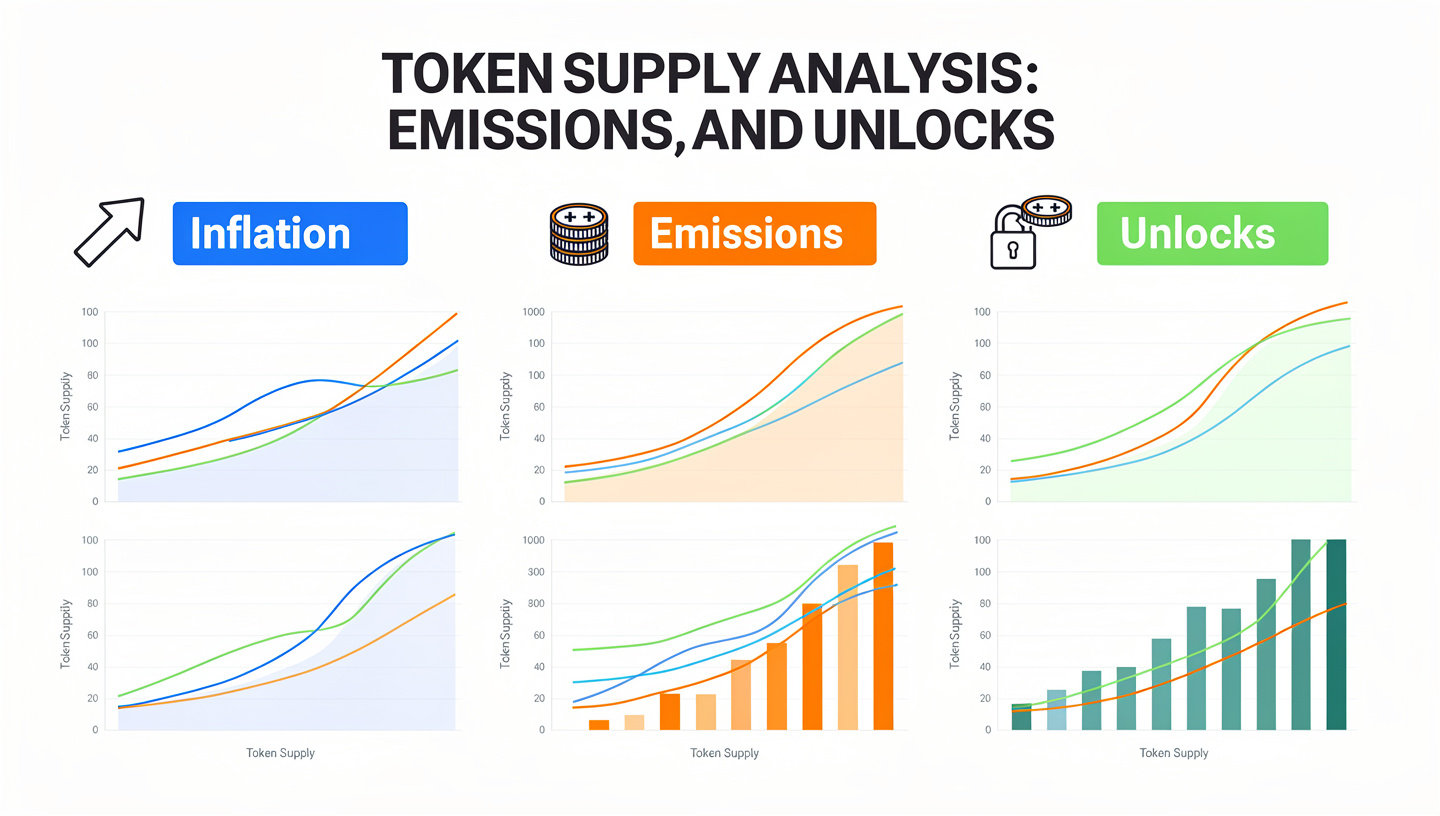
- Unsustainable emissions dilute long-term holders.
- Short-term mercenary capital drains value post-reward.
- Token price inflation may be artificially stimulated.
Emission schedules must balance ecosystem growth with supply discipline. Hyperinflationary rewards systems mislead participants regarding sustainability.
3.5 Fair Launch Models
“Fair launch” implies no pre-mine, no insider allocation, and open participation.
Examples often cited include early proof-of-work distributions such as Bitcoin.
However, even fair launches face realities:
- Early miners gain disproportionate advantage.
- Technical insiders capture initial supply.
- Awareness disparities still exist.
Fair launch reduces insider concentration but does not eliminate structural inequality.
4. Ethical Principles in Token Distribution
A defensible token distribution model should be evaluated against core principles:
4.1 Transparency
Projects must disclose:
- Total supply
- Allocation percentages
- Vesting schedules
- Unlock timelines
- Insider ownership breakdown
Opaque tokenomics undermine informed consent.
4.2 Proportional Risk Alignment
Founders and early investors should bear long-term exposure proportional to their allocation.
Ethical alignment includes:
- Multi-year vesting
- Gradual unlock schedules
- Performance-based release structures
Short vesting horizons incentivize extraction rather than stewardship.
4.3 Decentralization of Governance
Governance tokens confer decision-making authority. Concentration of voting power undermines legitimacy.
Ethical safeguards include:
- Delegation mechanisms
- Quadratic voting experiments
- Staggered unlocks for insiders
- Community-controlled treasuries
If 60%+ of voting power rests with insiders, decentralization is cosmetic.
4.4 Fair Market Access
Equal opportunity does not mean equal outcomes, but it does require:
- Transparent pricing
- No hidden pre-sale discounts
- No preferential liquidity arrangements
- Clear communication of token utility
Retail participants must not serve as exit liquidity for insiders.
4.5 Long-Term Ecosystem Sustainability
Distribution must support:
- Developer incentives
- Security budgets
- Treasury resilience
- Community growth
Short-term price appreciation at the cost of long-term viability is ethically flawed.
5. Governance Power and Token Concentration
Token distribution directly affects governance. When tokens equal votes, distribution equals power.
Research across decentralized autonomous organizations (DAOs) shows:
- Low voter participation
- Delegation concentration
- Founder-led proposal pipelines
- Treasury capture risks
An ethically responsible model mitigates plutocratic capture. Otherwise, governance becomes performative.
6. Information Asymmetry and Ethical Disclosure
Insiders typically possess superior information about:
- Product roadmap
- Technical limitations
- Regulatory exposure
- Treasury runway
- Strategic partnerships
Ethical distribution demands structured disclosure before token sale or listing. Partial transparency creates moral hazard.
Projects should disclose:
- Token supply inflation schedule
- Insider unlock cliffs
- Legal risk exposure
- Revenue models
Silence on these variables is not neutral; it is materially misleading.
7. Token Vesting: The Ethics of Unlock Schedules
Vesting schedules determine economic pressure.
Ethical best practices:
- Cliff periods exceeding 12 months
- Gradual linear vesting over 3–4 years
- Transparent unlock dashboards
- No undisclosed OTC transfers
Abrupt unlocks create predictable volatility. Ethical design minimizes systemic shock.
8. Token Utility vs. Speculative Design
Tokens should have functional purpose:
- Governance
- Network fees
- Collateral
- Access rights
- Staking for security
Purely speculative tokens with no utility invite extractive distribution strategies.
In decentralized finance (DeFi), governance tokens emerged alongside platforms such as Ethereum, which enabled programmable token standards. However, many governance tokens lack substantive control or revenue rights, raising ethical concerns about representational value.
9. Regulatory Compliance and Ethical Responsibility
Legal compliance does not exhaust ethical responsibility.
Projects may:
- Structure tokens to avoid securities classification
- Use offshore jurisdictions
- Implement minimal KYC
Ethical evaluation must consider whether design choices prioritize regulatory arbitrage over participant protection.
Regulatory clarity remains evolving across jurisdictions, but ethical clarity is not contingent on enforcement.
10. Community Perception and Trust
Trust is cumulative and fragile.
Unethical distribution patterns—such as silent token minting, sudden supply increases, or insider dumps—irreparably damage legitimacy.
Crypto markets are reflexive. Perceived unfairness accelerates capital flight.
11. Measuring Ethical Distribution: Quantitative Indicators
Projects can be evaluated using objective metrics:
- Insider allocation percentage
- Effective circulating supply at launch
- Gini coefficient of token holders
- Vesting duration median
- Governance participation rates
- Treasury transparency frequency
Ethics in token distribution should become measurable, not rhetorical.
12. Case Patterns: Centralization vs. Distribution
Comparative patterns show:
- Highly concentrated tokens often correlate with governance stagnation.
- Emission-heavy models correlate with price volatility.
- Transparent vesting correlates with stronger community retention.
Projects aligned with decentralized ideals must reconcile capital formation with equitable distribution.
13. Toward a Normative Framework for Ethical Token Distribution
An ethically sound token distribution model should satisfy the following criteria:
- Clarity: Complete disclosure before capital inflow.
- Alignment: Long-term vesting for insiders.
- Access: Reasonable opportunity for public participation.
- Decentralization: Governance diffusion over time.
- Sustainability: Controlled inflation and emissions.
- Accountability: Transparent treasury governance.
- Resilience: No single actor capable of destabilizing supply.
These principles transform tokenomics from marketing into governance architecture.
Conclusion: Distribution Defines Legitimacy
Token distribution is not a secondary feature of crypto networks; it defines them. It determines who controls governance, who captures upside, and whether decentralization is substantive or symbolic.
The ethics of token distribution require structured transparency, incentive alignment, governance diffusion, and sustainable emission design. Without these elements, decentralization remains rhetorical, and communities become exit liquidity.
Projects that treat token distribution as moral infrastructure rather than financial engineering will establish durable ecosystems. Those that do not will face capital flight, governance capture, and reputational erosion.
In crypto, distribution is destiny.