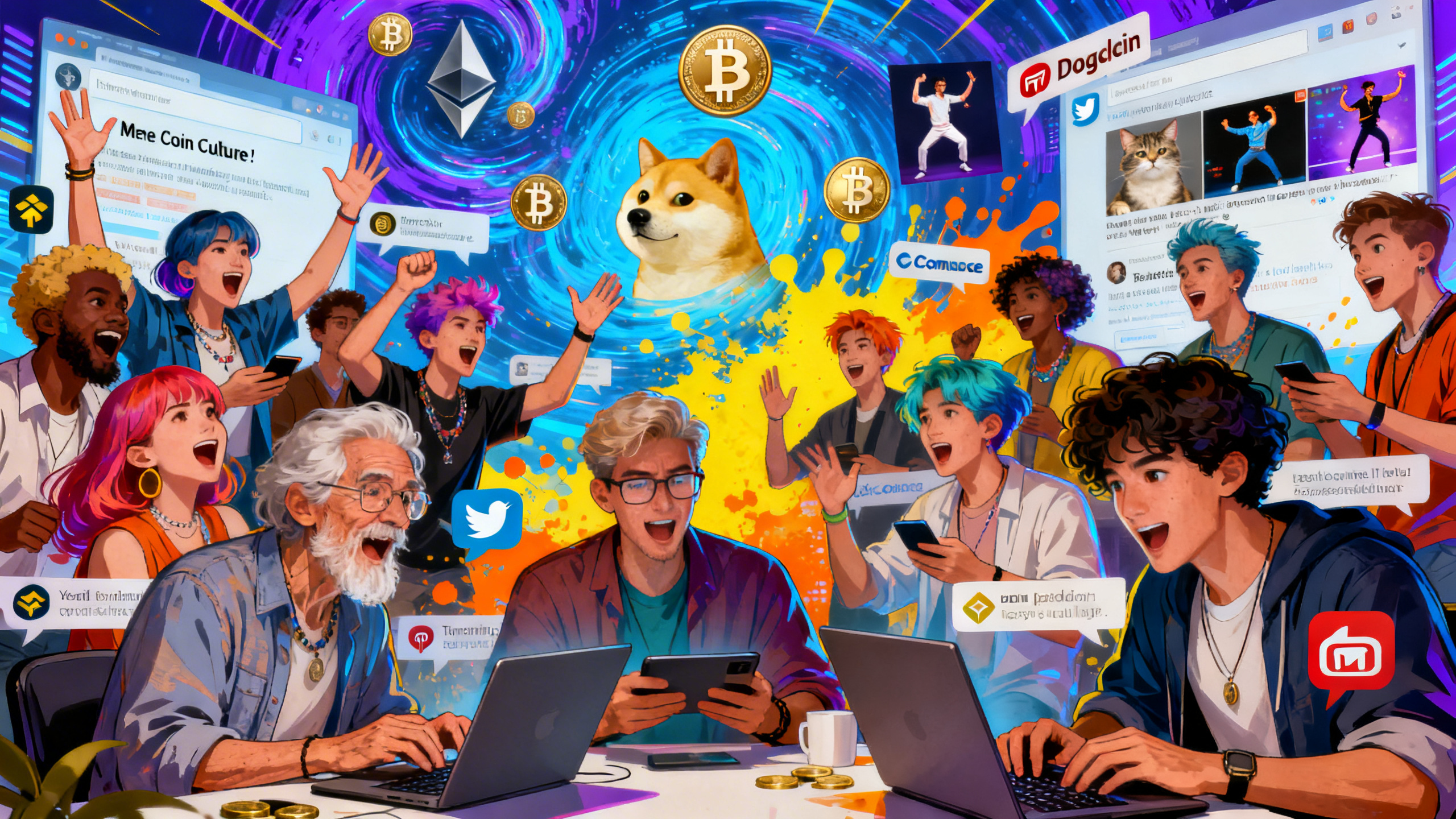
Meme coins represent one of the most paradoxical phenomena in the history of digital assets. Emerging from internet humor, online tribalism, and speculative exuberance, they have grown into a multi-billion-dollar segment of the cryptocurrency market. What began with projects like Dogecoin—itself inspired by a viral Shiba Inu meme—has evolved into an ecosystem that includes thousands of tokens built around cultural references, celebrities, political movements, and fleeting internet trends.
Meme coin culture is not merely a financial curiosity. It is a socio-economic experiment at the intersection of decentralized finance, social media virality, and collective behavior. Platforms such as Reddit, X, TikTok, and Telegram have functioned as accelerants, compressing the lifecycle of financial manias into hours or days.
This article examines the ethical dimensions of meme coin culture. It analyzes governance structures, information asymmetry, market manipulation, community norms, influencer accountability, developer responsibilities, and regulatory tensions. The objective is not to moralize but to evaluate: What are the ethical standards that should apply in an ecosystem defined by irony, speculation, and speed? And what happens when humor becomes a financial instrument?
1. Defining Meme Coins: Cultural Tokens or Financial Instruments?
Meme coins are typically cryptocurrencies launched with minimal technical innovation and substantial emphasis on branding, community identity, and narrative virality. Unlike infrastructure tokens such as Ethereum or monetary networks such as Bitcoin, meme coins rarely introduce novel consensus mechanisms or protocol upgrades. Their value proposition is memetic resonance.
Ethically, this distinction matters. If a token is marketed primarily as entertainment, does it carry the same disclosure obligations as a serious financial instrument? Conversely, once traded on exchanges and promoted as an investment opportunity, does it cease to be “just a joke”?
The tension between irony and financialization is central. The market does not price satire differently from utility. Liquidity, speculation, and leverage do not distinguish between humor and infrastructure.
2. Information Asymmetry and Retail Vulnerability
2.1 Structural Asymmetry
Meme coin markets are characterized by extreme information asymmetry:
- Developers often remain pseudonymous.
- Token supply allocations may heavily favor insiders.
- Smart contract audits are frequently absent.
- Roadmaps are vague or non-existent.
Retail participants—often new entrants attracted by viral narratives—operate with limited due diligence capacity. In contrast, insiders may possess detailed knowledge of tokenomics, liquidity locks, or pre-mined allocations.
This asymmetry creates ethical concerns analogous to traditional pump-and-dump schemes, but with accelerated execution cycles.
2.2 Informed Consent in Speculation
Ethical finance requires informed participation. In meme coin markets, disclosure practices are inconsistent. Even when token distribution data is technically available on-chain, interpreting it requires technical literacy. Transparency without comprehensibility does not constitute ethical clarity.
3. Pump-and-Dump Dynamics and Market Manipulation
Meme coins are particularly susceptible to coordinated price manipulation. Viral promotion can trigger rapid inflows, after which early holders exit positions, leaving late entrants with depreciating assets.
The ethical problem is not volatility per se—volatility is inherent in emerging markets—but intentional orchestration of hype cycles for asymmetric gain.
High-profile figures have occasionally amplified meme coins, causing abrupt price movements. The impact of endorsements from individuals such as Elon Musk on assets like Dogecoin illustrates the sensitivity of meme tokens to public signaling.
When influence substitutes for fundamentals, ethical accountability becomes blurred. Should influential individuals bear responsibility for foreseeable financial harm arising from their public statements?
4. Developer Ethics and Launch Practices
4.1 Fair Launch vs. Pre-Mine
Some meme coins claim “fair launch” status, meaning no tokens were reserved for founders. Others allocate significant pre-mines to developer wallets.
From an ethical standpoint, allocation transparency is critical. Hidden pre-mines enable exit liquidity exploitation. Ethical launch standards should include:
- Public disclosure of token supply distribution.
- Time-locked liquidity pools.
- Independent smart contract audits.
- Immutable token contracts to prevent stealth minting.
4.2 Rug Pulls and Abandonment
A “rug pull” occurs when developers withdraw liquidity or abandon a project after raising capital. Meme coins, due to low barriers to entry, are especially vulnerable.
The absence of legal contracts does not eliminate ethical obligations. Decentralization does not absolve creators of fiduciary-like responsibilities when they solicit public funds.
5. Community Governance and Collective Responsibility
Meme coin communities frequently operate through decentralized communication channels. Governance is informal and often leaderless.
However, communities can become complicit in misinformation. Coordinated promotion campaigns may encourage members to:
- Post misleading price targets.
- Dismiss risk disclosures.
- Frame dissent as betrayal.
Ethically, collective action does not dilute individual accountability. When communities normalize unrealistic expectations, they contribute to systemic harm.
6. Influencer Marketing and Disclosure Standards
The rise of crypto influencers has materially shaped meme coin culture. Paid promotions are common, yet disclosure practices are inconsistent.
In traditional securities markets, undisclosed paid endorsements constitute regulatory violations. In decentralized crypto ecosystems, enforcement is fragmented across jurisdictions.
The ethical baseline should include:
- Explicit disclosure of compensation.
- Clear statement of financial exposure.
- Avoidance of guaranteed return claims.
Absent these practices, influencer-driven hype exploits informational imbalances.
7. Psychological Exploitation and Behavioral Finance
Meme coin culture leverages cognitive biases:
- FOMO (Fear of Missing Out)
- Herd behavior
- Overconfidence bias
- Gambler’s fallacy
The gamification of trading interfaces, meme imagery, and rapid price charts reinforce impulsive decision-making.
Ethically, designing financial products that exploit psychological vulnerabilities raises concerns similar to those in high-frequency trading or addictive gambling platforms. The boundary between entertainment and financial risk becomes indistinct.
8. The Role of Platforms and Exchanges
Centralized exchanges that list meme coins confer legitimacy. Decentralized exchanges enable frictionless creation and trading.
Listing standards vary widely. When platforms profit from transaction fees, they face a structural conflict: more volatility generates more volume.
Ethical platform conduct would include:
- Minimum transparency thresholds for listing.
- Risk warnings prominently displayed.
- Mechanisms to detect and mitigate wash trading.
Failure to implement safeguards may constitute negligence rather than neutrality.
9. Cultural Expression vs. Financial Harm
It is essential to acknowledge that meme coins also function as cultural artifacts. They represent decentralized satire, internet-native identity, and collective creativity.
Communities built around meme tokens often engage in philanthropy, charity fundraising, and artistic collaboration. For example, early Dogecoin communities funded charitable initiatives and sponsored sports teams.
The ethical evaluation must therefore be balanced. Meme coins are not inherently exploitative; they become ethically problematic when cultural expression masks asymmetric extraction.
10. Regulatory Tensions
Regulators globally struggle to classify meme coins:
- Are they securities?
- Commodities?
- Digital collectibles?
- Gambling instruments?
The absence of intrinsic utility complicates classification. Yet the economic impact is real.
Excessive regulation risks stifling innovation and free expression. Insufficient regulation invites fraud and systemic distrust.
An ethically coherent regulatory framework should focus on conduct rather than category:
- Fraud prohibition.
- Disclosure requirements.
- Anti-manipulation enforcement.
- Consumer protection standards.
11. Ethical Frameworks for Meme Coin Ecosystems
11.1 Deontological Perspective
From a duty-based standpoint, honesty and transparency are non-negotiable. Intentional deception—regardless of outcome—is unethical.
11.2 Consequentialist Perspective
If meme coin promotion predictably results in disproportionate harm to late entrants, ethical justification collapses under outcome analysis.
11.3 Virtue Ethics Perspective
Communities that value integrity, clarity, and accountability cultivate long-term credibility. Meme coin culture that valorizes extraction undermines collective trust.
12. Toward Ethical Standards in Meme Coin Culture
The following principles can serve as a baseline ethical framework:
- Radical Transparency
Clear disclosure of tokenomics, allocations, and developer identities (or at minimum, verifiable track records). - Fair Launch Integrity
Documented evidence of liquidity locks and absence of stealth mint functions. - Influencer Accountability
Mandatory compensation disclosure and conflict-of-interest statements. - Platform Due Diligence
Transparent listing criteria and visible risk warnings. - Community Moderation Standards
Active discouragement of misinformation and price guarantees. - Educational Emphasis
Promotion of financial literacy over speculative slogans.
13. Long-Term Implications for Crypto Legitimacy
Meme coin excesses affect the broader cryptocurrency ecosystem. Infrastructure projects like Ethereum and monetary networks like Bitcoin are often evaluated in public discourse through the lens of meme-driven volatility.
Reputational spillover is significant. If meme coin culture becomes synonymous with manipulation, regulatory backlash may extend beyond the meme segment.
Ethical discipline within meme coin communities therefore serves systemic interests.
Conclusion
Meme coin culture is neither trivial nor benign. It is a compressed laboratory of digital capitalism, where humor, identity, speculation, and asymmetry converge. The ethical challenges it presents are not unique to crypto—but they are intensified by decentralization, pseudonymity, and velocity.
Ethics in meme coin culture requires more than compliance. It requires clarity of intent, symmetry of information, and accountability proportional to influence. Humor does not negate responsibility. Decentralization does not dissolve duty.
If meme coins are to remain a legitimate expression of internet-native creativity rather than a recurrent vehicle for wealth transfer from the uninformed to the informed, ethical standards must evolve alongside innovation.
The future of meme coin culture depends not on virality, but on credibility.