When NFTs exploded into public consciousness, they arrived wrapped in paradox.
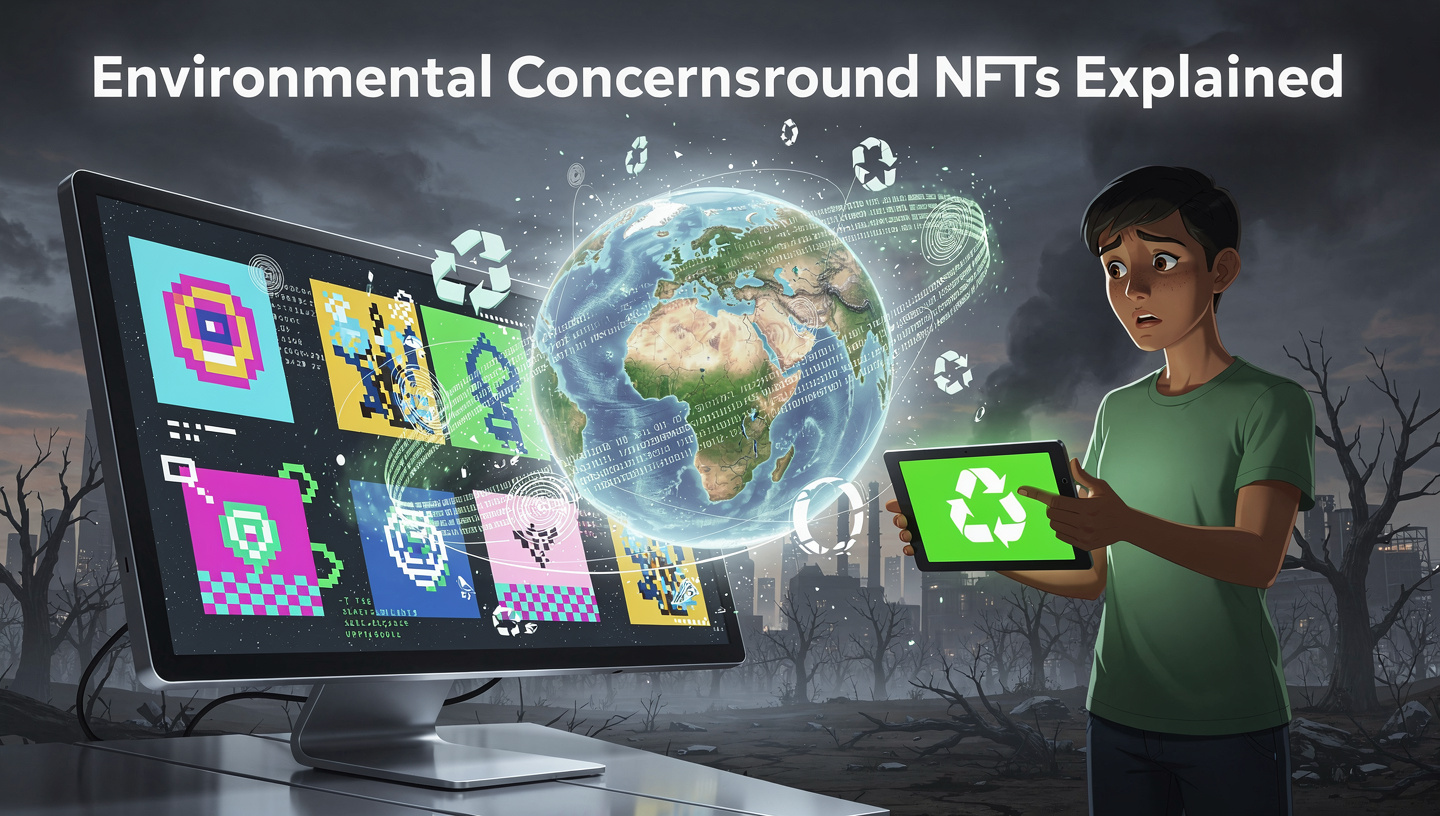
On one hand, they promised a revolution in digital ownership: empowering artists, redefining value, and reshaping how we think about authenticity in an online world. On the other hand, they were quickly branded as environmental villains—digital monsters allegedly burning as much energy as entire countries, melting glaciers one JPEG at a time.
Headlines screamed. Social media polarized. Artists deleted collections. Critics sharpened knives.
But as with most technological controversies, the truth about NFTs and the environment is far more nuanced—and far more interesting—than the loudest voices suggest.
This article is not here to defend NFTs blindly, nor to condemn them reflexively. Instead, it aims to explain:
Where the environmental concerns come from, what is real, what is exaggerated, what has changed, and what still needs fixing.
Because understanding the environmental impact of NFTs requires more than outrage. It requires context.
1. Why NFTs Became an Environmental Flashpoint
NFTs did not invent environmental controversy. They inherited it.
At their core, NFTs are built on blockchain technology. And blockchains—especially early ones—were already under scrutiny for their energy consumption long before NFTs entered the mainstream conversation.
When NFTs gained popularity in 2020–2021, they collided with three cultural forces:
- Rising climate awareness, particularly among artists and younger creators
- The visibility of NFTs, often associated with expensive, seemingly frivolous digital art
- The reputation of proof-of-work blockchains, especially Bitcoin and Ethereum (at the time)
This collision created a perfect storm.
NFTs became an easy symbol:
Digital luxury + speculative markets + unfamiliar technology = environmental scapegoat.
But symbols are rarely accurate representations of systems.
2. Understanding the Real Source of the Environmental Impact
To understand the environmental concerns around NFTs, we must be precise about where energy is actually consumed.
NFTs Themselves Do Not Consume Energy
This may sound counterintuitive, but it’s important:
- An NFT is not a file
- It is not an image
- It does not “burn energy” by existing
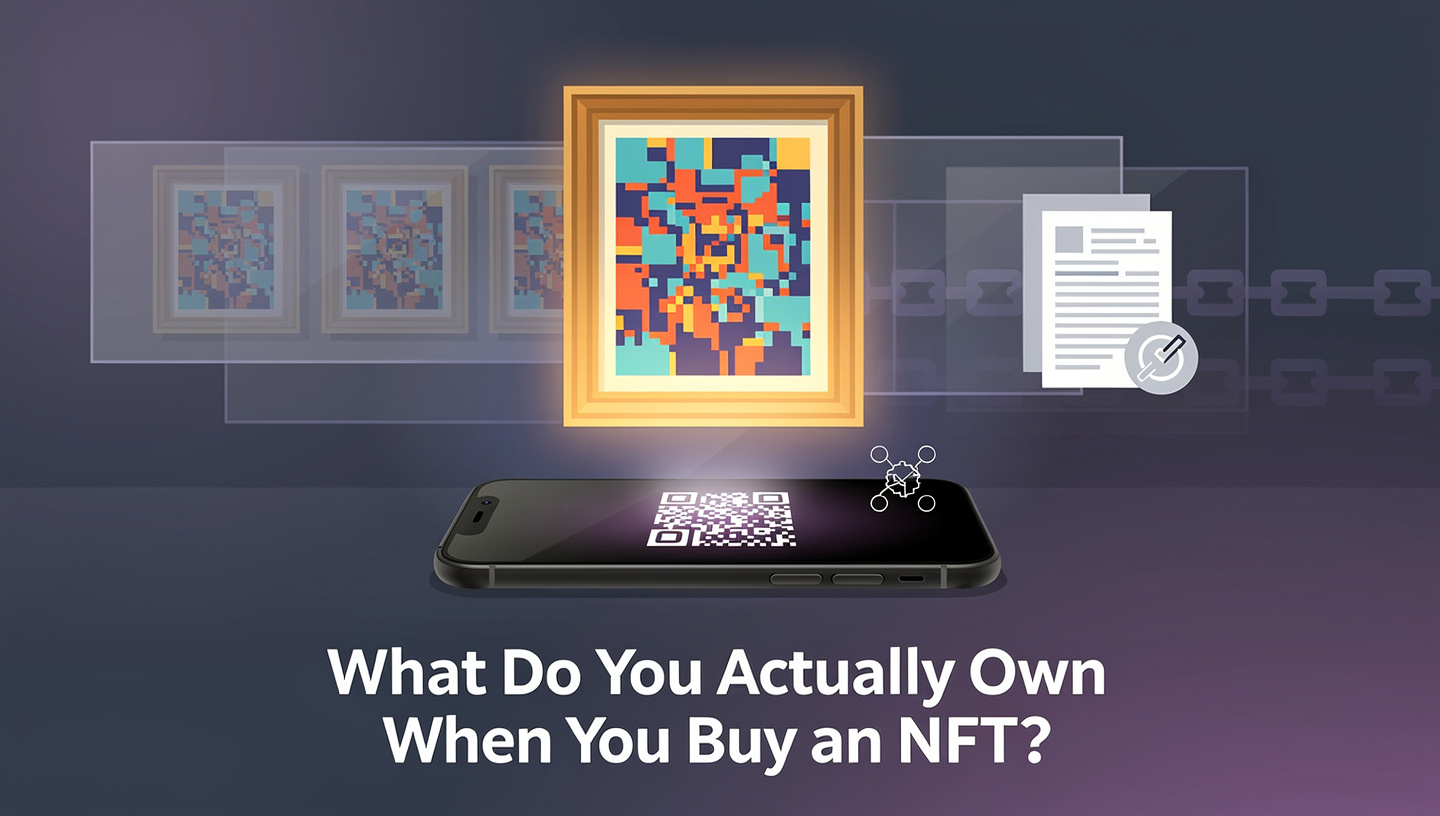
An NFT is essentially a record on a blockchain—a token that points to metadata and ownership information.
The environmental impact comes from the blockchain network that processes transactions, not from the NFT as a concept.
So the real question becomes:
What kind of blockchain is the NFT using, and how does that blockchain reach consensus?
3. Proof of Work: The Original Environmental Problem
Most early NFT criticism focused on proof-of-work (PoW) blockchains.
What Is Proof of Work?
Proof of work is a consensus mechanism where computers (miners) compete to solve cryptographic puzzles. The first to solve the puzzle gets to validate a block of transactions and receive a reward.
This process:
- Requires massive computational power
- Encourages specialized hardware
- Consumes large amounts of electricity
Bitcoin popularized this model. Ethereum originally used it too.
Why Proof of Work Is Energy-Intensive
The security of proof-of-work comes from competition and redundancy. Thousands of machines perform calculations, but only one “wins.”
From an environmental perspective, this is inefficient by design.
When NFTs were minted on proof-of-work Ethereum, they were indirectly tied to this energy-hungry system. Critics argued that every NFT transaction contributed to carbon emissions.
While this argument was often simplified, it wasn’t entirely wrong at the time.
4. The Carbon Footprint Debate: Facts vs. Exaggeration
One of the most controversial claims during the NFT boom was that:
“Minting one NFT uses as much energy as a household uses in a year.”
These comparisons spread rapidly—but they were deeply flawed.
Why Many NFT Energy Comparisons Were Misleading
- They attributed total network energy to individual actions
Blockchain energy consumption is not linear per transaction. - They ignored baseline usage
The network consumes energy whether one NFT is minted or none. - They failed to distinguish between blockchain types
Not all NFTs were minted on the same networks. - They ignored traditional art’s environmental costs
Shipping, materials, galleries, storage, and travel all have carbon footprints too.
This does not mean NFTs had no environmental impact—but it does mean the conversation was often driven by shock value rather than accuracy.
5. The Ethereum Merge: A Turning Point Few Headlines Corrected
In September 2022, Ethereum underwent one of the most significant upgrades in blockchain history: The Merge.
Ethereum transitioned from proof of work to proof of stake (PoS).
Why Proof of Stake Changes Everything
Proof of stake does not rely on computational competition. Instead:
- Validators are selected based on the amount of cryptocurrency they stake
- No massive calculations are required
- Energy consumption drops dramatically
Estimates suggest Ethereum’s energy usage fell by over 99% after the transition.
This single event invalidated many of the environmental arguments still being repeated today.
Yet, public perception lagged behind reality.
NFTs were still being criticized for problems that—on Ethereum at least—had largely been solved.
6. Not All Blockchains Are Equal
One of the biggest mistakes in NFT environmental debates is treating all blockchains as the same.
They are not.
Energy-Efficient Blockchains Commonly Used for NFTs
- Ethereum (post-Merge)
- Polygon
- Solana
- Tezos
- Flow
These networks use proof of stake or similar mechanisms and consume a fraction of the energy of proof-of-work chains.
An NFT minted on Tezos or Polygon does not have the same environmental impact as one minted on early Ethereum or Bitcoin-based systems.
Context matters.
7. Storage, Metadata, and Hidden Environmental Costs
While blockchain energy usage gets most of the attention, NFTs also rely on off-chain infrastructure.
Where NFT Data Is Stored
- Images and media are often stored on IPFS or cloud servers
- Marketplaces run centralized infrastructure
- Users interact through devices, browsers, and apps
These systems consume energy too—but so does the entire internet.
The environmental cost of NFT storage is comparable to:
- Streaming platforms
- Social media
- Cloud-based applications
Singling out NFTs while ignoring broader digital consumption creates a distorted picture.
8. Are NFTs Worse Than Traditional Industries?
Environmental criticism often frames NFTs as uniquely harmful.
But comparison tells a different story.
Traditional Art Industry Environmental Costs
- Physical materials (paint, canvas, chemicals)
- International shipping and packaging
- Climate-controlled storage and galleries
- Art fairs requiring global travel
Fashion, Finance, and Luxury Goods
- Gold mining
- Diamond extraction
- Fast fashion waste
- Data centers for traditional banking
NFTs did not invent environmental harm. They exist within an already resource-intensive global economy.
The real question is not whether NFTs are perfect—but whether they can become better than existing alternatives.
9. The Role of Speculation and Overproduction
One legitimate environmental concern remains: overproduction.
During NFT hype cycles:
- Millions of low-quality NFTs were minted
- Many had no long-term value
- Most will never be used or traded again
This mirrors problems seen in fast fashion or mass consumerism.
The environmental issue here is not NFTs themselves—but speculative excess.
Technology does not create waste alone. Human behavior does.
10. How the NFT Space Is Responding
The NFT ecosystem is not ignoring environmental criticism. In fact, it has changed rapidly because of it.
Emerging Solutions
- Carbon-neutral marketplaces
- Eco-focused blockchains
- Layer-2 scaling to reduce transaction load
- Artist-led sustainability standards
Many NFT communities now actively choose chains based on environmental impact.
Environmental awareness is becoming a design constraint—not an afterthought.
Conclusion: Moving Beyond Simplistic Narratives
Environmental concerns around NFTs were never imaginary—but they were often misunderstood, exaggerated, and frozen in time.
The NFT space of today is not the NFT space of 2021.
Energy usage has dropped dramatically. Design philosophies have matured. Awareness has increased. And the conversation is slowly shifting from outrage to responsibility.
The real environmental challenge is not whether NFTs should exist.
It is whether we are willing to build digital systems that reflect the values we claim to care about.
Because the future of NFTs—and the planet—will not be decided by technology alone.
It will be decided by how thoughtfully we choose to use it.