Banks computerized ledgers. Card networks virtualized cash. Mobile apps wrapped centuries-old financial infrastructure in glossy interfaces. Yet underneath, the system remained fundamentally analog: centralized authorities, batch settlement, geographic constraints, and trust intermediated through institutions.
Cryptocurrency proposes something more radical.
It asks what happens when money itself becomes a first-class citizen of the internet—programmable, borderless, persistent, and autonomous. Not merely “online banking,” but a monetary substrate that behaves like software.
This article explores that premise as a worldbuilding exercise—not fiction, but systems design at planetary scale. We will construct, layer by layer, a coherent model of a civilization where money is native to the internet: how it works, how power shifts, how economies reorganize, and what technical primitives make such a world possible.
1. The Core Design Shift: Money as Protocol
Traditional finance operates on institutions. Crypto operates on protocols.
That distinction matters.
In today’s world, value moves because organizations authorize it. In a crypto-native world, value moves because software rules execute deterministically.
The conceptual leap began with Bitcoin, introduced in 2009 by Satoshi Nakamoto. Bitcoin replaced trusted third parties with cryptographic consensus. Ownership became a function of private keys. Settlement became continuous rather than deferred.
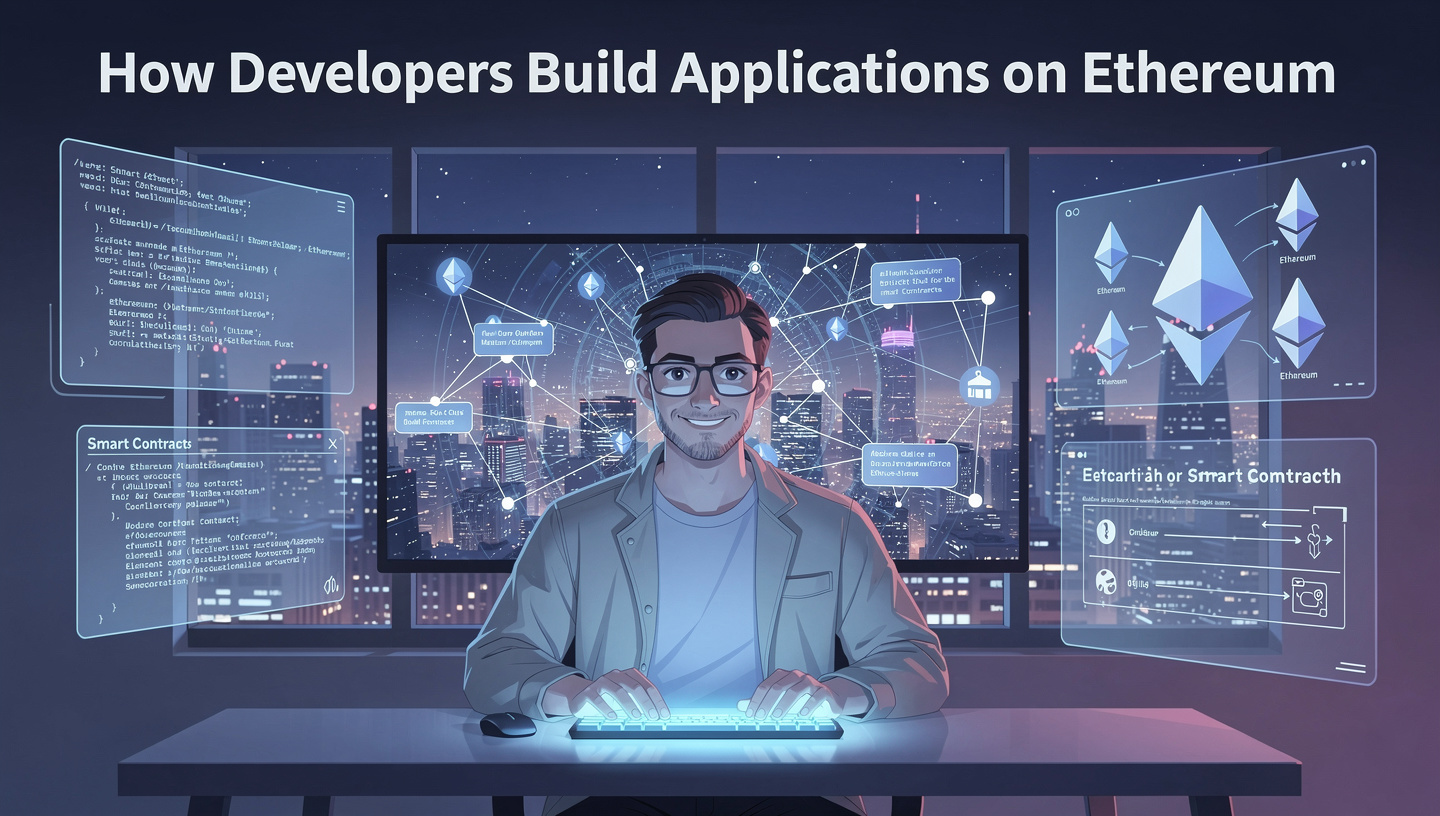
Later platforms such as Ethereum extended this model with general-purpose computation, enabling programmable money through smart contracts.
This establishes the foundational axiom of a crypto-native world:
Money is not an application. Money is infrastructure.
Just as TCP/IP governs data flow, blockchains govern value flow.
2. Native Money vs Digitized Money
To understand the magnitude of this shift, compare crypto with existing payment rails.
Legacy systems like Visa, SWIFT, and PayPal are interfaces layered atop fragmented banking backends. They move messages about money, not money itself.
Crypto moves the asset directly.
This difference produces several emergent properties:
Instant Finality
Transactions settle in minutes or seconds, not days.
Global Reach by Default
There is no concept of “international transfer.” The network is already global.
Permissionless Access
Anyone with an internet connection can participate—no accounts, approvals, or compliance onboarding.
Composability
Financial primitives stack like software libraries: lending protocols integrate with exchanges integrate with derivatives integrate with identity.
In worldbuilding terms, this creates a unified economic fabric—one continuous value layer spanning all geographies and applications.
3. Economic Physics: Designing Incentives Into Reality
A crypto-native world embeds economics directly into its infrastructure.
Blockchains are not neutral databases. They are incentive machines.
Miners or validators are paid to secure networks. Developers are rewarded through token appreciation. Users pay fees that dynamically price block space. Governance tokens coordinate upgrades.
This produces something unprecedented: self-funding public infrastructure.
Roads don’t pay for themselves. Blockchains do.
From a systems perspective, this is revolutionary. It means monetary policy, security budgets, and development incentives are algorithmically coupled.
In such a world:
- Monetary issuance becomes transparent code.
- Security spending is endogenous.
- Inflation or deflation is explicit and predictable.
- Governance is expressed through cryptographic voting rather than political institutions.
The economy becomes partially autonomous.
4. Identity, Property, and the End of Custodial Ownership
When money is native to the internet, possession changes meaning.
Private keys replace deeds, account numbers, and notarized documents. Assets live directly on public ledgers. Individuals become their own banks.
This creates a new model of sovereignty:
- You custody your wealth.
- You authorize transactions.
- You opt into financial relationships at the protocol level.
Worldbuilding implication: the primary economic actor is no longer the institution—it is the cryptographic identity.
This also enables tokenized property: land registries, intellectual property, equities, and credentials represented as on-chain assets. Ownership becomes globally verifiable and instantly transferable.
Legal systems adapt or become bypassed.
5. Programmable Economies and Autonomous Markets
Once money is programmable, markets themselves become software.
Smart contracts allow:
- Automatic liquidation of undercollateralized loans
- Algorithmic market making
- Continuous payroll streams
- Conditional escrow based on oracle data
- On-chain insurance
Entire industries collapse into code.
Instead of firms coordinating internally, protocols coordinate externally. Instead of lawyers drafting agreements, developers deploy contracts.
This produces what can be called autonomous economic zones—digital jurisdictions with their own rulesets, currencies, and incentive structures.
They compete for users the way nations compete for citizens.
6. Labor in a Crypto-Native World
Work decouples from geography.
Compensation becomes real-time and global. A developer in Nairobi, a designer in Hanoi, and a strategist in Berlin can collaborate inside the same protocol economy, paid continuously in native tokens.
DAOs (decentralized autonomous organizations) replace corporations. Employment becomes opt-in contribution. Reputation replaces resumes. Pseudonymity becomes viable.
The labor market turns into a permissionless mesh network.
Worldbuilding consequence: cities lose monopoly over opportunity. Talent flows to protocols, not headquarters.
7. Monetary Multiplicity: A World Without a Single Currency
Crypto does not converge on one money. It explodes into thousands.
Stablecoins, governance tokens, utility tokens, NFTs, and synthetic assets coexist.
Each protocol issues its own unit of account.
This produces a pluralistic monetary ecosystem where value is contextual:
- You earn one token.
- You spend another.
- You save in a third.
- You speculate in a fourth.
Exchange becomes ambient and automatic.
In such a world, “money” is no longer singular. It is modular.
8. Geopolitics After Fiat
Nation-states derive power from currency control.
A crypto-native world erodes that leverage.
Capital becomes mobile at the speed of light. Sanctions become porous. Taxation becomes harder to enforce. Monetary policy competes with algorithmic alternatives.
Governments respond in predictable phases:
- Denial
- Regulation
- Integration
- Co-option
Some states adopt crypto infrastructure. Others attempt prohibition. Eventually, most issue digital currencies of their own.
But the fundamental asymmetry remains: protocol money is global by default; state money is territorial.
This tension defines the next century.
9. Security, Risk, and the New Failure Modes
Native digital money introduces new vulnerabilities:
- Smart contract exploits
- Key mismanagement
- Oracle manipulation
- Governance attacks
In traditional finance, humans absorb error. In crypto, code executes regardless of intent.
Worldbuilding requires acknowledging this tradeoff: radical efficiency paired with unforgiving precision.
Risk shifts from institutions to individuals.
Education becomes critical infrastructure.
10. The Cultural Layer: How Humans Adapt
Beyond technology and economics lies culture.
People in a crypto-native world think differently about:
- Ownership (self-custody as default)
- Privacy (selective disclosure)
- Trust (cryptographic verification)
- Time (real-time settlement)
- Value (tokenized everything)
Memes become financial instruments. Online communities become economies. Open-source contributors become capital allocators.
The boundary between internet culture and economic reality dissolves.
Conclusion: Designing for a Post-Institutional Economy
Designing a world where money is native to the internet is not about replacing banks with blockchains.
It is about re-architecting civilization around programmable value.
This world is:
- Borderless
- Continuous
- Composable
- Algorithmically governed
- Individually sovereign
It replaces institutional trust with mathematical certainty. It turns finance into software. It transforms money from a static medium of exchange into a dynamic coordination protocol.
We are not merely witnessing a new asset class.
We are witnessing the emergence of a new operating system for human cooperation.