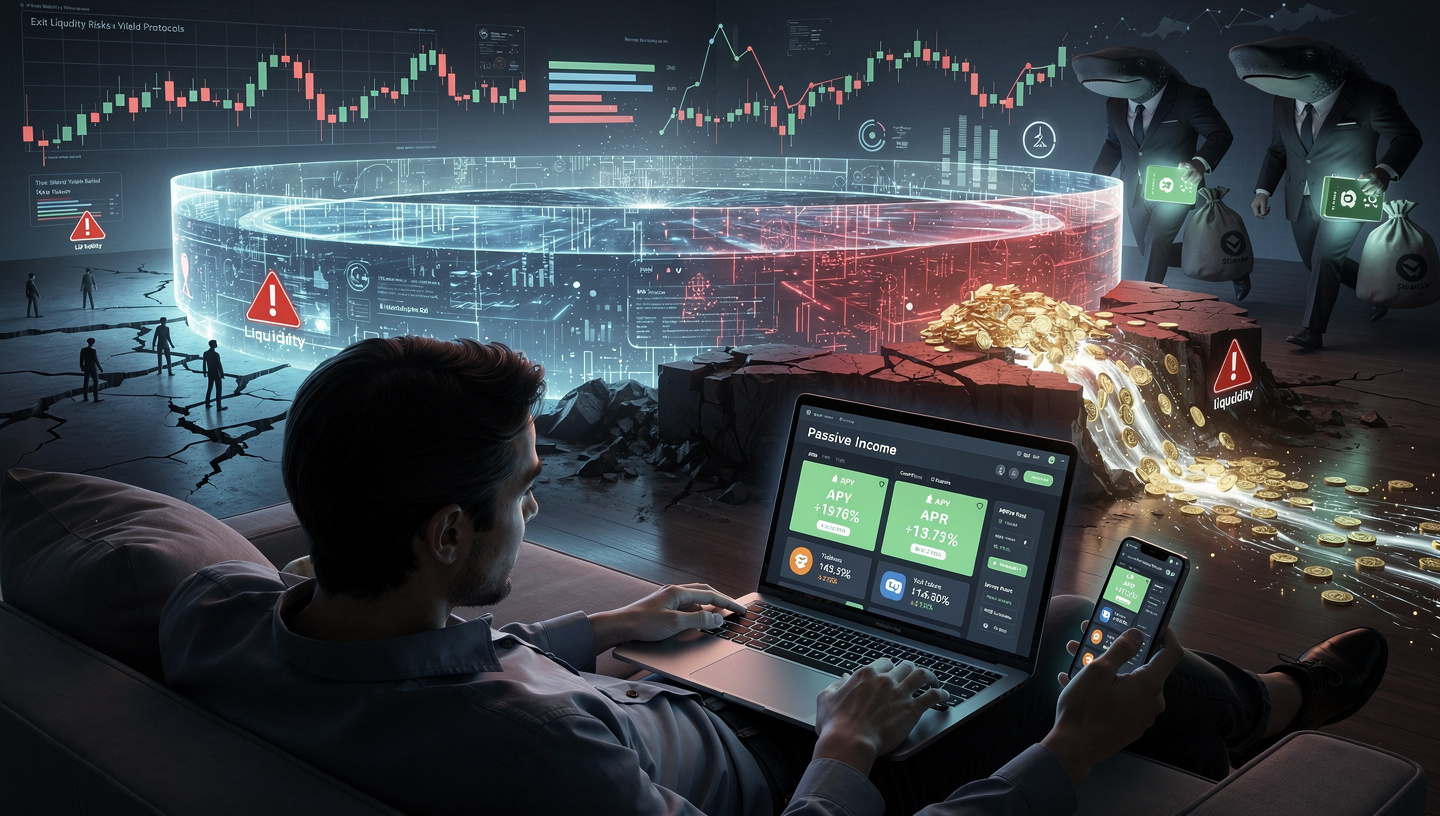
Crypto trading is often framed as a technical pursuit: charts, indicators, entries, exits. But anyone who has stayed long enough knows a deeper truth—the market is not the hardest opponent.
The hardest opponent is you.
Crypto is the most honest market ever created. It does not care about your background, your effort, or your intentions. It does not reward hard work, only correct positioning. It does not punish ignorance—only misplaced confidence. It reflects your psychology with brutal clarity, amplifying fear, greed, impatience, and discipline in real time.
This article is not a collection of “winning setups.”
It is a framework for understanding how trading actually works—across strategy, psychology, and timing—and how these three forces intertwine into a single craft.
If you remember nothing else, remember this:
Trading is not a game of prediction. It is a practice of alignment.
Alignment between:
- Strategy and market structure
- Timing and volatility
- Emotion and execution
Let us begin.
Part I: Strategy Is Not a System—It Is a Philosophy
1. The Illusion of the Perfect Strategy
Most traders search for the perfect strategy the way people search for a perfect answer to life: desperately, endlessly, and externally.
They ask:
- “What indicator works best?”
- “Which timeframe is most profitable?”
- “Which setup has the highest win rate?”
These questions are understandable—but incomplete.
A strategy is not a formula.
A strategy is a belief system about how markets behave.
Behind every strategy is an assumption:
- Trend-following assumes persistence.
- Mean reversion assumes balance.
- Breakout trading assumes expansion.
- Scalping assumes inefficiency.
If you do not understand why a strategy should work, you will abandon it the moment it stops working—which all strategies eventually do, temporarily.
The market does not reward complexity.
It rewards coherence.
2. Edge Is Not Accuracy—It Is Asymmetry
One of the most damaging myths in trading is that success comes from being “right” often.
Professional traders think differently.
They ask:
- “How much do I lose when I’m wrong?”
- “How much do I gain when I’m right?”
- “How often do these conditions truly appear?”
An edge exists when:
- Losses are small and controlled
- Wins are allowed to expand
- Conditions are repeatable, not frequent
In crypto, asymmetry is everywhere:
- High volatility
- Narrative-driven moves
- Liquidity gaps
- Reflexive momentum
The mistake is trying to capture everything.
A real strategy says:
“I do not trade most of the time—so that I can trade well when it matters.”
3. Strategy Must Match Identity
A strategy that works for someone else may psychologically destroy you.
Ask yourself:
- Can I hold through drawdowns?
- Can I wait days without trading?
- Can I execute quickly under pressure?
- Can I accept being wrong publicly—or privately?
Day trading rewards speed and emotional neutrality.
Swing trading rewards patience and conviction.
Position trading rewards humility and long-term thinking.
If your strategy fights your personality, you will self-sabotage.
The best strategy is not the most profitable one on paper.
It is the one you can execute flawlessly under stress.
Part II: Market Structure—The Language of Price
4. Price Is Information, Not Prediction
Price does not tell you what will happen.
It tells you what participants are doing now.
Crypto price action reflects:
- Fear rushing for exits
- Greed chasing continuation
- Indecision compressing volatility
- Capitulation transferring ownership
Charts are not mystical.
They are crowd psychology drawn in real time.
Understanding structure means understanding:
- Who is trapped
- Who is in control
- Who is waiting
5. Trends, Ranges, and Transitions
Markets exist in three states:
- Trend
- Range
- Transition
Most losses happen when traders mistake one for another.
- Trend strategies fail in ranges.
- Mean reversion fails in trends.
- Breakouts fail in transitions.
The goal is not to trade constantly, but to recognize the regime.
Key insight:
The market pays the trader who adapts, not the one who insists.
In crypto, transitions are violent.
They feel like fakeouts because they are—until they aren’t.
Patience during transitions is not inactivity.
It is preparation.
6. Liquidity Is the Real Battlefield
Price moves to where liquidity exists.
Not because of manipulation myths—but because markets require counterparties.
Liquidity pools around:
- Obvious highs and lows
- Round numbers
- Crowded stop placements
- Emotional decision points
Understanding liquidity changes how you see charts:
- Stops are fuel, not safety
- Volatility is not chaos, but release
- Wicks are conversations, not noise
Trading becomes less about prediction and more about positioning relative to others’ mistakes.
Part III: Psychology—The Silent Decider
7. Fear and Greed Are Not Enemies
Most traders try to eliminate emotion.
This is impossible—and unnecessary.
Fear and greed are not flaws.
They are information signals.
- Fear tells you risk feels unclear.
- Greed tells you opportunity feels urgent.
The problem is not emotion.
The problem is unexamined emotion.
Professional traders feel fear—but they act according to rules.
Amateurs feel excitement—and act according to impulse.
Discipline is not emotional absence.
It is emotional containment.
8. The Most Dangerous State: Hope
Fear cuts losses too early.
Greed enters too late.
But hope?
Hope destroys accounts quietly.
Hope says:
- “It will come back.”
- “Just a little more time.”
- “The market is wrong.”
Hope replaces decision-making with waiting.
Markets do not punish mistakes.
They punish refusal to accept reality.
The moment a trade violates your thesis, it is no longer a trade—it is a prayer.
9. Losses Are Tuition, Not Failure
Every trader pays tuition to the market.
The difference is what they receive in return.
- Some pay and learn.
- Others pay and repeat.
- A few pay and refine.
A loss is only expensive if it teaches nothing.
Ask after every loss:
- Was the entry wrong—or the timing?
- Was the idea invalid—or execution flawed?
- Was risk misjudged—or emotions unmanaged?
Progress in trading is not linear.
It comes in plateaus and breakthroughs, often disguised as frustration.
Part IV: Market Timing—The Art of Waiting
10. Timing Beats Intelligence
You can be right and still lose money.
Because timing is not about ideas—it is about context.
A good idea at the wrong time is indistinguishable from a bad idea.
Crypto exaggerates this truth:
- Narratives arrive before fundamentals
- Tops feel justified
- Bottoms feel irrational
Timing requires sensitivity to:
- Volatility cycles
- Sentiment extremes
- Participation levels
- Liquidity conditions
The best traders are not the most active.
They are the most selective.
11. Volatility Is a Season, Not a Constant
Volatility expands and contracts.
Most traders treat every day the same.
But markets breathe.
There are periods for:
- Accumulation
- Expansion
- Distribution
- Decay
Forcing trades during low-volatility periods creates overtrading.
Trading aggressively during exhaustion creates drawdowns.
Wisdom is knowing when not to press.
12. Patience Is a Competitive Advantage
In an always-on market, patience feels unnatural.
But patience is not inactivity.
It is strategic restraint.
Waiting:
- Keeps capital intact
- Preserves emotional clarity
- Sharpens execution when opportunity arrives
In crypto, the biggest moves often come after long boredom.
Those who survive the boredom earn the volatility.
Part V: Risk—The Only Thing You Control
13. Risk Management Is Respect for Uncertainty
No trader knows the future.
Risk management is an admission of that truth.
It answers:
- “What if I’m wrong?”
- “How much can I lose and stay rational?”
- “How many times can I fail and continue?”
Position sizing matters more than entries.
Survival matters more than profits.
The goal is not to avoid loss.
It is to avoid ruin.
14. Consistency Beats Brilliance
One exceptional trade means nothing.
Consistency compounds quietly.
- Small wins repeated
- Small losses contained
- Emotions regulated
- Process respected
Trading success is not dramatic.
It is almost boring—until you look back.
Conclusion: Trading as a Personal Evolution
Crypto trading is not merely financial.
It reshapes how you:
- Handle uncertainty
- Process loss
- Delay gratification
- Trust your judgment
It teaches humility faster than any book.
It rewards self-awareness more than intelligence.
It exposes who you are—before teaching who you must become.
If you approach trading as:
- A shortcut to wealth, it will punish you.
- A mirror for growth, it will transform you.
In the end, the market does not change.
You do.
And when strategy aligns with psychology,
when timing aligns with patience,
when risk aligns with respect—
Trading stops being a battle.
It becomes a craft.