Public goods have always posed a structural challenge to markets. They are non-excludable, non-rivalrous, and foundational to collective progress. Roads, clean air, scientific research, open-source software, digital infrastructure, and climate mitigation all share one defining feature: they benefit many, but cannot be easily monetized by any single actor. As a result, they are persistently underfunded.
Traditional public finance relies on taxation and state allocation. Philanthropy fills selected gaps. Corporate sponsorships and advertising support others. Yet these mechanisms remain geographically constrained, politically mediated, and frequently inefficient. They struggle to coordinate global contributors around borderless goods—especially digital ones.
Cryptographic networks introduce a new primitive: programmable, permissionless, transparent capital allocation. Blockchain-based systems allow value to be pooled, matched, distributed, audited, and governed without centralized intermediaries. This capability has catalyzed a new domain of innovation: crypto-powered public goods funding.
This article provides a rigorous examination of how blockchain networks are redesigning public goods financing. It analyzes the theoretical foundations, funding mechanisms, governance models, economic incentives, and real-world implementations across ecosystems such as Ethereum Foundation, Gitcoin, and Optimism Foundation. It evaluates strengths and limitations, and outlines a forward-looking architecture for sustainable, decentralized public goods funding at scale.
1. The Public Goods Problem: Economic Foundations
1.1 Defining Public Goods
In economic theory, public goods are characterized by:
- Non-excludability: It is difficult or impossible to prevent individuals from benefiting.
- Non-rivalry: One person’s consumption does not diminish availability to others.
Examples include:
- Open-source software
- Basic scientific research
- Public infrastructure
- Climate stability
- Cryptographic protocols
Markets underproduce public goods because contributors cannot fully capture the benefits of their investment. This creates a free-rider problem: rational actors wait for others to pay.
1.2 Digital Public Goods in the Crypto Era
Blockchains are themselves public goods. The base layers of networks such as Ethereum and Bitcoin provide shared settlement infrastructure. The open-source clients, research, and tooling around them are similarly public.
Ironically, crypto ecosystems depend heavily on public goods while lacking robust mechanisms to fund them sustainably.
This tension has forced innovation.
2. Why Crypto Enables New Funding Mechanisms
Blockchain systems introduce several structural advantages over traditional funding models:
2.1 Programmable Capital
Smart contracts enable automatic allocation rules. Funds can be:
- Escrowed
- Matched
- Distributed conditionally
- Released upon verification
This eliminates bureaucratic overhead and increases transparency.
2.2 Global Coordination
Crypto-native assets allow global participation without banking infrastructure. Contributors from any jurisdiction can fund shared projects in minutes.
2.3 On-Chain Transparency
All transactions are publicly auditable. This enhances accountability and reduces information asymmetry.
2.4 Native Incentive Alignment
Tokens embed governance and financial upside into ecosystems. Public goods contributors can receive reputational, governance, or economic rewards tied to network growth.
These primitives enable funding models that were previously impractical.
3. Quadratic Funding: A Breakthrough Mechanism
The most significant innovation in crypto-powered public goods funding is quadratic funding (QF).
3.1 Core Concept
Quadratic funding, formalized by Glen Weyl and Vitalik Buterin, allocates matching funds based on the square root of individual contributions.
If many individuals contribute small amounts, the project receives disproportionately higher matching.
Mathematically:
Matching allocation ∝ (Σ √contributions)²
This mechanism rewards broad support over concentrated capital.
3.2 Why It Matters
Traditional grants favor large donors. QF amplifies community preference intensity rather than capital weight.
It solves a key inefficiency:
- Wealth concentration no longer dictates allocation.
- Collective small signals dominate.
3.3 Real-World Implementation: Gitcoin Grants
Gitcoin pioneered QF in practice through Gitcoin Grants rounds.
Key features:
- Community contributions
- Matching pools from sponsors
- Transparent allocation
- Identity verification mechanisms to prevent sybil attacks
Over multiple funding rounds, Gitcoin has distributed tens of millions of dollars to open-source and Web3 infrastructure projects.
Quadratic funding represents the first credible market-based solution to public goods coordination at scale.
4. Retroactive Public Goods Funding
Another innovation is retroactive funding, pioneered by the Optimism ecosystem.
4.1 Concept
Instead of predicting impact, retroactive funding rewards projects after they have demonstrably created value.
This model assumes:
Impact is easier to evaluate retrospectively than prospectively.
4.2 Implementation: Optimism RetroPGF
Optimism Foundation launched Retroactive Public Goods Funding (RetroPGF) rounds, allocating substantial OP token grants to projects that contributed to the Optimism ecosystem.
Characteristics:
- Impact-based evaluation
- Citizen governance voting
- Transparent deliberation
- Token-based treasury allocation
This shifts funding logic from speculation to evidence.
4.3 Economic Implications
Retro funding changes incentives:
- Builders can create first, monetize later.
- Impact becomes a revenue stream.
- Networks reward ecosystem externalities.
This model resembles venture capital—but for ecosystem-wide benefit rather than equity extraction.
5. Protocol-Owned Treasuries and On-Chain Governance
Many crypto networks embed public goods funding directly into protocol economics.
5.1 Treasury Mechanisms
Protocols can allocate:
- Inflationary token issuance
- Transaction fee percentages
- Block rewards
- Seigniorage
to ecosystem development funds.
Examples:
- DAO treasuries
- Layer 1 ecosystem funds
- Layer 2 retroactive grants
5.2 DAO Governance
Decentralized Autonomous Organizations (DAOs) vote on funding proposals.
Advantages:
- Community legitimacy
- Transparent voting records
- Open proposal systems
Challenges:
- Voter apathy
- Governance capture
- Coordination inefficiencies
Public goods funding through DAOs is still evolving, but it represents a structurally new model of participatory public finance.
6. Identity and Sybil Resistance
Public goods funding requires robust identity systems.
Quadratic mechanisms are vulnerable to sybil attacks, where a single actor splits funds across multiple identities.
Solutions include:
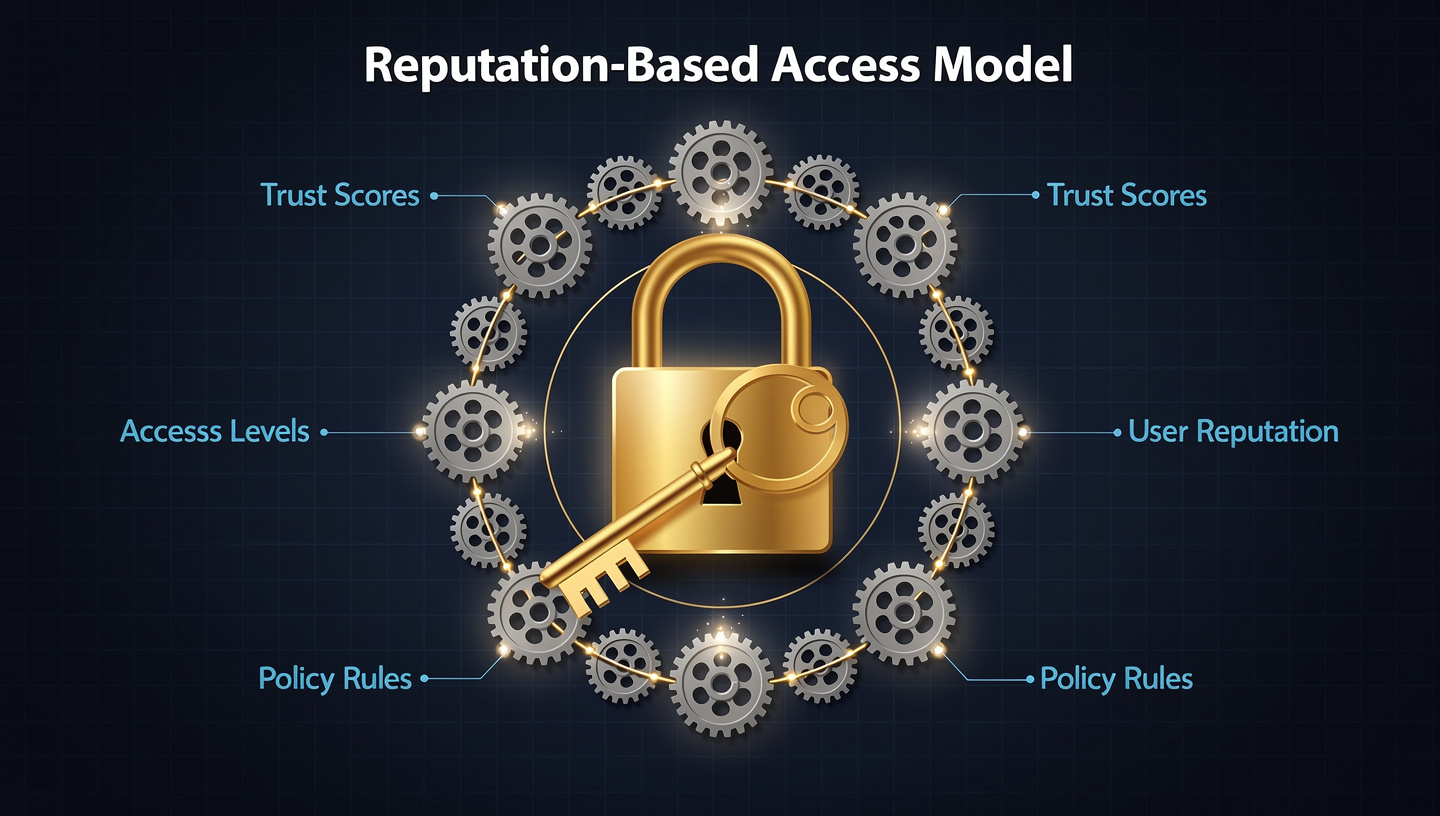
- Proof-of-humanity systems
- On-chain reputation scores
- Web-of-trust models
- Soulbound credentials
Without credible identity primitives, funding mechanisms degrade.
The identity layer is foundational to crypto public finance scalability.
7. Funding Open-Source Software at Scale
Open-source software (OSS) is a canonical public good.
The global digital economy depends on:
- Cryptographic libraries
- Developer tooling
- Infrastructure clients
Crypto ecosystems have funded:
- Ethereum client teams via the Ethereum Foundation
- Independent protocol researchers
- Cross-chain infrastructure
- Security audits
Compared to Web2, where OSS funding is ad hoc, crypto embeds funding pipelines directly into ecosystem growth.
This alignment is structural: protocol success depends on public goods sustainability.
8. Public Goods Beyond Crypto
Crypto-powered funding extends beyond blockchain-native infrastructure.
Emerging domains include:
8.1 Climate Coordination
On-chain carbon markets
Decentralized climate research funding
Global environmental DAOs
8.2 Scientific Research
Transparent grant allocation
Crowdfunded research DAOs
Milestone-based smart contract disbursement
8.3 Digital Knowledge Commons
Open educational resources
Decentralized publishing
Censorship-resistant archives
The architecture of programmable funding is applicable to any globally shared good.
9. Incentive Design and Mechanism Engineering
Public goods funding in crypto is fundamentally a mechanism design problem.
Key questions:
- How to measure impact?
- How to prevent collusion?
- How to balance token inflation and sustainability?
- How to minimize governance capture?
Game theory, cryptoeconomics, and behavioral economics are central disciplines here.
Mechanisms must be robust under adversarial conditions. Crypto systems operate in open, permissionless environments.
Poorly designed funding systems invite exploitation.
10. Critiques and Limitations
Crypto-powered public goods funding is not without challenges.
10.1 Volatility
Token-based treasuries fluctuate with market cycles.
10.2 Governance Concentration
Token distribution often mirrors capital concentration.
10.3 Regulatory Ambiguity
Jurisdictional compliance remains unclear for many DAO structures.
10.4 Coordination Overhead
Community voting is not automatically efficient.
These weaknesses must be addressed through iterative governance design and hybrid models.
11. Toward Sustainable Public Goods Infrastructure
The long-term viability of crypto-powered public goods funding depends on:
- Sustainable treasury design
- Credible neutrality
- Cross-chain interoperability
- Reliable identity systems
- Impact measurement frameworks
The next frontier includes:
- Cross-ecosystem funding pools
- Multi-chain quadratic rounds
- AI-assisted impact evaluation
- Public goods insurance mechanisms
12. The Strategic Significance
Public goods funding is not peripheral to crypto—it is existential.
Blockchains are coordination machines. Their value scales with ecosystem richness. Without public goods investment, ecosystems stagnate.
Crypto transforms public finance from:
- Bureaucratic allocation
to - Programmable coordination.
This is a structural reconfiguration of capital flows.
Conclusion: From Speculation to Stewardship
Crypto began as a monetary experiment. It evolved into programmable infrastructure. It is now becoming a laboratory for collective finance.
Crypto-powered public goods funding redefines how societies coordinate around shared resources. Through mechanisms such as quadratic funding, retroactive grants, and protocol-owned treasuries, blockchain ecosystems are designing financial systems that reward contribution rather than extraction.
The challenge ahead is not technological—it is institutional. Can decentralized networks build credible, resilient, and equitable funding systems that outperform traditional public finance?
If they succeed, the result will not merely fund open-source software or digital infrastructure. It will redefine how humanity funds its most important shared endeavors.
Public goods funding is no longer a peripheral experiment in crypto. It is becoming its moral and economic backbone.