Cryptocurrency was born from an idealistic dream: a financial system without gatekeepers, where anyone, anywhere, could participate freely. Over the past decade, that dream has attracted innovators, investors, artists, and everyday people seeking freedom from traditional finance.
Unfortunately, it has also attracted something else: scammers.
Wherever money flows quickly, fraud follows. And in crypto—where transactions are irreversible, identities are pseudonymous, and regulation lags behind innovation—scams don’t just exist; they evolve.
This article is not meant to scare you away from crypto. Instead, it’s designed to arm you with awareness. Because in crypto, knowledge isn’t just power—it’s protection.
Let’s explore the most common crypto scams, how they work psychologically and technically, and most importantly, how to spot them before it’s too late.
Why Crypto Is a Perfect Playground for Scammers
Before diving into specific scams, it’s important to understand why crypto is such fertile ground for fraud:
- Irreversible transactions – Once funds are sent, there’s no “undo.”
- Lack of central authority – No bank to call, no hotline to reverse mistakes.
- Technical complexity – New users don’t fully understand wallets, keys, or smart contracts.
- Hype-driven culture – Fear of missing out (FOMO) clouds judgment.
- Global reach – Scammers can operate anonymously across borders.
Scams don’t rely on technology alone. They rely on human psychology.
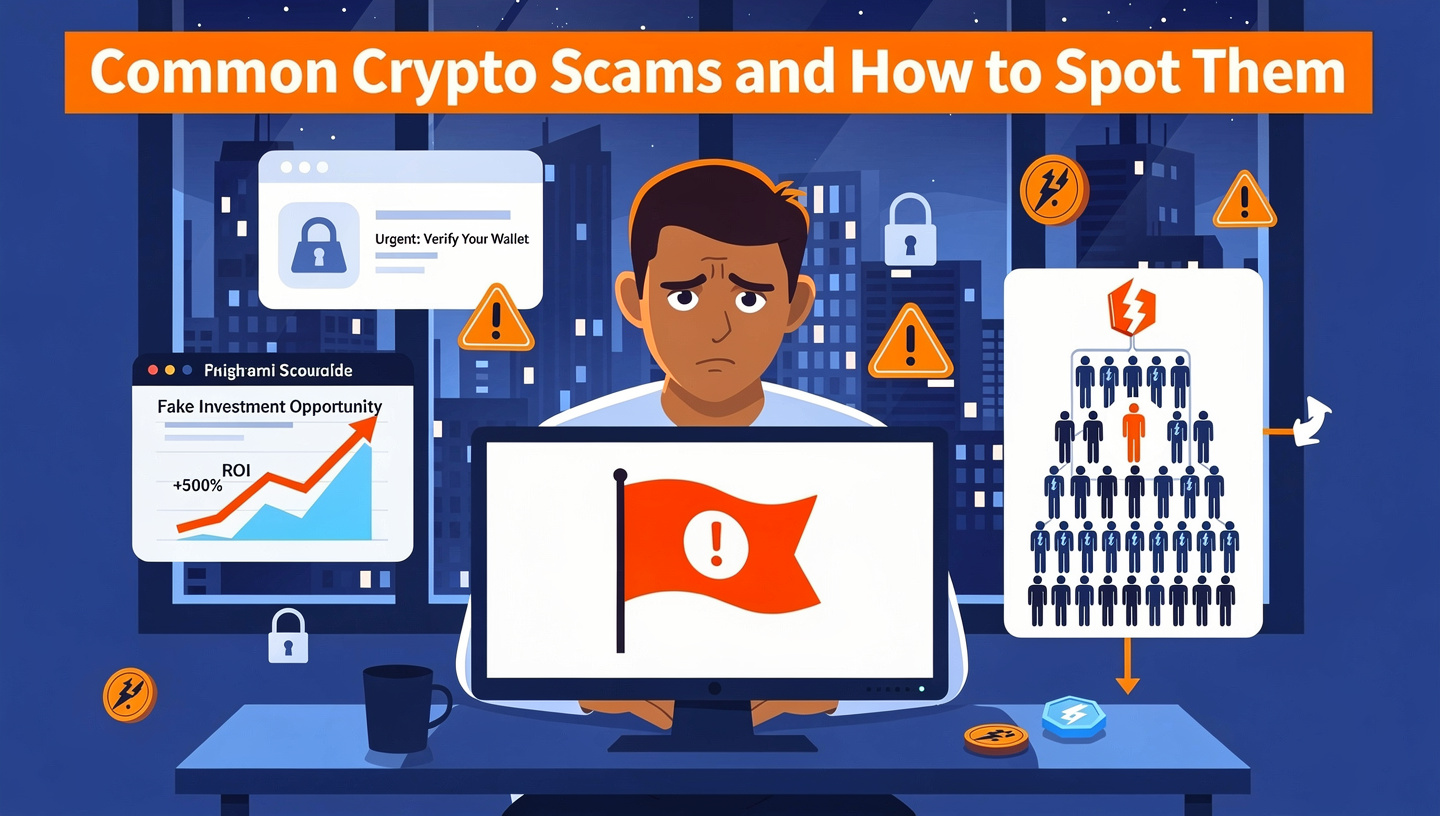
1. Phishing Scams: Stealing the Keys to Your Kingdom
How It Works
Phishing scams trick users into revealing:
- Private keys
- Seed phrases
- Wallet login credentials
Scammers impersonate:
- Wallet providers (MetaMask, Trust Wallet)
- Exchanges (Binance, Coinbase)
- NFT marketplaces (OpenSea, Blur)
- Support teams on Discord or Telegram
You might receive:
- A fake email asking you to “verify your wallet”
- A DM saying your account is “at risk”
- A cloned website that looks identical to the real one
Once you enter your seed phrase, your crypto is gone forever.
How to Spot It
- Legitimate services never ask for your seed phrase
- Check URLs carefully (tiny spelling changes matter)
- Beware of urgency: “Act now or lose your funds”
- Support will never DM you first
Golden Rule:
If anyone asks for your private key or seed phrase, it’s a scam. No exceptions.
2. Fake Giveaway Scams: “Send 1 ETH, Get 2 Back”
How It Works
These scams often impersonate:
- Famous crypto influencers
- Well-known founders
- Major projects
You’ll see posts like:
“We’re giving back to the community! Send 0.5 ETH and receive 1 ETH instantly!”
The transaction history may even show fake “returns” to trick viewers.
Why People Fall for It
- Authority bias (famous names)
- Greed mixed with excitement
- Social proof (fake comments, bots)
How to Spot It
- No legitimate project asks you to send crypto to receive more
- Check verified social accounts carefully
- Look for disabled comments or bot-filled replies
Truth:
There is no such thing as a free crypto multiplier.
3. Rug Pulls: When the Floor Disappears
How It Works
A rug pull happens when developers:
- Launch a new token or NFT project
- Build hype and attract investors
- Suddenly remove liquidity or abandon the project
Prices crash to zero, leaving investors with worthless tokens.
Common Signs
- Anonymous teams with no track record
- No locked liquidity
- No audited smart contracts
- Over-the-top marketing, little substance
- Promises of “guaranteed returns”
How to Spot It
- Check if liquidity is locked and for how long
- Research the team’s past projects
- Read the smart contract (or use analysis tools)
- Be cautious of projects that explode overnight
Remember:
In crypto, if something rises too fast with no fundamentals, it can fall even faster.
4. Romance Scams: Love as a Weapon
How It Works
Also known as “pig-butchering” scams, these involve:
- Long-term emotional manipulation
- Fake romantic relationships
- Gradual introduction to “investment opportunities”
The scammer gains trust over weeks or months before convincing the victim to invest in fake platforms.
Why They’re So Dangerous
- Emotional bonds override logic
- Victims are less likely to question advice
- Losses are often devastating and personal
How to Spot It
- The person avoids video calls or meets
- Conversations steer toward crypto investments
- Platforms they recommend aren’t well-known
- Pressure to invest “together”
Hard Truth:
No genuine romantic partner needs you to invest crypto to prove trust.
5. Fake Exchanges and Wallet Apps
How It Works
Scammers create:
- Fake trading platforms
- Malicious wallet apps
- Clone websites with real-time fake balances
Users deposit crypto, see “profits,” but withdrawals are impossible.
Red Flags
- App not listed on official app stores
- Poor grammar or broken UI
- No real company registration
- Withdrawal requires extra “fees” or “taxes”
How to Spot It
- Use only official links from trusted sources
- Verify app publishers
- Search for independent reviews
- Test with small amounts first
Rule of Thumb:
If you can deposit but can’t withdraw, it’s already too late.
6. Impersonation Scams on Social Media
How It Works
Scammers clone profiles of:
- Influencers
- Project founders
- Customer support accounts
They DM users offering:
- Special deals
- Private sales
- Technical help
How to Spot It
- Slight username variations
- New or unverified accounts
- Poor grammar or copy-paste responses
- Requests to move conversations off-platform
Best Practice:
Never trust DMs. Always initiate contact through official channels.
7. Malware and Clipboard Hijacking
How It Works
Malicious software:
- Replaces copied wallet addresses
- Logs keystrokes
- Drains wallets silently
This often comes from:
- Fake software downloads
- Pirated tools
- Browser extensions
How to Spot It
- Always double-check wallet addresses before sending
- Use hardware wallets
- Avoid installing unknown software
- Keep systems updated
Security Insight:
The most dangerous scams are the ones you never see.
8. Pump-and-Dump Schemes
How It Works
Groups artificially inflate a token’s price through coordinated buying and hype, then dump it on latecomers.
Retail investors buy the top. Insiders exit with profits.
Warning Signs
- Telegram groups promising “signals”
- Sudden spikes with no news
- Influencers pushing obscure tokens
Reality Check:
If you hear about it late, you’re likely the exit liquidity.
How to Protect Yourself: A Crypto Survival Checklist
- Never share private keys or seed phrases
- Use hardware wallets for long-term storage
- Verify URLs and smart contracts
- Avoid emotional decision-making
- Question urgency and guaranteed profits
- Start small when testing new platforms
- Assume DMs are scams until proven otherwise
The Psychology Behind Crypto Scams
Scams don’t succeed because people are stupid.
They succeed because scammers exploit:
- Fear
- Greed
- Trust
- Loneliness
- Inexperience
Understanding this removes shame and builds resilience.
Conclusion: Awareness Is Your Best Wallet
Crypto is a powerful tool—one that can reshape finance, creativity, and ownership. But like any powerful tool, it demands responsibility.
Scammers will never disappear. They will adapt, rebrand, and invent new tricks. The only constant defense is education.
In crypto, you are your own bank.
And that means you are also your own security team.
Stay curious. Stay skeptical. Stay safe.