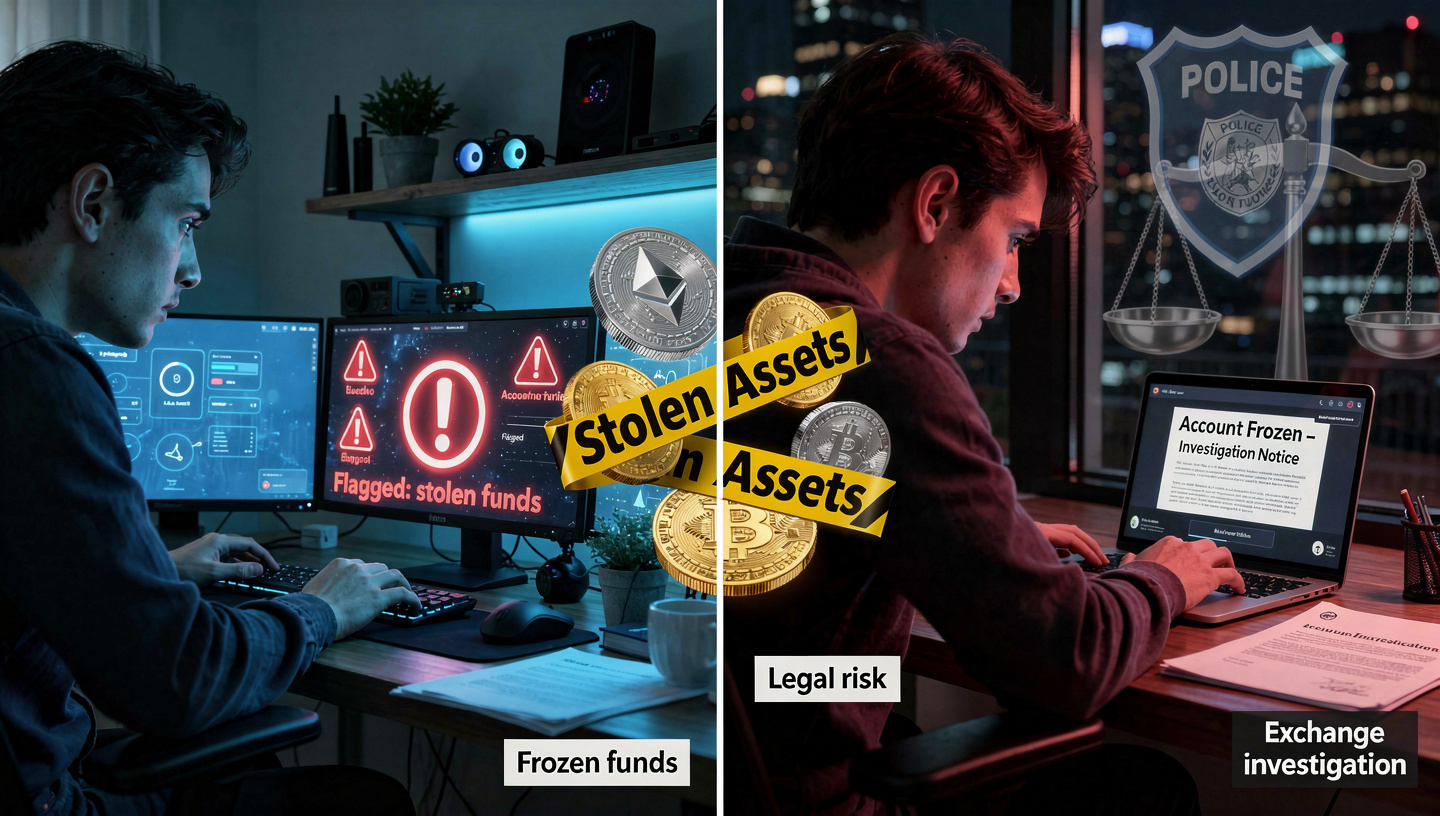
Immutability is one of the defining attributes of blockchain technology. Transactions recorded on networks such as Bitcoin and Ethereum are designed to be irreversible once confirmed. This technical finality is frequently cited as both a strength and a weakness: a strength because it prevents arbitrary interference, and a weakness because it complicates fraud recovery and consumer protection.
Yet immutability at the protocol level does not eliminate legal intervention. Courts issue freezing orders. Regulators seize exchange accounts. Law enforcement agencies recover private keys. Bankruptcy trustees unwind transfers. Smart contracts are paused or upgraded. In certain extreme cases, blockchain communities themselves have coordinated “reversals,” most famously after the 2016 DAO exploit.
This article examines, in depth, whether crypto transactions can be reversed by law. It analyzes the distinction between technical irreversibility and legal reversibility, the mechanisms through which authorities intervene, relevant case law, jurisdictional approaches, enforcement tools, and the evolving interface between decentralized infrastructure and centralized legal systems.
1. Technical Finality vs. Legal Finality
1.1 Protocol-Level Immutability
Most public blockchains achieve finality through consensus mechanisms. On proof-of-work systems like Bitcoin, transactions become increasingly irreversible as additional blocks are added. On proof-of-stake systems like Ethereum (post-Merge), finality is achieved through validator attestations and checkpointing.
From a purely technical standpoint:
- Once a transaction is confirmed and buried under sufficient blocks, it cannot be reversed without reorganizing the chain.
- Reorganization at scale would require extraordinary control of network resources (e.g., majority hash power or validator control).
- In practice, confirmed transactions are treated as final.
However, protocol-level immutability does not equate to legal immunity.
1.2 Legal Systems Operate Off-Chain
Law does not depend on rewriting the blockchain ledger. Courts and regulators operate through:
- Compelled transfers.
- Asset freezes.
- Injunctions.
- Custodial intervention.
- Personal liability.
- Criminal enforcement.
The blockchain record may remain unchanged, but ownership, control, and legal entitlement can shift.
The central question is therefore not whether the blockchain can be rewritten, but whether the legal system can compel or effect an equivalent outcome.
2. Categories of Reversibility
Crypto transaction “reversal” occurs in several distinct forms:
- On-chain reversal through consensus intervention (rare, community-driven).
- Exchange-level reversal or freeze (custodial).
- Court-ordered restitution or clawback.
- Insolvency clawbacks.
- Criminal seizure and forfeiture.
- Smart contract-level administrative controls.
Each operates under different legal and technical constraints.
3. Exchange-Level Reversals and Freezes
3.1 Custodial Control
Most retail users interact with centralized exchanges such as Binance or Coinbase. In custodial environments:
- Users do not control private keys.
- Exchanges maintain internal ledgers.
- Transfers between accounts may be off-chain.
If funds are transferred internally or withdrawn fraudulently, exchanges can:
- Freeze accounts.
- Reverse internal ledger entries.
- Block withdrawals.
- Cooperate with law enforcement.
This is not blockchain reversal. It is custodial intervention.
3.2 Regulatory Authority
Exchanges operating under licensing regimes (e.g., in the U.S., EU, UK, Singapore) must comply with:
- Anti-money laundering (AML) obligations.
- Sanctions enforcement.
- Court orders.
- Asset freezing directives.
If funds are sent to a custodial account, authorities can freeze or seize them without modifying the blockchain.
4. Court-Ordered Asset Freezes and Proprietary Claims
4.1 Crypto as Property
A threshold legal issue is whether crypto assets are property. Courts in multiple jurisdictions have affirmed that they are.
For example:
- UK courts have recognized crypto assets as property capable of being subject to proprietary injunctions.
- U.S. courts treat digital assets as property for purposes of fraud, theft, and bankruptcy.
Once classified as property, crypto assets become subject to:
- Injunctions.
- Constructive trusts.
- Tracing claims.
- Restitutionary remedies.
4.2 Freezing Orders
Courts can issue:
- Freezing injunctions.
- Mareva injunctions (in common law jurisdictions).
- Temporary restraining orders.
- Asset preservation orders.
If the assets are located in identifiable wallets controlled by exchanges or known individuals, enforcement becomes possible.
4.3 Tracing and Constructive Trusts
Courts may trace stolen crypto into downstream wallets. Even if assets move across multiple addresses, blockchain transparency enables forensic tracing. If funds are identifiable and recipients lack good faith purchaser status, courts may impose constructive trusts.
Again, the blockchain remains unchanged. The legal title shifts.
5. Criminal Seizure and Forfeiture
5.1 Law Enforcement Capabilities
Authorities have developed sophisticated blockchain analytics tools. Agencies such as the U.S. Department of Justice, Europol, and others regularly seize crypto assets.
For example:
- The U.S. government has seized large quantities of Bitcoin linked to criminal enterprises.
- Assets are transferred to government-controlled wallets after key recovery.
This is not reversal in the ledger sense. It is key-based seizure.
5.2 Methods of Seizure
Seizure occurs via:
- Confiscation of private keys.
- Cooperation from custodial platforms.
- Court-ordered surrender.
- Exploitation of operational security failures.
If law enforcement controls the private key, they control the asset.
6. Bankruptcy and Clawback Actions
6.1 Insolvency Law
When a crypto exchange or platform enters insolvency proceedings, prior transfers may be unwound under:
- Preferential transfer rules.
- Fraudulent conveyance laws.
- Avoidance powers.
In U.S. bankruptcy law, trustees may recover transfers made within certain lookback periods.
6.2 Practical Enforcement
If crypto was withdrawn shortly before bankruptcy, trustees may:
- Sue recipients.
- Demand return of assets.
- Seek monetary equivalents.
If recipients refuse, courts may issue judgments enforceable against other assets.
Blockchain immutability does not shield recipients from legal liability.
7. Smart Contract-Level Intervention
7.1 Admin Keys and Upgradeability
Many decentralized finance (DeFi) protocols incorporate:
- Upgradeable contracts.
- Emergency pause functions.
- Admin-controlled freeze mechanisms.
These features enable project teams to freeze tokens or prevent transfers.
7.2 Stablecoins and Blacklisting
Certain stablecoin issuers can blacklist addresses. For example, centralized stablecoin contracts allow freezing of funds at specific addresses.
This is technically on-chain intervention, but executed through administrative privileges embedded in the smart contract.
7.3 Regulatory Pressure
Regulators may compel issuers to freeze assets associated with sanctioned or criminal actors.
8. The DAO Hard Fork: A Historical Exception
The 2016 DAO exploit led to a controversial intervention in the Ethereum ecosystem. After a smart contract vulnerability resulted in significant loss of funds:
- The community voted to implement a hard fork.
- The fork effectively reversed the exploit’s effects.
- A minority rejected the fork, forming Ethereum Classic.
This event demonstrates that large-scale reversals are possible—but only through extraordinary social consensus. It was not a court-ordered reversal, but it shows that blockchain immutability is ultimately governed by community agreement.
Such events are rare and unlikely in mature ecosystems absent catastrophic circumstances.
9. Cross-Border Enforcement Challenges
9.1 Jurisdictional Complexity
Crypto transactions are borderless. Legal systems are not.
Challenges include:
- Identifying the defendant.
- Establishing jurisdiction.
- Enforcing judgments across borders.
- Accessing foreign exchanges.
9.2 Mutual Legal Assistance
Governments cooperate through mutual legal assistance treaties (MLATs) and international enforcement bodies.
Recovery becomes more difficult when:
- Funds are held in self-custody.
- Private keys are unknown.
- Actors operate anonymously.
In such cases, legal rights may exist without practical enforceability.
10. Are Self-Custodied Transactions Reversible?
10.1 Practical Reality
If a user sends crypto to:
- An incorrect address.
- A scammer’s wallet.
- A private self-custodied address.
There is no central authority capable of reversing the transaction.
Unless:
- The recipient cooperates.
- Law enforcement obtains private keys.
- Assets are transferred to a custodial platform.
Absent these conditions, recovery is unlikely.
10.2 Legal vs. Technical Outcome
A court may declare that funds belong to the victim. But if the defendant refuses compliance and cannot be compelled, the legal declaration does not restore the asset.
This gap between legal entitlement and technical control is a defining feature of crypto law.
11. Consumer Protection and Regulatory Trends
11.1 Expanding Regulatory Frameworks
Jurisdictions are increasingly regulating crypto service providers. Frameworks impose:
- Custodial safeguards.
- Mandatory reporting.
- Compliance programs.
- Consumer redress mechanisms.
These measures enhance recoverability in custodial contexts.
11.2 The Policy Tension
There is structural tension between:
- Decentralization and censorship resistance.
- Consumer protection and reversibility.
Regulatory models tend to increase control points. Fully decentralized systems resist such intervention.
12. Civil Liability Without Reversal
Even when crypto cannot be retrieved, victims may pursue:
- Damages claims.
- Fraud actions.
- Breach of fiduciary duty claims.
- Misrepresentation lawsuits.
Courts may award monetary damages denominated in fiat equivalent or crypto value.
The blockchain record remains intact. Financial consequences shift elsewhere.
13. Practical Scenarios
Scenario A: Sent to Wrong Address
- No central reversal mechanism.
- Possible recovery if recipient cooperates.
- Legal action viable if identity known.
Scenario B: Sent to Exchange
- Exchange may freeze upon notice.
- Court order can compel transfer.
Scenario C: Fraud via DeFi Protocol
- Depends on protocol architecture.
- Admin keys may enable freeze.
- Otherwise limited to civil litigation.
Scenario D: Criminal Enterprise Wallet
- Law enforcement may seize via key control.
- Forfeiture proceedings follow.
Conclusion
Can crypto transactions be reversed by law?
At the protocol level, no. Public blockchain transactions on networks like Bitcoin and Ethereum are designed to be immutable once finalized.
At the legal level, frequently yes—through indirect but effective mechanisms:
- Custodial freezes.
- Court orders.
- Constructive trusts.
- Insolvency clawbacks.
- Criminal seizures.
- Smart contract administrative controls.
The key distinction lies between ledger immutability and asset control. The blockchain record may never change, yet ownership and control can shift through legal compulsion.
Crypto is not outside the law. It operates at the intersection of code, property doctrine, enforcement capacity, and jurisdictional reach. The closer assets are to centralized intermediaries, the more reversible they become. The deeper they are embedded in self-custodied decentralized systems, the more legal recovery depends on identifying and controlling private keys.
Immutability is a technical design choice. Reversibility is a legal question. The two coexist—sometimes uneasily—within the evolving architecture of global crypto regulation.