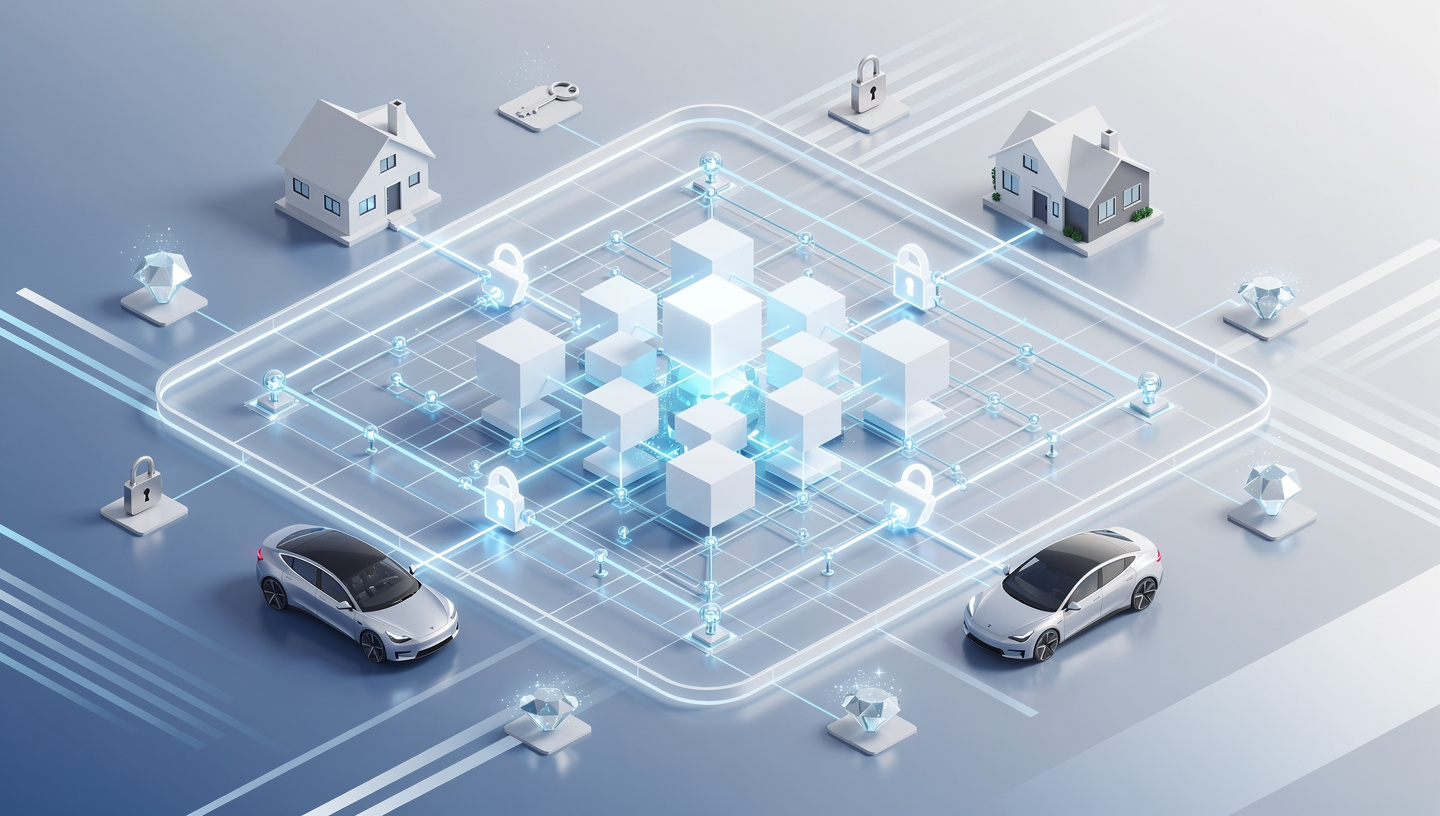
For most of its history, the blockchain industry has been architected around native digital assets—cryptocurrencies, governance tokens, NFTs, and DeFi primitives that exist entirely on-chain. Yet the next structural shift in crypto is not about inventing new tokens. It is about encoding the world’s existing value into programmable infrastructure. Real estate, sovereign debt, corporate bonds, commodities, invoices, private equity, infrastructure revenue streams—these are the multi-trillion-dollar markets that dwarf crypto’s current footprint.
The tokenization of real-world assets (RWAs) is not a marginal experiment. It represents a reconfiguration of capital markets. But tokenization at scale cannot be achieved on general-purpose blockchains optimized for speculative trading and validator incentives. It requires infrastructure deliberately engineered for regulatory compliance, deterministic settlement, identity-aware transfers, institutional custody, and high-assurance auditability.
Blockchains optimized for real-world assets are emerging as a distinct architectural category. They are designed not merely to host tokens, but to integrate legal ownership frameworks, compliance logic, and financial reporting standards directly into the protocol layer. This article provides a research-oriented analysis of how such blockchains differ from legacy crypto networks, what technical properties they must possess, and how platforms such as Ethereum, Avalanche, Polkadot, and Polygon are adapting—or being redesigned—to meet the demands of institutional-grade asset tokenization.
The Real-World Asset Thesis
What Counts as a Real-World Asset?
Real-world assets are off-chain economic rights represented digitally on a blockchain. These include:
- Government bonds and treasury bills
- Corporate debt and structured credit
- Commercial and residential real estate
- Private equity shares
- Trade receivables and invoices
- Commodities (gold, oil, agricultural products)
- Infrastructure revenue streams
- Intellectual property rights
The defining characteristic of RWAs is that the underlying asset exists in a legally recognized jurisdiction. Ownership is not purely cryptographic; it is enforced by courts, regulators, and contractual law.
Why Tokenize RWAs?
The economic logic behind RWA tokenization rests on four pillars:
- Programmability: Ownership, dividend distribution, coupon payments, and voting rights can be automated through smart contracts.
- Liquidity Transformation: Illiquid assets (e.g., private equity or real estate) can be fractionalized and traded in smaller units.
- Settlement Efficiency: Near-instant settlement reduces counterparty risk and capital lockup.
- Global Access: Cross-border investment barriers can be reduced via compliant digital rails.
Institutions such as BlackRock and Franklin Templeton have already piloted tokenized funds on blockchain infrastructure, signaling that RWAs are transitioning from experimentation to production deployment.
Why General-Purpose Blockchains Are Insufficient
Public blockchains were not designed for regulated financial instruments. They optimize for decentralization, censorship resistance, and permissionless participation. RWAs impose different constraints.
1. Identity and Compliance
Most public chains assume pseudonymity. Real-world assets require:
- Know Your Customer (KYC)
- Anti-Money Laundering (AML)
- Accredited investor verification
- Jurisdictional restrictions
Without identity-aware transaction controls, tokenized securities violate regulatory frameworks.
2. Deterministic Finality
Proof-of-Work networks like Bitcoin rely on probabilistic finality. High-value securities demand deterministic settlement guarantees to reduce legal ambiguity.
3. Asset Backing and Custodial Trust
RWA tokens must be linked to legally enforceable claims. This introduces:
- Off-chain custodians
- Legal trusts or SPVs
- Auditable reserve attestations
The blockchain becomes part of a hybrid system rather than a self-contained ledger.
4. Regulatory Reporting
Institutions must generate compliant financial statements. This requires structured metadata, identity tagging, and reporting APIs not native to early blockchain designs.
Architectural Requirements for RWA-Optimized Blockchains
To serve real-world assets effectively, a blockchain must incorporate the following structural properties.
1. Native Compliance Primitives
Instead of layering compliance on top of smart contracts, RWA chains embed compliance at the token standard or protocol level. Features include:
- Transfer restrictions enforced at the base layer
- Whitelisting and blacklisting functionality
- Jurisdiction-aware token logic
- Role-based access control
Standards such as ERC-1400 on Ethereum attempt to formalize security token functionality, but dedicated chains go further by integrating identity verification modules directly into consensus execution.
2. Modular Architecture
Modular blockchain design separates:
- Execution layer
- Data availability layer
- Settlement layer
Networks inspired by modular concepts pioneered within ecosystems like Polkadot allow specialized execution environments tailored to financial use cases, without compromising overall network interoperability.
3. High Throughput with Low Latency
Capital markets demand performance comparable to traditional exchanges:
- Sub-second block times
- High transaction throughput
- Predictable gas costs
Subnets on Avalanche demonstrate how dedicated validator sets can be configured for institutional applications, offering custom compliance parameters.
4. Interoperability
Tokenized assets must interact with:
- DeFi liquidity pools
- Cross-chain bridges
- Custodial banking APIs
Layer-2 ecosystems like Polygon enable scalable settlement while preserving compatibility with broader liquidity networks.
Legal-Technical Integration: The Missing Layer
The most critical dimension of RWA blockchains is not purely technical. It is legal-technical synchronization.
On-Chain vs Off-Chain Enforcement
An RWA token must map precisely to a legal claim. This often involves:
- Special Purpose Vehicles (SPVs)
- Legal trusts
- Custodial agreements
- Regulatory filings
The smart contract does not create ownership; it references legally binding documentation.
Oracles and Attestations
RWA systems depend heavily on data feeds:
- Asset valuations
- Reserve confirmations
- Corporate action announcements
Oracles must provide tamper-resistant, auditable data flows. This requires high-trust oracle architectures or cryptographic attestations.
Institutional Custody and Infrastructure
For real-world assets, custody cannot be purely self-custodial. Institutional participants require:
- Multi-signature custody frameworks
- Hardware security modules (HSMs)
- Insurance-backed custodial arrangements
- Regulatory compliance audits
The infrastructure layer becomes a hybrid of blockchain security and traditional financial custodianship.
Token Standards for Securities
Several token standards aim to encode securities logic:
- ERC-1400 (Security Tokens)
- ERC-3643 (Permissioned Token Standard)
- Proprietary institutional token frameworks
These standards include:
- Partitioned balances
- Forced transfers (for legal enforcement)
- Transfer validation hooks
RWA-optimized chains frequently integrate such standards natively, reducing reliance on external smart contract complexity.
Settlement and Atomic Delivery-versus-Payment (DvP)
Traditional securities settlement involves T+2 cycles. Blockchain-based settlement enables:
- Atomic DvP transactions
- Real-time gross settlement
- Reduced counterparty risk
For tokenized bonds and treasury instruments, atomic settlement reduces capital inefficiencies significantly.
Institutions piloting blockchain-based treasury funds, including initiatives by BlackRock, demonstrate that blockchain settlement can coexist with regulated investment products.
Stablecoins as the Liquidity Rail
Real-world assets require stable settlement currency. Stablecoins provide programmable liquidity.
On networks like Ethereum, stablecoins have become the primary medium of exchange for tokenized assets. However, RWA-focused chains often incorporate:
- Permissioned stablecoin variants
- Central bank digital currency (CBDC) integration pathways
- Institutional-grade settlement tokens
Stablecoin interoperability becomes foundational for RWA ecosystems.
Risk Surfaces in RWA Blockchains
Despite their promise, RWA blockchains introduce new risk vectors:
- Legal Ambiguity: If token-holder rights are not clearly enforceable in court, the token loses economic meaning.
- Custodial Risk: Off-chain asset custodians represent centralized failure points.
- Regulatory Shifts: Jurisdictional changes can invalidate token structures.
- Oracle Manipulation: Asset valuation feeds can be corrupted.
- Liquidity Fragmentation: Isolated RWA chains risk thin secondary markets.
Mitigation requires robust governance frameworks and layered security.
Governance and Validator Composition
Unlike open networks, RWA-optimized blockchains often implement curated validator sets. Validators may include:
- Regulated financial institutions
- Compliance-certified entities
- Infrastructure providers
This semi-permissioned model balances decentralization with regulatory accountability.
Subnet architectures, such as those enabled on Avalanche, allow tailored validator configurations for asset-specific environments.
The Economic Impact of RWA-Optimized Chains
The long-term implications of RWA blockchains are structural:
Capital Efficiency
Instant settlement reduces collateral requirements and frees working capital.
Global Liquidity Pools
Fractionalization enables global investors to access previously inaccessible asset classes.
Cost Compression
Intermediary reduction lowers administrative overhead in issuance, transfer, and settlement.
Transparency
On-chain auditability increases investor confidence and reduces information asymmetry.
The Convergence of DeFi and TradFi
Real-world asset blockchains create a convergence layer between decentralized finance (DeFi) and traditional finance (TradFi).
DeFi protocols can:
- Accept tokenized treasury bonds as collateral
- Provide yield aggregation across real-world instruments
- Enable structured credit markets
Meanwhile, institutions gain access to:
- Automated liquidity
- On-chain risk management tools
- Composable financial primitives
The interoperability between RWA tokens and decentralized liquidity pools marks a structural evolution in capital markets.
Future Directions
1. On-Chain Compliance as a Service
Compliance modules may become composable middleware.
2. Jurisdiction-Specific Subnets
Dedicated regulatory zones embedded within shared infrastructure.
3. Central Bank Integration
CBDCs interacting with tokenized securities settlement systems.
4. Institutional DeFi Gateways
Bridging compliant RWA tokens into broader DeFi ecosystems.
Conclusion: Engineering the Financial Substrate of the Physical World
Blockchains optimized for real-world assets are not incremental upgrades to existing crypto networks. They represent a re-architecture of financial infrastructure. Where early blockchains prioritized decentralization purity, RWA chains prioritize enforceability, compliance, and capital efficiency.
The transition from purely digital tokens to legally enforceable real-world assets transforms blockchain from speculative substrate to institutional backbone. Platforms such as Ethereum, Avalanche, Polkadot, and Polygon are early steps in this evolution, but the ultimate design paradigm is clear: compliance-native, modular, identity-aware, interoperable infrastructure capable of representing the full spectrum of global capital.
The blockchain industry’s long-term legitimacy will not be secured by memecoins or speculative cycles. It will be secured by its capacity to tokenize, settle, and govern the real economy. RWA-optimized blockchains are the foundation of that transition.