Every civilization encodes its values in art.
Cave paintings documented survival. Renaissance frescoes glorified divinity and power. Photography compressed memory into light. Cinema industrialized storytelling. Social media atomized attention.
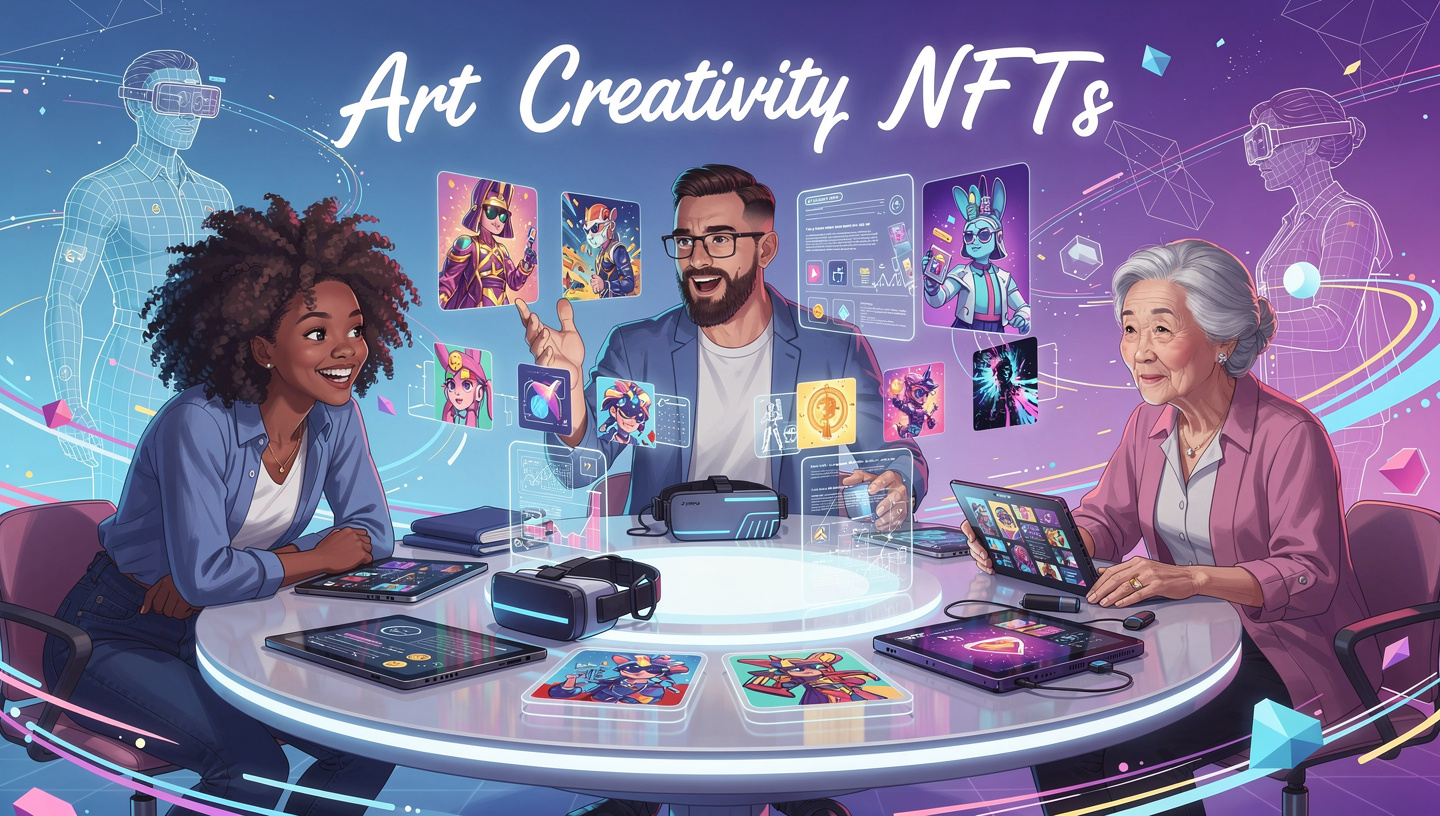
Crypto-native societies introduce something fundamentally new: art that is natively digital, provably scarce, economically composable, and globally transferable without intermediaries.
This is not merely a new medium. It is a new cultural substrate.
Non-fungible tokens (NFTs) are often discussed in terms of speculation, hype cycles, or price volatility. That framing misses the deeper transformation. NFTs represent the first time in history that creative works can exist as sovereign digital property, programmable at the protocol layer, and embedded directly into economic systems.
In a crypto world, creativity is no longer downstream from institutions. It becomes an on-chain primitive.
This article examines how NFTs reshape art, authorship, patronage, identity, and collective culture—and how these mechanisms scale into a full civilization model.
1. From Objects to Ledgers: The Structural Shift in Art Ownership
Traditional art economies rely on physical scarcity and institutional validation.
Ownership is established through:
- Galleries
- Auction houses
- Provenance paperwork
- Curatorial authority
- Legal registries
These systems are slow, opaque, and exclusionary. Artists typically surrender control. Buyers depend on intermediaries. Royalties are rare. Global participation is constrained by geography, regulation, and capital.
NFTs invert this architecture.
An NFT is not the artwork itself. It is a cryptographic record that asserts:
- Uniqueness
- Ownership
- Transfer history
- Metadata
- Optional embedded logic (royalties, permissions, access)
This matters because it replaces subjective trust with deterministic verification.
For the first time, a digital file can behave like a scarce asset—without needing a central registrar.
This transition from objects to ledgers unlocks several structural changes:
Native Digital Provenance
Every transaction is recorded permanently. No lost certificates. No forged histories. The full lifecycle of a piece—from minting to resale—exists on-chain.
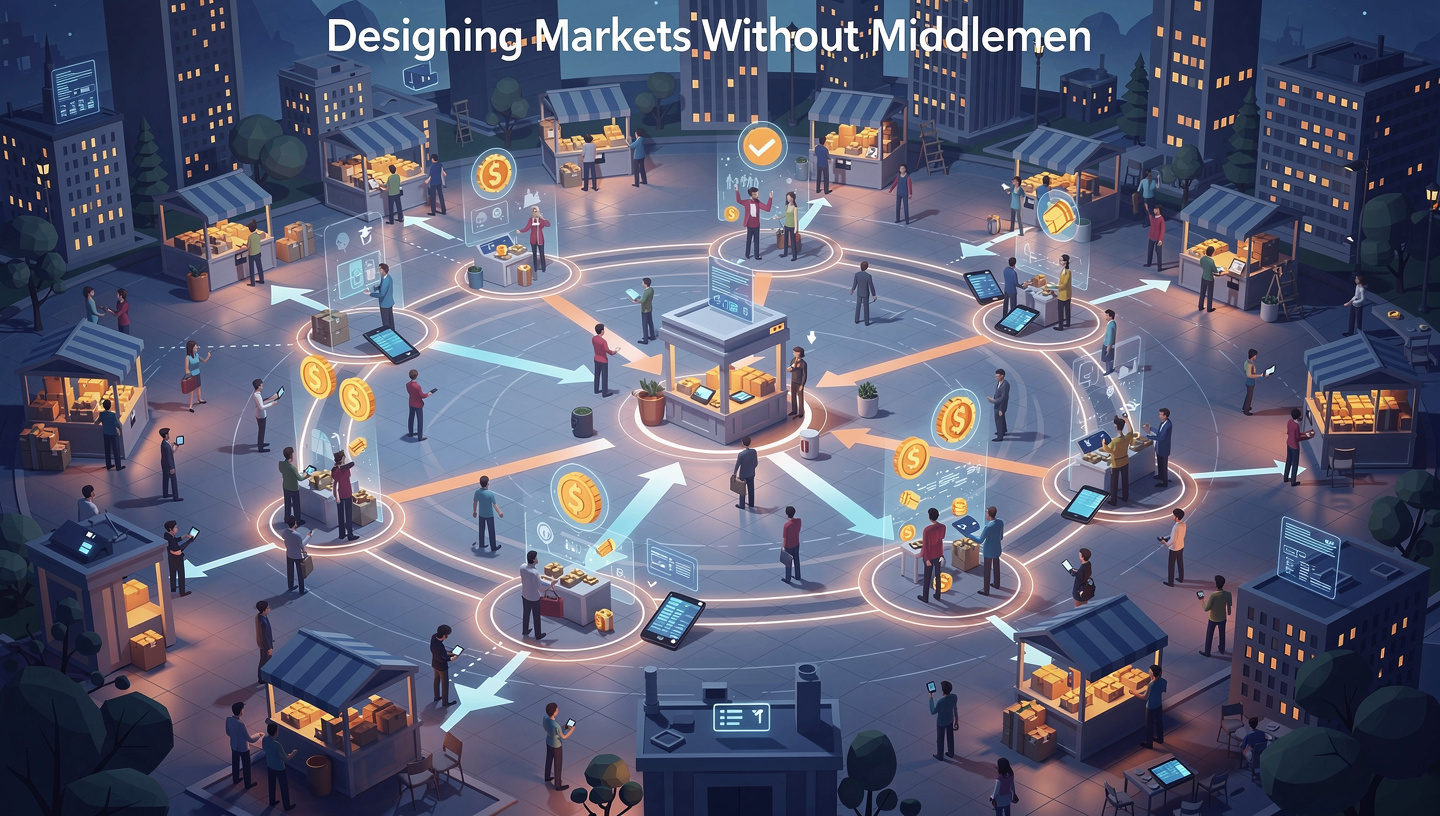
Permissionless Markets
Artists publish directly. Collectors acquire globally. No gatekeepers are required to validate participation.
Composable Rights
Smart contracts enable automated royalties, fractional ownership, gated access, and derivative licensing—all without legal intermediaries.
Art becomes software.
2. Creators Without Borders: The End of Geographic Patronage
Historically, artists clustered around capitals of wealth: Florence, Paris, New York, London.
Crypto dissolves that gravity.
A digital illustrator in Lagos can sell to a collector in Seoul. A 3D artist in Hanoi can collaborate with a musician in Berlin. Payment clears in minutes. Royalties execute automatically.
Platforms such as OpenSea and Foundation operationalized this shift by providing open marketplaces where identity is wallet-based rather than nationality-based.
The result is a planetary creative economy.
Key consequences:
- Emerging-market creators gain direct access to global capital
- Language and culture diversify NFT aesthetics
- Creative labor becomes location-independent
- Talent flows toward networks, not cities
In crypto civilization, culture routes around borders.
3. Programmable Patronage and the Return of the Renaissance Model
NFTs revive an ancient economic pattern: patronage.
But this time, it scales.
Instead of aristocrats funding painters, thousands of pseudonymous collectors back creators through:
- Primary NFT purchases
- Royalty-bearing secondary markets
- DAO grants
- Crowdfunded mints
- Token-gated communities
Unlike historical patronage, modern NFT systems embed incentives directly into contracts.
Creators benefit from long-term appreciation via resale royalties. Collectors benefit from early discovery. Communities benefit from shared upside.
This creates a three-sided alignment:
- Artist produces culture
- Collectors provide capital
- Networks amplify visibility
No single party controls the system.
A prominent early example was Beeple, whose NFT sale demonstrated that purely digital art could command institutional-scale value—without galleries or auction houses dictating terms.
That moment marked a psychological inflection point: digital creation became economically sovereign.
4. NFTs as Cultural Infrastructure, Not Collectibles
Most public discourse frames NFTs as collectibles.
This is reductive.
In crypto societies, NFTs function as cultural infrastructure.
They encode:
- Membership
- Reputation
- Access rights
- Creative lineage
- Identity signals
Consider what changes when NFTs are used as:
Identity Primitives
Your wallet holds visual artifacts that represent taste, affiliations, and history. Avatars, badges, and art collections become social credentials.
Access Keys
NFT ownership can unlock:
- Private forums
- Physical events
- Software features
- Educational content
- Creative collaborations
Culture becomes token-gated.
Creative Building Blocks
Artists remix each other’s work using on-chain permissions. Derivatives become traceable. Attribution is automatic.
Creativity becomes composable.
This transforms NFTs from static objects into living cultural protocols.
5. Generative Art and Algorithmic Aesthetics
One of the most profound developments in NFT culture is generative art.
Here, artists write algorithms instead of images.
Each mint triggers code that produces a unique output based on deterministic randomness. The artist designs the system; the blockchain executes it.
This introduces a new creative paradigm:
- The artwork is not a file
- It is a process
Collectors become co-creators, instantiating pieces at mint time.
Generative NFTs merge:
- Computer science
- Visual design
- Probability theory
- On-chain execution
They represent a synthesis of engineering and aesthetics that was previously impractical at scale.
In crypto civilization, art is no longer handcrafted alone—it is co-authored by machines.
6. Community as Canvas: Collective Creativity at Scale
NFT-native communities operate differently from traditional fan bases.
They are:
- Economically aligned
- Pseudonymously organized
- Globally distributed
- Rapidly adaptive
Ownership creates participation.
Members propose exhibitions, fund murals, commission music, organize conferences, and bootstrap media channels. Creative output emerges from coordination, not hierarchy.
This is a shift from audience to stakeholder.
Entire cultural movements now originate inside tokenized communities, evolving through Discord servers and governance votes rather than editorial boards.
Art becomes collective infrastructure.
7. NFTs and the Reconfiguration of Creative Labor
Crypto also reframes how creative work is compensated.
Traditional pipelines:
Artist → Platform → Advertisers → Audience
NFT pipelines:
Artist → Network → Collectors
No ad-driven extraction. No opaque algorithms. Value flows directly to creators.
Additional innovations include:
- Revenue-sharing smart contracts
- Cooperative studios governed by tokens
- Micro-patronage via fractional NFTs
- Automated royalty enforcement
Creative labor becomes modular, transparent, and globally liquid.
This is not a minor optimization. It is a fundamental restructuring of cultural economics.
8. Physical–Digital Hybrids: When NFTs Leave the Screen
NFTs increasingly anchor real-world experiences.
Examples include:
- Gallery installations linked to on-chain ownership
- Fashion items paired with digital twins
- Concert tickets issued as NFTs
- Architectural access controlled by tokens
The boundary between physical and digital culture collapses.
In crypto societies, cities themselves become token-aware. Museums verify wallets. Venues recognize NFTs. Public art projects are crowdfunded on-chain.
Culture becomes spatially programmable.
9. Long-Term Worldbuilding: Art in a Crypto Civilization
Project forward several decades.
In a mature crypto civilization:
- Every citizen has a wallet identity
- Creative works are minted at birth
- Education portfolios are NFTs
- Career achievements are tokenized
- Cultural memory lives on-chain
Artists no longer seek gallery approval. They cultivate networks.
Curators become protocol designers.
Museums operate as DAOs.
Entire aesthetic movements emerge inside smart contracts.
Art becomes an evolving layer of civilization, inseparable from economics, governance, and identity.
Creativity is no longer peripheral. It is infrastructural.
10. Challenges: Speculation, Sustainability, and Signal-to-Noise
This transition is not without friction.
Key unresolved issues include:
Speculative Distortion
Short-term flipping can overshadow artistic merit, creating incentive misalignment.
Discoverability
Open markets suffer from saturation. Quality signaling remains an open problem.
Preservation
Ensuring long-term storage of digital assets requires decentralized infrastructure and incentives.
Cultural Homogenization
Meme-driven aesthetics risk flattening diversity without conscious stewardship.
These are not reasons to dismiss NFTs. They are design constraints for the next iteration of creative systems.
Crypto civilization is still early-stage.
Conclusion: Art as a First-Class Citizen of the Blockchain Age
NFTs are not about JPEGs.
They are about ownership without permission, creativity without borders, and culture without gatekeepers.
They turn art into an executable asset. They turn communities into co-creators. They turn identity into a composable ledger.
Most importantly, they restore agency to creators.
In crypto-native societies, art is no longer a luxury layered atop economic systems. It is part of the system—embedded directly into protocols, wallets, and networks.
This is what makes NFTs historically significant.
They are not a trend.
They are the cultural operating system of a programmable world.
And in that world, creativity is not merely expressed.
It is minted, shared, governed, and lived—on-chain.