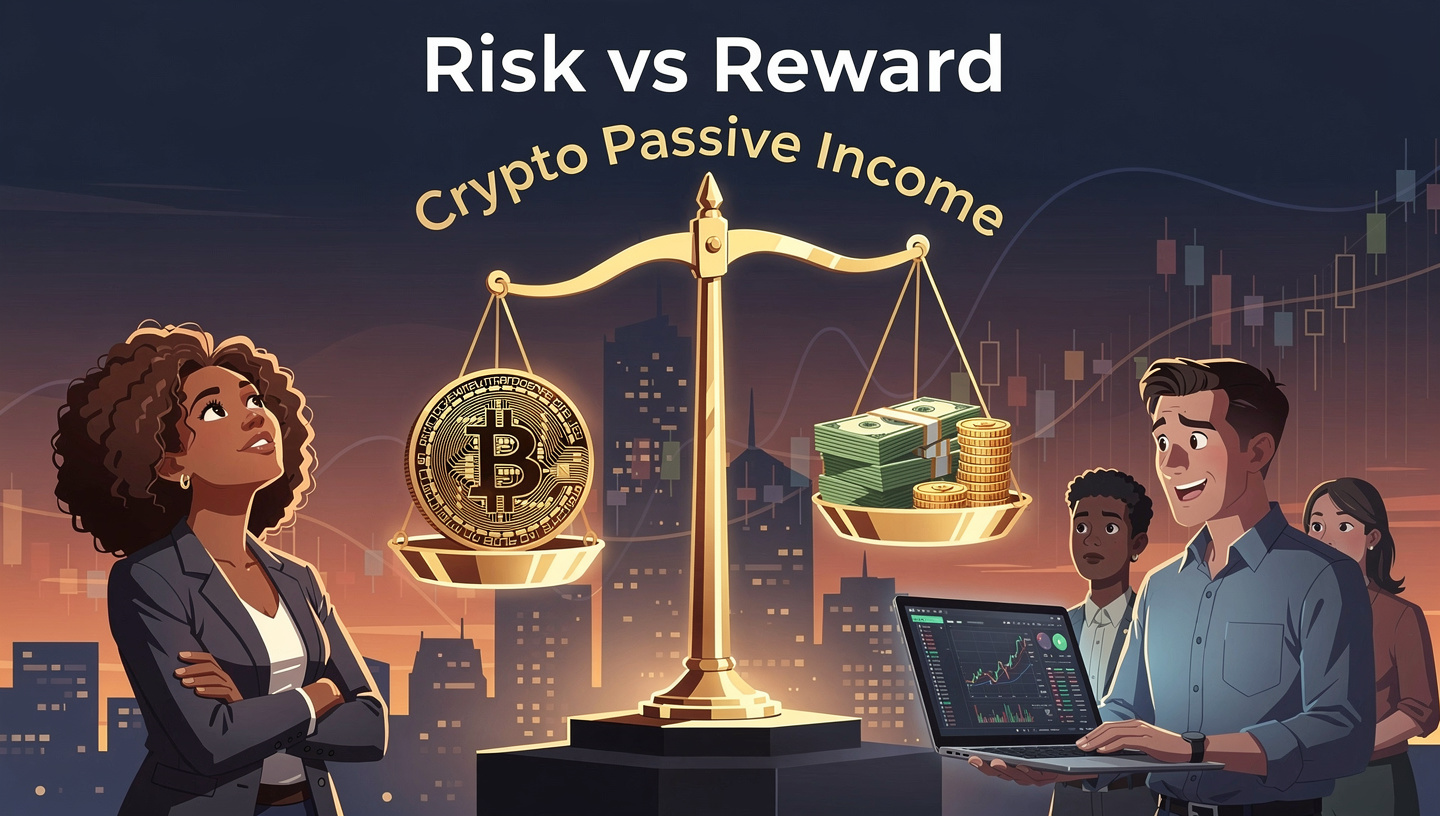
Meme coins are the market’s most uncomfortable mirror.
They do not pretend to be efficient.
They do not ask to be taken seriously.
And yet, they absorb billions in liquidity, outperform carefully modeled “fundamentals,” and force professional investors to confront an unsettling question:
If markets are rational, why do meme coins keep winning cycles?
Most analysis fails here because it begins with moral judgment instead of structural reasoning. Meme coins are dismissed as gambling, scams, or collective delusion—labels that feel intellectually safe but analytically lazy. The truth is more inconvenient: meme coins expose blind spots in traditional market theory, particularly around attention, coordination, narrative velocity, and reflexivity.
This article does not defend meme coins.
It dissects them.
The objective is not to decide whether meme coins are “good” or “bad,” but to answer a more serious question:
Are meme coins merely decentralized gambling instruments, or are they an emergent financial primitive shaped by internet-native coordination?
The answer, as always in markets, is not binary.
Defining the Meme Coin: What Actually Makes a Meme Coin?
A meme coin is not defined by technology.
It is defined by absence.
No proprietary protocol.
No novel consensus mechanism.
No defensible cash flow.
Often no roadmap that survives first contact with reality.
What meme coins do possess is more subtle—and more powerful:
- A recognizable symbol
- A compressible narrative
- Low cognitive load
- High emotional resonance
- Frictionless social transmission
In market terms, meme coins optimize for virality over utility.
This is not accidental. In an environment where thousands of tokens compete for attention, narrative compression becomes a competitive advantage. Meme coins are financial instruments designed to be understood instantly, shared effortlessly, and emotionally reinforced socially.
That alone separates them from most “serious” crypto projects.
The Gambling Argument: Why Meme Coins Look Like Pure Speculation
Critics are not wrong to compare meme coins to gambling. In fact, from a surface-level analysis, the resemblance is strong.
Key Gambling Characteristics
- Negative-Sum Dynamics for Late Entrants
Early holders benefit disproportionately. Late buyers subsidize exits. - Outcome Dominated by Timing, Not Analysis
No discounted cash flow, no usage metrics, no protocol revenue. - Extreme Volatility with Asymmetric Information
Insider wallets, coordinated marketing, opaque distribution. - Psychological Reinforcement Loops
Dopamine cycles driven by price movement, not progress.
From this angle, meme coins resemble slot machines with social media APIs. Price action replaces probability tables. Influencers replace dealers. Liquidity pools replace casinos.
If analysis stopped here, the case would be closed.
But it doesn’t.
Why the Gambling Framing Is Incomplete (and Conveniently Wrong)
Calling meme coins “gambling” explains behavior—but it does not explain persistence.
Pure gambling games do not evolve. Meme coins do.
Pure gambling markets do not create cultural gravity. Meme coins do.
Pure gambling does not onboard millions into a financial system. Meme coins have.
This suggests something else is happening beneath the surface.
The gambling framing fails because it assumes markets exist only to price fundamentals. In reality, markets also price belief, coordination, and expectation of future participation.
That is not new. Crypto simply removed the gatekeepers.
Meme Coins as Coordination Assets
At their core, meme coins function as coordination instruments.
They answer one critical question faster than any other asset class:
“What are we collectively paying attention to right now?”
Traditional assets require justification. Meme coins require alignment.
When enough participants agree—explicitly or implicitly—that a symbol matters, liquidity follows. Price becomes the feedback mechanism that reinforces belief, which attracts more participants, which strengthens the signal.
This is reflexivity in its purest form.
Meme coins compress the time between idea → coordination → capital allocation to near zero.
That is not gambling innovation.
That is market structure innovation.
Attention as a Scarce Resource
Modern markets are not capital-constrained. They are attention-constrained.
Retail investors do not lack access to assets. They lack bandwidth to analyze them. Meme coins exploit this reality by minimizing friction at every layer:
- No whitepaper to read
- No tokenomics to model
- No roadmap to verify
The value proposition is simple:
“You either get it immediately, or you don’t.”
This makes meme coins uniquely suited to an era dominated by short-form content, algorithmic feeds, and social signaling. In that sense, meme coins are not a regression—they are a logical adaptation.
Liquidity as Culture
One of the least discussed aspects of meme coins is how they merge culture and liquidity into a single asset.
Owning a meme coin is not merely a financial position. It is a social statement:
- Belonging to a group
- Participating in a shared joke
- Aligning against perceived financial elitism
This matters because culture sustains markets longer than logic. People will hold assets that represent identity even when fundamentals are absent.
Traditional finance underestimates this because it treats markets as spreadsheets. Meme coins operate closer to anthropology.
The Innovation Layer Most Analysts Miss
Meme coins introduced several structural innovations to crypto markets:
1. Radical Simplicity
They stripped crypto down to its most basic components: wallet, token, price.
2. Permissionless Narrative Formation
No foundation decides the story. The crowd does.
3. Faster Market Feedback Loops
Price reacts to sentiment in real time, without institutional delay.
4. Socially Enforced Liquidity
Liquidity migrates where attention migrates—no roadmaps required.
These are not trivial developments. They represent a shift in how markets form consensus.
Where Meme Coins Break (And Why That Matters)
Innovation does not imply sustainability.
Meme coins fail structurally in several predictable ways:
- Narrative Exhaustion: Attention decays faster than liquidity can exit.
- Centralized Distribution: Early wallets dominate outcomes.
- Zero Reinvestment Mechanism: No way to recycle value into growth.
- Fragile Trust: One betrayal collapses the entire structure.
These failures are not accidents. They are the cost of speed.
Meme coins trade durability for velocity.
Are Meme Coins a Phase or a Permanent Layer?
History suggests they are neither a passing fad nor a stable foundation.
Meme coins are a stress test for markets.
They reveal:
- How quickly coordination can form
- How little information is required for capital movement
- How powerful narrative can be when distribution is frictionless
Future financial instruments will not look like today’s meme coins—but they will inherit their lessons.
Ignoring them would be a mistake. Romanticizing them would be worse.
So, Are Meme Coins Gambling or Market Innovation?
The honest answer is uncomfortable:
They are both—and that duality is precisely the point.
Meme coins are gambling instruments built on top of a genuine innovation in market coordination. They are reckless, inefficient, and often predatory—but they are also revealing, adaptive, and structurally informative.
They are not the future of finance.
They are a prototype of how fast finance can move when belief outruns bureaucracy.
Markets evolve by testing extremes. Meme coins are one such extreme.
Dismissing them outright does not make you rational.
Understanding why they work makes you dangerous—in the best possible way.
Final Thought
Meme coins did not break the market.
They exposed it.
Markets, like people, rarely enjoy being understood this clearly.