The first time power became programmable, it did not arrive with fanfare. There were no tanks in the streets, no burning parliaments, no televised coups. Instead, it appeared quietly—inside wallets, smart contracts, and governance dashboards.
By the mid-21st century, the world’s dominant political abstraction was no longer the nation-state.
It was the token.
In this speculative future, authority is no longer derived primarily from borders, ballots, or constitutions. It flows from cryptographic ownership. Influence is measured not in votes or seats, but in stake. Every major system—finance, infrastructure, media, even social coordination—operates under a single governing logic:
the more tokens you control, the more reality bends in your direction.
This is not a story. It is a research-oriented fictional analysis of a plausible trajectory: a civilization reorganized around token-weighted power.
1. From Fiat Hierarchies to Cryptographic Sovereignty
Historically, power has always tracked capital. What changed was how capital was represented.
Fiat currencies required trust in centralized issuers. Corporate shares demanded legal enforcement. Political authority depended on institutional legitimacy. All of these were mediated by humans, paperwork, and slow bureaucratic processes.
Tokenization removed those intermediaries.
Ownership became atomic. Transfer became instant. Governance became executable.
Smart contracts replaced committees. DAOs replaced boards. On-chain voting replaced assemblies. Treasury decisions were no longer debated—they were triggered.
Traditional institutions attempted to adapt. Reports from organizations like International Monetary Fund and World Economic Forum warned early about decentralized finance eroding monetary sovereignty. But their frameworks assumed gradual reform.
They underestimated reflexive systems.
Once capital became programmable, governance followed.
2. Token-Weighted Governance: The New Political Primitive
At the heart of this world lies a simple mechanism:
One token equals one unit of influence.
Token-weighted voting was initially framed as a technical convenience. Early DAOs used it to allocate grants or manage protocol upgrades. But its deeper implication was revolutionary: political agency became directly proportional to asset ownership.
In classical democracies, legitimacy flows upward from citizens.
In token regimes, it flows downward from capital.
This inversion reshaped everything.
How It Works
Every protocol, city-network, supply chain, and media platform operates under a governance contract. Proposals are submitted on-chain. Votes are cast by wallets. Outcomes execute automatically.
There is no parliament.
There is only consensus weighted by stake.
Those with large holdings—so-called whales—possess veto power by default. Coalitions form algorithmically. Lobbying becomes liquidity routing.
Power becomes liquid.
3. The Rise of Proto-States and Network Polities
As token systems matured, they began absorbing functions traditionally reserved for governments.
Security? Provided by decentralized validator networks.
Infrastructure? Funded through token treasuries.
Identity? Anchored to zero-knowledge credentials.
Dispute resolution? Handled via on-chain arbitration markets.
Entire populations opted into crypto-native jurisdictions—network polities that existed primarily in software but governed real-world assets: housing, energy grids, transport corridors.
These were not “countries” in the classical sense.
They were protocol states.
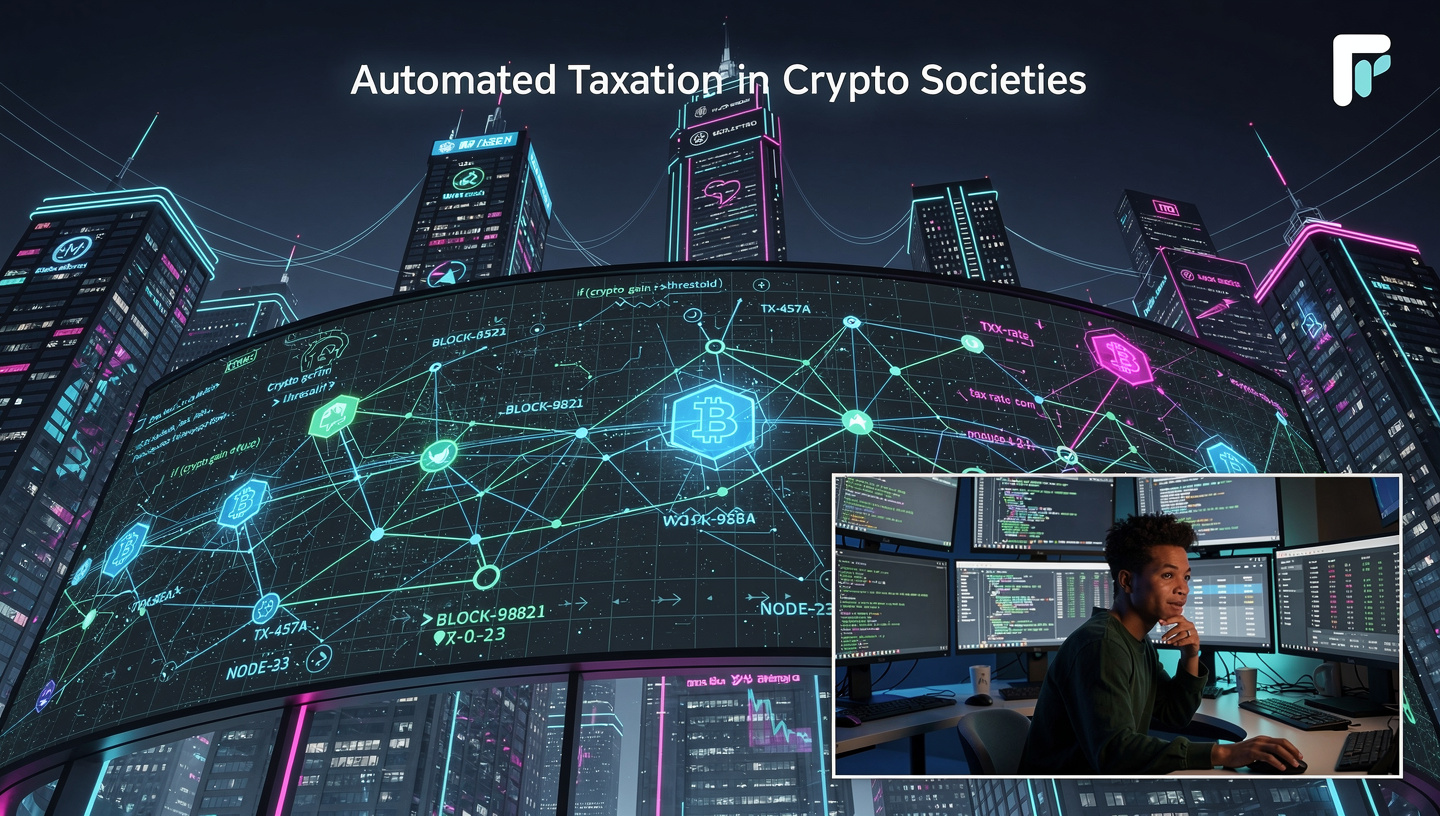
Membership was voluntary. Exit was frictionless. Taxation was automated. Social contracts were expressed as executable code.
Citizens became participants.
Participants became stakeholders.
Stakeholders became sovereign—at least in theory.
4. Capital Concentration Reimagined
Critics often predicted decentralization would flatten inequality.
It did not.
Token-weighted systems preserved the fundamental dynamics of capital accumulation while removing regulatory friction. Early adopters captured exponential upside. Venture treasuries became permanent political actors. Algorithmic yield replaced wages as the primary income stream for elites.
Wealth no longer hid in offshore accounts.
It sat transparently on-chain.
But transparency did not equal redistribution.
Instead, it normalized hierarchy.
In this world, oligarchy was not concealed—it was mathematically explicit.
Dashboards displayed the top holders of every major protocol. Governance outcomes could be forecast by wallet clustering analysis. Political power became quantifiable in real time.
5. Markets That Govern Themselves
One of the most profound shifts was the fusion of markets and law.
Smart contracts enforced compliance automatically. If a participant violated protocol terms, access was revoked without appeal. There were no courts—only logic trees.
Prediction markets began guiding public policy. Urban planning decisions were influenced by tokenized forecasting pools. Education funding flowed toward statistically optimized outcomes. Even healthcare allocation was partially routed through on-chain incentive systems.
Human judgment was not eliminated.
It was subordinated.
Algorithms became the first layer of governance.
6. Media, Narrative, and Tokenized Attention
Information ecosystems transformed alongside finance.
Content platforms adopted token-weighted moderation. Visibility became a function of stake. Reputation systems tied identity to economic history. Influence campaigns operated via liquidity provision rather than propaganda.
Narratives were no longer broadcast.
They were staked.
To amplify an idea, you locked capital behind it.
Truth became market-priced.
This produced a strange equilibrium: misinformation could exist, but sustaining it required continuous economic backing. Reality itself became a competitive asset.
7. Corporate Empires Without Headquarters
Traditional corporations dissolved into protocol conglomerates.
Some originated from crypto foundations. Others emerged from legacy firms that tokenized their entire balance sheets.
There were no CEOs—only governance keys.
No shareholders—only wallet addresses.
No headquarters—only repositories and validator clusters.
Strategic decisions were executed through proposals. Workforce coordination happened via bounty markets. Compensation streamed per block.
The firm became a living contract.
Even organizations like the Ethereum Foundation were eventually outpaced by autonomous successors that operated without legal incorporation at all.
Economic entities stopped being registered.
They simply existed.
8. Social Services in a Stakeholder Society
Welfare systems did not disappear.
They were re-architected.
Universal basic income was replaced by protocol dividends. Public goods were funded through inflation schedules. Disaster relief was triggered by oracle feeds.
Instead of social safety nets, there were participation incentives.
If you contributed to network value, you earned yield.
If you did not, you subsisted on minimal protocol distributions.
Compassion was replaced by mechanism design.
9. Resistance Was Also Tokenized
Opposition movements did not march.
They forked.
Dissent manifested as alternative protocols, parallel economies, and liquidity migrations. When a governance system became too extractive, users exited en masse, collapsing its token price and legitimacy simultaneously.
Revolutions became market events.
Civil disobedience became capital flight.
Power structures were fragile precisely because they were liquid.
10. The New Elite: Custodians of Consensus
At the apex of this world stood a new class:
Not politicians.
Not bankers.
Not generals.
Protocol architects.
They designed incentive curves, validator thresholds, slashing conditions, and governance frameworks. Their decisions shaped entire societies, often invisibly.
They were not elected.
They were forked into relevance.
Their authority derived from adoption.
Their legacy lived in code.
Conclusion: A Civilization Priced in Tokens
A world ruled by token-weighted power is not necessarily dystopian.
It is simply coherent.
It replaces ambiguous institutions with explicit mechanisms. It exposes hierarchy rather than disguising it. It transforms governance from rhetoric into runtime behavior.
But it also hard-codes inequality, financializes participation, and reduces citizenship to wallet balance.
In this speculative future, freedom is permissionless—but influence is expensive.
The ballot has been replaced by the balance.
The social contract has been replaced by the smart contract.
And humanity, for the first time, lives inside systems where power is not argued over.
It is calculated.
This is what happens when capital becomes code—and code becomes law.
If history is any guide, such systems will not be stable forever. They will fracture, fork, and recombine. New abstractions will emerge. New models of collective agency will challenge token dominance.
But for a long, strange era, the world will be governed not by presidents or parliaments—
but by stake-weighted consensus, block by block.