Cryptocurrency adoption is frequently framed as a question of price, regulation, or technological scalability. Yet the persistent volatility of user growth, the recurrence of preventable losses, and the cyclical nature of speculative manias indicate a deeper constraint: knowledge asymmetry. The diffusion of decentralized technologies such as Bitcoin and Ethereum is not limited by protocol performance alone. It is limited by comprehension.
Crypto education is not ancillary to adoption; it is its primary determinant. The architecture of decentralized finance, tokenized governance, and cryptographic security shifts responsibility from intermediaries to users. Without structured education, users cannot safely navigate private key management, smart contract risk, market microstructure, or regulatory obligations. Adoption without education produces fragility. Adoption with education produces resilience.
This article examines why crypto education will shape adoption at individual, institutional, and systemic levels. It evaluates cognitive barriers, economic incentives, governance literacy, compliance frameworks, and curriculum design. It argues that the future growth of crypto markets depends less on marketing and more on epistemic infrastructure.
1. Adoption Theory and the Knowledge Constraint
1.1 Diffusion of Innovation in Decentralized Systems
Traditional adoption models, such as Rogers’ diffusion of innovation theory, assume incremental integration into existing social and institutional frameworks. Crypto systems diverge from this pattern. They introduce:
- Sovereign self-custody
- Algorithmic monetary policy
- Peer-to-peer settlement
- Open-source governance
Each of these dimensions requires conceptual literacy. A user adopting a social media application does not need to understand TCP/IP routing. A user adopting a self-custodial wallet must understand private keys, seed phrases, phishing vectors, and irreversible transactions.
The friction is cognitive, not mechanical.
1.2 The Education-Adoption Feedback Loop
Adoption accelerates when:
- Risk perception decreases.
- Utility comprehension increases.
- Social proof strengthens.
- Institutional trust stabilizes.
Education directly affects all four variables. Without education, volatility amplifies fear. With education, volatility is contextualized as market structure rather than existential instability.
2. The Unique Educational Demands of Crypto
2.1 Cryptographic Literacy
Crypto users interact with asymmetric cryptography without realizing it. Concepts such as:
- Public-private key pairs
- Digital signatures
- Hash functions
- Consensus mechanisms
are embedded into wallet interfaces and protocol documentation. Yet most onboarding processes oversimplify these mechanisms to slogans.
Educational programs must explain why cryptography enforces property rights without central authority. Without this conceptual anchor, self-custody appears reckless rather than empowering.
2.2 Financial Literacy in Decentralized Markets
Decentralized exchanges, liquidity pools, and yield mechanisms introduce financial instruments unfamiliar to retail participants:
- Automated market makers (AMMs)
- Impermanent loss
- Collateralized debt positions
- Liquidation thresholds
When users supply liquidity on protocols like Uniswap or borrow against assets through Aave, they assume structural risk. Without education, they misinterpret algorithmic outcomes as malice or manipulation.
Education transforms participation from speculation to informed capital allocation.
2.3 Regulatory and Compliance Awareness
Jurisdictions increasingly regulate digital assets. Compliance requires understanding:
- Tax reporting obligations
- Securities classifications
- Anti-money laundering (AML) frameworks
- Custodial distinctions
For example, regulatory actions by bodies such as the U.S. Securities and Exchange Commission influence token classification and exchange operations globally. Retail participants unaware of regulatory risk may hold assets subject to enforcement actions.
Education reduces exposure to avoidable legal risk and increases long-term legitimacy.
3. Psychological Barriers to Adoption
3.1 Cognitive Overload
Crypto ecosystems compress finance, cryptography, governance, and software engineering into a single interface. New entrants face:
- Terminological density
- Rapid product iteration
- Persistent market volatility
Educational scaffolding reduces cognitive load by sequencing knowledge: foundational principles first, applied use cases later.
3.2 Trust Without Intermediaries
Traditional finance outsources trust to institutions. Crypto internalizes trust through code. This inversion requires users to understand verification processes such as:
- On-chain transparency
- Smart contract audits
- Multi-signature governance
Absent education, users revert to centralized platforms, undermining decentralization objectives.
4. Institutional Adoption and Workforce Education
4.1 Corporate Integration
Enterprises integrating blockchain-based systems require:
- Technical staff trained in distributed ledger architecture
- Legal teams versed in token classification
- Risk officers trained in custody protocols
Major financial institutions have engaged with blockchain research divisions or pilot programs. However, without workforce education, integration remains superficial.
Institutional adoption scales only when executive decision-makers understand both technological limitations and strategic advantages.
4.2 Academic Infrastructure
Universities increasingly introduce blockchain courses, often referencing foundational works such as the Bitcoin whitepaper by Satoshi Nakamoto. Academic engagement legitimizes the field and creates structured knowledge pipelines.
Educational standardization reduces misinformation and promotes research rigor.
5. Security Literacy as an Adoption Multiplier
5.1 Self-Custody and Operational Security
The shift from custodial accounts to self-custody introduces:
- Seed phrase management
- Hardware wallet usage
- Phishing mitigation
Hardware wallet manufacturers like Ledger and Trezor provide tools, but tools without literacy do not prevent loss.
Security literacy directly correlates with user retention. Users who suffer losses due to preventable errors rarely re-enter the ecosystem.
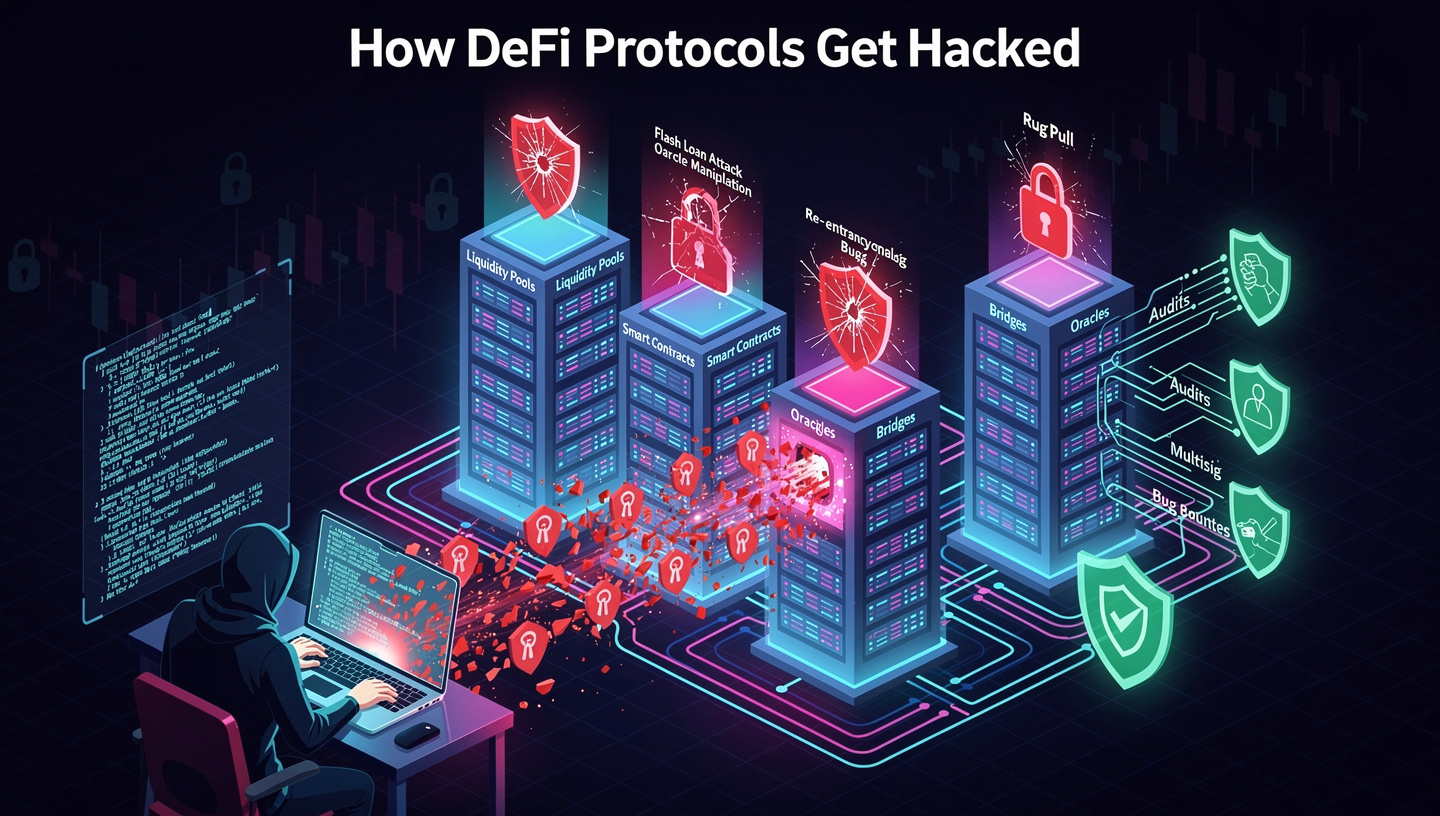
5.2 Smart Contract Risk Evaluation
Understanding audit reports, governance voting, and upgradeability reduces exploit exposure. Education enables users to:
- Distinguish between audited and unaudited protocols
- Assess centralization risk
- Evaluate token emission schedules
Security awareness is not optional; it is foundational.
6. Education as a Countermeasure to Misinformation
6.1 Speculative Narratives
Crypto markets are narrative-driven. Social amplification can detach asset prices from underlying utility. Education introduces analytical frameworks:
- Tokenomics analysis
- Network effect evaluation
- Developer activity metrics
Users trained to evaluate fundamentals are less susceptible to pump-and-dump schemes.
6.2 Media Literacy
Understanding how influencers monetize attention reduces susceptibility to coordinated hype. Education builds skepticism without cynicism.
7. Emerging Markets and Financial Inclusion
7.1 Access vs. Literacy
In regions with unstable banking systems, crypto offers alternative rails for value transfer. However, access without literacy increases vulnerability to scams.
Educational initiatives in emerging economies must focus on:
- Stablecoin mechanics
- Remittance efficiency
- Volatility management
7.2 Stablecoins and Practical Utility
Stablecoins pegged to fiat currencies provide transactional stability. Protocols interacting with assets such as Tether and Circle require comprehension of reserve backing, redemption mechanisms, and counterparty risk.
Adoption grounded in utility requires education grounded in transparency.
8. Developer Education and Ecosystem Growth
8.1 Open-Source Contributions
Developer education expands protocol resilience. Training in smart contract languages and security auditing increases ecosystem capacity.
The expansion of developer communities around platforms like Solana and Polygon illustrates the link between technical literacy and network growth.
8.2 Hackathons and Incubation
Structured educational programs accelerate innovation. Hackathons and grants incentivize experimentation while transmitting best practices.
Developer density predicts protocol longevity.
9. Designing Effective Crypto Education
9.1 Curriculum Architecture
An effective curriculum should include:
- Foundations of cryptography
- Monetary theory and tokenomics
- Decentralized finance mechanisms
- Regulatory frameworks
- Security best practices
- Governance models
Sequencing must progress from theory to applied interaction.
9.2 Multimodal Delivery
Education must adapt to diverse learning preferences:
- Academic courses
- Online modules
- Interactive simulations
- Community workshops
Hybrid models maximize reach.
9.3 Assessment and Metrics
Measuring impact requires quantitative metrics:
- Reduction in phishing losses
- Increased self-custody adoption
- Improved governance participation
- Reduced scam exposure
Adoption quality matters more than raw user counts.
10. The Macroeconomic Implications
10.1 Capital Formation
Informed participants allocate capital efficiently. Education reduces speculative churn and promotes long-term protocol development.
10.2 Regulatory Stability
Policymakers with technical literacy craft proportionate regulations. Educational dialogue between regulators and technologists reduces adversarial friction.
10.3 Systemic Resilience
An educated user base mitigates contagion effects during market stress. Panic selling and misinformation decline when structural understanding increases.
11. Long-Term Adoption Scenarios
Scenario A: High Adoption, Low Education
- Frequent exploit cycles
- Regulatory backlash
- Concentration in custodial platforms
- Volatile public perception
Scenario B: Moderate Adoption, High Education
- Gradual institutional integration
- Stable governance participation
- Reduced exploit frequency
- Sustainable innovation
The second scenario is structurally superior. Education calibrates growth.
Conclusion: Knowledge as Infrastructure
Crypto education is not marketing collateral. It is infrastructure. It determines whether decentralized systems mature into durable financial primitives or collapse under avoidable error.
Adoption metrics measured solely by wallet downloads obscure qualitative deficits. True adoption requires:
- Conceptual literacy
- Security competence
- Regulatory awareness
- Analytical discipline
The trajectory of digital assets will not be decided by speculative cycles alone. It will be determined by whether participants understand what they are using, why it functions, and how to manage its risks.
Education shapes perception. Perception shapes behavior. Behavior shapes markets.
Therefore, crypto education will shape adoption—not incidentally, but decisively.