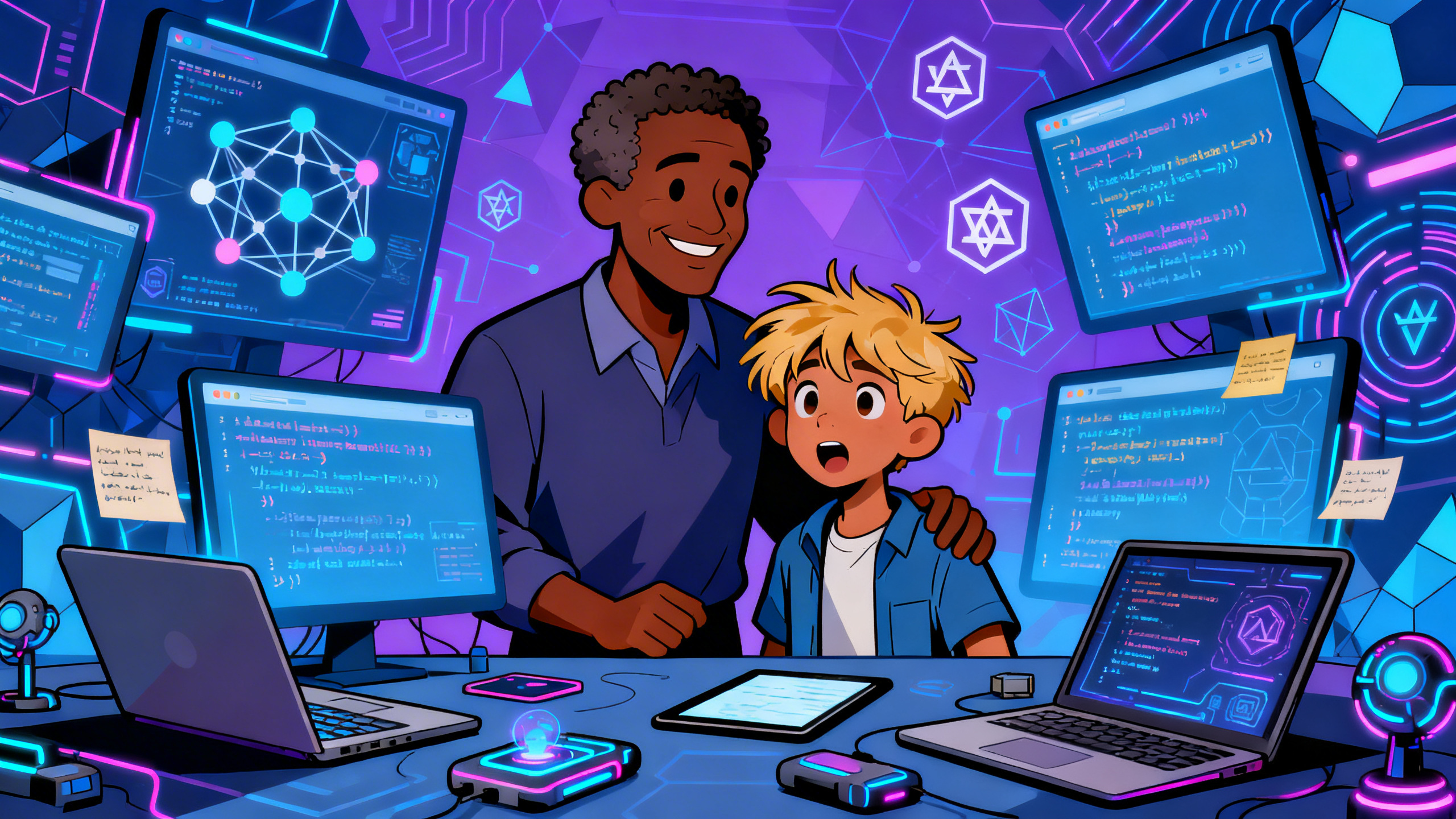
From the earliest days of Bitcoin discussions on cryptography mailing lists to the explosive developer growth around Ethereum, progress in decentralized ecosystems has been catalyzed not merely by code—but by mentorship. Builders teaching builders. Researchers guiding newcomers. Community leaders translating complexity into clarity.
In traditional industries, mentorship is recognized as a driver of innovation, retention, and leadership development. In Web3, it is even more critical. Why? Because Web3 operates at the intersection of finance, computer science, game theory, governance, and culture. The cognitive load is immense. Without structured guidance, newcomers face steep learning curves, misinformation risks, and costly mistakes.
This article explores the power of mentorship in Web3 from a research-oriented perspective. We will examine why mentorship matters, how it accelerates adoption and innovation, the structural models that work, measurable outcomes, risks and challenges, and how to design scalable, sustainable mentorship ecosystems for decentralized networks.
1. Web3 Education: The Complexity Challenge
Web3 differs from previous technology waves in three important ways:
- Financial risk is immediate.
- Technical barriers are high.
- Governance participation is embedded.
When users interact with decentralized applications (dApps), they are not just consumers—they are economic actors. A single mistake in private key management, token transfers, or smart contract interactions can result in irreversible loss. Unlike Web2 platforms, there is no customer support hotline that can undo blockchain transactions.
Moreover, Web3 requires multidisciplinary literacy:
- Cryptography fundamentals
- Distributed systems
- Tokenomics
- Decentralized governance
- Smart contract security
- Regulatory awareness
The result? Information asymmetry and high dropout rates.
Research in adult learning theory consistently shows that peer guidance significantly reduces attrition in complex domains. In Web3, mentorship acts as a bridge between theoretical knowledge and practical application.
2. Historical Foundations of Mentorship in Crypto
Mentorship has always existed informally in crypto ecosystems.
Early Community Mentorship
In the early days of Bitcoin, contributors mentored each other through forums, open-source collaboration, and direct code review. Knowledge was decentralized, but guidance was highly personal.
As Ethereum introduced smart contracts, complexity increased dramatically. Developers relied on senior contributors to understand Solidity security patterns, gas optimization, and protocol design. Informal mentorship became foundational to protocol development.
Hackathons and Builder Culture
Ethereum hackathons pioneered a mentorship-rich culture:
- Experienced devs guiding first-time smart contract writers
- Security experts reviewing code before deployment
- DAO contributors onboarding governance participants
These events demonstrated that structured mentorship accelerates innovation. Teams with experienced mentors consistently outperformed isolated builders.
3. Why Mentorship Is Uniquely Powerful in Web3
3.1 Risk Mitigation
Web3 environments expose participants to scams, rug pulls, phishing attacks, and malicious contracts. Mentors reduce risk by:
- Teaching wallet safety
- Explaining due diligence practices
- Reviewing smart contracts
- Advising on tokenomics sustainability
The difference between self-custody success and catastrophic loss often lies in guidance.
3.2 Knowledge Transfer Across Disciplines
Web3 combines:
- Computer science
- Economics
- Behavioral psychology
- Regulatory law
- Community governance
Few individuals master all areas. Mentorship enables knowledge cross-pollination. A security researcher may mentor a DAO operator. A tokenomics designer may guide a game developer.
This interdisciplinary exchange is crucial for ecosystem resilience.
3.3 Cultural Alignment
Web3 is not just technology—it is ideology. Concepts like decentralization, sovereignty, and censorship resistance are cultural pillars. Mentorship transmits values alongside skills, reinforcing:
- Ethical development
- Transparency norms
- Responsible innovation
Without mentorship, new entrants may treat Web3 as purely speculative infrastructure rather than participatory governance systems.
4. Types of Mentorship in Web3
Mentorship in Web3 can be categorized into four major types:
4.1 Technical Mentorship
Focus: Developers and protocol engineers
Includes:
- Smart contract auditing practices
- Gas optimization techniques
- Layer 2 integration
- Security best practices
Technical mentorship reduces vulnerabilities and strengthens protocol reliability.
4.2 Governance Mentorship
Focus: DAO contributors and community leaders
Includes:
- Proposal writing
- On-chain voting mechanisms
- Treasury management
- Conflict resolution
Effective governance mentorship ensures decentralized systems remain functional rather than chaotic.
4.3 Economic & Tokenomics Mentorship
Focus: Founders and product designers
Includes:
- Incentive design
- Emission schedules
- Liquidity strategies
- Sustainability modeling
Poor tokenomics can collapse projects. Mentorship mitigates these risks.
4.4 User Safety & Self-Custody Mentorship
Focus: Retail users and new adopters
Includes:
- Hardware wallet setup
- Phishing detection
- Multisig management
- Operational security (OpSec)
Education at this level prevents irreversible errors.
5. Structured Mentorship Models That Work
Mentorship in Web3 must evolve beyond informal Discord advice.
5.1 DAO-Based Mentorship Programs
Decentralized Autonomous Organizations can allocate treasury funds to structured mentorship tracks:
- Mentor stipends
- Cohort-based programs
- Certification systems
- Accountability metrics
By formalizing mentorship within governance frameworks, DAOs incentivize knowledge sharing.
5.2 Cohort Learning with Embedded Mentors
Programs that combine:
- Live workshops
- Small peer groups
- Assigned mentors
- Capstone projects
show significantly higher completion rates than self-paced content.
5.3 Open-Source Contribution Mentorship
Open-source repos thrive when senior maintainers guide contributors:
- Code review mentorship
- Issue triage guidance
- Documentation standards
Projects with mentorship pathways see greater long-term contributor retention.
5.4 Peer-to-Peer Micro-Mentorship
Short-form mentorship:
- 30-minute sessions
- Office hours
- Community Q&A calls
Lower barrier, scalable, and effective for targeted problem solving.
6. Measuring the Impact of Mentorship in Web3
To understand mentorship’s power, we need metrics.
Key Indicators:
- Contributor retention rate
- Security incident reduction
- Proposal success rates in DAOs
- Time-to-first smart contract deployment
- User retention in educational cohorts
Data from developer ecosystems consistently shows that guided onboarding reduces time-to-productivity by up to 40–60%.
Mentorship is not just a feel-good initiative—it is a measurable growth strategy.
7. The Economics of Mentorship
In decentralized ecosystems, incentives matter.
Why Would Mentors Participate?
- Reputation building
- Token rewards
- Governance influence
- Career opportunities
- Ecosystem sustainability
Protocols can integrate on-chain reputation systems to reward mentors based on outcomes rather than vanity metrics.
Preventing Incentive Misalignment
Token-based mentorship rewards must avoid:
- Quantity over quality incentives
- Superficial engagement farming
- Reputation manipulation
Proper evaluation mechanisms are essential.
8. Challenges and Risks
Despite its benefits, mentorship in Web3 faces structural challenges:
8.1 Scalability
As adoption grows globally, one-to-one mentorship becomes resource-intensive.
8.2 Quality Control
Unqualified mentors can spread misinformation, especially in financial contexts.
8.3 Centralization Risk
If mentorship power concentrates among elite figures, decentralization may erode.
8.4 Burnout
Experienced contributors often face overload from constant support requests.
Solutions must include distributed mentorship networks and transparent standards.
9. Mentorship as Infrastructure
Web3 often discusses infrastructure in terms of nodes, bridges, and rollups. But human infrastructure is equally important.
Mentorship creates:
- Knowledge continuity
- Ecosystem resilience
- Security culture
- Leadership pipelines
Without it, protocols stagnate.
Consider how developer ecosystems surrounding Ethereum Foundation foster long-term contributors through grants, research groups, and guidance networks. The result is sustained innovation over a decade.
Mentorship is infrastructure because it:
- Reduces systemic risk
- Encourages ethical design
- Accelerates innovation cycles
10. Designing a Scalable Mentorship Framework for Web3
A robust mentorship ecosystem should include:
1. Clear Role Definitions
- Mentor
- Apprentice
- Reviewer
- Program Coordinator
2. Transparent Evaluation Criteria
- Skill progression milestones
- Project-based assessments
- Peer feedback systems
3. Hybrid Incentive Systems
- Token rewards
- Reputation NFTs
- Governance weight
4. Documentation-First Culture
Encourage mentors to convert sessions into public learning artifacts to compound knowledge.
5. Inclusivity and Global Access
Localized mentorship programs expand access beyond English-speaking technical elites.
11. Mentorship and the Future of Web3
The next billion Web3 users will not arrive through speculation—they will arrive through education.
Mentorship transforms:
- Curious users into confident participants
- Developers into protocol architects
- Contributors into community leaders
In a decentralized world, leadership cannot rely on corporate hierarchies. It must emerge through guided growth.
Web3’s success will not be determined solely by TPS, scalability, or token price. It will be determined by whether ecosystems can cultivate capable, ethical, and resilient participants.
Mentorship is the compounding force behind that cultivation.
Conclusion: The Human Layer of Decentralization
Web3 promises trustless systems—but trust between people still matters. Code may be immutable, but communities are dynamic.
Mentorship is the connective tissue between innovation and sustainability. It reduces risk, accelerates growth, reinforces values, and ensures decentralization does not collapse under its own complexity.
If decentralized networks wish to endure beyond hype cycles, they must invest not only in cryptography and scaling solutions—but in structured, measurable, and inclusive mentorship frameworks.
The power of mentorship in Web3 is not peripheral. It is foundational.