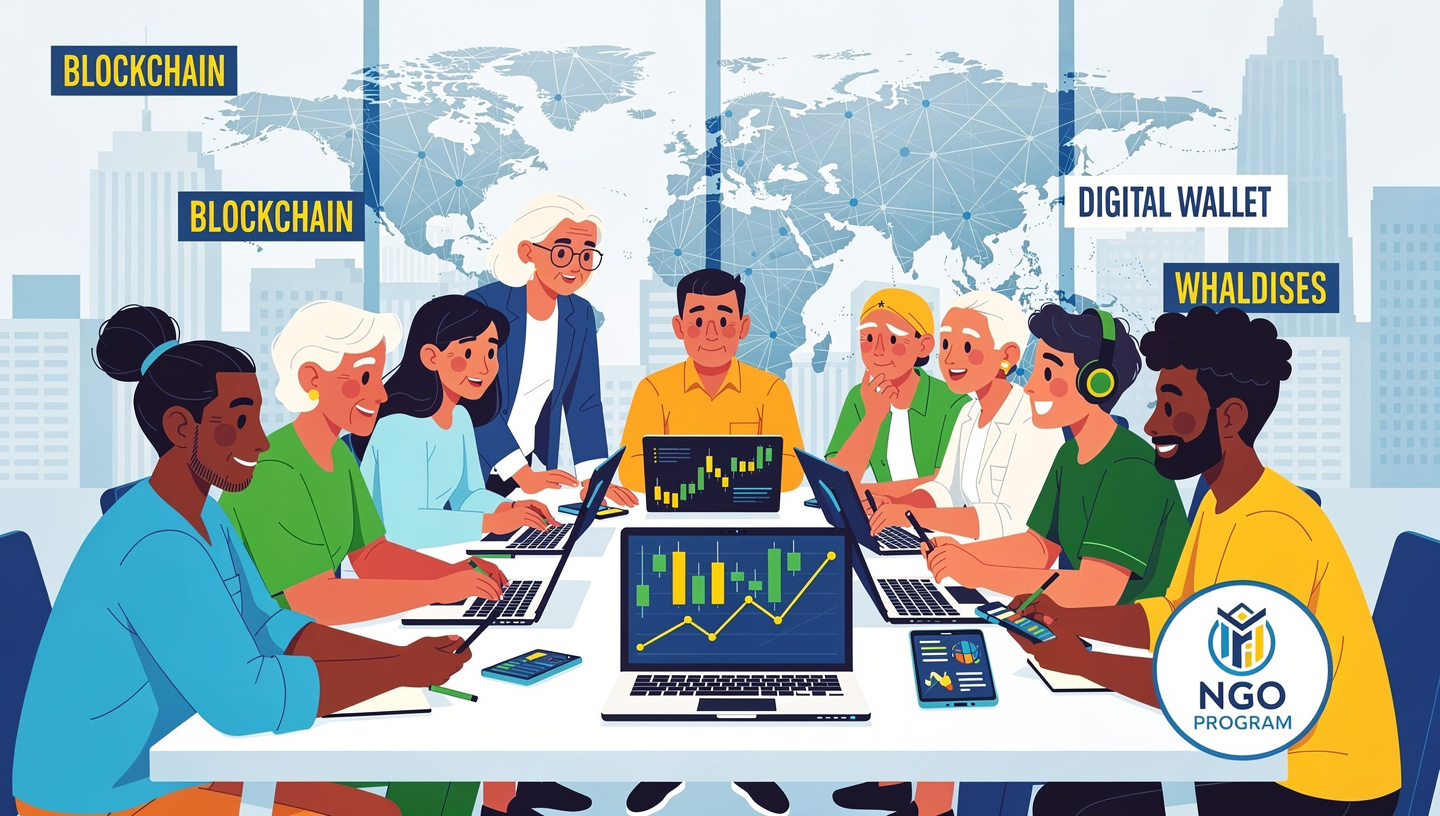
The digital economy is built on invisible labor. Billions of hours are spent moderating forums, contributing open-source code, creating content, curating information, testing products, evangelizing networks, and providing liquidity—often with limited or misaligned compensation. Platforms monetize engagement. Protocols accrue value. Corporations extract data. Meanwhile, the raw inputs—time, attention, and contribution—remain structurally underpriced.
Cryptocurrency and decentralized networks introduce a new design space: programmable ownership. For the first time, it is possible to natively encode incentive systems into infrastructure. The question is no longer whether value can be transferred peer-to-peer—that was resolved by Bitcoin. The real frontier is whether value can be attributed granularly, fairly, and continuously to the human inputs that create network effects.
Tokenizing time, attention, and contribution represents a structural shift in how digital systems are built and governed. It moves beyond speculative tokens toward measurable participation. It reframes networks as coordination machines rather than extraction engines. And it forces a reconsideration of economic primitives in the context of programmable money.
This article examines the theoretical foundations, technical mechanisms, economic models, governance implications, and emerging case studies shaping this domain.
I. The Economic Case: Why Time and Attention Are Underpriced
1. The Attention Economy’s Structural Imbalance
The attention economy monetizes engagement through advertising, subscriptions, or data brokerage. Platforms such as Meta Platforms and Google capture the majority of advertising value generated by user attention. The revenue model is centralized. Users receive utility but not equity.
Time is converted into ad impressions. Attention is converted into behavioral data. Contribution is converted into platform defensibility. The asset owners are shareholders. The asset creators are users.
Tokenization offers a mechanism to internalize these externalities: instead of monetizing attention indirectly, systems can reward it directly.
2. Contribution as Capital
Open-source ecosystems provide a clear example of unpriced labor. Developers contribute to repositories on GitHub without guaranteed compensation. Infrastructure layers that secure billions in value often rely on volunteer contributions.
In decentralized networks, contributors can be issued tokens representing fractional ownership. When the network grows, contributors benefit proportionally. This converts contribution from a sunk cost into productive capital.
The implication is profound: participation becomes investment.
II. Technical Foundations of Tokenizing Intangibles
Tokenizing intangible human inputs requires three core components:
- Measurement
- Attribution
- Programmable reward distribution
Each presents non-trivial challenges.
1. Measurement: Quantifying Time and Attention
Time can be measured in discrete blocks—minutes, sessions, uptime. Attention is more complex. It requires behavioral metrics such as dwell time, interaction frequency, content engagement depth, or proof-of-presence mechanisms.
Protocols such as Ethereum enable on-chain recording of participation events, but off-chain data must be validated before being committed to blockchain state. This introduces oracle design challenges.
Zero-knowledge proofs (ZKPs) offer a pathway: users can prove engagement or contribution without revealing raw behavioral data. Emerging ZK systems allow validation of actions while preserving privacy, mitigating surveillance risks.
2. Attribution: Linking Contribution to Identity
A recurring problem in tokenized incentive systems is Sybil resistance—the prevention of fake identities claiming rewards.
Projects such as Worldcoin attempt biometric uniqueness verification, while decentralized identity (DID) frameworks aim to provide portable, verifiable credentials.
Attribution mechanisms include:
- Proof-of-Work (computational effort)
- Proof-of-Stake (economic stake)
- Proof-of-Humanity (identity validation)
- Proof-of-Participation (verifiable action logs)
Each introduces trade-offs between decentralization, privacy, scalability, and fairness.
3. Distribution: Programmable Incentives
Smart contracts enable automated reward flows. Tokens can be streamed continuously, vested over time, or conditionally unlocked based on milestones.
Protocols like Solana emphasize high throughput, enabling micro-distributions at scale. Layer-2 solutions such as Optimism reduce transaction costs, making frequent micro-rewards economically viable.
The infrastructure now exists to reward participation in near real time.
III. Tokenizing Time
1. Time as a Native Unit of Economic Coordination
Traditional labor markets price time via wages. However, digital participation often exists outside employment contracts. Tokenized systems can reward:
- Community moderation hours
- DAO governance participation
- Educational engagement
- Network uptime provisioning
Time-based tokens can operate as accrual systems. Participants accumulate tokens proportional to verified engagement duration.
2. Streaming Compensation Models
Streaming payments enable continuous compensation. Instead of monthly payroll, participants receive token flows per second.
Such mechanisms align incentives:
- Participants are compensated in real time.
- Networks can halt streams if participation ceases.
- Governance can dynamically adjust rates.
Time tokenization effectively introduces programmable labor contracts without centralized employers.
3. Risks of Time Commodification
Tokenizing time risks over-financialization of social interaction. Not every minute should be monetized. Systems must avoid turning all participation into transactional exchange.
Design principles should emphasize:
- Opt-in participation
- Transparent emission schedules
- Sustainable token supply models
- Long-term value accrual rather than short-term extraction
IV. Tokenizing Attention
1. From Surveillance Capitalism to Attention Ownership
Current digital advertising markets are built on centralized data harvesting. Tokenized attention models seek to invert this dynamic.
Users can opt into attention marketplaces where:
- Advertisers pay directly for verified engagement.
- Users receive tokens for ad consumption.
- Data remains user-controlled.
Basic Attention Token (BAT) pioneered this approach within the Brave ecosystem, demonstrating a functional attention-reward model.
2. Attention as Scarce Resource
Attention is finite. Cognitive bandwidth cannot scale infinitely. By pricing attention, markets can allocate it more efficiently.
Tokenized attention systems create:
- Market-based filtering of low-quality content
- Incentivized curation
- Transparent engagement metrics
3. Attack Vectors
Attention tokenization introduces risks:
- Bot amplification
- Engagement farming
- Collusion rings
Mitigation requires cryptographic identity proofs, stake-slashing mechanisms, and anomaly detection.
V. Tokenizing Contribution
Contribution is broader than time or attention. It includes:
- Code commits
- Content creation
- Liquidity provision
- Community building
- Governance participation
1. Contributor Ownership Models
Protocols like Uniswap distributed governance tokens to early users and liquidity providers. This converted usage into ownership.
Contributor token models can include:
- Retroactive rewards
- Performance-based vesting
- Governance-weighted multipliers
- Reputation-linked emission curves
2. Retroactive Public Goods Funding
Retroactive models, popularized by the Optimism Collective within Optimism, allocate funding based on past impact rather than speculative promises.
This shifts incentive focus from fundraising to execution.
3. Reputation as Non-Transferable Asset
Soulbound tokens (SBTs) represent non-transferable credentials tied to identity. These can encode:
- Contribution history
- Skill verification
- Governance participation records
Reputation tokenization reduces speculation and aligns long-term incentives.
VI. Governance Implications
1. Redefining Organizational Structure
Tokenizing contribution dissolves traditional corporate hierarchies. Decentralized Autonomous Organizations (DAOs) coordinate capital and labor via smart contracts.
Governance tokens enable:
- Proposal submission
- Voting rights
- Treasury allocation
However, plutocratic risks persist when token ownership concentrates.
2. Quadratic and Impact-Based Voting
Quadratic voting mechanisms weight participation more equitably by reducing marginal voting power of large holders.
Impact-based distribution models tie governance influence to measurable contribution rather than pure capital stake.
VII. Macroeconomic Effects
1. Labor Market Fluidity
Tokenized contribution reduces barriers to global participation. Anyone with internet access can earn tokens for verified participation.
This introduces:
- Borderless micro-labor markets
- Continuous skill monetization
- Real-time reputation building
2. Capital Formation Through Participation
Traditional startups allocate equity to founders and investors. Tokenized networks allocate ownership to users.
This expands capital formation beyond accredited investors.
3. Risk of Hyper-Financialization
If all digital interactions become tokenized, speculative volatility may overshadow productive coordination. Sustainable tokenomics require emission discipline and utility grounding.
VIII. Design Principles for Sustainable Systems
- Emission Transparency
- Identity Integrity
- Privacy Preservation
- Anti-Speculative Mechanisms
- Governance Adaptability
Systems must prioritize long-term utility over short-term token price appreciation.
IX. Emerging Infrastructure Layers
Several ecosystems are advancing tooling for participation-based economics:
- Ethereum – Programmable contracts and identity frameworks
- Solana – High-throughput microtransactions
- Optimism – Retroactive funding infrastructure
- Polygon – Low-cost participation scaling
These networks provide the computational substrate for time and contribution tokenization.
X. The Psychological Dimension
Token incentives alter behavior. Properly calibrated rewards enhance engagement. Poorly calibrated incentives create gaming dynamics.
Behavioral economics indicates that:
- Extrinsic rewards can crowd out intrinsic motivation.
- Transparent incentive design improves trust.
- Long-term vesting promotes retention.
Designers must treat token systems as socio-technical constructs, not purely financial instruments.
XI. Regulatory Considerations
Tokenized participation systems intersect with securities law, labor classification, and tax treatment.
Key considerations include:
- Whether tokens represent securities
- Whether contributors qualify as employees
- How cross-border token flows are taxed
Compliance architectures must integrate jurisdictional awareness without compromising decentralization.
XII. The Future: Toward Contribution-Based Economies
Tokenizing time, attention, and contribution represents a structural evolution in digital coordination. It reframes users as stakeholders. It internalizes network effects. It aligns participation with ownership.
The long-term trajectory suggests:
- Contributor-owned social networks
- Performance-indexed DAOs
- Continuous payroll systems
- Privacy-preserving attention markets
- Reputation-anchored governance
The critical challenge is balance: systems must reward contribution without commodifying humanity.
Programmable ownership enables the repricing of human inputs in digital networks. Whether it results in equitable coordination or speculative distortion depends on design discipline.
The next generation of crypto innovation will not be defined by faster block times or higher throughput. It will be defined by whether networks can measure and reward human value accurately.
Time is finite. Attention is scarce. Contribution builds everything.
Tokenization simply makes that visible—and tradable.