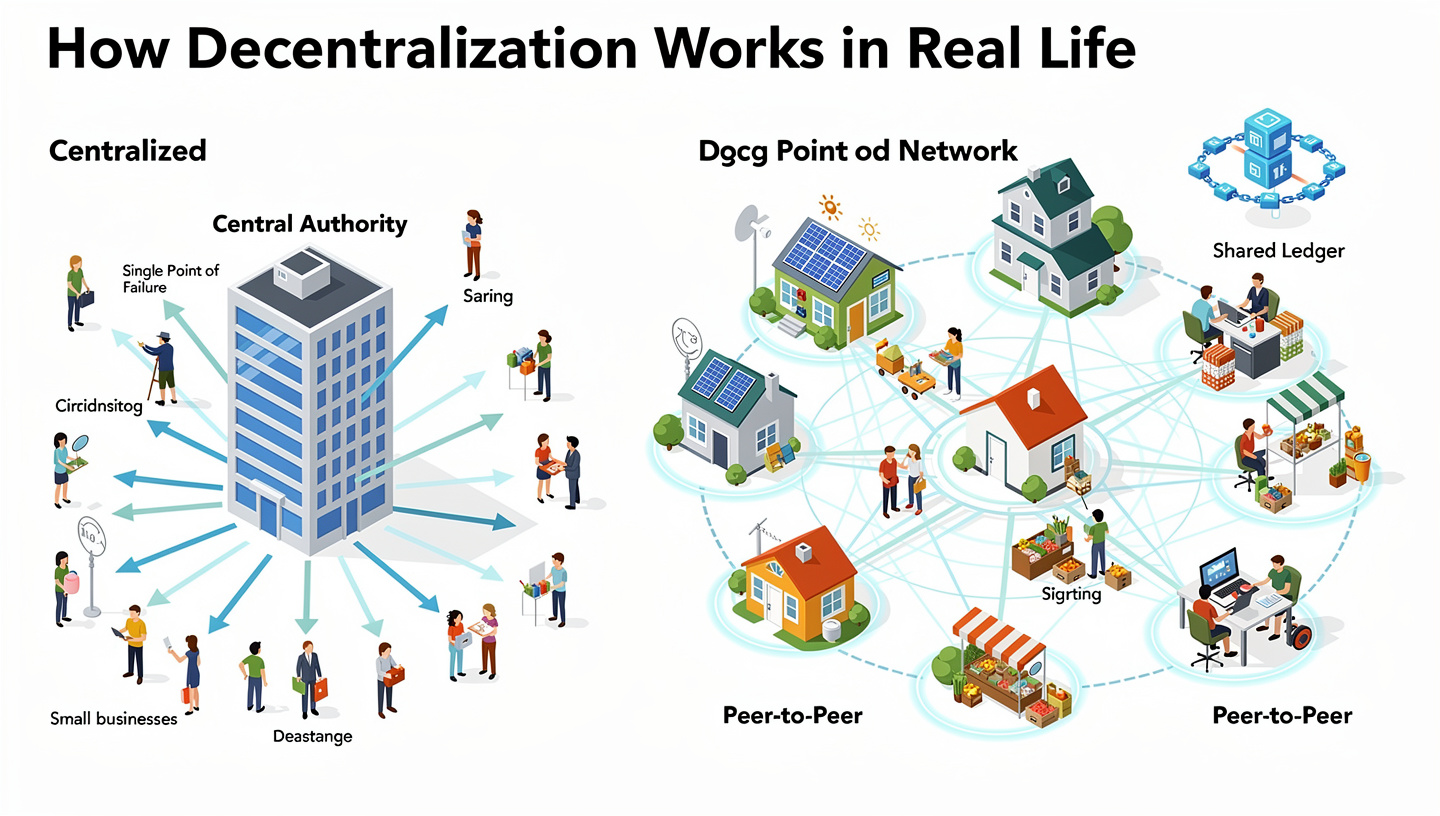
Crypto ecosystems do not grow the way nations or corporations grow. They grow like networks under stress—expanding simultaneously across capital, code, culture, and coordination. In early stages, this velocity feels magical: liquidity floods in, builders multiply, narratives crystallize overnight, and communities form faster than institutions can respond.
But speed is not resilience.
When a crypto world grows too fast, it exposes a structural truth that traditional economies learned over centuries: systems that scale faster than their governance, infrastructure, and social norms eventually fracture. What follows is not just market volatility—it is cultural instability, architectural debt, governance collapse, and, in extreme cases, civilizational reset.
This article examines hypergrowth in crypto as a worldbuilding problem. Not price action. Not hype cycles. Worldbuilding: how entire digital societies emerge, strain, and sometimes fail under their own acceleration.
1. Hypergrowth in Crypto Is Multidimensional
Most discussions of “fast growth” focus narrowly on market capitalization or user count. That is insufficient.
Crypto worlds grow across at least five interdependent dimensions:
- Capital velocity – how quickly value enters and exits the system
- Protocol surface area – how many smart contracts, bridges, and integrations appear
- Social density – how many participants join without shared history
- Narrative expansion – how rapidly new meanings, myths, and expectations form
- Governance load – how many decisions must be made before coordination structures mature
When these dimensions scale unevenly, instability emerges.
Capital almost always outruns governance. Social density outpaces cultural coherence. Protocol surface area expands faster than security review. Narrative momentum exceeds empirical reality.
This is not a bug. It is an inherent property of permissionless systems.
2. The Compression of Institutional Time
Traditional institutions—banks, courts, universities—formed slowly. Crypto compresses centuries of institutional evolution into months.
A new chain launches.
Within weeks:
- DAOs appear.
- Lending markets open.
- Derivatives are built.
- Cross-chain bridges activate.
- NFTs create parallel economies.
- Influencers establish informal authority.
- Venture capital hardens power structures.
All before stable norms exist.
This produces what can be called temporal asymmetry: technical primitives mature far faster than human coordination mechanisms.
The result is institutional thinness. There are rules, but no shared understanding of them. There are contracts, but no cultural consensus. There is governance, but no legitimacy.
Everything works—until it doesn’t.
3. Infrastructure Buckles First
Hypergrowth attacks infrastructure before anything else.
Common failure modes include:
• Network congestion and fee spikes
Rapid user onboarding overwhelms base-layer capacity, pricing out smaller participants and centralizing activity among whales.
• Bridge fragility
Interoperability layers become single points of failure as assets flow across ecosystems faster than security models evolve.
• Validator centralization
Economic incentives favor large operators, quietly eroding decentralization under the banner of efficiency.
• Developer tooling debt
APIs, SDKs, and indexers accumulate brittle dependencies, making iteration slower precisely when speed is demanded most.
These are not theoretical risks. They are recurring patterns across every fast-scaling crypto environment.
Infrastructure does not fail because it is poorly designed. It fails because it is asked to support civilizations before it finishes becoming a city.
4. Social Capital Dilution
Early crypto communities are high-trust environments. Participants know each other’s reputations. Norms are implicit. Coordination is lightweight.
Hypergrowth destroys this.
As thousands—or millions—arrive simultaneously:
- Shared context evaporates.
- Reputation systems reset.
- Bad actors blend into noise.
- Long-term builders lose narrative control to short-term speculators.
This is social capital dilution.
When too many participants join too quickly, culture becomes transactional. Governance becomes performative. Discourse polarizes. Influence concentrates in loud nodes rather than credible ones.
The original community does not scale. It fragments.
5. Narrative Inflation and Meaning Collapse
Every crypto world runs on stories.
Decentralization. Financial sovereignty. Open access. Digital ownership.
During hypergrowth, narratives inflate faster than reality can support.
Marketing replaces measurement. Roadmaps become theater. Whitepapers mutate into myth.
Eventually, meaning collapses.
Participants stop asking what systems actually do and start trading on what they are supposed to represent. Tokens become symbols detached from utility. DAOs become brands without operational depth. Protocols become speculative shells.
This narrative overextension creates existential fragility: when belief breaks, there is nothing underneath to absorb the shock.
6. Governance Lags Behind Power
In fast-growing crypto ecosystems, power concentrates long before governance matures.
Typical sequence:
- Early insiders accumulate tokens.
- VCs formalize ownership.
- Delegation frameworks appear.
- On-chain voting launches.
- Legitimacy is assumed retroactively.
By the time governance exists, outcomes are already path-dependent.
This produces a familiar pattern:
- Decisions feel predetermined.
- Participation drops.
- Forums become symbolic.
- Proposals rubber-stamp existing hierarchies.
The system is technically decentralized but socially oligarchic.
This is not malice. It is temporal mismatch.
Power scales instantly. Governance requires time.
7. Speculative Gravity Distorts Development
When a crypto world grows too fast, speculation becomes its dominant organizing force.
Builders begin optimizing for token narratives instead of user experience. Product roadmaps bend toward incentives rather than needs. Capital efficiency replaces technical rigor.
Short-term liquidity eclipses long-term resilience.
This is how ecosystems drift from engineering-driven to market-driven—and eventually from market-driven to hype-driven.
Once that transition completes, reversing it is extremely difficult.
8. Case Pattern: Collapse Through Velocity
While each ecosystem fails uniquely, the structural template repeats.
Terraform Labs’ rapid expansion around algorithmic stablecoins created systemic fragility long before its collapse. FTX scaled global operations without commensurate internal controls, ultimately centralizing enormous risk under opaque management. The implosion of FTX—and the legal fallout surrounding Sam Bankman-Fried—illustrated how quickly trust evaporates when growth outpaces governance.
These were not isolated accidents. They were velocity failures.
Hypergrowth amplified latent weaknesses until they became terminal.
9. Developer Burnout and Cognitive Saturation
Fast-growing crypto worlds consume builders.
Constant protocol changes. Toolchain instability. Governance noise. Community pressure. Security emergencies.
Developers become firefighters instead of architects.
Cognitive load increases while creative bandwidth shrinks. Talented contributors quietly exit. Knowledge drains. Documentation lags. Institutional memory dissolves.
Ironically, growth intended to attract builders often drives them away.
10. Regulatory Shockwaves
Hypergrowth attracts attention.
As crypto worlds cross visibility thresholds, regulatory institutions intervene—often abruptly, and usually without deep technical understanding.
This introduces:
- Compliance uncertainty
- Geographic fragmentation
- Legal asymmetry between participants
- Sudden liquidity cliffs
Projects scramble to retrofit governance, disclosures, and accountability into systems never designed for them.
This is civilization encountering the state.
The friction is inevitable.
11. Fragmentation Becomes the Default Outcome
When a crypto world grows too fast, it does not stabilize.
It fragments.
Forks emerge. Communities split. Layer-2s proliferate. Subcultures harden. Competing standards appear.
What began as one ecosystem becomes many loosely connected micro-worlds, each optimizing for different values:
- Speed vs. security
- Composability vs. sovereignty
- Speculation vs. utility
Fragmentation is not failure. It is evolutionary pressure.
But it carries cost: duplicated effort, incompatible tooling, diluted network effects.
12. Why Some Ecosystems Absorb Growth Better Than Others
Not all crypto worlds respond equally to hypergrowth.
Resilient ecosystems tend to share traits:
- Slow, conservative base-layer evolution
- Strong developer education pipelines
- Cultural emphasis on audits and formal verification
- Explicit social norms around risk
- Modular architecture that isolates failure
Organizations like the Ethereum Foundation deliberately prioritize ossification over novelty, trading velocity for stability.
By contrast, high-throughput environments backed by entities such as Solana Labs optimize aggressively for performance, accepting greater systemic risk in exchange for rapid iteration.
Neither approach is inherently correct. Each encodes a different philosophy of civilization-building.
13. The Worldbuilding Lens: Crypto as Emergent Civilization
Seen through a worldbuilding framework, crypto ecosystems resemble proto-civilizations:
- Protocols are constitutions.
- Tokens are economic primitives.
- DAOs are political experiments.
- Developers are infrastructure engineers.
- Communities are cultural substrate.
Hypergrowth is analogous to industrialization without urban planning.
Everything accelerates. Nothing harmonizes.
Without deliberate cultural design, technical foresight, and governance pacing, these worlds repeat the same cycle:
Expansion → strain → fragmentation → reset.
14. Designing for Sustainable Growth
If hypergrowth is structurally dangerous, what replaces it?
Not stagnation.
Sustainable crypto worldbuilding emphasizes:
• Growth pacing
Artificially limiting throughput during early phases to allow social norms to form.
• Progressive decentralization
Delaying token distribution and governance until systems stabilize.
• Cultural onboarding
Teaching history, values, and technical context—not just UX flows.
• Architectural modularity
Containing failures within bounded domains.
• Reputation over incentives
Prioritizing contributor credibility over yield farming.
These are not easy choices. They are anti-speculative. They slow headlines.
They also produce civilizations instead of bubbles.
15. The Final Consequence: Identity Crisis
Ultimately, when a crypto world grows too fast, it faces an identity collapse.
Participants no longer agree on what the system is for.
Is it a financial layer?
A social network?
A developer platform?
A speculative casino?
A coordination protocol?
Without shared purpose, governance decays. Development splinters. Capital migrates.
The world survives—but as something smaller, quieter, and fundamentally changed.
Conclusion: Speed Builds Empires. Time Builds Societies.
Crypto has mastered velocity.
It has not yet mastered continuity.
Worlds that grow too fast discover a hard limit: technology can scale instantly, but trust cannot. Culture cannot. Meaning cannot.
The next generation of crypto ecosystems will not be defined by how quickly they attract capital.
They will be defined by how deliberately they cultivate coherence.
In decentralized systems, survival is not about being first.
It is about lasting long enough to become real.