The corporation has always been a technology.
Not software—institutional technology. A legal abstraction that allowed humans to pool capital, distribute risk, and coordinate labor across space and time. For centuries, this model has depended on hierarchy, paperwork, courts, and human discretion.
Crypto changes that premise.
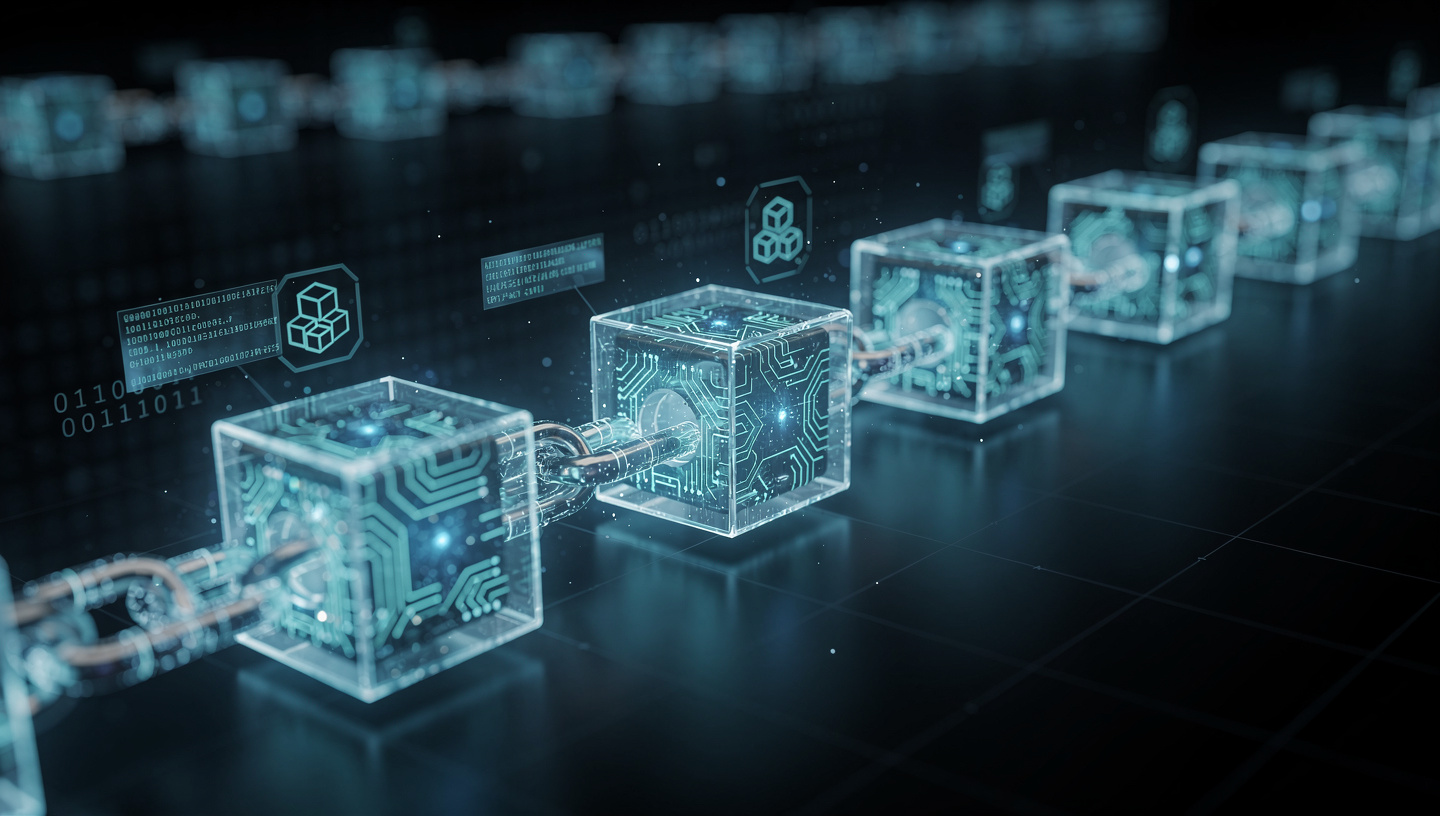
Blockchains introduce something radically different: organizations that can exist natively in software, operate continuously, enforce their own rules, and transact without intermediaries. When combined with smart contracts, cryptography, and AI, this unlocks an entirely new class of entities: autonomous corporations.
These are not startups with crypto wallets. They are not traditional firms “using blockchain.” They are computational organisms—self-governing economic agents embedded directly into decentralized networks.
This article treats autonomous corporations as a worldbuilding primitive: how they are designed, how they function, how they evolve, and how entire civilizations might organize around them.
We will examine:
- Core architecture of autonomous corporations
- Governance without executives
- On-chain labor and capital flows
- Machine-native markets
- Legal and identity frameworks
- Failure modes and evolutionary pressures
- Macroeconomic implications
- Design patterns for fictional or speculative crypto societies
This is not a story. It is a systems-level blueprint.
1. What Is an Autonomous Corporation?
An autonomous corporation is a persistent, on-chain entity that:
- Owns assets directly
- Executes logic via smart contracts
- Makes decisions through algorithmic or token-based governance
- Interacts economically with humans and machines
- Continues operating without centralized management
In contemporary crypto discourse, these are often approximated by DAOs (Decentralized Autonomous Organizations), deployed primarily on networks like Ethereum, and conceptually descended from the original trust-minimized architecture introduced by Bitcoin.
But an autonomous corporation goes further than a DAO.
A DAO still typically relies on:
- Human proposal authors
- Human voters
- Human multisig signers
- Human-operated infrastructure
An autonomous corporation treats humans as external participants, not internal operators.
Its core behaviors are software.
2. The Autonomous Stack
Designing such an entity requires a layered architecture.
Think in terms of a corporate operating system.
Layer 1: Settlement Substrate
This is the base blockchain.
Responsibilities:
- Asset custody
- Transaction finality
- Identity anchoring
- Global state synchronization
In worldbuilding terms, this is your civilization’s economic physics. It defines what ownership means.
Layer 2: Smart Contract Core
This is the corporate genome.
Here live:
- Treasury logic
- Revenue distribution
- Access control
- Upgrade mechanisms
- Internal accounting
These contracts encode the firm’s constitution.
Unlike legal charters, these rules are executable.
Layer 3: Governance Engine
This layer decides:
- Parameter changes
- Strategic pivots
- Budget allocations
- Protocol upgrades
Governance may be:
- Token-weighted
- Quadratic
- Reputation-based
- AI-mediated
- Hybrid models
Crucially, governance outputs are directly consumed by smart contracts—no translation layer.
Layer 4: Economic Interfaces
APIs, frontends, or agent endpoints enabling:
- Customers to pay
- Workers to contribute
- Other corporations to transact
At this level, autonomous corporations behave like programmable market participants.
3. Capital Without Capitalists
Traditional corporations aggregate capital through equity and debt.
Autonomous corporations aggregate capital through tokens.
These tokens simultaneously represent:
- Ownership
- Voting rights
- Economic exposure
- Access permissions
This collapses multiple legal instruments into a single cryptographic primitive.
Continuous Capital Formation
Instead of IPOs, autonomous corporations can:
- Issue tokens algorithmically
- Adjust supply dynamically
- Sell equity in real time
- Redistribute ownership based on contribution
There is no “fundraising round.” Capital formation becomes a continuous process.
Treasury as Autonomous Actor
The treasury is not a bank account.
It is an intelligent contract that:
- Allocates funds automatically
- Pays contributors
- Invests surplus
- Enforces spending constraints
In advanced designs, treasuries can interact directly with DeFi protocols, providing liquidity or generating yield without human oversight.
Money becomes active.
4. Labor in Autonomous Economies
Employees imply payroll departments, HR, and management hierarchies.
Autonomous corporations replace this with task markets.
Work as On-Chain Claims
Contributors interact through:
- Bounties
- Micro-contracts
- Proof-of-work submissions
- AI-evaluated deliverables
Payment is conditional on verifiable output.
No managers approve timesheets. Smart contracts release funds.
Reputation Instead of Résumés
Identity is not CV-based.
Participants accumulate cryptographic reputation:
- Completed tasks
- Accuracy scores
- Peer attestations
- Performance metrics
This reputation directly affects compensation rates and access to higher-value work.
AI as Middle Management
As AI systems mature (drawing inspiration from organizations like OpenAI), they can:
- Decompose objectives into tasks
- Evaluate submissions
- Detect fraud
- Optimize workflows
Middle management becomes software.
5. Governance Without Boards
Boards of directors exist because coordination is expensive.
On-chain coordination is cheap.
Autonomous corporations therefore explore governance structures impossible in legacy systems.
Parameterized Democracy
Rather than voting on every decision, participants vote on governance parameters:
- Budget caps
- Risk tolerances
- Investment strategies
Day-to-day operations run automatically inside those constraints.
Futarchy and Prediction Markets
Some designs use prediction markets to guide decisions:
“If we adopt Strategy A, will revenue increase?”
Markets answer. Contracts execute.
Delegated Intelligence
Token holders may delegate governance power to AI agents optimized for:
- Profit
- Sustainability
- Social impact
These agents compete for delegation, creating an evolutionary selection of governance algorithms.
6. Legal Identity in a Post-Jurisdictional World
Autonomous corporations exist natively on blockchains, not in nation-states.
This creates a fundamental mismatch with existing legal systems.
Worldbuilders must decide:
- Are these entities recognized as persons?
- Can they own physical property?
- Can they sue or be sued?
- Who is liable for their actions?
Some speculative models treat autonomous corporations as digital sovereigns—recognized only by protocol consensus, not governments.
Others embed them within special regulatory zones or crypto-native jurisdictions.
In either case, the key shift is this:
Law becomes optional. Code becomes primary.
7. Inter-Corporate Ecology
Autonomous corporations do not exist in isolation.
They form ecosystems.
Machine-to-Machine Markets
Corporations transact directly:
- Buying compute
- Selling data
- Renting infrastructure
- Licensing algorithms
No humans involved.
These are machine-native supply chains.
Recursive Ownership
Corporations can own tokens of other corporations.
This produces recursive capital structures:
- Autonomous holding companies
- Algorithmic conglomerates
- On-chain investment funds
Entire economies become graphs of interlinked treasuries.
Competitive Evolution
Poorly designed corporations lose capital.
Efficient ones attract contributors and liquidity.
Market selection replaces corporate governance theory.
8. Failure Modes and Attack Surfaces
Autonomy does not eliminate risk. It redistributes it.
Key vulnerabilities:
Smart Contract Exploits
A single bug can drain a treasury.
Worldbuilders must assume:
- Formal verification
- Redundant modules
- Circuit breakers
are standard.
Governance Capture
Token concentration enables hostile takeovers.
Mitigations include:
- Time locks
- Voting decay
- Identity-weighted systems
Oracle Corruption
Autonomous corporations depend on external data.
If price feeds or sensors are compromised, behavior collapses.
Robust oracle design is existential.
9. Designing for Persistence
Human corporations rely on culture.
Autonomous corporations rely on incentive geometry.
To survive long-term, they require:
- Adaptive governance
- Self-upgrading contracts
- Economic resilience
- Contributor retention mechanisms
Some speculative designs include:
- On-chain constitutions with amendment procedures
- AI-driven strategy layers
- Internal insurance pools
- Evolutionary forks where unsuccessful variants die off
These entities are not managed. They are bred.
10. Macroeconomics of Autonomous Civilizations
When autonomous corporations dominate production, the macro picture changes.
Continuous Markets
No closing bells.
No accounting periods.
Everything settles in real time.
Hyper-Liquid Capital
Assets move frictionlessly across organizations.
Idle capital becomes rare.
Fragmented Employment
Individuals work for dozens—or hundreds—of corporations simultaneously through micro-contributions.
The concept of a “job” dissolves.
Algorithmic Business Cycles
Booms and busts emerge from interacting algorithms, not human psychology.
Central banks become irrelevant.
Economic policy becomes protocol design.
11. Worldbuilding With Autonomous Corporations
If you are constructing a crypto-native civilization, autonomous corporations become foundational.
Ask:
- Who designs them?
- Who audits them?
- How do citizens interface with them?
- What happens when one grows too powerful?
- Can they be killed? Forked? Sanctioned?
Possible societal archetypes:
- Corporate Archipelagos: thousands of small autonomous entities forming loose federations
- Algorithmic Megastates: massive on-chain corporations replacing governments
- Market Swarms: ephemeral corporations spun up per project and dissolved after completion
- AI Syndicates: networks of machine-run firms trading with humans at the edges
Each produces radically different cultures.
Closing: Corporations as a New Lifeform
Autonomous corporations are not merely an upgrade to business models.
They represent a new category of economic actor.
They can:
- Own assets
- Make decisions
- Hire labor
- Compete in markets
- Persist indefinitely
All without executives, offices, or legal paperwork.
In crypto civilizations, corporations cease to be tools.
They become inhabitants.
Designing them is not corporate governance.
It is synthetic economics—the creation of artificial institutions that live inside code and compete for survival in global, permissionless markets.
The question is no longer whether such entities will exist.
The question is what kind of world they will build around themselves.