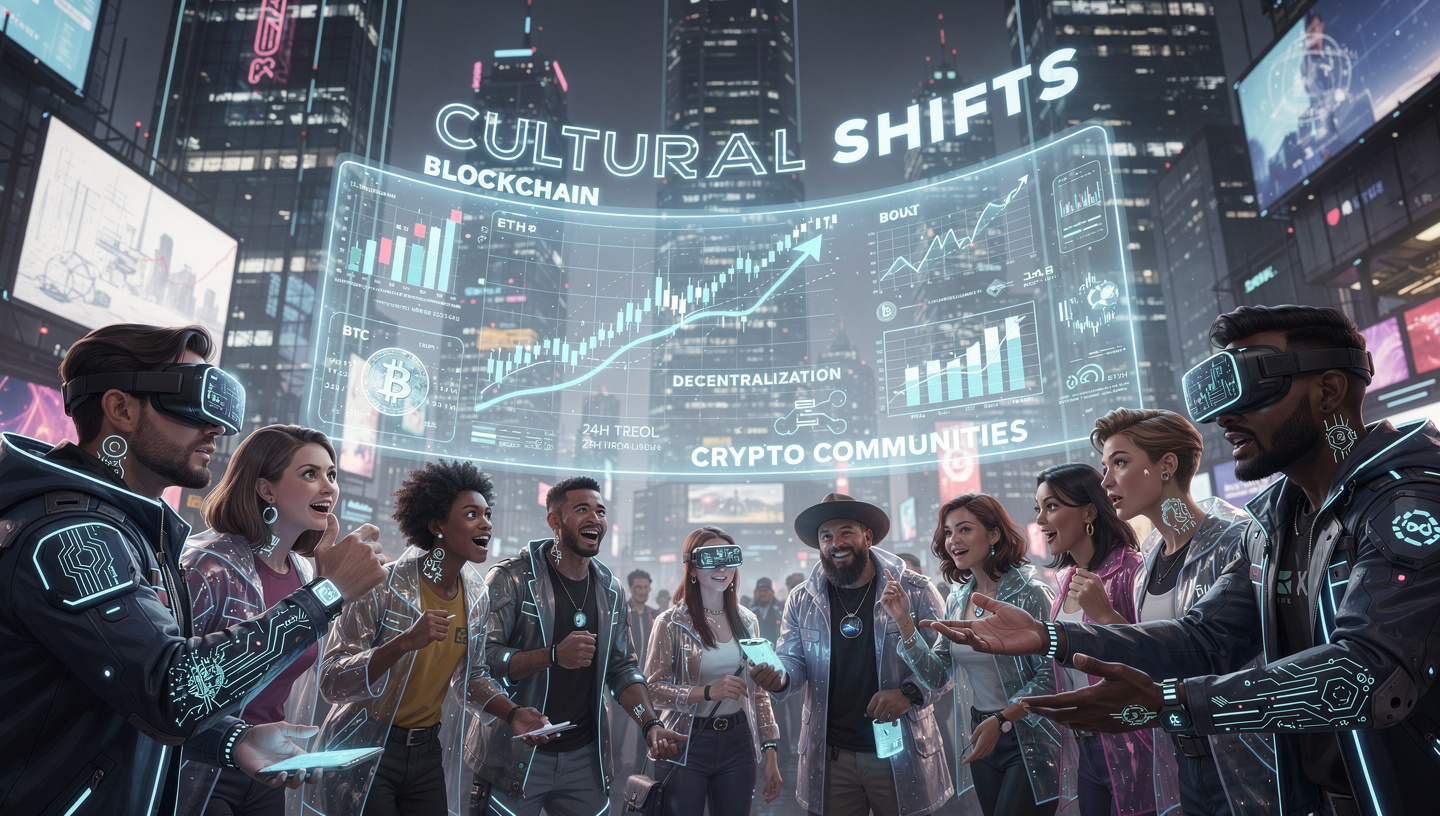
A token economy does not merely change how value moves. It restructures how society itself stratifies.
When money becomes programmable, ownership becomes transparent, and participation is mediated by cryptographic systems, traditional class boundaries dissolve—and new ones form in their place. Titles, land deeds, and bank accounts give way to wallets, protocols, and on-chain reputation. Labor is replaced by incentives. Citizenship becomes optional. Capital becomes liquid, global, and automated.
This is not a speculative fantasy about price charts or digital collectibles. It is a structural thought experiment: what social classes emerge when tokens—not institutions—define access, power, and opportunity?
This article approaches that question from a worldbuilding perspective grounded in economics, game theory, cryptography, and political philosophy. It is not a story. It is an analytical model of how a fully tokenized society might organize itself—and how inequality, hierarchy, and identity evolve inside it.
Defining the Token Economy
A token economy is a socio-economic system where:
- Value is represented primarily through cryptographic tokens
- Access to services, governance, and resources is mediated by smart contracts
- Ownership is provable, portable, and programmable
- Incentives are embedded directly into infrastructure
- Identity is optional, pseudonymous, or composable
In this environment, money is no longer passive. It executes logic. Assets vote. Contracts enforce themselves. Algorithms replace administrators.
This changes the mechanics of class formation.
Historically, social classes emerged from control over:
- Land (feudalism)
- Capital (industrial capitalism)
- Information (late-stage digital economies)
In a token economy, class emerges from control over protocols, liquidity, and narrative gravity.
From Marx to Markets Without Masters
Classical economic theory treated class as a consequence of ownership over means of production—a framework formalized by Karl Marx and later softened by market-oriented thinkers like Adam Smith.
But neither model anticipated systems where:
- Production is automated
- Ownership is fractionalized
- Governance is algorithmic
- Borders are irrelevant
A token economy introduces a fourth category of power:
Protocol control.
Those who shape protocol parameters—issuance schedules, staking rewards, governance thresholds—effectively design reality for everyone else.
This creates a new stratification map.
Not bourgeoisie versus proletariat.
Not capital versus labor.
But architects versus participants.
The New Class Stack
In a mature token economy, social hierarchy organizes around five dominant classes.
Each is defined not by income alone, but by leverage over systems.
1. Protocol Architects
These are the builders of foundational infrastructure:
- Core developers
- Cryptographers
- Systems designers
- Economic modelers
They write the rules that everything else obeys.
Their power is asymmetric and durable. Even when they hold few tokens, their influence persists through:
- Code commits
- Improvement proposals
- Reference implementations
- Architectural decisions
They resemble constitutional framers more than entrepreneurs.
Once deployed, their designs become irreversible social machinery.
This class is small, highly technical, and globally distributed.
They do not advertise.
They ship.
2. Liquidity Sovereigns
Liquidity is sovereignty in a token economy.
Those who control deep pools of capital—early adopters, funds, DAOs, treasury operators—can:
- Move markets
- Seed ecosystems
- Starve competitors
- Dictate governance outcomes
They are not merely wealthy.
They are systemically influential.
Liquidity Sovereigns shape which projects live, which narratives trend, and which protocols gain legitimacy.
Traditional financial elites are replaced by on-chain capital coordinators—often pseudonymous, sometimes collective, always data-driven.
Their dashboards replace boardrooms.
3. Governance Elites
These are participants who accumulate governance tokens and voting rights.
They may not write code or supply liquidity, but they:
- Pass proposals
- Adjust parameters
- Allocate treasury funds
- Approve integrations
In theory, governance is democratic.
In practice, it centralizes.
Participation requires:
- Capital
- Attention
- Technical literacy
- Time
Over time, voter apathy concentrates power in the hands of professional governors.
This class resembles a digital aristocracy: visible on-chain, accountable in theory, entrenched in practice.
4. Incentivized Operators
This is the productive middle layer:
- Validators
- Node operators
- Moderators
- Curators
- Content producers
- Service providers
They do not own the system.
They keep it alive.
Their income comes from:
- Staking rewards
- Usage fees
- micro-incentives
- protocol emissions
They trade stability for autonomy.
They are mobile, globally distributed, and highly sensitive to parameter changes.
This class replaces salaried employment with continuous on-chain performance.
Their job security is statistical.
5. Peripheral Users
At the base lies the largest group:
- Casual users
- Speculators
- Consumers
- Late adopters
They interact with interfaces, not protocols.
They pay fees.
They follow trends.
They hold tokens but rarely influence outcomes.
Their experience resembles today’s app economy—except assets are volatile, and mistakes are permanent.
They are participants without agency.
Customers in a system that pretends everyone is a stakeholder.
Tokenized Inequality: How Stratification Hardens
Token economies advertise openness.
Anyone can join.
Anyone can build.
Anyone can earn.
But openness does not equal equality.
Three mechanisms harden class boundaries over time.
1. Compounding Advantage
Early access multiplies.
Genesis allocations, insider knowledge, or initial liquidity snowball through:
- Yield farming
- Airdrops
- Governance privileges
- Network effects
Returns are not linear.
They are exponential.
This creates a permanent early elite—analogous to landowners in agrarian societies.
2. Cognitive Barriers
Understanding cryptographic systems requires:
- Technical fluency
- Risk tolerance
- Pattern recognition
- Economic literacy
These are unevenly distributed.
As protocols grow more complex, participation becomes specialized.
User-friendly interfaces mask structural power.
Complexity protects incumbents.
3. Narrative Capture
Value follows stories.
Those who control discourse—thought leaders, major platforms, research organizations like the World Economic Forum—shape perception, legitimacy, and capital flow.
In a token economy, narrative is a form of currency.
Influence migrates from media empires to on-chain attention markets.
But hierarchy remains.
Identity Without Citizenship
Token economies detach identity from geography.
Your wallet becomes your resume.
Your transaction history becomes your reputation.
Your NFTs become credentials.
Citizenship becomes optional.
Participation becomes modular.
This creates a new social phenomenon:
Stateless class identity.
People no longer belong to nations.
They belong to protocols.
Communities form around DAOs, not borders.
Solidarity becomes contractual.
Loyalty becomes liquid.
The result is a society organized around overlapping economic micro-polities—each with its own incentives, values, and hierarchies.
Education, Status, and Cultural Capital
Traditional markers of class—degrees, job titles, institutions—lose relevance.
New markers emerge:
- Wallet age
- On-chain reputation
- Governance participation
- Protocol contribution history
Cultural capital becomes:
- Technical credibility
- Meme fluency
- Risk narratives
- Builder status
Status is no longer granted by universities or employers.
It is earned in public ledgers.
Prestige becomes transparent.
So does failure.
The Illusion of Decentralized Equality
Token economies promise decentralization.
What they deliver is distributed centralization.
Power does not disappear.
It fragments, recombines, and reasserts itself through:
- Token concentration
- Developer gatekeeping
- Governance fatigue
- Capital velocity
Every protocol converges toward oligarchy unless actively resisted.
Every DAO trends toward plutocracy unless structurally constrained.
This is not a bug.
It is a property of incentive-driven systems.
Worldbuilding Implications
If you are constructing a society around tokens, several dynamics become unavoidable:
- Class is algorithmic, not hereditary
- Power is probabilistic, not institutional
- Mobility exists—but narrows rapidly over time
- Identity is composable
- Governance is technical
- Inequality is transparent
- Revolutions are forks
Social conflict no longer targets kings or corporations.
It targets codebases.
Dissent manifests as protocol migrations.
Rebellion becomes liquidity exit.
Conclusion: A Civilization Written in Smart Contracts
A token economy does not eliminate class.
It reprograms it.
Hierarchy persists—but its foundations shift from land and labor to code and capital flow. Elites are no longer crowned or elected. They emerge from technical competence, early access, and system-level influence.
The future token society is not utopian.
It is hyper-rational.
Every interaction is quantified.
Every incentive is explicit.
Every inequality is measurable.
And every participant, whether architect or peripheral user, lives inside an economic engine that never sleeps.
In such a world, the most powerful position is not wealth.
It is authorship.
Those who write the protocols do not merely build platforms.
They design civilizations.