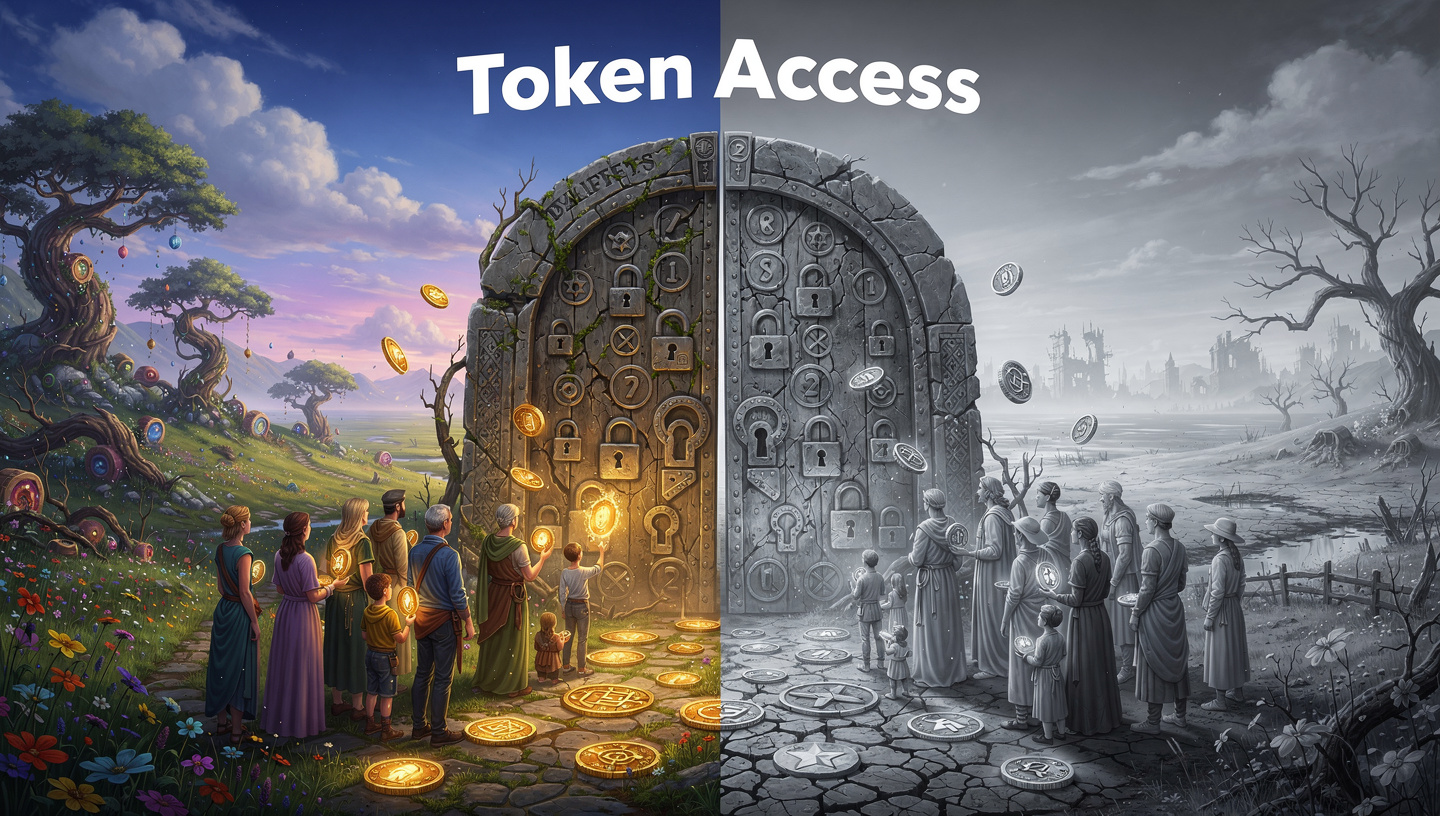
Somewhere between zero-knowledge proofs and sovereign rollups, between programmable money and programmable identity, the global economy quietly crossed a line: access itself became tokenized. Not wealth. Not ownership. Access.
That distinction matters.
In this world—our near future, rendered only slightly forward in time—economic participation is no longer primarily gated by nationality, credit scores, or bank accounts. It is gated by cryptographic credentials bound to wallets, reputation graphs, and algorithmic trust layers. You don’t just own assets anymore. You hold keys to entire domains of life.
And not everyone gets the same keys.
This article is not a story in the literary sense. It is a speculative systems analysis—a research-oriented examination of how decentralized finance, AI-mediated markets, and token-gated infrastructure could converge into a civilization where opportunity itself is segmented by protocol design.
Welcome to a world divided by token access.
1. Tokenization Was Never About Assets
Early crypto discourse framed tokenization as a way to fractionalize real estate, digitize art, or trade commodities on-chain. That framing was incomplete.
Tokenization’s real power is structural. It allows any rule-based system to be encoded, enforced, and settled without intermediaries. Once that capability exists, everything with conditional access becomes programmable:
- Education
- Healthcare queues
- Corporate procurement
- Travel corridors
- Data marketplaces
- Employment pipelines
- Civic participation
In other words, tokens stop representing things and start representing rights.
A credential NFT doesn’t merely prove you completed a course. It determines whether you’re allowed into a research DAO.
A reputation token doesn’t just signal trust. It defines your borrowing ceiling across autonomous credit networks.
A governance token doesn’t simply grant voting power. It gates influence over infrastructure.
Access becomes composable.
And composable access scales.
This is the pivot point most observers miss.
2. From Financial Inclusion to Protocol Inclusion
The industry once promised “banking the unbanked.” That narrative assumed traditional finance was the reference frame.
It no longer is.
Modern crypto stacks increasingly resemble operating systems: modular layers of identity, settlement, computation, and coordination. Inclusion is no longer about opening a checking account. It’s about being admitted into protocol ecosystems.
You are not excluded because you lack documents.
You are excluded because your wallet graph does not satisfy the required predicates.
These predicates might include:
- On-chain activity history
- Proof-of-humanity attestations
- Contribution scores
- Social recovery structures
- Zero-knowledge credentials
- AI-generated risk profiles
Participation becomes probabilistic.
Every interaction updates your standing.
This is not hypothetical. It is the logical extension of permissionless systems once they become economically dense.
In such a world, your token posture replaces your résumé.
3. The Invisible Architecture of Gated Economies
By the time most people notice this shift, the infrastructure will already be embedded everywhere.
Token gates will not look dramatic. They will be UI elements:
- “Access denied: insufficient reputation.”
- “Upgrade required: Tier-3 identity credential.”
- “You are not eligible for this liquidity pool.”
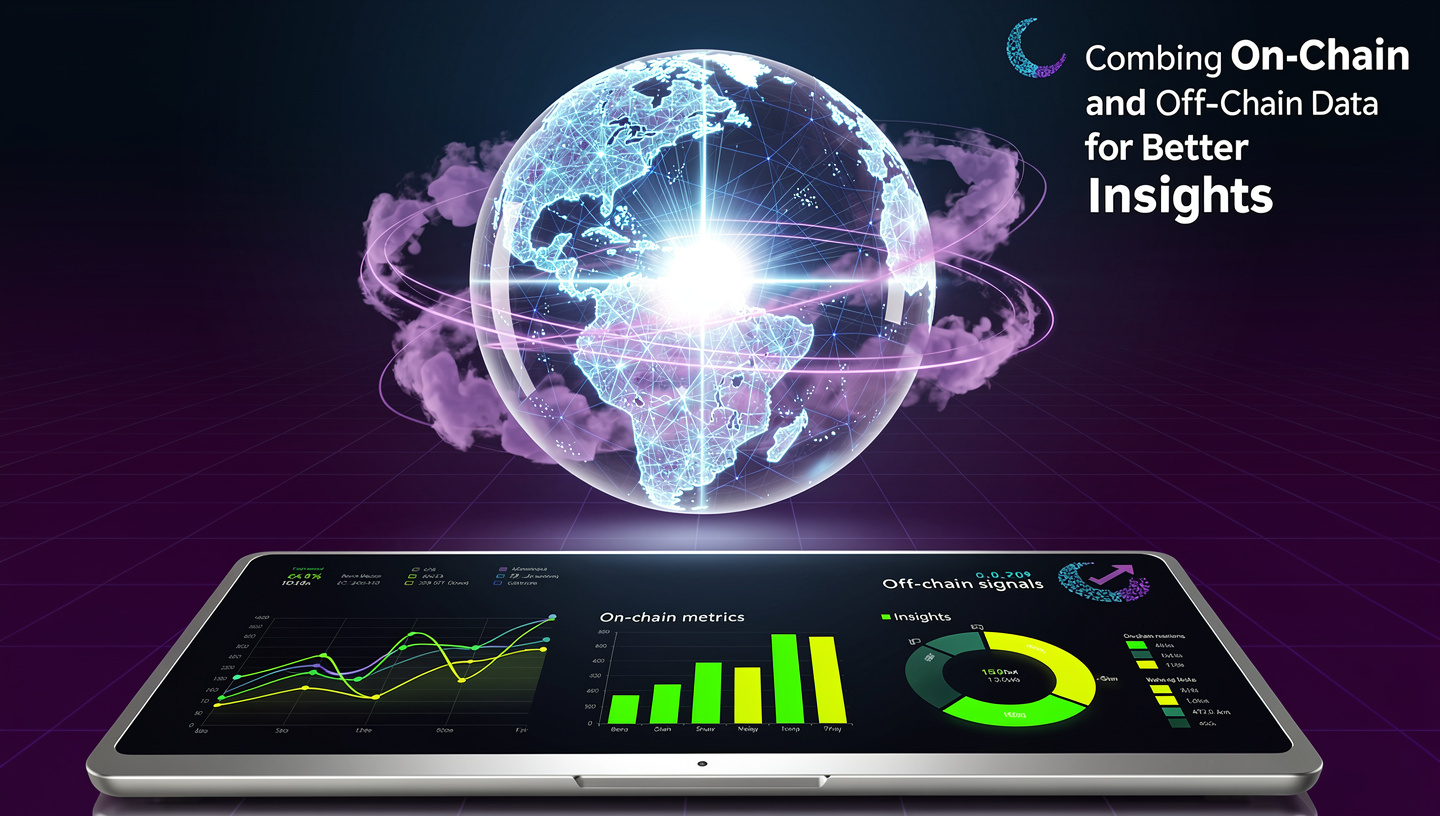
Behind those messages lies a sprawling mesh of smart contracts and AI agents performing continuous classification.
Every wallet becomes a moving profile.
Every transaction feeds models.
Every interaction refines eligibility.
These systems won’t feel authoritarian. They will feel procedural.
That is precisely why they will be accepted.
4. AI Agents as Market Custodians
Human traders do not scale. Agents do.
Autonomous AI systems already execute arbitrage, rebalance treasuries, and manage liquidity across decentralized venues. As these agents gain access to cross-chain analytics and predictive modeling, they evolve from tools into custodians of market structure.
The crucial shift occurs when agents begin enforcing access policies.
At that point:
- Credit becomes algorithmic.
- Compliance becomes continuous.
- Risk becomes personalized in real time.
Your ability to participate in certain economic domains is no longer decided by committees. It is computed.
Major institutions experimenting with crypto infrastructure—entities like BlackRock and regulatory bodies such as the U.S. Securities and Exchange Commission—are already exploring frameworks where digital identity, custody, and compliance collapse into unified stacks.
Now imagine that same architecture operating autonomously.
No call centers.
No appeals.
Just models.
5. The Emergence of Token Classes
In this future, inequality does not primarily manifest as income disparity.
It manifests as access stratification.
You will belong—explicitly or implicitly—to a token class.
Tier Zero: The Uncredentialed
Wallets with minimal history. No verified attestations. Limited interaction graph.
They can transact. Barely.
They face higher fees, restricted pools, delayed settlements, and near-zero leverage. Their economic surface area is narrow.
Tier One: The Verified
These users possess identity proofs and participation records.
They can access mainstream DeFi, basic DAO governance, and standard credit rails.
This is the new middle class.
Tier Two: The Networked
These wallets are deeply embedded across ecosystems. They hold governance tokens, contribute code, provide liquidity, or curate data.
They receive preferential routing, early access to protocols, and algorithmically reduced risk premiums.
Tier Three: The Sovereign Nodes
Rare entities—sometimes individuals, sometimes DAOs—whose wallets function as economic hubs.
They underwrite markets.
They influence protocol upgrades.
Their signatures move capital.
These are not billionaires in the traditional sense.
They are infrastructural actors.
6. Identity Becomes a Financial Primitive
In legacy systems, identity is static.
In cryptographic systems, identity is dynamic.
Every proof you present alters your future permissions.
This leads to a subtle but profound change: identity becomes collateral.
Not metaphorically. Literally.
Zero-knowledge attestations can already verify attributes without revealing data. Combine that with staking mechanisms, and you can create identities that are economically bonded.
Lie, and you lose stake.
Behave, and your access expands.
This transforms trust from a social construct into a programmable variable.
Organizations like Ethereum Foundation have openly discussed identity layers as core infrastructure for decentralized societies.
Once identity is composable, everything else follows.
Employment contracts.
Medical triage.
Immigration queues.
Education pathways.
All mediated through wallets.
7. Data Is the New Border
In this divided world, geography matters less than data sovereignty.
Your wallet history determines where you can work.
Your contribution graph defines what services you can use.
Your behavioral score influences which AI agents will transact with you.
There are no physical walls.
There are protocol boundaries.
Some ecosystems are open. Others are heavily curated.
High-trust zones form around specialized DAOs: biotech collectives, climate engineering groups, orbital manufacturing syndicates.
Entry requires credentials.
Credentials require reputation.
Reputation requires participation.
Participation requires access.
The loop is complete.
8. The Quiet Role of Centralized Intelligence
Despite the rhetoric of decentralization, centralized intelligence never disappears.
It mutates.
Large model providers—companies like OpenAI—supply the inference layers that interpret on-chain data, predict behavior, and optimize economic flows.
These models do not own assets.
They shape outcomes.
They recommend which wallets receive liquidity.
They score risk.
They flag anomalies.
They become the invisible referees of decentralized worlds.
Control shifts from custody to cognition.
9. When Markets Become Adaptive Organisms
At sufficient scale, crypto markets stop behaving like marketplaces and start behaving like ecosystems.
Liquidity migrates in response to incentives.
Protocols fork in response to governance pressure.
Agents evolve strategies based on adversarial feedback.
The system becomes self-modifying.
In such an environment, token access is not merely a policy choice—it is a survival mechanism. Protocols must defend against sybil attacks, extractive capital, and malicious automation.
Gating becomes inevitable.
And once gating exists, hierarchy emerges.
Not by decree.
By optimization.
10. Education as a Token-Gated Resource
One of the earliest domains to fracture will be learning.
Advanced research collectives already operate as tokenized networks. Access to datasets, simulations, and collaborative environments increasingly requires proof of contribution.
Degrees lose relevance.
Wallet histories replace transcripts.
Students are no longer evaluated by exams but by on-chain artifacts:
- Code commits
- Model improvements
- Peer attestations
- Knowledge bounties
The best learning environments become inaccessible to those without prior access.
Meritocracy hardens into recursion.
11. The New Labor Market
Employment dissolves into task markets.
You don’t apply for jobs.
Agents match your wallet profile to micro-contracts across DAOs.
Compensation streams directly to your address.
Performance updates your reputation.
Low performers are algorithmically deprioritized.
High performers are routed premium work.
Human resource departments disappear.
Matching engines replace them.
This labor economy is efficient.
It is also unforgiving.
12. Privacy Becomes a Luxury Good
Zero-knowledge systems offer technical privacy.
But practical privacy erodes.
To gain access, you must disclose.
To earn reputation, you must act publicly.
To compete, you must leave traces.
Those who can afford advanced privacy tooling—custom zk circuits, private relayers, shielded identity layers—retain autonomy.
Everyone else becomes legible.
Transparency becomes compulsory.
13. The Political Consequence
Governments struggle to regulate systems that do not reside in jurisdictions.
Voting power migrates into protocol governance.
Treasuries accumulate in DAOs.
Public goods funding becomes algorithmic.
Citizenship becomes less relevant than participation metrics.
States do not disappear.
They lose monopoly.
Power fragments across cryptographic networks.
14. This Is Not Dystopia. It Is Optimization
There is no villain in this transformation.
No singular antagonist.
Just incentives, compounding.
Developers optimize for security.
Protocols optimize for capital efficiency.
Agents optimize for expected value.
Users optimize for access.
Each step is rational.
The aggregate outcome is stratification.
15. Living Inside the Ledger
In A World Divided by Token Access, the blockchain is not merely a financial substrate.
It is memory.
Every action persists.
Every interaction compounds.
Your past becomes executable.
The ledger does not forget.
And because it does not forget, it begins to decide.
Conclusion: Access Is the New Currency
We once believed crypto was about money.
Then we thought it was about decentralization.
The deeper truth is simpler and more unsettling:
Crypto is about programmable inclusion.
Who gets in.
Who stays out.
Who advances.
In this future, wealth still matters—but access matters more.
Not access to capital.
Access to systems.
To networks.
To opportunity itself.
And once that access is tokenized, composable, and enforced by autonomous intelligence, society reorganizes around wallets instead of passports, credentials instead of citizenship, and reputation instead of resumes.
This is not a collapse scenario.
It is a convergence.
A world where every interaction leaves a trace.
Where every trace influences permission.
Where every permission shapes destiny.
A world divided—not by borders or ideologies—but by token access.
And once that world arrives, it will feel inevitable.