You don’t adopt a technology when it becomes powerful.
You adopt it when it becomes invisible.
Electricity didn’t win because people finally understood alternating current. It won when flipping a switch required zero thought. Cars didn’t reshape society because engines improved; they did it when driving stopped feeling like mechanical labor. Every major platform shift follows the same arc: complexity migrates inward, experience moves outward.
Crypto is now at that inflection point.
Blockchains already settle trillions. Smart contracts already run autonomous markets. Tokenized assets already move globally in seconds. And yet adoption remains niche—not because the infrastructure is weak, but because the interface layer is hostile to normal human behavior.
The next wave of crypto growth will not be driven by faster chains or clever tokenomics. It will be driven by wallet UX.
Not marginal improvements. Structural ones.
This article breaks down the concrete UX changes happening right now—and those still missing—that could finally turn crypto from a specialist tool into a mass-market platform.
Wallets Are Crypto’s Real Front Door
Every user journey in crypto starts and ends with a wallet.
Trading, staking, NFTs, DeFi, gaming, payments, identity—none of it matters if users cannot safely and intuitively manage keys, sign transactions, and understand what they are doing.
Today’s dominant wallets—like MetaMask, Coinbase Wallet, Trust Wallet, and Phantom—were built primarily for early adopters. Power users. Developers. Crypto-native traders.
They optimized for:
- Direct key control
- Raw protocol access
- Permissionless composability
They did not optimize for:
- Cognitive simplicity
- Error prevention
- Emotional reassurance
- Progressive onboarding
This mismatch explains nearly every adoption bottleneck.
Mass users don’t reject crypto because of ideology. They reject it because the experience feels fragile, alien, and unforgiving.
Wallet UX is now being redesigned around that reality.
Why UX Matters More Than Throughput
Crypto discourse still centers on performance metrics: TPS, gas costs, block times.
Those matter—but they are second-order effects.
The primary constraint is human.
Mainstream users do not want to:
- Manage seed phrases
- Decode hex strings
- Interpret opaque signing prompts
- Navigate multi-step bridge flows
- Worry that one wrong click vaporizes savings
Traditional fintech removed these burdens decades ago.
Crypto is just starting.
The shift underway is from protocol-first design to user-first abstraction.
That single transition changes everything.
1. Seed Phrases Are Being Replaced by Recoverable Identity
Twelve-word seed phrases are a catastrophic UX artifact.
They assume users will:
- Write them down correctly
- Store them safely forever
- Never lose or expose them
- Understand what they represent
In practice, seed phrases are responsible for a massive percentage of lost funds.
Wallet UX is moving toward social recovery, hardware-backed credentials, and cloud-assisted key management.
Emerging approaches include:
Smart Account Recovery
Instead of a single private key, wallets increasingly use smart contract accounts that allow:
- Multiple guardians
- Time-delayed recovery
- Threshold signatures
Lose your phone? You recover through trusted devices or contacts.
No paper backups required.
Passkeys and Biometric Auth
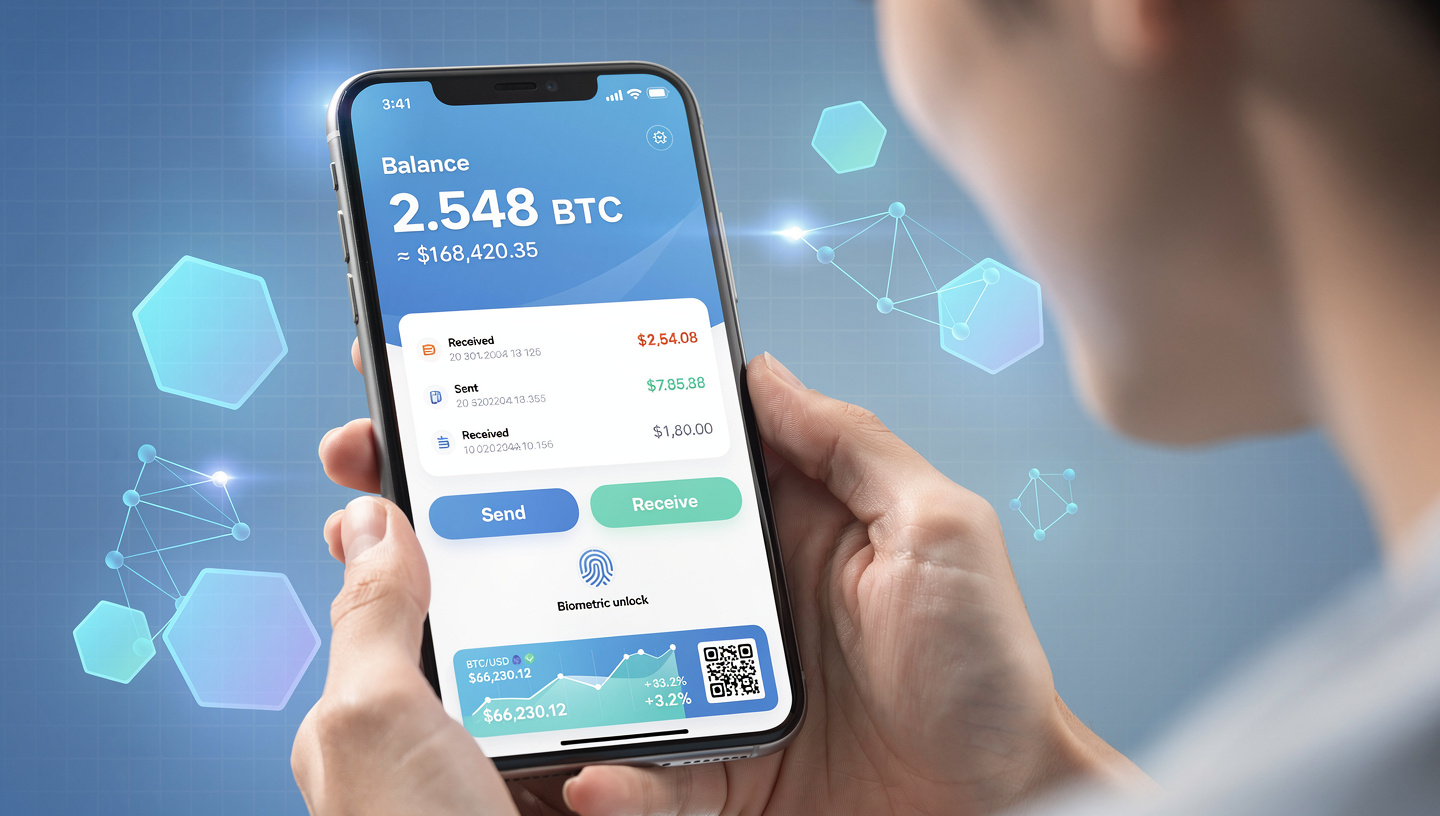
Modern wallets now integrate OS-level secure enclaves and biometric authentication, allowing users to sign transactions using face or fingerprint—without ever seeing raw private keys.
From the user’s perspective, crypto begins to feel like mobile banking.
Hardware-Assisted Custody
Companies like Ledger pioneered secure hardware storage. That model is now merging directly into phone chips and browsers.
Self-custody no longer requires separate devices.
This is foundational.
When key management becomes invisible, onboarding friction collapses.
2. Transaction Signing Is Becoming Human-Readable
Right now, most wallets still show users something like:
“Sign message: 0x9f3b…a12c”
This is absurd.
You wouldn’t approve a bank transfer described in hexadecimal.
Wallet UX is rapidly evolving toward semantic transaction previews:
- “You are swapping 100 USDC for ~0.056 ETH”
- “This app is requesting permission to spend up to 500 DAI”
- “You are minting NFT #482 from Collection X”
Clear language. Clear intent. Clear risk.
Some wallets already simulate outcomes before signing, displaying:
- Token balance changes
- Approval scopes
- Contract trust scores
This is the difference between guessing and knowing.
Mass adoption requires users to understand actions, not just authorize them.
3. Chain Abstraction Eliminates Network Confusion
Normal users do not care what chain they are on.
They care that their transaction works.
Historically, wallets forced users to manually:
- Select networks
- Bridge assets
- Manage gas tokens
- Troubleshoot failed routes
This is collapsing into chain abstraction.
Modern wallets increasingly handle:
- Automatic routing
- Cross-chain execution
- Unified balances
From the user’s perspective, crypto becomes one global system—not a maze of competing networks like Ethereum, Solana, or Bitcoin.
They send value. The wallet figures out the rest.
This shift mirrors how the internet hides routing protocols.
Users type URLs. They don’t manage packets.
Crypto is finally learning the same lesson.
4. Gas Fees Are Being Abstracted Away
Gas is one of crypto’s most confusing concepts.
Why does sending money require buying another token first?
Why does the fee fluctuate wildly?
Why does failure still cost money?
Wallets are now introducing:
- Gas sponsorship
- Fee bundling
- Meta-transactions
- Stablecoin gas payments
Users simply pay a flat fee in the asset they are already holding—or nothing at all.
The wallet handles backend complexity.
This removes a major psychological barrier.
People don’t want to become amateur economists just to move funds.
5. Progressive Disclosure Replaces Overwhelming Interfaces
Early wallets exposed everything at once: networks, tokens, approvals, addresses, settings.
That’s developer-centric design.
Next-generation UX uses progressive disclosure:
- Beginners see only core actions: send, receive, swap
- Advanced tools unlock gradually
- Power features live behind optional menus
This mirrors how professional software onboards users.
You don’t show Photoshop’s entire toolbar on day one.
Crypto wallets are finally adopting the same philosophy.
6. Embedded Compliance Without Killing Self-Custody
Mass adoption requires compatibility with real-world systems: banks, payroll, tax reporting, merchant payments.
Wallets are integrating:
- Optional KYC layers
- Fiat onramps
- Transaction labeling
- Exportable accounting data
Crucially, these features are becoming modular—not mandatory.
Users retain self-custody while gaining bridges to legacy finance.
This hybrid model will dominate.
Pure cypherpunk UX does not scale to billions.
7. In-Wallet Education and Risk Context
Crypto is not intuitive.
Wallets now embed:
- Protocol explainers
- Risk warnings for new contracts
- Visual indicators for approvals
- Scam detection heuristics
Instead of outsourcing learning to Twitter threads and Discord servers, wallets are becoming first-class education surfaces.
This dramatically reduces costly mistakes.
Users don’t just transact. They learn.
8. Wallets Are Becoming Application Platforms
The wallet itself is evolving from a utility into an operating system.
Modern wallets host:
- Built-in DEX aggregators
- NFT galleries
- DeFi dashboards
- Messaging layers
- Identity credentials
Rather than bouncing between dozens of apps, users increasingly live inside their wallet.
This mirrors the evolution of browsers in Web2.
The wallet becomes crypto’s primary runtime environment.
Behavioral Economics: Why These Changes Actually Work
Good UX is not aesthetic. It’s psychological.
These wallet changes directly address known friction points:
- Loss aversion → recovery mechanisms
- Cognitive overload → simplified flows
- Trust uncertainty → transaction previews
- Decision fatigue → automation
- Fear of irreversible error → simulations and confirmations
Crypto previously violated nearly every usability principle.
Now it is aligning with them.
That alignment is what unlocks adoption.
The Institutional Spillover Effect
As wallets improve for consumers, institutions follow.
Treasury teams, fintech platforms, payment processors, and asset managers all rely on the same UX primitives.
Better wallets mean:
- Easier custody integration
- Lower operational risk
- Faster onboarding
- Cleaner compliance
Retail UX improvements cascade upward.
This feedback loop accelerates ecosystem maturity.
What Still Needs to Happen
Despite progress, several gaps remain:
Unified Identity
Users still juggle multiple addresses across platforms. Persistent, privacy-preserving identity layers are still early.
Permission Management Dashboards
Revoking old approvals remains obscure and fragmented.
Default Safety Profiles
New users should start with conservative limits automatically—not maximum permissions.
Standardized Risk Ratings
Contracts and protocols need universally recognized trust indicators.
These are solvable problems.
They are design problems, not protocol ones.
Why This Cycle Is Different
Previous crypto bull markets were fueled by speculation.
The next one will be fueled by usability.
Wallet UX is converging toward the standards that made mobile banking universal:
- Invisible security
- Human-readable actions
- Automated complexity
- Emotional reassurance
When sending crypto feels no harder than sending a message, everything changes.
Developers don’t need to convince users anymore.
The interface does it for them.
Final Thought
Crypto does not need another narrative.
It needs better defaults.
The infrastructure is already here. The liquidity is already here. The applications are already here.
What’s been missing is an interface that respects how humans actually think, behave, and make decisions.
Wallet UX is finally catching up.
And when it does, adoption won’t arrive with hype cycles or viral slogans.
It will arrive quietly—through frictionless flows, invisible keys, and interfaces that disappear into everyday life.
That’s how every real platform shift happens.
Not loudly.
Inevitably.