Price tells you what happened.
Funding rates tell you who is trapped.
That distinction matters.
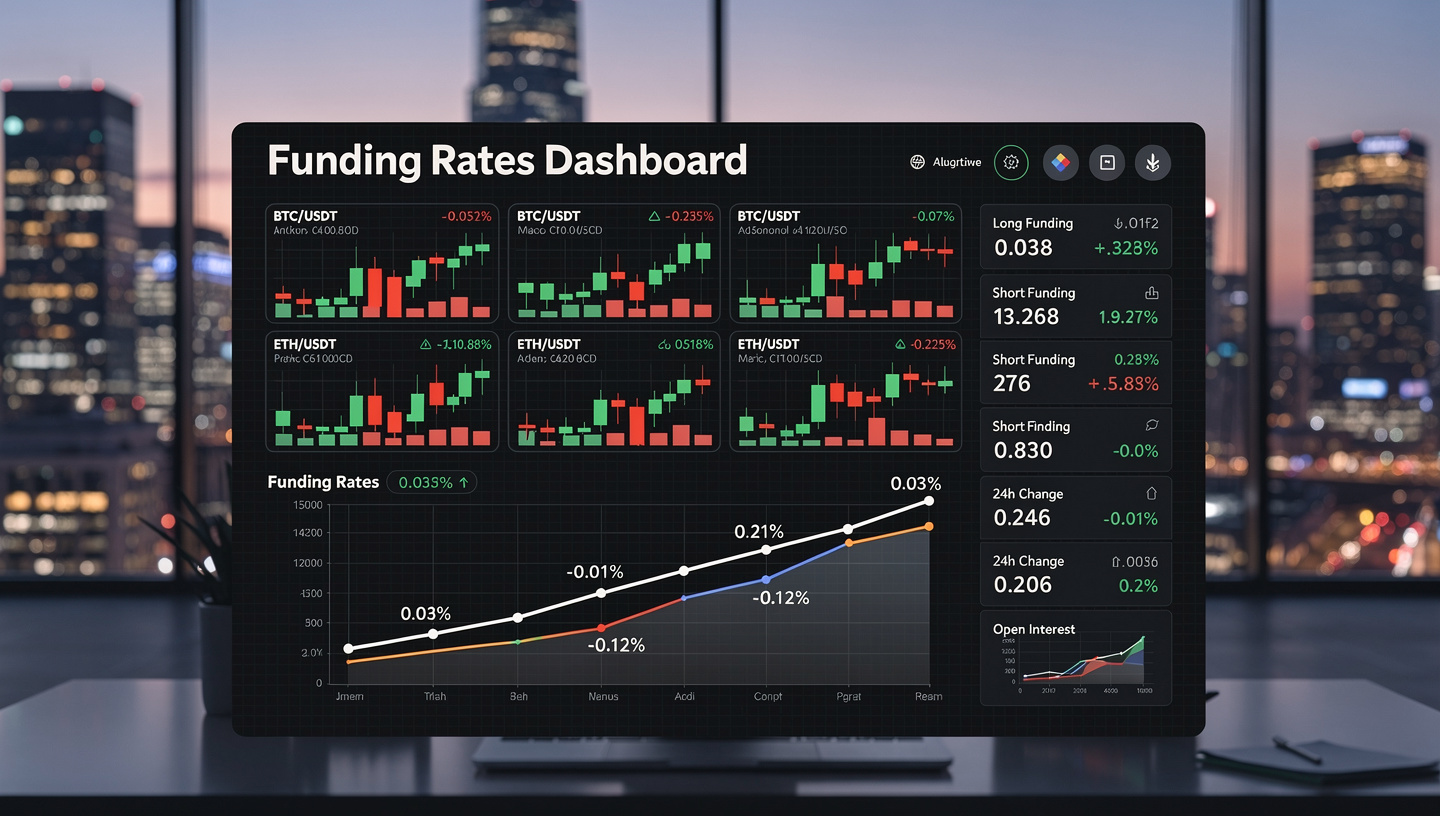
In modern crypto markets, perpetual futures dominate volume. And funding rates are the invisible gravity keeping those contracts anchored to spot prices. But more importantly, they act as a real-time sentiment engine — revealing positioning pressure long before liquidation cascades begin.
This article dissects funding rates from first principles through advanced interpretation. Not surface-level definitions. Not recycled trading clichés. Instead: structure, mechanics, behavioral implications, historical patterns, and how professional traders actually use funding as a signal.
What Funding Rates Really Are (Beyond the Textbook Definition)
In perpetual futures markets, contracts have no expiration. Without intervention, their prices would drift freely away from spot markets.
Funding rates solve that.
They are periodic payments exchanged directly between long and short traders:
- If funding is positive, longs pay shorts.
- If funding is negative, shorts pay longs.
Exchanges merely facilitate the transfer.
The goal is simple: incentivize traders to open positions that pull perpetual prices back toward spot.
But that mechanical explanation misses the deeper layer.
Funding rates are not just a pricing tool — they are a crowd positioning indicator.
They measure imbalance:
- Too many longs → longs pay.
- Too many shorts → shorts pay.
Every funding interval reveals where leverage is concentrated.
That’s why experienced traders treat funding like a seismograph for market psychology.
Why Funding Rates Matter More Than Most Indicators
Technical indicators react to price.
Funding rates expose intent.
They tell you:
- Which side is overleveraged
- How aggressive traders are
- Whether momentum is organic or synthetic
- When rallies or dumps are being propped up by borrowed conviction
A price breakout with neutral funding suggests spot-driven demand.
A breakout with sharply rising funding suggests leverage chasing candles.
Those are radically different market conditions — yet many retail traders treat them the same.
Funding reveals whether a move is sustainable or fragile.
Where Funding Rates Come From (Exchange Mechanics)
Most major derivatives platforms calculate funding using a blend of:
- Perpetual contract price
- Spot index price
- Interest rate components
- Premium/discount adjustments
On venues like Binance, Bybit, and OKX, funding typically settles every 8 hours — though intervals and formulas vary.
The key point: funding is not arbitrary.
It’s algorithmically derived from price divergence and positioning pressure.
But the market interprets funding emotionally.
That’s where opportunity emerges.
The Psychological Dimension of Funding
Funding rates reflect behavioral extremes.
They rise when traders pile into longs during euphoric rallies.
They plunge negative when fear dominates and shorts overcrowd.
These extremes tend to occur:
- Near local tops (excessively positive funding)
- Near panic bottoms (deeply negative funding)
Not because funding causes reversals — but because leverage amplifies emotion.
When funding spikes, traders are literally paying to maintain directional bias.
That is commitment.
That is vulnerability.
Markets exploit vulnerability.
Positive Funding: Bullish Signal or Warning Flag?
Positive funding means longs are dominant.
But magnitude matters.
Mild Positive Funding
This usually accompanies healthy uptrends:
- Spot buyers lead
- Perpetual traders follow
- Leverage remains controlled
This is constructive.
Elevated Positive Funding
Now conditions change:
- Late longs enter
- Momentum traders pile in
- Stops cluster below
Price may still rise — but structure becomes fragile.
Extreme Positive Funding
This is where rallies die.
Everyone is on one side. Liquidation fuel builds beneath price. A small pullback can trigger forced selling, cascading into sharp corrections.
Historically, many major crypto tops occurred under extreme positive funding conditions on assets like Bitcoin.
Not because funding predicts tops — but because excessive leverage creates instability.
Negative Funding: Panic or Opportunity?
Negative funding means shorts are paying longs.
This typically appears during:
- Sharp selloffs
- News-driven fear
- Liquidation events
Deeply negative funding often signals:
- Capitulation
- Forced selling exhaustion
- Oversaturated bearish positioning
In these environments, even modest buying pressure can spark violent short squeezes.
Some of crypto’s fastest rebounds emerged from deeply negative funding zones — when everyone was already leaning short.
Negative funding doesn’t guarantee bottoms.
But it frequently marks asymmetry.
Funding and Liquidations: A Structural Relationship
Funding extremes and liquidation clusters are inseparable.
When funding rises:
- Long leverage increases
- Stop-loss density builds below price
- Liquidation engines prime themselves
When funding drops deeply negative:
- Short leverage increases
- Buy-side liquidations stack above price
Large players monitor these imbalances.
They don’t chase momentum — they hunt fragility.
Funding tells them where that fragility lives.
Funding vs Open Interest: The Complete Picture
Funding alone is incomplete.
Professionals always pair it with open interest.
Four core scenarios:
1. Rising Price + Rising Funding + Rising Open Interest
Classic leverage-driven rally. Fragile.
2. Rising Price + Stable Funding + Rising Open Interest
Healthier trend. Likely spot-supported.
3. Falling Price + Negative Funding + Rising Open Interest
Short overcrowding. Squeeze potential increases.
4. Falling Price + Falling Open Interest
Deleveraging phase. Often marks trend exhaustion.
Funding shows bias.
Open interest shows participation.
Together, they map risk.
Cross-Market Funding Divergences
Another advanced signal: funding disparities between exchanges.
When funding is highly positive on retail-heavy venues but neutral on institutional platforms, it suggests speculative excess.
Institutional derivatives markets like those operated by CME Group often display calmer funding dynamics. Divergences between CME and crypto-native exchanges frequently precede volatility.
Smart money rarely pays extreme funding.
Retail does.
Funding Rates and Macro Liquidity
Funding doesn’t exist in isolation.
Global liquidity conditions heavily influence leverage appetite.
During easy-money environments:
- Funding rises
- Leverage expands
- Risk tolerance increases
During tightening cycles:
- Funding compresses
- Open interest contracts
- Volatility spikes
Crypto funding rates are downstream of macro conditions, not independent from them.
They reflect capital availability more than ideology.
Common Misinterpretations Traders Make
“High funding means sell.”
No. It means risk is elevated. Price can remain irrational longer than funding remains extreme.
“Negative funding guarantees a bounce.”
Also false. Structural weakness can persist.
Funding is probabilistic, not deterministic.
It defines asymmetry — not certainty.
Practical Applications for Traders
Professionals use funding to:
- Reduce size when funding overheats
- Avoid chasing leverage-driven breakouts
- Identify squeeze zones
- Time entries during panic extremes
- Structure market-neutral strategies (long spot / short perp during high funding)
Funding isn’t a standalone strategy.
It’s a risk filter.
Funding Rate Arbitrage: Quiet Institutional Edge
Large desks often exploit funding via delta-neutral positions:
- Buy spot
- Short perpetual futures
- Collect funding
When funding is high and volatility is low, this becomes a low-risk yield strategy.
This is one reason extreme funding rarely persists indefinitely — capital moves in to harvest it.
The Evolution of Funding in Crypto’s Maturation
Early crypto markets had wild, chaotic funding swings.
As liquidity deepened and participation broadened, funding became more disciplined — but still far more volatile than traditional futures.
That volatility is opportunity.
Crypto remains one of the few markets where retail leverage visibly distorts structure in real time.
Funding exposes those distortions.
Funding Rates and Narrative Cycles
Every major narrative — DeFi, NFTs, AI tokens, meme cycles — eventually shows up in funding.
Speculation concentrates.
Rates spike.
Crowds chase.
Then structure breaks.
Funding is the heartbeat of narrative excess.
A Note on Market Personalities
Public figures like Elon Musk can move prices with a tweet — but funding reveals whether traders believed enough to lever that move.
News moves price.
Funding shows conviction.
The Core Insight Most Traders Miss
Funding rates don’t tell you direction.
They tell you crowding.
Crowding creates instability.
Instability creates opportunity.
If you trade crypto without watching funding, you are operating blind to leverage pressure — the single largest driver of short-term volatility.
Final Thoughts: Funding Is the Market’s Confession
Price is what markets show you.
Funding is what markets confess.
It reveals greed when charts still look bullish.
It exposes fear when candles are already red.
In crypto, leverage writes the plot.
Funding rates are its punctuation.
Learn to read them — and you stop reacting to volatility. You start anticipating it.
Not perfectly. Not magically.
But structurally.