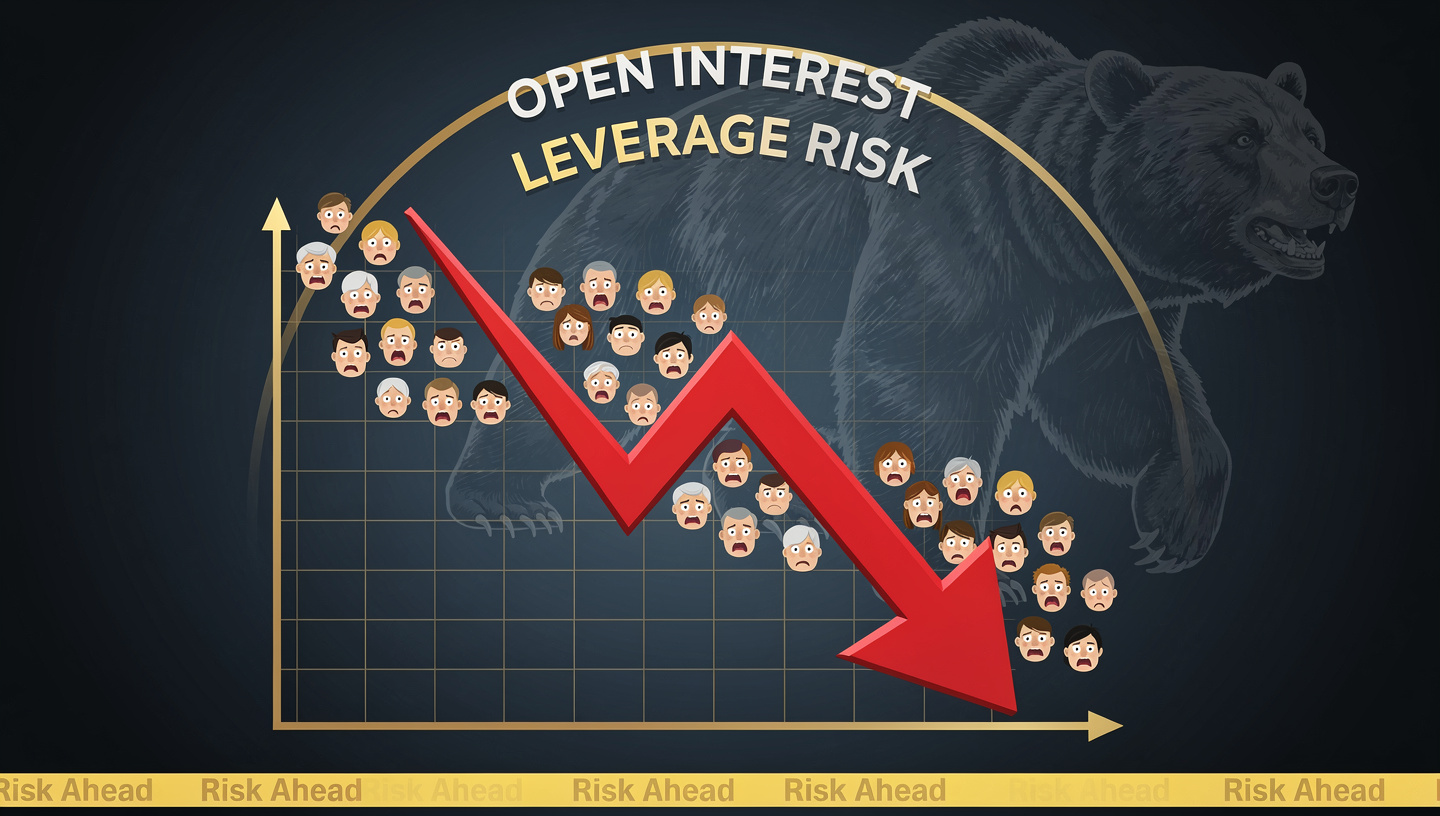
There’s a moment, usually somewhere between global closing bells and the next continent waking up, when crypto order books feel hollow. Spreads widen. Depth evaporates. A single aggressive market order suddenly moves price more than it should. This is the twilight zone of digital assets: low-liquidity hours, where most retail traders lose discipline, professionals tighten risk, and price becomes far more negotiable than charts suggest.
This article is about operating effectively in that zone.
Not philosophically. Not abstractly.
Practically.
We’ll break down what actually changes during low liquidity periods, how microstructure behaves, why volatility becomes asymmetric, and how to adapt execution, position sizing, and strategy selection so you don’t become exit liquidity for someone else’s algorithm.
No platitudes. No recycled trading clichés.
Just mechanics.
What “Low Liquidity Hours” Really Mean in Crypto
Crypto trades 24/7, but participation does not.
Liquidity ebbs and flows with human activity cycles:
- Asia session (Tokyo/Singapore/Hong Kong)
- Europe session (London)
- North America session (New York)
Between these peaks are valleys—periods where:
- Fewer participants are active
- Market makers reduce inventory exposure
- Order books thin
- Bid–ask spreads widen
- Slippage increases nonlinearly
Unlike equities, there’s no official “after-hours.” But functionally, crypto has dead zones.
These usually occur:
- Late U.S. evening → early Asia open
- Between Asia close → Europe open
During these windows, even large-cap assets like Bitcoin and Ethereum behave very differently from their high-liquidity counterparts.
Price discovery becomes fragile.
And fragility changes everything.
Liquidity Is Not Volume (And This Confusion Costs Traders Money)
Most traders equate liquidity with volume.
That’s a mistake.
Volume tells you how much traded.
Liquidity tells you how easily you can trade without moving price.
During low-liquidity hours:
- Volume may appear stable
- But book depth collapses
- Large resting orders disappear
- Market makers widen quotes
The result: the same position size now produces 2–5× the impact.
This is why:
- Stops get wicked more easily
- Breakouts fail more often
- Fake moves expand
- Mean reversion becomes violent
You’re not trading price anymore.
You’re trading order book elasticity.
The Microstructure Shift Nobody Talks About
In high-liquidity regimes, price moves because:
- New information enters the market
- Large players rebalance
- Systematic flows execute
In low-liquidity regimes, price moves because:
- Someone sneezed on the market order button
- A single bot swept thin levels
- Stops clustered near obvious highs/lows got harvested
This is structural, not psychological.
Here’s what actually changes:
1. Order Book Becomes Discrete
Instead of smooth ladders of bids and asks, you get gaps.
Price jumps between levels.
This produces:
- Poor fills
- Unexpected slippage
- Candles with long wicks and tiny bodies
2. Spread Expansion
Market makers protect themselves by widening spreads.
Your cost of entry rises immediately.
Even before price moves against you.
3. Latent Volatility
Volatility doesn’t disappear—it compresses.
Then releases suddenly.
This is why low-liquidity hours often precede sharp impulse moves.
Why Retail Traders Lose Most During These Hours
Retail traders typically:
- Use market orders
- Place tight stops
- Over-size positions
- Trade breakouts mechanically
Low liquidity punishes all four.
Consider this common sequence:
- Price consolidates
- Breaks structure by a few ticks
- Retail enters
- Thin book allows a quick spike
- Stops cluster
- Smart liquidity sweeps both sides
- Price snaps back to range
Retail calls it manipulation.
Professionals call it liquidity discovery.
The market is simply searching for orders.
And during low liquidity hours, it finds them fast.
Exchange-Specific Liquidity Behavior
Liquidity is not uniform across venues.
For example:
- Binance tends to retain deeper retail liquidity around Asia hours
- Coinbase becomes noticeably thinner outside U.S. sessions
- Institutional derivatives venues connected to CME Group primarily influence price during U.S. trading hours
This matters.
Because arbitrage bots link these venues.
When one dries up, the entire ecosystem feels it.
Strategy Selection: What Works (and What Doesn’t)
Low liquidity environments demand different tactics.
Strategies That Degrade
❌ Momentum breakout trading
❌ Tight stop scalping
❌ High-frequency entries
❌ Market order execution
These rely on continuous depth.
Low liquidity removes that assumption.
Strategies That Improve
✅ Mean reversion around value areas
✅ Range trading with wide invalidation
✅ Limit order entries
✅ Reduced size + wider stops
✅ Waiting for sweep-and-reclaim patterns
You’re not hunting trends here.
You’re harvesting overextensions.
Position Sizing Must Shrink (Non-Negotiable)
This is where most experienced traders still fail.
They keep the same size.
They rationalize:
“Volatility is lower.”
Wrong.
Displayed volatility may be lower.
Impact volatility is higher.
Your position sizing formula must adjust for:
- Book depth
- Spread width
- Slippage probability
A practical rule:
During low liquidity hours, cut size by at least 40–60%.
Not optional.
This preserves expectancy.
Execution: Limit Orders or Don’t Trade
Market orders during low-liquidity windows are donations.
Always assume:
- You will be slipped
- You will be front-run
- You will be filled worse than expected
Use:
- Passive limit orders
- Layered entries
- Partial fills
Yes, you may miss trades.
That’s acceptable.
Capital preservation beats participation.
Stop Placement in Thin Markets
Tight stops are invitations.
Instead:
- Place stops beyond obvious structure
- Accept wider invalidation
- Reduce size accordingly
Better yet, use soft stops:
- Mental invalidation
- Close on reclaim
- Exit on confirmed continuation
Rigid mechanical stops are easiest to hunt when liquidity is sparse.
Low Liquidity Hours Favor One Thing: Patience
Professionals don’t force trades in dead zones.
They wait.
They observe:
- How price reacts to sweeps
- Whether volume confirms moves
- If range highs/lows get reclaimed
Most importantly, they wait for return of liquidity.
The best trades often appear right as major sessions open, when fresh participants inject depth back into the market.
Correlation Breakdown and False Signals
During thin periods:
- Correlations between assets weaken
- BTC dominance spikes randomly
- Alts decouple unpredictably
Indicators derived from normal-session behavior lose reliability.
RSI, moving averages, even volume profiles become distorted.
Your edge must come from:
- Structure
- Liquidity zones
- Order flow behavior
Not indicators.
Advanced Tactic: Liquidity Mapping
Experienced traders mark:
- Prior session highs/lows
- Equal highs/lows
- Untested value areas
During low liquidity hours, price frequently sweeps these levels and returns.
This creates high-probability fade opportunities.
You are trading liquidity targets, not patterns.
Psychological Discipline Matters More at Night
Low liquidity hours test restraint.
There’s less action.
More noise.
This tempts overtrading.
Professional operators treat these windows as:
- Observation periods
- Position management phases
- Planning sessions
Not hunting grounds.
Risk Events Become Magnified
Unexpected news during low-liquidity periods causes outsized moves.
Because there’s no depth to absorb impact.
This is why sudden tweets or announcements—especially from figures like Elon Musk—historically created exaggerated spikes outside peak sessions.
Thin books amplify everything.
Practical Checklist Before Trading Low Liquidity Hours
Run this mentally:
- Is book depth visibly thinner?
- Are spreads wider than average?
- Am I using limit orders?
- Is size reduced?
- Are stops placed beyond obvious levels?
- Am I trading structure, not indicators?
- Would this setup still make sense during full liquidity?
If any answer is no—stand down.
Final Perspective
Low liquidity hours are not inherently dangerous.
They are structurally different.
Most traders fail because they don’t change behavior when conditions change.
They apply daytime strategies to nighttime markets.
They keep size constant.
They chase thin moves.
They blame manipulation.
Professionals adapt.
They scale down.
They slow execution.
They focus on liquidity, not candles.
They understand that price in crypto is not driven by charts—it’s driven by who is present to trade.
Master that, and low liquidity hours stop being a liability.
They become just another regime.