The market doesn’t wait for consensus.
It reacts to stimulus.
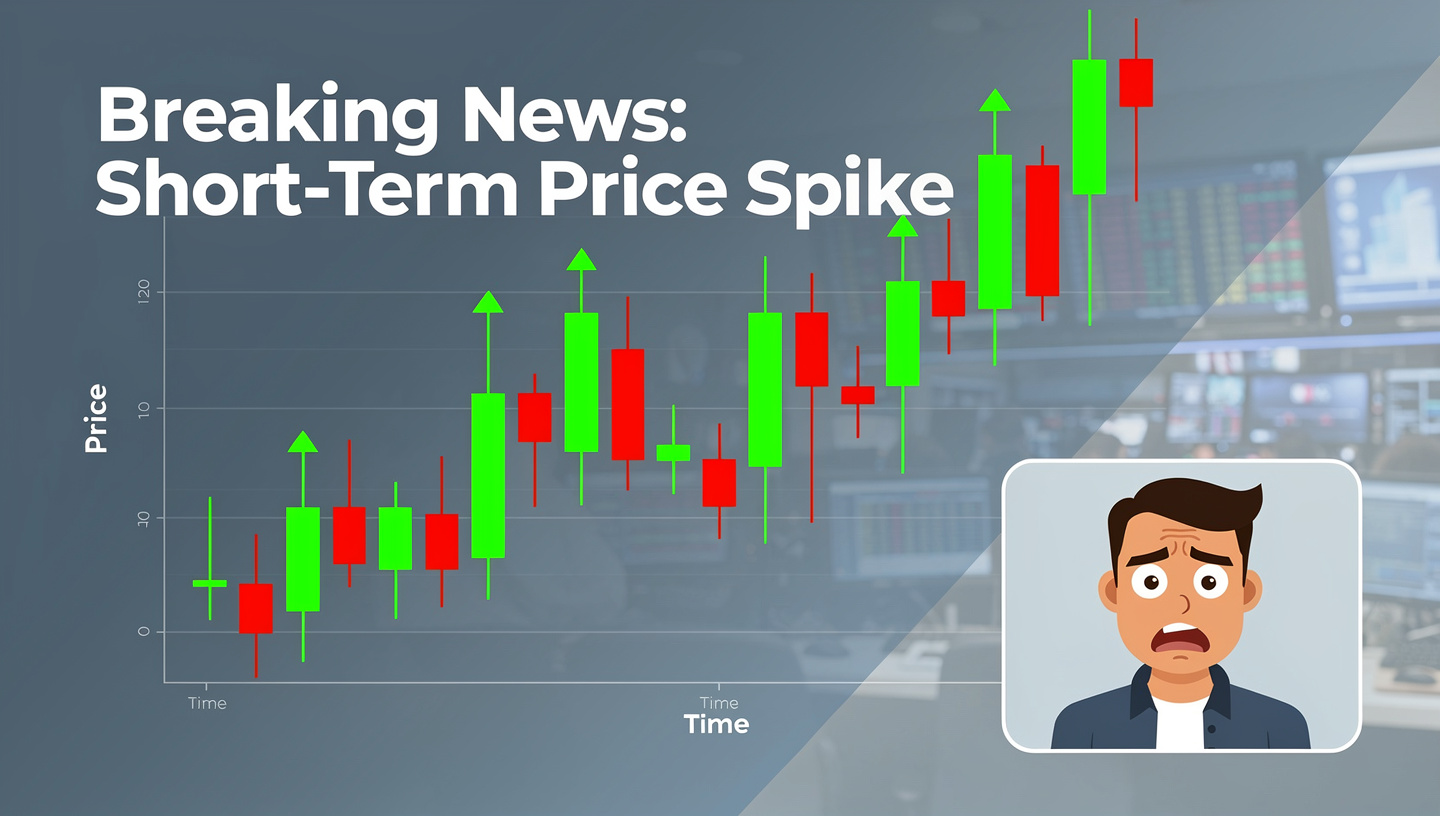
A single headline can do what weeks of technical buildup could not: rip liquidity from one side of the book and force price into motion. In crypto—where leverage is high, participants are globally distributed, and information travels at machine speed—news is not just narrative. It is an executable event.
Short-term price action in digital assets is less about long-term belief systems and more about immediate positioning. Traders are not responding to the future of blockchain. They are responding to whether other traders will panic, chase, or freeze over the next five minutes.
That distinction matters.
This article breaks down, at a professional level, how news propagates through crypto markets, why price behaves the way it does in the seconds to hours after a catalyst, and how informed participants can structure around these moments instead of becoming their liquidity.
No platitudes. No retail clichés. Just mechanics.
News Is a Liquidity Shock, Not Information
Traditional finance treats news as information.
Crypto treats news as flow.
When a headline hits, algorithms scan it, parse sentiment, and fire orders before humans finish reading the first sentence. Market makers immediately widen spreads. Perpetual swap funding shifts. Open interest snaps higher or collapses. Within seconds, the order book reorganizes.
Price doesn’t move because people “agree” with the news.
Price moves because:
- Market orders suddenly imbalance the book
- Stops cluster and cascade
- Passive liquidity pulls
- Leverage forces liquidation
This is why two pieces of news with identical long-term implications can produce radically different short-term reactions. The outcome depends on positioning, not fundamentals.
A bullish announcement in an already crowded long market often produces a selloff. A mildly negative headline in an under-positioned environment can spark a violent squeeze higher.
Short-term price action is context-dependent reflexivity.
The Reflexive Loop: Headlines → Orders → Volatility → Narrative
Crypto operates inside a tight feedback loop:
- News breaks
- Initial orders hit the book
- Price spikes or drops
- Social media amplifies the move
- Secondary traders chase
- Liquidations accelerate direction
- New narrative forms around the price move
By the time the broader market is discussing what the news “means,” price has already traveled.
This loop explains why crypto moves often feel irrational. Traders are not responding to meaning. They are responding to motion.
Once volatility expands, the narrative adjusts to justify it—not the other way around.
Why Crypto Reacts Faster Than Traditional Markets
Three structural features make crypto uniquely sensitive to news:
1. 24/7 Trading
There is no open. There is no close. Liquidity is always live. News released at 3 a.m. UTC can still trigger full-scale repricing.
In equities, overnight headlines are absorbed into an opening auction. In crypto, they hit active books immediately.
2. High Leverage Density
Perpetual futures dominate volume. Leverage compresses reaction time.
A 1% move in spot can trigger forced selling across derivatives, turning minor headlines into multi-percent swings within minutes.
3. Retail-Heavy Participation
Unlike traditional markets, crypto still has a large cohort of emotionally reactive participants. This creates asymmetric responses to fear-based or hype-driven news.
Professional desks exploit this predictably.
Categories of News That Move Crypto in the Short Term
Not all news is equal. Some headlines move markets structurally. Others barely register.
Here are the categories that consistently impact short-term price action.
Regulatory Announcements
Anything involving enforcement, classification, or approval creates immediate volatility.
Statements from bodies like the U.S. Securities and Exchange Commission routinely cause abrupt repricing—especially when they affect exchanges, stablecoins, or ETFs.
Regulatory news matters not because traders care about compliance, but because it threatens access. Anything that constrains fiat onramps, derivatives availability, or custody infrastructure directly impacts liquidity.
Short-term reaction pattern:
- Initial spike or dump
- 15–60 minutes of chaotic two-way flow
- Directional continuation once weak hands are flushed
These moves are rarely clean. They are designed to extract stops.
Macroeconomic Releases
Crypto may market itself as detached from legacy finance, but in practice it trades as a high-beta risk asset.
Inflation data, interest rate decisions, and central bank commentary frequently dictate intraday direction.
Announcements from the Federal Reserve and meetings of the Federal Open Market Committee often produce synchronized moves across equities, forex, and crypto.
The mechanism is simple:
- Hawkish tone → dollar strength → risk-off → crypto sells
- Dovish tone → liquidity expectations rise → crypto bids
These reactions typically occur within seconds of release.
By the time retail traders “digest” the data, the move is already mature.
Exchange-Specific Events
Outages, delistings, reserve disclosures, or legal actions against major platforms create localized chaos that rapidly spills into broader markets.
Announcements involving Binance or Coinbase often trigger sharp volatility because these venues anchor global liquidity.
Even rumors of insolvency or regulatory pressure can cause:
- Temporary spread explosions
- Sudden basis divergence between spot and perps
- Rapid capital rotation between exchanges
These are prime environments for professional arbitrage desks.
Influencer and Public Figure Commentary
One of crypto’s more unusual characteristics is its sensitivity to individual voices.
Comments from figures like Elon Musk have historically caused abrupt short-term price distortions—not because of intrinsic value, but because of attention concentration.
These moves tend to follow a consistent structure:
- Immediate impulse
- Social amplification
- Overextension
- Mean reversion
They are rarely sustainable.
Experienced traders fade these reactions once volume peaks.
Protocol-Level Events
Network upgrades, exploits, bridge failures, and token unlocks directly impact supply dynamics.
Unlike macro or regulatory news, these events change the microstructure of a specific asset.
Short-term effects include:
- Liquidity vacuum during exploit headlines
- Aggressive repricing after unlocks
- Volatility compression before major upgrades
The key here is predictability. Many of these events are scheduled. The market often positions before the headline.
The Anatomy of a News-Driven Move
Let’s break down what actually happens on the tape.
Phase 1: Initial Shock (0–30 seconds)
- Algorithms scrape headlines
- Market orders sweep nearest liquidity
- Spreads widen
- Volatility spikes
This is not tradable for humans.
You are already late.
Phase 2: Forced Participation (30 seconds–5 minutes)
- Stops trigger
- Liquidations cascade
- Funding rates shift aggressively
This is where most retail traders enter—exactly when risk is highest.
Phase 3: Structural Response (5–60 minutes)
- Market makers rebuild books
- Larger players deploy capital
- Direction either stabilizes or reverses
This is where professionals operate.
They are not reacting to the news. They are reacting to positioning damage.
Why Most Traders Lose Money on News
Because they trade headlines instead of structure.
Common mistakes:
- Chasing the first candle
- Entering after liquidation spikes
- Assuming direction without checking open interest
- Ignoring funding extremes
- Trading emotionally charged narratives
News creates volatility, but volatility alone does not equal opportunity.
Opportunity exists only when price deviates from fair value due to forced flow.
Advanced Concepts: How Professionals Trade News
This is where the discussion becomes technical.
Open Interest Divergence
If price moves sharply but open interest collapses, the move was driven by liquidations—not fresh conviction.
These moves often retrace.
If price rises while open interest expands, new leverage is entering. That move has structural backing.
This distinction is critical.
Funding Rate Extremes
During aggressive news moves, funding can swing violently positive or negative.
Extreme funding signals crowded positioning.
Professionals fade these conditions, not chase them.
Spot–Perp Basis
When perpetual futures decouple from spot, it reveals urgency.
A widening positive basis indicates aggressive longs. Negative basis signals forced selling.
Both are exploitable.
Order Book Absorption
After the initial impulse, watch how price behaves at key levels.
If large bids or offers absorb repeated market orders without breaking, that is institutional inventory being built.
This often marks reversal zones.
News vs Narrative: A Critical Distinction
News is the catalyst.
Narrative is the justification.
Markets move first. Stories follow.
Understanding this prevents you from overvaluing commentary and undervaluing flow.
By the time Twitter agrees on what just happened, the trade is usually over.
Practical Framework for Trading News
If you operate short-term, structure your approach:
- Identify the catalyst type (macro, regulatory, exchange, protocol)
- Measure immediate volatility expansion
- Monitor open interest and funding
- Wait for forced flow to exhaust
- Trade after the chaos, not during
Your edge is patience, not speed.
The Psychological Layer: Why News Feels So Powerful
Humans are wired to respond to novelty.
Markets exploit this.
News injects urgency. Urgency reduces discipline. Reduced discipline increases error rate.
Professional traders do not suppress emotion.
They design systems that function despite it.
Final Thoughts
Short-term crypto price action is not driven by belief.
It is driven by liquidity displacement.
News is simply the trigger that exposes where leverage is fragile and where positioning is imbalanced.
If you treat headlines as trading signals, you will remain reactive.
If you treat them as stress tests on market structure, you gain strategic clarity.
That shift—from narrative to mechanics—is what separates participants from professionals.
Crypto does not reward opinions.
It rewards understanding how forced behavior propagates through thin books at machine speed.
Master that, and news becomes less threatening—and far more useful.