Yield dashboards don’t shout. They whisper.
They present themselves as calm grids of percentages, tidy charts, and reassuring historical curves. APY here. TVL there. A green arrow implying momentum. A leaderboard implying legitimacy. Everything appears measurable, comparable, rational.
And yet, behind these clean interfaces sits one of the most distorted incentive systems ever created in finance.
Crypto yield dashboards are not neutral instruments. They are interfaces to risk. They compress complex protocol mechanics, liquidity dynamics, token emissions, and counterparty exposure into a single headline number: yield.
If you treat that number at face value, you are not investing. You are outsourcing judgment.
This article explains how to read yield dashboards the way professionals do: skeptically, structurally, and with an understanding of where returns actually come from. Not how dashboards want you to read them—but how reality demands.
Why Yield Dashboards Exist (And What They Optimize For)
Yield dashboards emerged alongside DeFi itself, particularly after Ethereum unlocked composable smart contracts.
Protocols multiplied. Liquidity fragmented. Users needed aggregation.
So dashboards stepped in:
- Ranking opportunities
- Standardizing APY display
- Abstracting away protocol mechanics
- Reducing dozens of contracts into sortable rows
But dashboards are businesses. Their incentives matter.
Most optimize for:
- Engagement (time on page)
- Click-through to partner protocols
- TVL visibility
- Growth optics
They are not designed to surface fragility. They are designed to surface attractiveness.
That doesn’t make them dishonest. It makes them directional.
Your job is to read through that directionality.
The First Trap: APY Is a Marketing Construct
Annual Percentage Yield is the primary hook.
It is also the least reliable metric on the page.
Why APY Lies by Construction
Most crypto APY is calculated using:
- Current reward emission rate
- Current token price
- Assumed continuous compounding
- Static liquidity assumptions
None of these remain stable.
If rewards are paid in the protocol’s own token, APY depends on that token not collapsing. If liquidity increases, your share of emissions shrinks. If token price drops, real yield evaporates.
Dashboards rarely model:
- Future dilution
- Reward decay schedules
- Liquidity migration
- Market reflexivity
They annualize today’s conditions and project them into a fictional future.
That is not forecasting. That is extrapolation.
Professionals treat APY as a snapshot, not a promise.
Real Yield vs. Emission Yield
Critical distinction:
Emission Yield
Returns paid via newly minted tokens.
Characteristics:
- Inflates supply
- Depends on market exit liquidity
- Temporarily attractive
- Structurally unsustainable
Real Yield
Returns generated from actual economic activity:
- Trading fees
- Borrow interest
- Liquidations
- MEV capture
Protocols like Uniswap primarily generate real yield via swap fees. Lending platforms such as Aave mix real borrower interest with incentive emissions.
Dashboards often merge both into a single APY.
You must separate them mentally.
If 80% of yield comes from emissions, you are farming dilution, not income.
TVL: The Most Abused Metric in DeFi
Total Value Locked looks impressive. It signals adoption. It implies safety.
It is also manipulable.
TVL rises when:
- Token prices rise
- Incentives attract mercenary capital
- Protocols loop deposits internally
TVL does not tell you:
- How sticky liquidity is
- How much is leveraged
- How much belongs to insiders
- How much will flee when rewards drop
High TVL with high emissions usually indicates temporary capital, not conviction.
Ask instead:
- What percentage of TVL is incentivized?
- How fast does TVL fall after reward reductions?
- Is TVL organic or rented?
Dashboards rarely answer these.
You must infer.
Liquidity Depth Matters More Than Yield
Yield without exit liquidity is theoretical.
If rewards are paid in a thinly traded token, your realized return depends on:
- Slippage
- Market depth
- MEV extraction
- Front-running
A 40% APY in an illiquid pool can net less than 5% after unwind.
Before trusting any dashboard number, check:
- Daily trading volume of reward token
- Order book depth (if applicable)
- DEX liquidity curve shape
If your position represents more than 1–2% of daily volume, you are not earning yield—you are becoming liquidity.
The Illusion of Stability in Historical Charts
Dashboards love backward-looking curves.
Smooth APY history. Rising TVL. Consistent returns.
Crypto regimes change abruptly.
What looks stable often masks:
- One-sided incentive flows
- Whale-controlled liquidity
- Latent smart contract risk
- Hidden leverage
Past yield persistence does not imply future yield durability.
Unlike traditional finance, most DeFi strategies have no equilibrium state. They exist in cycles of:
- Incentive launch
- Capital inflow
- Yield compression
- Liquidity exit
Dashboards usually show you phase two.
Smart Contract Risk Is Never Priced In
No dashboard APY includes protocol failure probability.
Yet exploits remain systemic.
From oracle attacks to reentrancy bugs, smart contract risk is binary: either nothing happens, or everything breaks.
Dashboards assume uptime.
You must assume failure.
Professional allocators discount DeFi yields heavily for this reason. A displayed 20% APY may be treated internally as 6–8% after risk adjustment.
Retail users see 20%.
Same data. Different interpretation.
Composability Creates Hidden Dependency Chains
Many yield strategies stack protocols:
- LP tokens deposited into vaults
- Vault shares used as collateral
- Collateral borrowed against to loop exposure
Dashboards typically show only the top layer.
But underneath may sit:
- Multiple bridges
- Several oracle feeds
- Two or three governance systems
- A stablecoin peg
One break propagates upward.
If you cannot diagram the full dependency chain on paper, you do not understand the yield source.
That is not a moral failing. It is a structural warning.
Token Incentives Reveal Protocol Psychology
Look closely at reward design:
- Linear emissions = short-term growth bias
- Front-loaded emissions = bootstrap desperation
- High APY caps = mercenary attraction strategy
- Governance-token rewards = alignment theater
Dashboards surface outcomes, not intent.
But protocol incentives always reveal priorities.
A system paying triple-digit yields is not offering opportunity. It is buying attention.
Borrow APY vs. Supply APY: The Spread Tells the Story
In lending dashboards, compare:
- Borrow rate
- Supply rate
A healthy system has:
- Demand-driven borrow rates
- Supply APY derived mostly from borrower interest
If supply APY significantly exceeds borrow APY, emissions are filling the gap.
That is synthetic yield.
Once emissions slow, capital leaves.
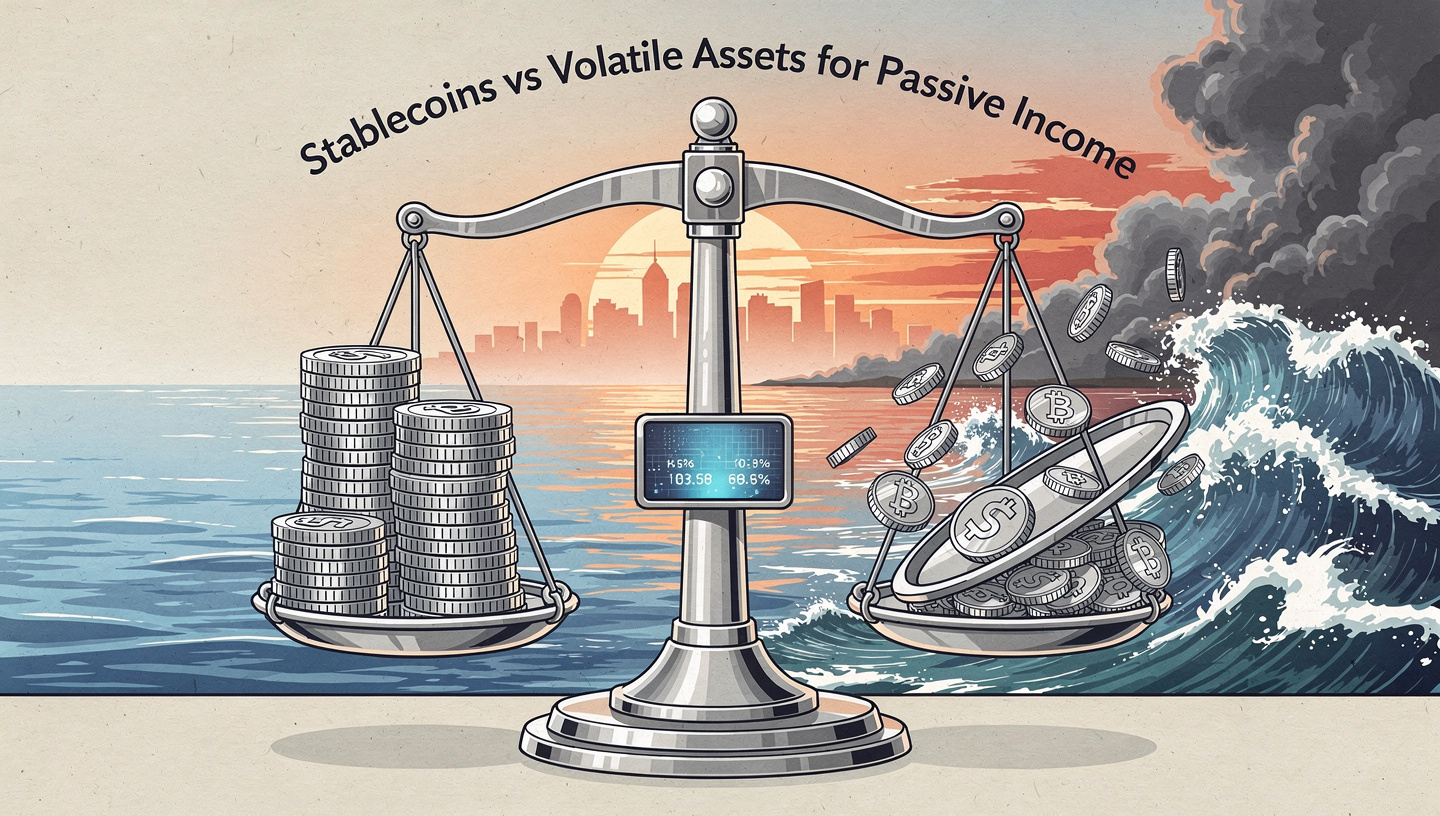
Stablecoin Yields Require Extra Skepticism
Stablecoin dashboards often display surprisingly high returns.
Interrogate:
- What backs the stablecoin?
- Is yield coming from real borrowing?
- Is there rehypothecation?
- Are there off-chain counterparties?
If yield exceeds global short-term interest rates by multiples, someone somewhere is taking asymmetric risk.
Dashboards won’t show you who.
Aggregators Are Not Risk Managers
Sites like CoinMarketCap or yield aggregators provide visibility, not due diligence.
They standardize display, not safety.
They do not audit contracts. They do not model liquidation cascades. They do not simulate tail events.
Treat dashboards as search engines, not investment advisors.
A Practical Framework for Reading Any Yield Dashboard
Use this checklist:
1. Decompose Yield
- What % is emissions?
- What % is fees or interest?
2. Examine Reward Token Liquidity
- Daily volume
- Slippage at your position size
3. Assess Capital Stickiness
- TVL behavior after incentives drop
- Historical retention
4. Identify Dependency Stack
- Underlying protocols
- Oracles
- Bridges
- Stablecoins
5. Adjust for Smart Contract Risk
Apply a personal discount factor. Be conservative.
6. Model Exit
Always ask: How do I leave if conditions change tomorrow?
If that answer is unclear, the yield is irrelevant.
Yield Is a Signal, Not a Strategy
Crypto dashboards condition users to chase numbers.
Professionals chase structure.
Yield is not income. It is compensation for providing capital under uncertainty.
Dashboards show you the compensation.
They do not show you the uncertainty.
That asymmetry is the entire game.
The Buffett Parallel (Without the Platitudes)
Traditional investors focus on:
- Cash flow durability
- Competitive moats
- Balance sheet strength
In DeFi, the equivalents are:
- Fee sustainability
- Liquidity loyalty
- Contract robustness
Dashboards emphasize surface metrics. Durable returns come from underlying mechanics.
Same discipline. Different substrate.
Closing Perspective
Every yield dashboard tells a story.
Not with words—but with numbers.
Your task is to read between them.
Behind every APY is dilution or demand. Behind every TVL spike is incentive design. Behind every smooth chart is unpriced risk.
If you learn to decode those layers, dashboards become tools.
If you don’t, they become slot machines with better UI.
Crypto does not reward optimism.
It rewards clarity.
And yield dashboards, read critically, are clarity engines—provided you stop letting them think for you.