Nobody enters crypto because they suddenly understand elliptic curve cryptography.
They enter because something felt interesting enough to click.
That’s the part most analysts miss.
Every bull cycle, the industry debates scalability, decentralization, modular blockchains, zk-proofs, rollups. Meanwhile, millions of first-time users arrive through something far less sophisticated:
A dog.
A frog.
A badly drawn logo.
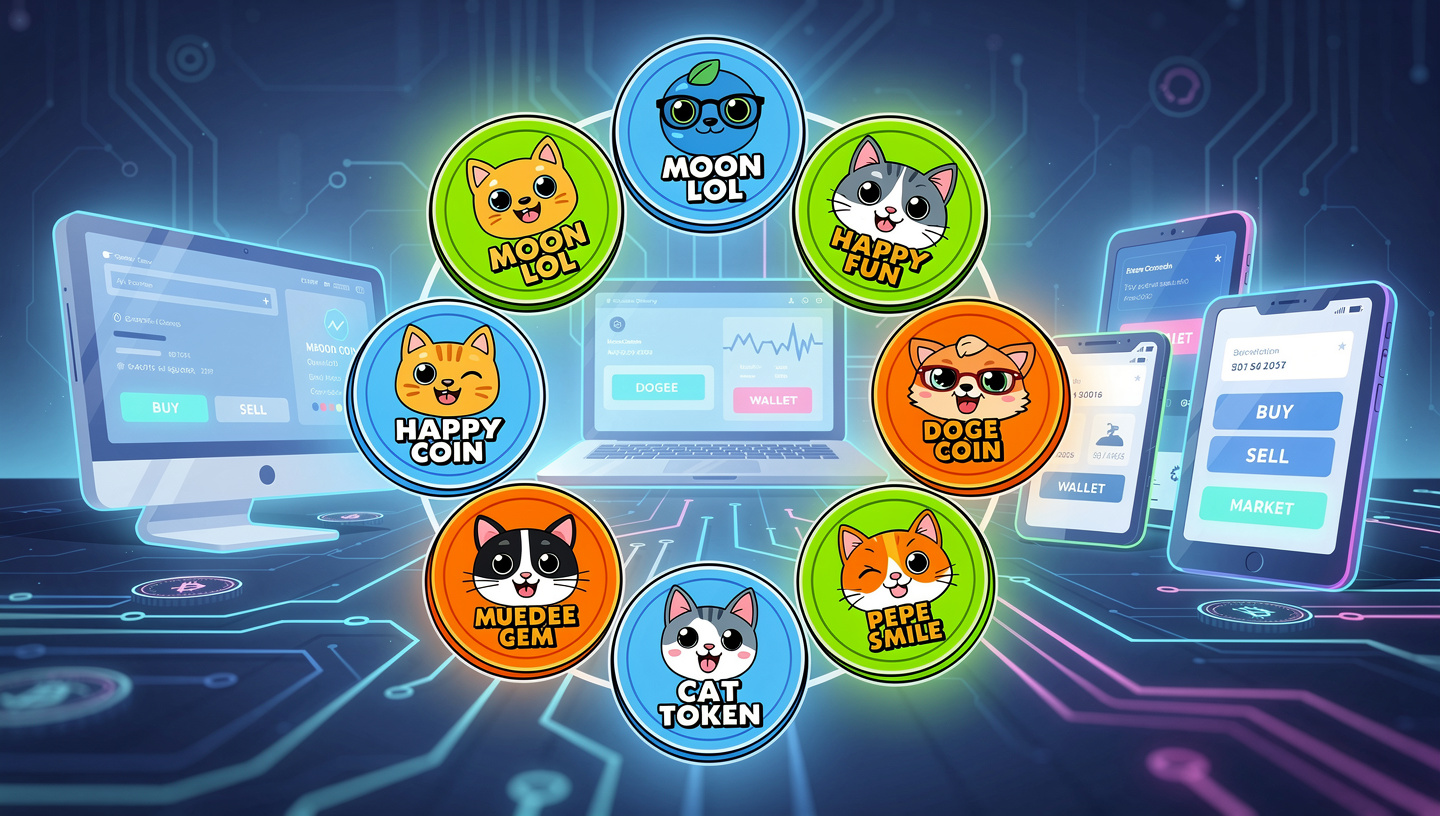
A meme coin.
This isn’t an accident. It’s a structural pattern.
Meme coins have quietly become crypto’s most efficient onboarding mechanism — outperforming VC-funded protocols, polished fintech apps, and billion-dollar marketing campaigns.
Not because they’re technologically superior.
But because they understand human psychology better than most of Web3.
This article breaks down:
- Why meme coins attract first-time users more effectively than “serious” crypto projects
- The behavioral mechanics behind meme-driven adoption
- Historical data across multiple market cycles
- How meme coins function as training wheels for onchain activity
- Why institutions underestimate this phenomenon
- And what this means for the next wave of crypto adoption
This is not hype.
This is market structure.
Onboarding Is a Psychological Problem, Not a Technical One
Traditional crypto onboarding looks like this:
- Learn what a blockchain is
- Install a wallet
- Write down seed phrases
- Bridge assets
- Understand gas fees
- Navigate a DEX
- Avoid scams
- Manage risk
From a UX perspective, this is absurd.
No mainstream technology ever scaled by demanding this level of cognitive effort upfront.
People didn’t adopt the internet because they understood TCP/IP.
They adopted it because email was useful and browsers were simple.
Crypto tried to onboard users through ideology:
- Financial sovereignty
- Censorship resistance
- Trustless systems
- Permissionless finance
These are powerful concepts.
But they’re abstract.
Meme coins skip abstraction.
They operate directly on emotion.
Curiosity. Humor. Belonging. FOMO.
That’s why they work.
Meme Coins Remove the Perceived Intelligence Barrier
One of crypto’s biggest hidden obstacles is intimidation.
Whitepapers. Tokenomics. Roadmaps. GitHub repos.
For newcomers, this creates an implicit message:
“You need to be smart to be here.”
Meme coins flip that script.
There is no pretense of sophistication.
The branding is intentionally unserious.
No one feels stupid buying something called PEPE or DOGE.
That psychological accessibility matters more than most people realize.
Meme coins communicate:
- You don’t need technical knowledge
- You don’t need financial credentials
- You don’t need permission
Just participate.
This lowers the activation energy dramatically.
And activation energy is everything in early adoption.
Every Major Cycle Proves the Same Pattern
Look at historical data across market cycles:
2013–2014
Dogecoin introduces millions to crypto wallets for the first time.
2017
Retail flows into joke ICOs before touching DeFi.
2021
DOGE and SHIB onboard users who had never interacted with Ethereum.
2024–2025
Solana meme coins drive wallet installs faster than any DeFi protocol ever did.
Each cycle follows the same sequence:
- Meme coins attract attention
- New users install wallets
- Users learn swaps
- Users explore ecosystems
- Capital rotates into infrastructure
Meme coins act as the gateway drug.
Not by design.
By emergent behavior.
The “Low Stakes Experiment” Effect
Another critical mechanism: meme coins feel disposable.
New users are far more willing to risk $20 on a meme than $20 on a “serious” protocol they don’t understand.
This creates a sandbox environment.
People learn:
- How to bridge
- How to swap
- How to sign transactions
- How to track portfolios
- How to avoid rugs
All with emotionally discounted capital.
In educational theory, this is called low consequence learning.
Meme coins provide exactly that.
They turn complex financial infrastructure into a casual experiment.
No onboarding tutorial beats that.
Memes Create Tribal Gravity
Crypto adoption doesn’t spread through documentation.
It spreads through social clusters.
Meme coins excel here because they:
- Generate inside jokes
- Encourage profile picture signaling
- Produce viral content
- Create shared identity
Owning a meme coin isn’t just a financial position.
It’s a social badge.
This tribal dynamic accelerates onboarding organically.
People don’t ask “what is Ethereum?”
They ask “where can I buy this?”
That question alone pushes them into wallets, bridges, and exchanges.
The infrastructure follows the meme.
Not the other way around.
Why Traditional Crypto Projects Fail at Onboarding
Most serious projects make the same mistake:
They explain too much, too early.
New users don’t care about:
- Consensus mechanisms
- Validator incentives
- Modular architecture
They care about:
- Does this feel alive?
- Are other people here?
- Is this fun?
Meme coins answer yes immediately.
Protocols answer with diagrams.
Guess which one wins attention.
Meme Coins as UX Abstraction Layers
Here’s the underrated insight:
Meme coins function as interface layers on top of blockchain complexity.
They abstract away:
- Technical jargon
- Risk perception
- Learning curves
Behind the scenes, users are:
- Interacting with smart contracts
- Paying gas
- Using DEXs
- Signing messages
But emotionally, they’re just buying a meme.
That abstraction is powerful.
It mirrors how consumer apps hide complexity behind playful design.
Crypto desperately needs this.
Meme coins accidentally delivered it.
Capital Efficiency of Memetic Marketing
Compare marketing costs:
A Layer 2 might spend $50 million on partnerships.
A meme coin spends $0 and trends globally.
Why?
Because memes are native to the internet.
They travel frictionlessly across platforms.
They compress meaning into imagery.
They reward participation.
This is not marketing.
It’s memetic propagation.
And it outperforms traditional growth strategies by orders of magnitude.
The Institutional Blind Spot
Most institutions dismiss meme coins as noise.
They track TVL, revenue, developer activity.
They miss behavioral adoption signals.
But retail doesn’t onboard through dashboards.
They onboard through vibes.
Ignoring meme coins is like ignoring mobile games while analyzing smartphone adoption.
You miss the entry vector.
From Meme to Ecosystem Participant
The typical user journey now looks like:
Meme coin → wallet → DEX → NFT → staking → DeFi → governance
This progression repeats constantly.
Meme coins are not endpoints.
They’re entry ramps.
Even users who lose money still learn tooling.
And learned users are sticky.
They come back next cycle.
That matters.
Are Meme Coins Sustainable?
Individually? No.
Collectively? Absolutely.
Most meme coins will go to zero.
That’s irrelevant.
Their purpose is not long-term value storage.
Their purpose is behavioral activation.
They convert spectators into participants.
That is their product.
And that product works.
Final Thought
Crypto doesn’t need better explanations.
It needs better invitations.
Meme coins are those invitations.
They are messy.
They are chaotic.
They are irrational.
And they are onboarding more people than every institutional initiative combined.
Ignore them if you want.
The market already chose.