Stocks were once seen as gambling instruments. Bitcoin was dismissed as magic internet money. NFTs were mocked as overpriced JPEGs. And meme coins? They began as literal jokes—Dogecoin’s Shiba Inu grin staring back at a skeptical world.
Yet here we are.
Meme coins now represent tens of billions in market capitalization across cycles. They dominate retail attention during bull markets. They onboard first-time crypto users faster than any Layer-2 or DeFi protocol ever could. They move liquidity at a speed that traditional finance cannot comprehend.
So the real question is no longer whether meme coins matter.
The question is deeper:
Can meme coins be sustainable?
Not sustainable in the shallow ESG sense. Not sustainable as in “will this pump again next week.”
Sustainable as financial primitives.
Sustainable as attention assets.
Sustainable as long-term network participants.
This article breaks that down from first principles.
We’ll examine:
- What “sustainability” actually means in crypto
- Why meme coins exist at all
- The economic mechanics behind viral tokens
- Historical patterns across multiple cycles
- The role of culture, liquidity, and reflexivity
- What separates fleeting hype from durable relevance
- And what the next generation of meme assets might look like
No fairy tales. No empty hopium.
Just structure.
Defining Sustainability in Crypto (Because Most People Get This Wrong)
Before evaluating meme coins, we need to define sustainability in a crypto context.
In traditional finance, sustainability usually means:
- Revenue
- Profitability
- Cash flow
- Competitive advantage
Crypto doesn’t work like that.
Most tokens don’t generate revenue. Many don’t even have formal business models. Their value emerges from network effects, liquidity density, and collective belief.
So crypto sustainability is better framed as:
- Liquidity persistence – Does capital remain over time?
- Attention retention – Does the asset stay culturally relevant?
- Holder distribution – Is ownership decentralized or extractive?
- Narrative durability – Does the story evolve or stagnate?
- Integration depth – Does it plug into broader ecosystems?
Sustainable crypto assets maintain at least three of these over multiple market cycles.
Bitcoin does all five.
Ethereum does all five.
Most altcoins do none.
Where do meme coins fall?
That’s where things get interesting.
Why Meme Coins Exist: The Psychology Layer of Crypto Markets
Meme coins aren’t accidents.
They are the natural result of three forces colliding:
1. Permissionless Creation
Anyone can deploy a token in minutes.
No gatekeepers. No approvals. No underwriting.
This removes friction entirely.
2. Financial Gamification
Crypto markets operate 24/7. Price discovery happens in real time. Social platforms amplify momentum instantly.
This turns trading into a multiplayer game.
Meme coins thrive in game environments.
3. Cultural Compression
Memes are how the internet communicates emotion, identity, and alignment.
A meme coin compresses:
- Humor
- Tribal belonging
- Speculation
- Identity signaling
…into a single tradeable object.
That’s powerful.
You’re not just buying a token.
You’re buying participation.
Meme Coins as Attention Markets
Here’s a framework most analysts miss:
Meme coins are not primarily financial instruments.
They are attention instruments.
Price is downstream from attention.
Always.
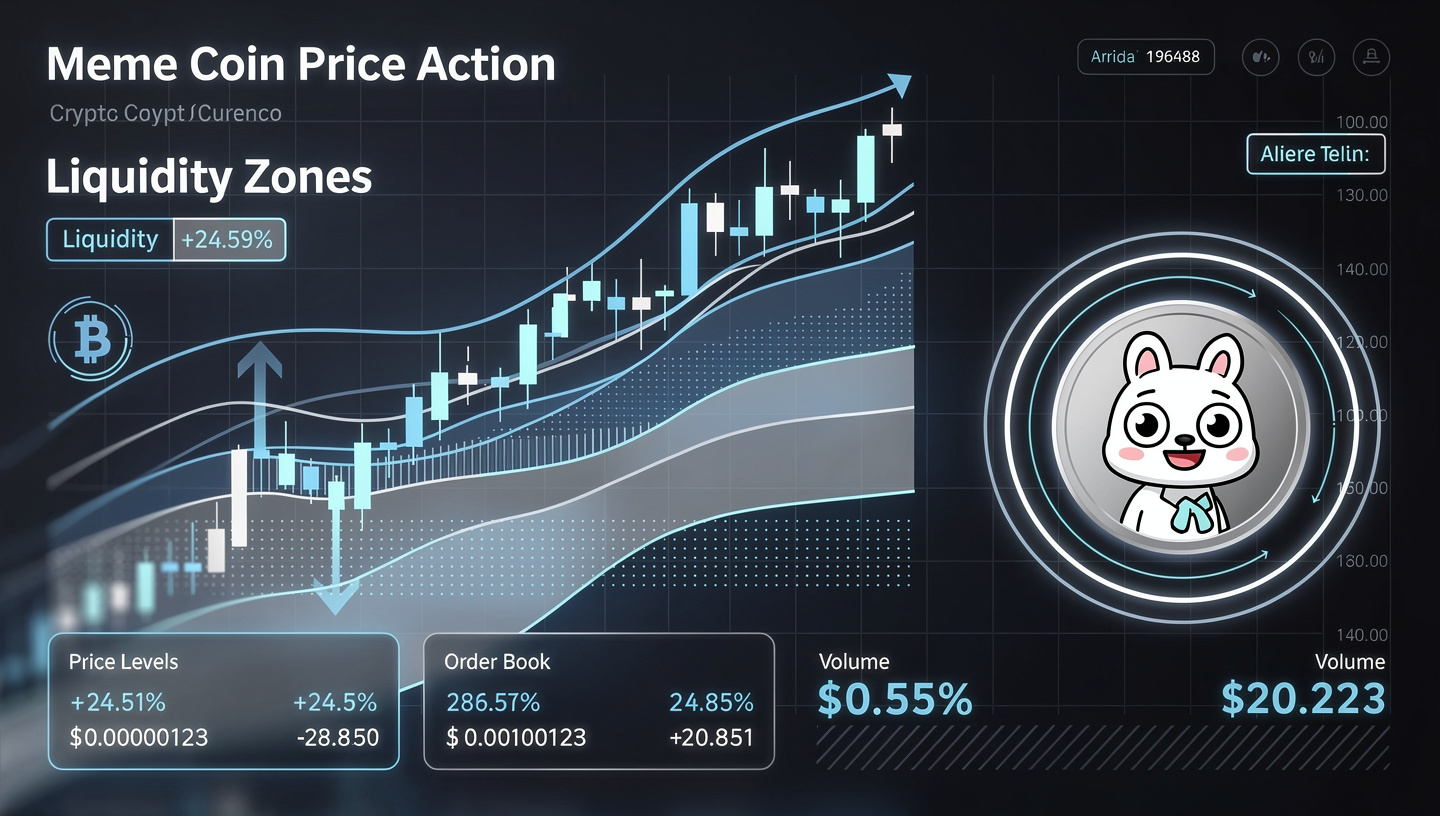
Every meme coin rally begins on X, Telegram, Discord, or TikTok before it appears on charts. Volume follows virality. Liquidity follows narrative.
This creates a feedback loop:
Attention → Price → More Attention → More Liquidity → Higher Visibility
This is reflexivity in its purest form.
George Soros would recognize this immediately.
Traditional assets require fundamentals first.
Meme coins require mindshare.
That’s the core distinction.
Historical Data: What Actually Survives?
Let’s look across cycles.
2013–2016
- Dogecoin launches.
- Most meme experiments disappear.
- Doge survives purely through community inertia.
2017–2018
Hundreds of joke tokens emerge.
Almost all go to zero.
No infrastructure. No liquidity rails. No social coordination tools.
2020–2021
Explosion phase:
- DOGE
- SHIB
- FLOKI
- SAFEMOON
- BabyDoge
- Thousands more
Outcomes:
- 95% die completely.
- A few retain meaningful liquidity.
- Even fewer maintain cultural relevance.
2023–2025
New generation:
- PEPE
- BONK
- WIF
- BRETT
- MAGA variants
- AI-themed memes
Key difference:
These launch into mature ecosystems:
- Better DEX UX
- Faster chains
- Built-in social virality
- On-chain analytics
- Professional market makers
Survival rates improve—but still brutal.
Pattern is clear:
Most meme coins are disposable.
A tiny minority become persistent.
Exactly like startups.
What Separates Survivors From Noise?
After studying dozens of meme lifecycles, five traits consistently appear in survivors.
1. Strong Initial Distribution
If insiders control supply, the coin dies.
Sustainable meme coins launch fair or close to fair.
Wide holder bases reduce collapse risk.
2. Cultural Flexibility
Static memes decay.
Dynamic memes evolve.
Doge survived because its community kept reinventing its meaning.
3. Liquidity Density
Deep liquidity pools attract traders.
Traders attract volume.
Volume attracts listings.
Listings attract new users.
This compounding effect matters more than any roadmap.
4. Narrative Expandability
The best meme coins aren’t one-liners.
They become platforms for multiple narratives:
- Community identity
- Political satire
- AI integration
- Gaming
- DeFi experiments
Single-joke coins fade fast.
5. External Validation
Elon tweets. Major exchange listings. Influencer adoption.
You don’t control this—but survivors almost always receive it.
The Harsh Truth: Most Meme Coins Are Designed to Die
Let’s be blunt.
The majority of meme coins are:
- Cash grabs
- Insider extraction schemes
- Short-term liquidity traps
They are engineered for:
- Rapid hype
- Fast inflows
- Aggressive dumping
- Abandonment
No community building. No long-term thinking.
This doesn’t make meme coins uniquely bad.
It makes them honest.
Traditional markets hide extraction behind complexity.
Crypto puts it on-chain.
Can Meme Coins Create Real Utility?
This is where skeptics push back.
They argue meme coins have no intrinsic value.
That’s partially true.
But value in crypto is rarely intrinsic.
It’s emergent.
Some meme coins are experimenting with:
- NFT integrations
- Gaming ecosystems
- DAO governance
- DeFi liquidity incentives
- Social token mechanics
Most fail.
A few succeed modestly.
But here’s the insight:
Utility doesn’t save meme coins.
Communities do.
Utility helps only after culture exists.
Not before.
Meme Coins vs Infrastructure Tokens
Layer-1s compete on throughput.
DeFi protocols compete on yields.
Meme coins compete on emotion.
They occupy a different market category entirely.
Trying to evaluate meme coins using traditional crypto metrics is like analyzing fashion brands with industrial KPIs.
Wrong lens.
Meme coins behave more like:
- Streetwear brands
- Music artists
- Internet movements
They rise through resonance, not specifications.
The Sustainability Model: Three Archetypes
After observing cycles, meme coins fall into three buckets:
1. Flash Memes
- 1–30 day lifespan
- Pure speculation
- No community persistence
These dominate numerically.
2. Cycle Memes
- Survive one bull market
- Strong narrative but weak infrastructure
- Fade during bear markets
This is the middle class.
3. Cultural Memes
- Multi-cycle survival
- Strong community identity
- External integrations
- Persistent liquidity
This is Dogecoin territory.
Extremely rare.
Sustainability exists only in category three.
Why Retail Will Always Return to Meme Coins
Even after getting burned.
Even after promising never again.
Retail always comes back.
Why?
Because meme coins offer:
- Low entry barriers
- Simple narratives
- High volatility
- Emotional engagement
They provide something DeFi dashboards don’t:
Fun.
And markets are human systems.
Not spreadsheets.
The Next Evolution: Meme Coins as Social Infrastructure
We’re already seeing early signs:
- Meme DAOs
- Meme-based launchpads
- AI-generated meme economies
- Tokenized communities
- Political meme coins
Future meme assets may function as:
- Identity layers
- Reputation systems
- Community coordination tools
At that point, they stop being jokes.
They become social protocols.
So… Can Meme Coins Be Sustainable?
Short answer:
Yes—but almost none will be.
Long answer:
Meme coins can be sustainable when they achieve:
- Persistent attention
- Decentralized ownership
- Cultural adaptability
- Deep liquidity
- Community-led evolution
These conditions are difficult to engineer and impossible to fake.
Most projects won’t reach them.
A few will.
Those few won’t look like traditional crypto.
They’ll look like living internet organisms.
Final Thoughts
Meme coins expose an uncomfortable truth about markets:
Value is not rational.
It’s collective.
Meme coins simply remove the mask.
They show us finance in its rawest form—attention, belief, coordination, and reflexivity compressed into tokens that move faster than institutions can react.
They are chaotic.
They are inefficient.
They are often brutal.
But they are also honest.
And in a permissionless world, honesty scales.
The future won’t be built entirely on meme coins.
But it also won’t ignore them.
They are the emotional layer of crypto.
And emotions don’t disappear from markets.
They just change shape.