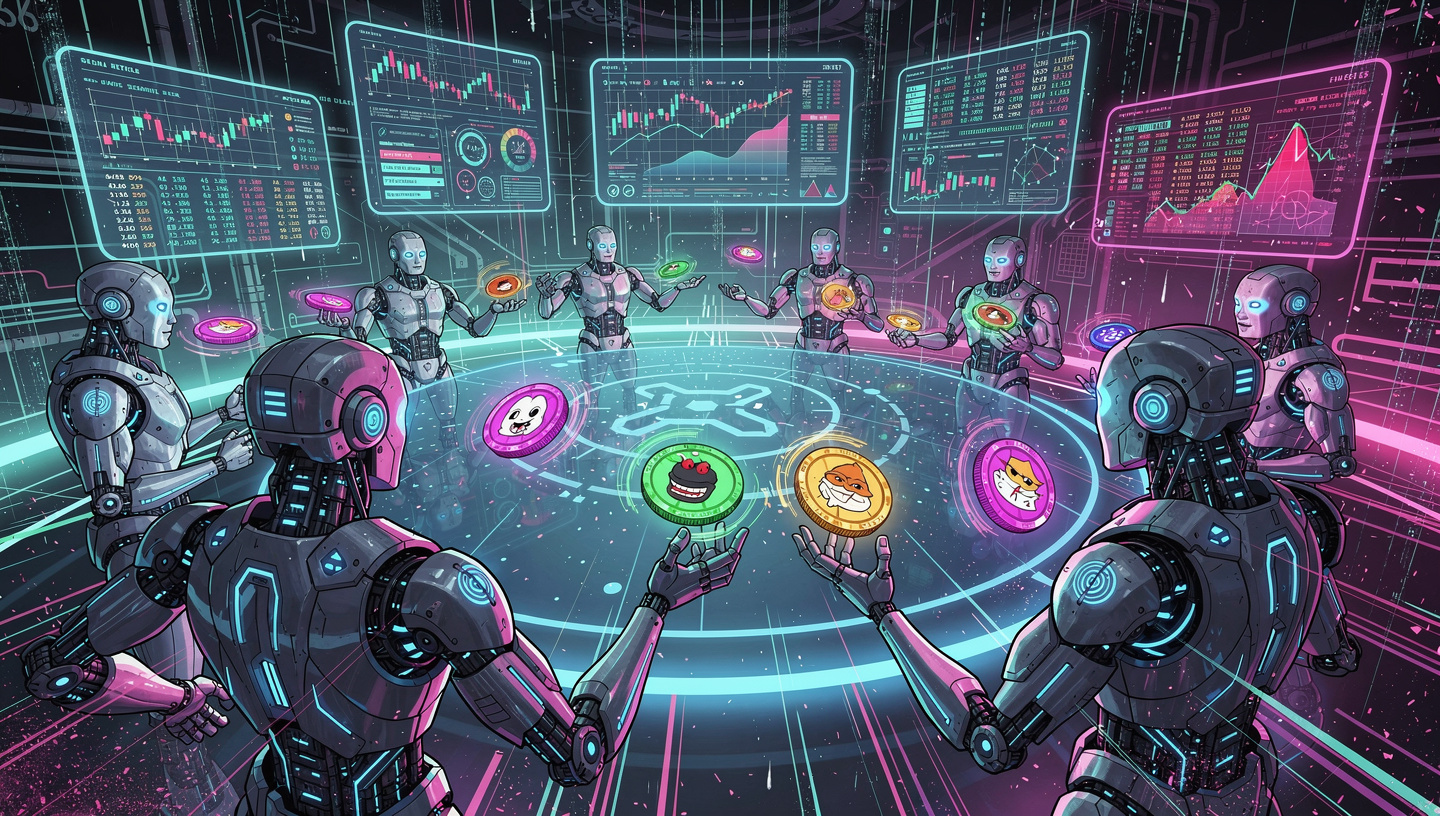
The modern meme coin market—especially on-chain—is not driven primarily by humans anymore. It is shaped, accelerated, and often decided by bots. Silent, fast, unemotional systems that see order where humans see noise.
If you are still analyzing meme coins as a purely social phenomenon, you are missing the actual engine.
This article breaks down how bots really trade meme coins, what types of bots exist, what data they consume, how strategies differ across market regimes, and why most retail traders are structurally late—no matter how early they feel.
This is not a how-to guide.
This is a dissection.
Meme Coins Are Not Random — They Are Microstructure Games
At a distance, meme coins look irrational. No fundamentals. No revenue. No roadmap worth reading.
But at the execution layer, meme coins are among the most mechanically precise markets in crypto.
Why?
Because:
- Liquidity is thin
- Attention is bursty
- Volatility is extreme
- Time-to-obsolescence is short
These conditions are perfect for automation.
Bots do not care what a meme coin represents. They care about:
- Transaction ordering
- Liquidity inflows
- Wallet behavior
- Latency advantages
- Narrative ignition points
In other words, bots trade structure, not memes.
The Core Data Bots Use (That Humans Mostly Don’t)
Human traders watch charts and Twitter.
Bots watch everything else.
Here is the real data stack behind meme coin bots:
1. Mempool Data (Pre-Confirmation Alpha)
The mempool is where transactions sit before they are finalized on-chain.
Bots monitor:
- Pending buys from known wallets
- Contract interactions with deploy functions
- Liquidity add/remove calls
- Tax parameter changes
- Router usage anomalies
This allows bots to act before a transaction is visible on-chain explorers.
By the time you see a “huge buy” on Dexscreener, a bot has already reacted to it 1–3 blocks earlier.
2. Wallet Graphs, Not Wallet Lists
Retail tracks “whale wallets.”
Bots build behavioral graphs:
- Which wallets cluster together?
- Which wallets consistently buy within the same block window?
- Which wallets fund deployers?
- Which wallets exit before rugs?
This turns individual wallets into entities.
When a known entity enters a meme coin early, bots follow—not because they believe, but because probability favors momentum.
3. Liquidity Shape, Not Just Size
Humans ask: “How much liquidity?”
Bots ask:
- Is liquidity skewed on one side?
- Is LP locked, soft-locked, or fake-locked?
- What is the slippage elasticity?
- How fast does price move per ETH?
Meme coins with bad liquidity geometry are ideal for bots. They allow rapid markups with minimal capital.
4. Time-of-Day and Block Rhythm
Bots learn when:
- Asia wakes up
- Europe overlaps with US
- Gas spikes before US open
- Weekends distort participation
Meme coin pumps are not random in time. They cluster around predictable block rhythms.
Humans feel “lucky.”
Bots feel statistical.
The Main Classes of Meme Coin Trading Bots
There is no single “meme coin bot.” There is an ecosystem.
1. Sniper Bots (Genesis Exploiters)
These bots enter at or near contract deployment.
They watch for:
- New pair creation
- Liquidity adds above a threshold
- Known deployer fingerprints
- Anti-bot logic weaknesses
Their edge:
- Being first
- Exploiting low liquidity
- Forcing early price discovery
Most sniper bots exit within minutes. They are not here for trends. They are here for initial inefficiency.
2. Sandwich & MEV Bots (Invisible Tax Collectors)
These bots do not “trade” meme coins in the traditional sense.
They:
- Front-run buys
- Back-run sells
- Capture slippage as profit
In meme coins, where slippage tolerance is high, MEV extraction is massive.
This is why many meme coins feel “impossible to trade.”
It is not bad luck.
It is predation.
3. Momentum Bots (Narrative Amplifiers)
These bots enter after initial traction but before retail saturation.
They monitor:
- Rate of new holders
- Buy/sell imbalance
- Twitter mention velocity
- Telegram join spikes
- Dex volume acceleration
They do not care about memes.
They care about second derivative attention.
These bots are often responsible for the cleanest vertical moves.
4. Exit Liquidity Bots (Distribution Specialists)
These bots appear near tops.
They:
- Sell into strength
- Split orders across blocks
- Avoid triggering obvious dumps
- Exploit retail FOMO
They don’t crash charts instantly.
They bleed them.
Strategy Is Regime-Dependent
Bots do not run one strategy.
They switch.
Low-Volume Regime
- Sniping
- MEV extraction
- Micro-cap rotations
High-Attention Regime
- Momentum stacking
- Narrative mirroring
- Cross-chain arb
Late-Cycle Regime
- Mean reversion
- Short-lived bounce exploitation
- Rapid exit strategies
This adaptability is the real advantage.
Humans argue whether the market is “bullish.”
Bots measure it.
Why Humans Feel Early But Are Structurally Late
You find a meme coin at $2M market cap.
You feel early.
A bot entered at:
- Contract creation
- $50k liquidity
- First 20 holders
Even if you “caught the pump,” you are still downstream of multiple automated layers.
This does not mean humans cannot profit.
It means humans must stop competing on speed.
Where Humans Still Have an Edge
Bots dominate execution.
Humans still dominate context.
Bots struggle with:
- Cultural nuance
- Irony-driven memes
- Cross-platform narrative synthesis
- Sudden influencer pivots
- Meta-level shifts (what kind of meme is about to matter)
The best human traders do not out-click bots.
They:
- Anticipate narratives before data exists
- Position early and let bots create exit liquidity
- Avoid micro-timeframe noise
In other words, humans win at theme selection, not trade timing.
The Arms Race Is Escalating
The meme coin market is no longer “fun chaos.”
It is:
- Automated
- Hyper-competitive
- Extractive
Every cycle increases:
- Bot sophistication
- Capital efficiency
- Latency advantages
Retail does not get dumber.
The game gets faster.
Final Reality Check
Meme coins are not going away.
Bots are not going away.
And nostalgia for “fair launches” is misplaced.
The question is not whether bots ruin meme coins.
The question is whether you understand who is actually trading when you click buy.
Because in most cases, it is not another human on the other side.
It is a system.
And systems do not care how good the meme is.