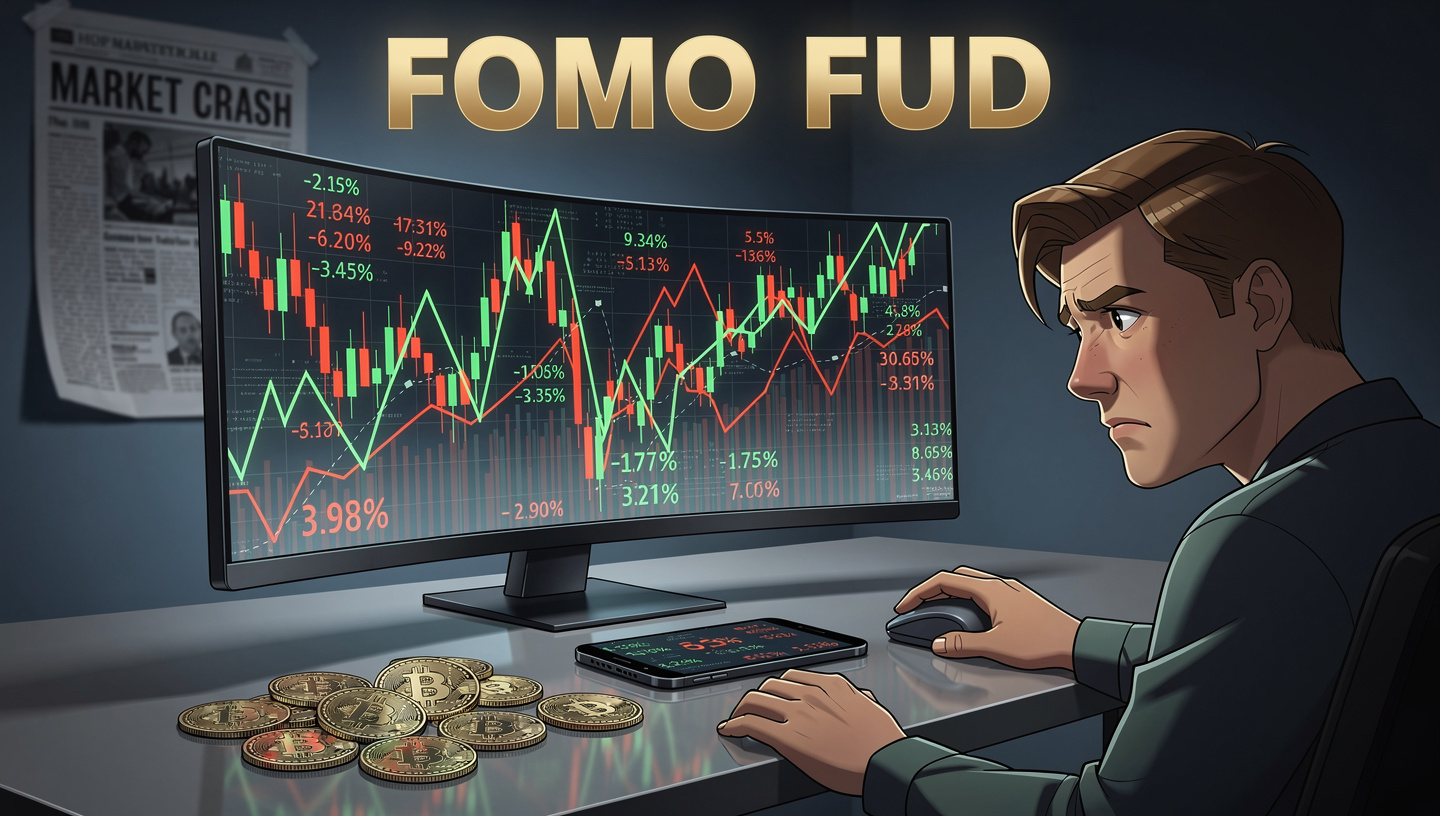
The problem is that most people misunderstand what actually sustains value.
Meme coins are often dismissed as jokes, scams, or pure speculation. That framing is intellectually lazy. The truth is more uncomfortable: meme coins fail not because they lack utility, but because they fail at capital structure, attention economics, and social coordination.
In markets, jokes can be worth billions. Narratives can outperform fundamentals for years. Communities can substitute for roadmaps. But none of that changes one hard rule:
Price survives only when incentives, liquidity, and belief are aligned for long enough.
Most meme coins never achieve this alignment. Not briefly. Not accidentally. Not structurally.
This article does not argue that meme coins are bad.
It explains—precisely and unemotionally—why most of them mathematically trend toward zero.
Meme Coins Are Not Assets — They Are Social Instruments
To understand failure, you must first understand what meme coins actually are.
A meme coin is not:
- A company
- A protocol
- A productivity engine
- A claim on future cash flow
A meme coin is:
- A social coordination instrument
- Backed by attention, identity, and liquidity timing
- Priced by belief velocity, not fundamentals
This distinction matters.
Traditional assets decay when revenue collapses.
Meme coins decay when attention leaks faster than liquidity enters.
Once you see meme coins as attention containers, their lifecycle becomes predictable.
The Meme Coin Lifecycle (Why Zero Is the Default Outcome)
Phase 1: Attention Shock
A meme coin launches with:
- A viral hook (name, image, cultural reference)
- Extremely low market cap
- Thin liquidity
- Asymmetric upside perception
Early price action is not adoption.
It is illiquidity meeting excitement.
This phase creates the illusion of inevitability.
Phase 2: Reflexive Price Expansion
Price increases create:
- Social proof
- Content loops (Twitter, Telegram, TikTok)
- New buyers chasing momentum
This is reflexivity, not value creation.
Importantly:
- No new belief is formed
- Only borrowed conviction from price movement
Most meme coins die here but don’t realize it yet.
Phase 3: Holder Base Degradation
This is the critical failure point.
As price rises:
- Early holders de-risk
- New holders have weaker conviction
- Entry price increases
- Time horizon shortens
The community looks bigger.
The belief base becomes thinner.
This is where most meme coins become fragile.
Phase 4: Liquidity Asymmetry
Liquidity does not grow linearly with price.
At higher valuations:
- Sell pressure increases faster than buy pressure
- Buyers require stronger narratives
- Marginal buyers disappear first
When selling begins, there is no structural bid.
The result is not a correction.
It is a liquidity vacuum.
Phase 5: Attention Collapse
Once price stagnates:
- Content volume drops
- Influencers rotate
- Engagement decays
- “Community” becomes observational, not participatory
Belief dissolves silently.
Price follows.
The Core Reason Meme Coins Go to Zero: No Endogenous Demand
This is the single most important concept.
Most meme coins rely on:
- Exogenous demand (new buyers)
- Not endogenous demand (usage, necessity, obligation)
Without endogenous demand:
- Every holder is a potential seller
- No holder is a forced buyer
- Time works against the asset
Bitcoin has miners.
Ethereum has gas.
Stablecoins have redemptions.
Most meme coins have nothing that requires buying.
When buying becomes optional, zero is not a risk.
It is the expected value.
Supply Structure Is Almost Always Hostile
Even “fair launch” meme coins often have structurally toxic supply dynamics.
Common issues:
- Concentrated early wallets
- Developer-controlled liquidity
- Unlock cliffs masked as “community reserves”
- Insider asymmetry disguised as decentralization
This creates a fatal imbalance:
- Risk is socialized
- Upside is privatized
Markets eventually discover this.
They always do.
Community Is Not Enough (And Usually Misunderstood)
“Meme coins are about community” is repeated constantly—and incorrectly.
Community only sustains value when:
- Members have skin in the downside
- Social status is tied to holding, not flipping
- Long-term identity outweighs short-term profit
Most meme coin communities are:
- Transactional
- Speculative
- Exit-oriented
They are crowds, not cultures.
Crowds disappear when incentives change.
Attention Is a Decaying Resource
Attention behaves like radioactive material:
- Extremely powerful at first
- Decays predictably
- Cannot be stored
Most meme coins:
- Spend attention too early
- Burn it for short-term pumps
- Fail to convert it into durable belief
Once attention is exhausted, there is no mechanism to regenerate it organically.
Marketing cannot fix this.
Listings cannot fix this.
Rebrands cannot fix this.
Liquidity Is Not the Same as Market Cap
This is one of the most misunderstood aspects of meme coins.
Market cap is:
- A theoretical number
- Based on last traded price
Liquidity is:
- The actual ability to exit without collapse
Most meme coins:
- Have impressive market caps
- And catastrophic liquidity depth
This mismatch guarantees violent repricing.
The Illusion of “If We Just Hold”
Collective holding does not create value.
Holding only works when:
- There is external pressure to buy
- Or internal pressure to use
Without those:
- Holding becomes a coordination problem
- The first seller wins
- The last holder absorbs the loss
This is not psychological.
It is game theory.
Why a Few Meme Coins Survive (And Most Don’t)
A tiny minority of meme coins avoid zero.
They share rare traits:
- Persistent cultural relevance
- Extremely distributed supply
- Strong identity beyond price
- Multi-cycle narrative adaptability
These are exceptions, not templates.
Attempting to replicate them without understanding why they worked is precisely why most new meme coins fail.
The Market Is Not Irrational — It Is Selective
Meme coin investors often accuse the market of being unfair.
In reality:
- The market is brutally consistent
- It rewards structural durability
- It punishes narrative entropy
Zero is not punishment.
Zero is resolution.
Zero Is the Default, Not the Failure
Most meme coins do not “die”.
They simply complete their function:
- Transfer capital from late conviction to early risk
- Monetize attention
- Then dissolve
Understanding this does not make meme coins unattractive.
It makes them legible.
In markets, legibility is alpha.