In the early days of NFTs, value felt simple.
Mint low.
Flip fast.
Post screenshots.
Repeat.
Then reality arrived.
Most NFT collections faded into digital dust — abandoned Discords, frozen floors, founders who vanished like ghosts after a bull run. Yet, a small number of collections survived, and an even smaller number kept gaining relevance, cultural weight, and value over time.
So the real question isn’t “Which NFT will pump?”
It’s:
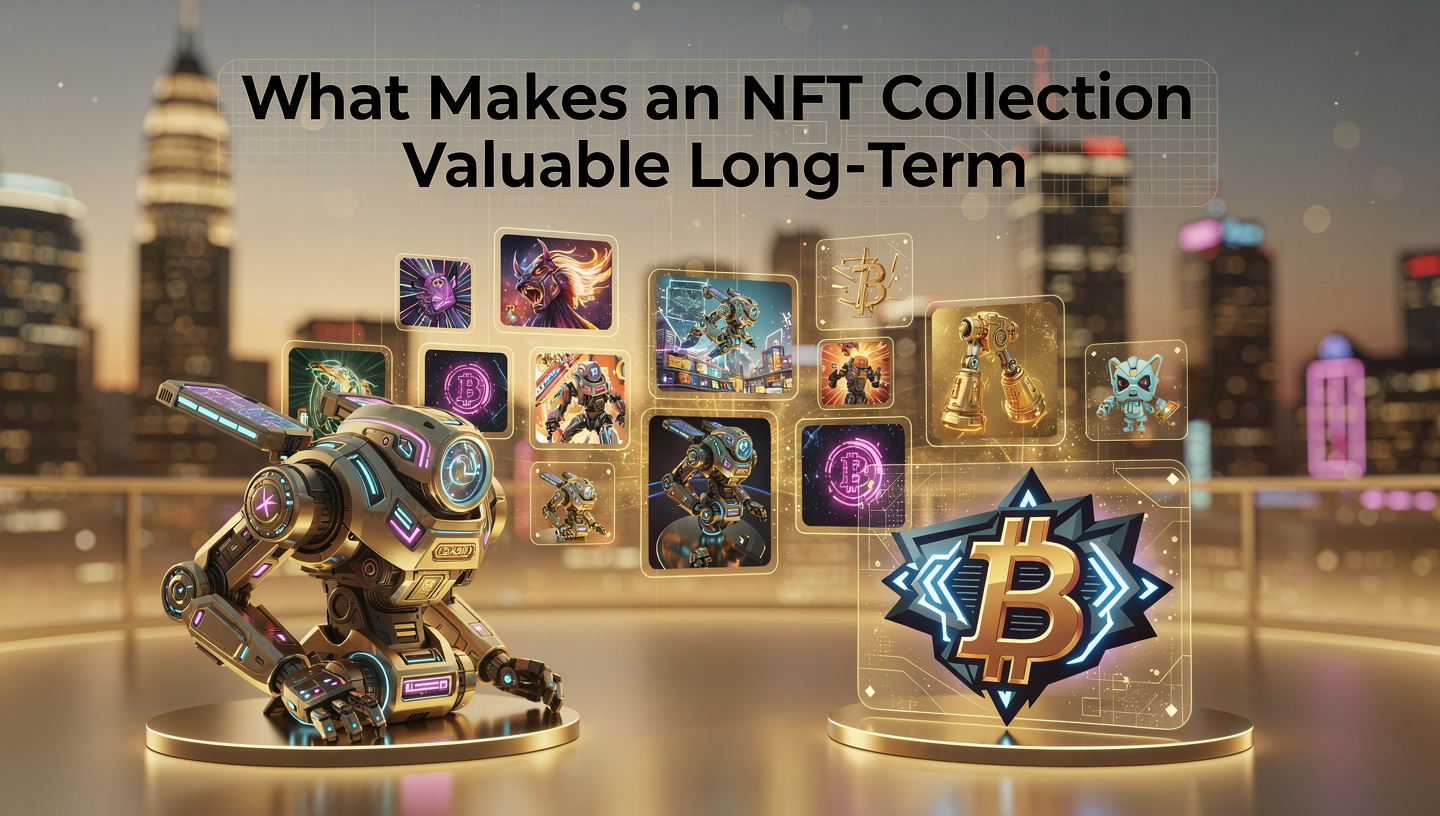
What makes an NFT collection valuable five or ten years from now — when the hype is gone, the market is quieter, and only substance remains?
This article is about that question.
Not speculation.
Not “alpha threads.”
But the deeper mechanics of long-term NFT value.
1. Scarcity Alone Is Not Value (But It’s the Starting Point)
Early NFT logic borrowed heavily from physical collectibles:
- Limited supply
- Fixed editions
- “Only 10,000 ever”
Scarcity matters — but scarcity without meaning is just artificial constraint.
If 10,000 JPEGs exist and nobody cares, scarcity does nothing.
If 1,000 assets exist but they represent something people want to belong to, scarcity becomes powerful.
Long-term valuable collections understand this difference.
They don’t just ask:
“How many should we mint?”
They ask:
“What does ownership mean?”
Scarcity works only when demand is structural, not speculative.
2. Cultural Relevance Beats Technical Innovation
Here’s an uncomfortable truth:
Technology rarely creates lasting NFT value. Culture does.
Many technically impressive projects disappeared.
Many “simple” projects survived.
Why?
Because culture ages better than code.
Think about iconic collections that still matter:
- They became symbols
- They reflected a moment in internet history
- They captured a vibe, a mindset, or a community identity
People don’t hold them because of smart contracts.
They hold them because of what the NFT represents socially.
Long-term valuable collections:
- Become memes
- Become references
- Become shorthand for belonging
When people say:
“Oh, you own that?”
That’s culture working.
3. Strong Identity > Pretty Art
Good art helps.
Great identity lasts.
A valuable NFT collection has:
- A recognizable visual language
- A consistent tone
- A clear personality
You should be able to see one image and immediately know:
“This belongs to that collection.”
Identity is built through:
- Art style
- Lore
- Language
- Founder voice
- Community behavior
Collections fail long-term when they:
- Change direction every month
- Chase trends
- Rebrand constantly to stay relevant
Consistency builds trust.
Trust builds staying power.
4. The Founders Matter More Than the Roadmap
Roadmaps lie.
Not maliciously — but inevitably.
Markets change.
Tech changes.
Ideas evolve.
What doesn’t change easily is founder character.
Long-term valuable NFT collections are almost always led by:
- Founders who show up during bear markets
- Builders who communicate honestly
- People who evolve without abandoning their core values
You can’t fake this over years.
Watch how founders behave when:
- Floor prices collapse
- Twitter engagement drops
- Nobody is watching
That’s where long-term value is forged.
5. Community Is Not About Size — It’s About Density
Many collections bragged about:
- 100,000 Discord members
- Millions of impressions
Most of them are gone.
Long-term valuable communities have:
- High signal-to-noise
- Shared norms
- Internal creators, not just consumers
Key signs of a durable NFT community:
- People build tools, content, or events without being paid
- Members stick around even when prices drop
- Conversations evolve beyond “floor price?”
This kind of community doesn’t feel like a pump group.
It feels like a subculture.
6. Utility Is a Bonus, Not the Foundation
Utility became the buzzword of every failed project.
Games.
Staking.
Metaverse land.
“Passive income.”
Most of it aged poorly.
That doesn’t mean utility is bad — but utility that exists only to justify a price rarely lasts.
The strongest NFT collections flip the logic:
- The NFT is valuable first
- Utility enhances ownership, not defines it
Good utility:
- Feels natural
- Is optional
- Deepens engagement rather than forcing it
If removing all utility makes the NFT worthless — that’s a red flag.
7. Economic Design Matters More Than Promises
Long-term value depends on how incentives are structured.
Poorly designed collections:
- Inflate supply
- Over-reward early insiders
- Extract value instead of recycling it
Strong collections think like economists:
- How does value flow?
- Who benefits from growth?
- What happens during stagnation?
They avoid:
- Endless dilution
- Unsustainable rewards
- Over-financialization
Sometimes, the smartest move is doing less.
8. Storytelling Creates Emotional Stickiness
Humans remember stories, not specs.
NFT collections that survive long-term often have:
- Lore
- Mythology
- A narrative arc that evolves slowly
This doesn’t require fantasy worlds.
It requires meaning.
Stories allow holders to:
- Explain why they own the NFT
- Feel part of something larger
- Attach memory to ownership
When people emotionally invest, they don’t exit easily.
9. Adaptability Without Betrayal
Markets evolve.
Platforms change.
Attention shifts.
Long-term valuable NFT collections adapt — but carefully.
They:
- Expand without losing identity
- Experiment without abandoning roots
- Respect early supporters while welcoming new ones
The worst mistake is panic-driven pivots:
- “Now we’re a gaming project!”
- “Now we’re an AI project!”
- “Now we’re a DAO!”
Adaptation must feel inevitable, not desperate.
10. Time Is the Ultimate Filter
Here’s the harsh reality:
Most NFTs will not be valuable long-term.
And that’s okay.
Value emerges through:
- Survival
- Consistency
- Cultural persistence
Time exposes:
- Weak incentives
- Empty narratives
- Founder fatigue
But time also rewards:
- Patience
- Craft
- Authentic communities
The collections that remain aren’t the loudest.
They’re the ones that never needed to shout.
A Simple Framework to Judge Long-Term NFT Value
When evaluating a collection, ask:
- Would this still matter if prices were invisible?
- Does ownership say something about the holder?
- Would people build around this without incentives?
- Is the culture stronger than the roadmap?
- Are the founders still here when nobody’s watching?
If the answer is “yes” more often than not — you’re looking at something rare.
Final Thought: NFTs as Digital Artifacts, Not Lottery Tickets
The biggest mistake people make with NFTs is treating them like short-term trades.
The collections that last feel more like:
- Cultural artifacts
- Internet history
- Digital heritage
They aren’t designed to be flipped.
They’re designed to be kept.
And in a market obsessed with speed,
sometimes the greatest value comes from moving slowly.