When people talk about DeFi, they usually mention yields, APYs, farming, or “number go up.”
Some talk about permissionless finance.
Some talk about replacing banks.
But almost nobody explains the single most powerful idea behind DeFi — the thing that makes it fundamentally different from traditional finance:
👉 Composability.
Composability is not a buzzword.
It’s not marketing fluff.
It’s the reason DeFi exploded from a few experiments into a global financial sandbox.
If DeFi were a smartphone, composability would be the App Store + APIs + open-source ecosystem combined.
In this article, we’ll break down what DeFi composability really means, why it matters, how it works under the hood, and — most importantly — simple, intuitive examples that make it click instantly.
No jargon-first explanations.
No math-heavy whitepaper talk.
Just clear thinking.
What Is DeFi Composability (In Plain English)?
DeFi composability means:
Different decentralized financial protocols can be combined, stacked, and reused together, like building blocks, without asking permission from each other.
Each protocol is a money LEGO.
You don’t use just one LEGO brick.
You snap multiple bricks together to build something bigger.
One-sentence definition:
Composability allows DeFi protocols to interact seamlessly, so one protocol’s output becomes another protocol’s input.
A Simple Non-Crypto Analogy: The Restaurant Kitchen
Imagine a restaurant kitchen:
- One station prepares ingredients
- Another cooks the food
- Another plates the dish
- Another handles delivery
Each station doesn’t care who uses its output — as long as the format is correct.
In traditional finance, each station is owned by a different company, closed off, and guarded by legal contracts.
In DeFi:
- Everything is open
- Everything is programmable
- Everything speaks the same “language” (smart contracts)
That’s composability.
Why Traditional Finance Is NOT Composable
Before we go deeper, let’s understand the contrast.
In traditional finance:
- Banks don’t expose open APIs for money movement
- Products are siloed
- Integrations require contracts, approvals, and months of work
- One institution failing breaks the entire chain
You cannot:
- Instantly plug a savings account into a trading strategy
- Stack a loan, derivative, and insurance product in one transaction
- Let anyone build on top of a bank’s balance sheet
Traditional finance is closed, permissioned, and brittle.
Why DeFi Is Naturally Composable
DeFi protocols are:
- Open-source
- On-chain
- Deterministic
- Publicly accessible
- Governed by code, not people
Every protocol:
- Exposes functions
- Accepts standardized tokens
- Can be called by other contracts
Think of it like this:
In DeFi, money is software, and software is meant to be composable.
The Three Layers of DeFi Composability
Let’s break composability into three layers:
1. Technical Composability (Smart Contracts)
This is the foundation.
Smart contracts:
- Can call other smart contracts
- Can pass tokens, data, and logic
- Can execute everything atomically (all-or-nothing)
If any step fails → the entire transaction reverts.
This is insanely powerful.
2. Token Composability (ERC-20, NFTs, LP Tokens)
Tokens follow standards.
That means:
- Any protocol that understands ERC-20 can use any ERC-20
- LP tokens can be used as collateral
- NFTs can represent positions, rights, or yield
Tokens become portable financial objects.
3. Economic Composability (Strategies Built on Strategies)
This is where creativity explodes.
One protocol:
- Creates yield
Another:
- Leverages that yield
Another:
- Insures the leveraged position
Another:
- Packages it into a new product
DeFi becomes recursive finance.
Simple Example #1: Lending + Trading
Let’s say Alice has 10 ETH.
Step 1: Lending
Alice deposits ETH into a lending protocol (like Aave).
- She earns interest
- She receives aETH (a receipt token)
Step 2: Borrowing
Using aETH as collateral:
- Alice borrows USDC
Step 3: Trading
She uses USDC to trade on a DEX.
All of this:
- Happens without intermediaries
- Uses multiple protocols
- Requires zero permissions
Each protocol does one thing well — composability stitches them together.
Simple Example #2: Yield Farming Without Understanding Yield Farming
Bob doesn’t care about DeFi complexity.
He just wants yield.
Under the hood, a single “vault” might:
- Deposit Bob’s USDC into a lending protocol
- Borrow another asset
- Provide liquidity on a DEX
- Stake LP tokens in a reward contract
- Auto-compound rewards
Bob clicks one button.
This is composability hiding complexity.
Simple Example #3: Flash Loans (The Ultimate Composability Demo)
Flash loans only exist because of composability.
A flash loan allows you to:
- Borrow millions
- Use the funds across multiple protocols
- Repay everything
- All in one transaction
If repayment fails → nothing happens.
You can:
- Borrow ETH
- Arbitrage between DEXs
- Repay loan
- Keep profit
No collateral.
No trust.
Pure composability.
Why Composability Accelerates Innovation
In DeFi:
- You don’t rebuild the wheel
- You reuse it
This leads to:
- Faster experimentation
- Smaller teams building powerful products
- Open competition
- Darwinian evolution of financial primitives
A single developer can:
- Build on top of dozens of protocols
- Launch something globally
- Improve it weekly
This pace is impossible in TradFi.
The “Money LEGO” Mental Model
Think of each DeFi protocol as:
- Lending LEGO
- Trading LEGO
- Insurance LEGO
- Derivatives LEGO
- Governance LEGO
Individually:
- Useful
Combined:
- Explosive
The value of DeFi is not in any single protocol, but in the network effect of composability.
The Dark Side: Composability Risk
Composability cuts both ways.
1. Cascading Failures
If Protocol A depends on B, and B depends on C:
- One failure can ripple outward
2. Hidden Complexity
Users may not understand:
- Where yield comes from
- What risks are stacked
- How many layers exist
3. Smart Contract Interdependence
A bug in one contract:
- Can be exploited across multiple protocols
This is why risk assessment in DeFi is system-level, not protocol-level.
Composable ≠ Safe
Many people confuse:
- “Open” with “secure”
- “Composable” with “robust”
In reality:
- More connections = larger attack surface
Smart composability requires:
- Audits
- Conservative parameters
- Kill switches
- Time delays
- Risk isolation
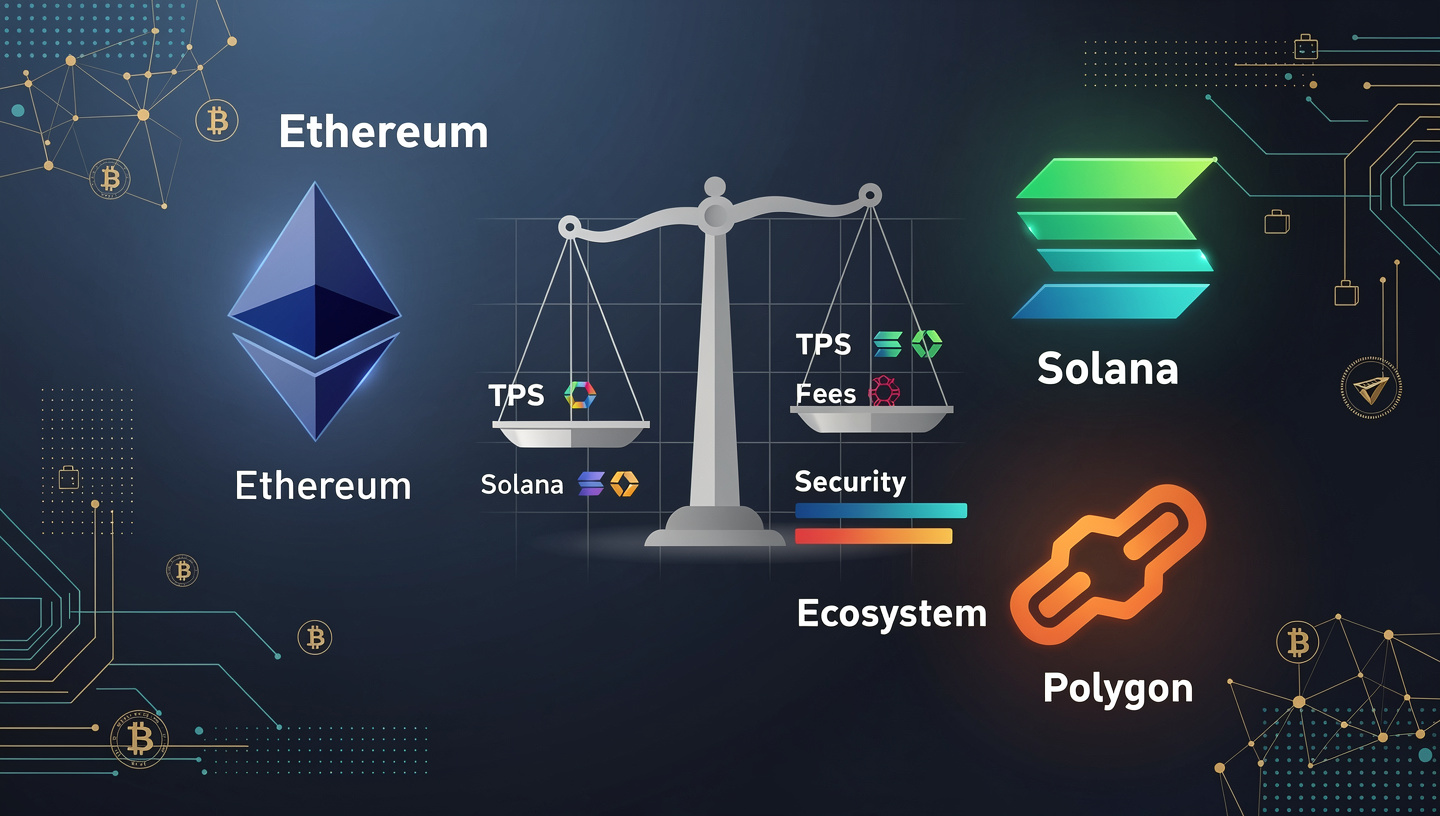
Why Ethereum Became the Home of DeFi Composability
Ethereum didn’t win because it was cheap or fast.
It won because:
- Standards were adopted early
- Liquidity concentrated
- Developers shared assumptions
- Tooling matured
Composability thrives where:
- Everything is close
- Everything speaks the same language
- Everything is liquid
Fragmentation kills composability.
Final Thoughts: Why Composability Is the Soul of DeFi
DeFi without composability is just:
- On-chain banks
- Tokenized TradFi
DeFi with composability is:
- A living financial organism
- A permissionless innovation engine
- A system that evolves faster than regulators can react
If you understand composability, you understand why DeFi matters.
Not because it replaces banks.
But because it redefines how financial systems are built.