In the digital age, identity has become both everything and nothing.
It is everything because nearly every interaction — opening a bank account, accessing healthcare, signing a contract, voting, traveling, logging into a website — depends on proving who you are. Yet it is nothing because digital identity today is fragile, fragmented, and constantly under threat.
Massive data breaches leak personal information with alarming regularity. Centralized databases become honeypots for hackers. Users surrender sensitive data to dozens of platforms they barely trust. Governments struggle to balance security with privacy. Corporations monetize identity data as if it were a natural resource.
In this climate of eroding trust, blockchain has emerged as a radical proposal: What if digital identity didn’t belong to governments or corporations, but to individuals themselves?
Blockchain-based digital identity promises a future where people control their credentials, share only what is necessary, and verify who they are without relying on centralized authorities. It is a powerful vision — but also a controversial one.
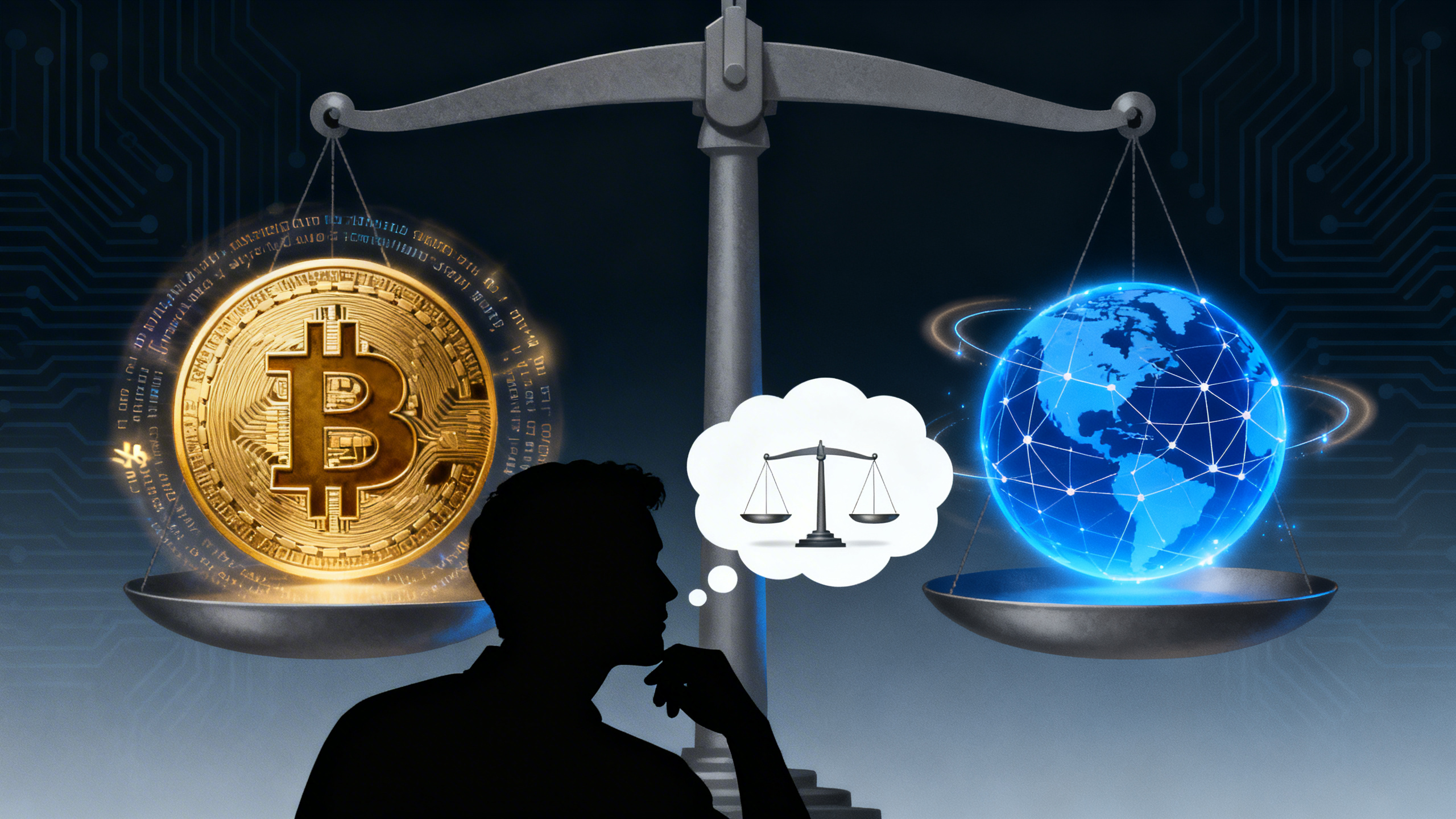
This article explores how blockchain can be used for digital identity, examines its potential advantages, confronts its real-world limitations, and asks a crucial question:
Is blockchain the future of digital identity — or simply an elegant solution looking for the right problem?
Understanding Digital Identity: The Problem Blockchain Tries to Solve
Before evaluating blockchain’s role, it’s important to understand what digital identity actually is — and why it’s broken.
What Is Digital Identity?
Digital identity refers to the collection of information that represents a person, organization, or device in digital systems. This includes:
- Names, birth dates, and addresses
- Government-issued IDs (passports, national IDs, driver’s licenses)
- Biometric data (fingerprints, facial scans)
- Login credentials and authentication tokens
- Behavioral data and online activity
In theory, digital identity enables trust. In practice, it often undermines it.
The Core Problems with Traditional Digital Identity Systems
- Centralization
Most identity systems are controlled by centralized authorities — governments, banks, tech companies. If these systems fail or are compromised, millions are affected. - Data Breaches
From credit bureaus to social media platforms, centralized identity databases are frequent targets for cyberattacks. - Over-Collection of Data
Users are routinely asked to provide far more information than necessary, increasing privacy risks. - Lack of User Control
Individuals rarely own or manage their identity data. Access, modification, and deletion are often impossible. - Exclusion
Over one billion people worldwide lack formal identification, preventing access to basic services like banking, healthcare, and education.
These weaknesses create fertile ground for identity theft, fraud, surveillance, and systemic inequality.
Blockchain aims to rewrite this model from the ground up.
Blockchain-Based Digital Identity: The Core Concept
At its heart, blockchain-based digital identity replaces institution-controlled identity with user-controlled identity.
This approach is often called Self-Sovereign Identity (SSI).
Key Principles of Blockchain Digital Identity
- Decentralization
Identity data is not stored in a single central database. - User Ownership
Individuals control their credentials and decide when and how to share them. - Verifiable Credentials
Trusted entities (governments, universities, employers) can issue cryptographically verifiable claims without storing personal data themselves. - Selective Disclosure
Users can prove specific facts (e.g., “I am over 18”) without revealing unnecessary information (e.g., date of birth). - Immutability and Integrity
Blockchain ensures records cannot be altered without detection.
Importantly, most blockchain identity systems do not store personal data directly on-chain. Instead, they store cryptographic proofs, identifiers, and verification mechanisms — preserving privacy while ensuring trust.
How Blockchain Digital Identity Works (Simplified)
- Identity Creation
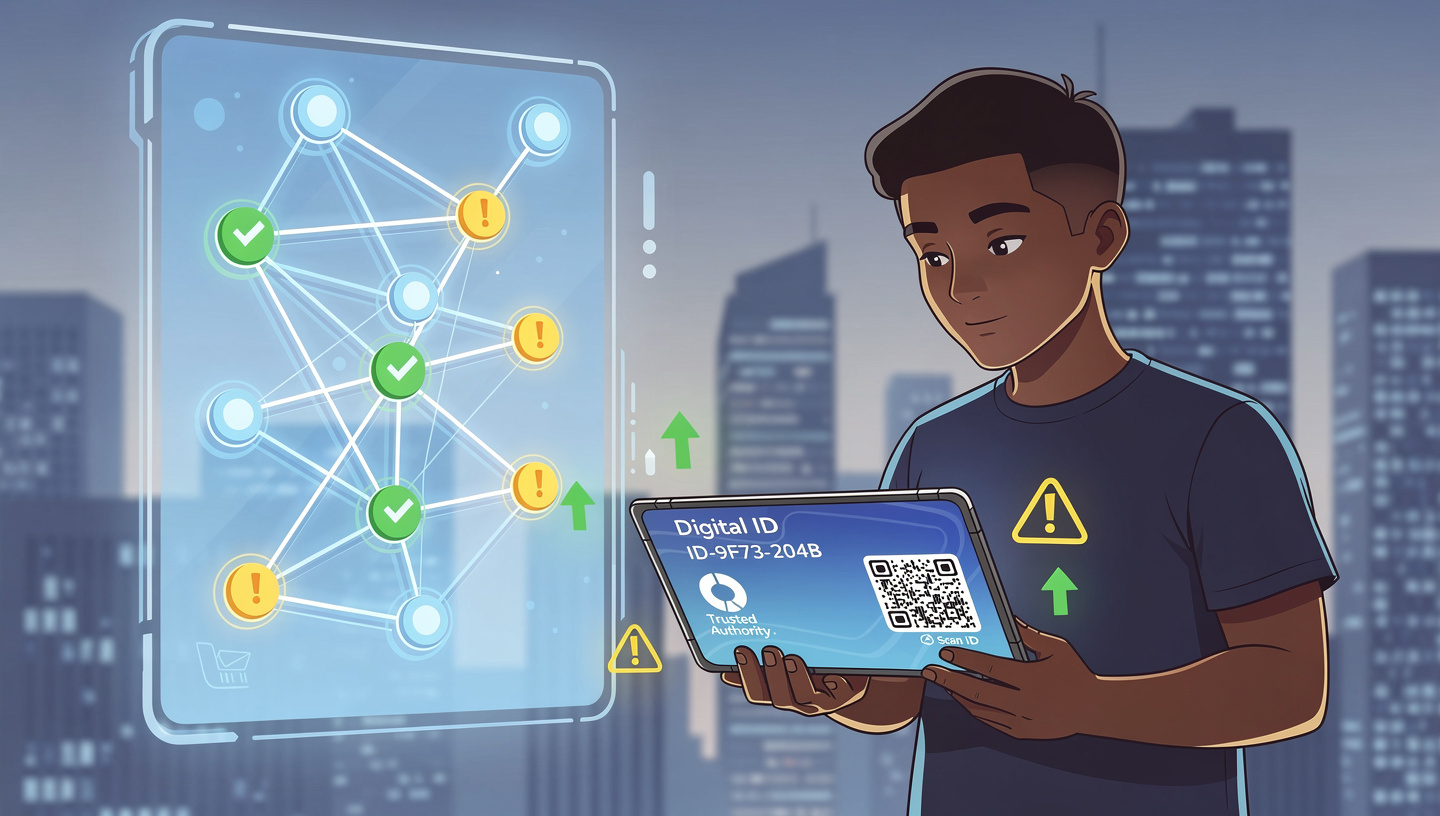
A user creates a decentralized identifier (DID) linked to a cryptographic key pair. - Credential Issuance
Trusted issuers (e.g., governments, banks, universities) issue verifiable credentials signed with their private keys. - Storage
Credentials are stored in a digital wallet controlled by the user — not on a central server. - Verification
When needed, the user presents cryptographic proof to a verifier, who checks authenticity using the blockchain. - Revocation & Updates
Issuers can revoke credentials without accessing personal data.
This model dramatically shifts power away from institutions and toward individuals.
The Pros of Blockchain for Digital Identity
1. User Ownership and Control
Perhaps the most transformative benefit is self-sovereignty.
Users:
- Decide which credentials to share
- Control access to their data
- Eliminate reliance on third-party identity providers
This restores digital autonomy — something largely absent from today’s internet.
2. Enhanced Privacy Through Selective Disclosure
Blockchain identity systems enable privacy by design.
Instead of sharing full documents, users can prove:
- Age eligibility without revealing birthdate
- Citizenship without exposing address
- Educational qualifications without transcripts
This dramatically reduces data exposure and misuse.
3. Reduced Identity Fraud
Cryptographically verifiable credentials are extremely difficult to forge.
Benefits include:
- Lower identity theft
- Reduced fake accounts
- Stronger authentication mechanisms
- Improved KYC and AML compliance without over-collection
Fraud becomes more expensive and less scalable.
4. Improved Security Through Decentralization
There is no single point of failure.
Even if one service is compromised:
- Identity credentials remain secure
- No massive database exists to exploit
- Attack surfaces are reduced
Blockchain doesn’t eliminate cyber risk — but it reshapes it.
5. Global Interoperability
Blockchain identities can work across borders.
A single digital identity could be used for:
- Banking in multiple countries
- International education verification
- Cross-border employment
- Refugee identification
This is especially powerful for populations excluded from traditional systems.
6. Inclusion of the Unbanked and Undocumented
Blockchain identity can provide a foundational identity layer for people without formal documents.
Potential impacts:
- Access to financial services
- Healthcare registration
- Humanitarian aid distribution
- Legal recognition
For marginalized communities, identity is often the first barrier — blockchain could help remove it.
7. Reduced Costs and Administrative Burden
For institutions:
- Less data storage liability
- Lower compliance costs
- Faster onboarding processes
For users:
- Fewer repetitive verifications
- No need to re-submit documents endlessly
Efficiency improves on both sides.
The Cons and Challenges of Blockchain Digital Identity
Despite its promise, blockchain identity is far from a silver bullet.
1. Complexity and User Experience
Key management is hard.
If users:
- Lose private keys
- Mismanage wallets
- Don’t understand cryptographic concepts
They could permanently lose access to their identity.
Mass adoption requires radical improvements in usability.
2. Recovery and Revocation Challenges
Traditional systems allow password resets and identity recovery through central authorities.
In self-sovereign systems:
- Recovery mechanisms are complex
- Social recovery introduces trust trade-offs
- Revocation systems must balance privacy and accountability
Mistakes can be costly.
3. Scalability and Performance Limitations
Public blockchains face:
- Transaction throughput constraints
- Network congestion
- Variable fees
While Layer-2 solutions help, identity systems require fast, low-cost, high-availability infrastructure — not all blockchains can deliver this reliably.
4. Regulatory and Legal Uncertainty
Identity is deeply tied to law.
Challenges include:
- Legal recognition of blockchain IDs
- Compliance with data protection laws (e.g., GDPR’s “right to be forgotten”)
- Jurisdictional conflicts
Without regulatory alignment, adoption stalls.
5. Governance and Trust Bootstrapping
Who decides:
- Which issuers are trusted?
- How disputes are resolved?
- How standards evolve?
Decentralization doesn’t eliminate governance — it complicates it.
6. Privacy Risks If Poorly Implemented
Ironically, bad blockchain identity design can increase surveillance.
Risks include:
- Correlation of identity activity
- Immutable records revealing patterns
- Metadata leaks
Privacy requires careful cryptographic design — not just decentralization.
7. Adoption Barriers and Network Effects
Identity systems are only useful if widely accepted.
Problems:
- Institutions are slow to change
- Competing standards fragment the ecosystem
- Legacy systems resist integration
Without critical mass, blockchain identity remains experimental.
Real-World Use Cases and Experiments
- Government IDs: Estonia, EU digital identity initiatives
- Education: Verifiable diplomas and certificates
- Healthcare: Patient-controlled medical records
- Finance: Privacy-preserving KYC
- Humanitarian Aid: Identity for displaced populations
Most projects remain pilots — promising, but not yet universal.
The Bigger Picture: Redefining Trust in the Digital Age
Blockchain digital identity is not just a technical upgrade.
It is a philosophical shift.
From:
- Institution-centric trust
- Data hoarding
- Surveillance-based verification
To:
- User-centric trust
- Minimal disclosure
- Cryptographic proof
Whether society embraces this shift depends not only on technology, but on politics, culture, regulation, and education.
Conclusion: A Powerful Tool, Not a Magic Solution
Blockchain for digital identity offers a compelling vision:
- More privacy
- Greater security
- Individual empowerment
- Global interoperability
But it also introduces:
- New risks
- New complexities
- New responsibilities
The future of digital identity will likely be hybrid — combining blockchain’s strengths with legal frameworks, user-friendly design, and institutional accountability.
Blockchain won’t magically fix identity.
But used wisely, it can help rebuild trust in a world that desperately needs it.