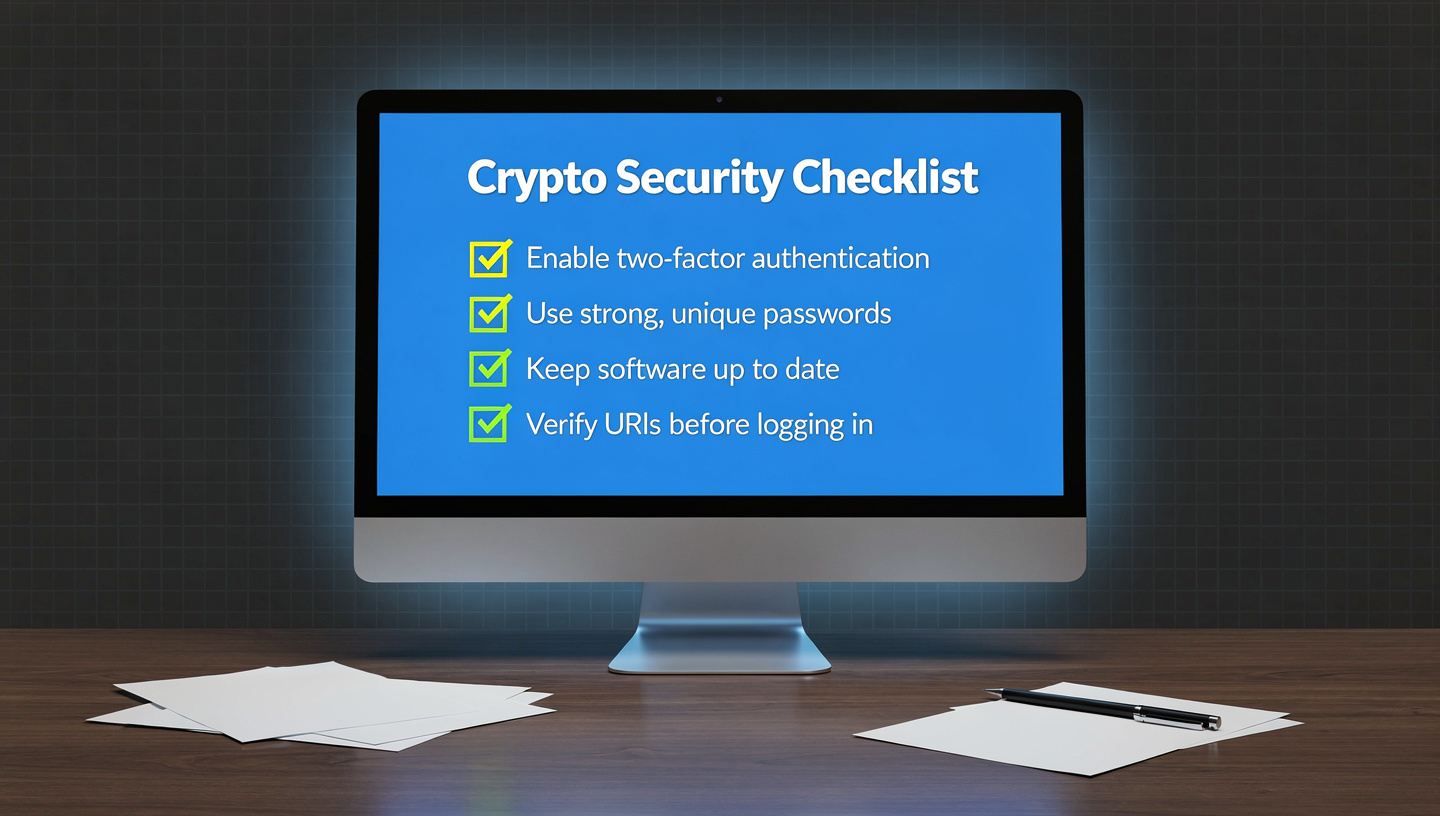
Crypto promises freedom. Freedom from banks. Freedom from borders. Freedom from permission.
But there is a trade-off few beginners truly understand until it’s too late:
In crypto, there is no customer support for mistakes.
No “forgot password” button.
No chargebacks.
No fraud department to reverse a bad decision.
Every year, billions of dollars in crypto disappear—not because of sophisticated hackers alone, but because ordinary people skipped basic security steps. Most losses are not caused by genius cybercriminals. They are caused by simple oversights.
This article is not meant to scare you away from crypto.
It is meant to keep you alive in it.
Think of this as a security checklist you should mentally review every time you touch crypto—from your first wallet to your first trade, and long after you think you’ve “figured it out.”
1. Understand the Real Threat Model (Before Touching Any Wallet)
Before talking about tools, apps, or wallets, beginners must understand one fundamental truth:
Most crypto thefts don’t happen through “hacking the blockchain.” They happen by hacking people.
Your biggest risks are:
- Phishing websites
- Fake apps
- Malicious browser extensions
- Social engineering (people tricking you)
- Poor key management
- Overconfidence
The blockchain itself is usually not the weak point.
You are.
Security begins with mindset. If you believe crypto losses only happen to “stupid people,” you are already vulnerable.
2. Choose the Right Wallet (And Know What You’re Choosing)
Not all wallets are equal, and beginners often misunderstand what a wallet actually is.
A crypto wallet does not store your coins.
It stores your private keys—the cryptographic proof that the coins belong to you.
Wallet Types Explained Simply
🔹 Hot Wallets (Connected to the Internet)
Examples:
- MetaMask
- Trust Wallet
- Phantom
Pros
- Easy to use
- Fast transactions
- Good for small amounts and daily activity
Cons
- Vulnerable to malware, phishing, and browser attacks
🔹 Cold Wallets (Offline Storage)
Examples:
- Ledger
- Trezor
Pros
- Private keys never touch the internet
- Best protection against hacks
Cons
- Cost money
- Less convenient
Beginner Rule of Thumb
- Small amounts → hot wallet
- Serious money → cold wallet
If losing the funds would hurt emotionally or financially, they don’t belong in a hot wallet.
3. Seed Phrase Security: The One Rule That Overrides All Others
Your seed phrase (also called a recovery phrase) is the master key to your crypto.
Anyone who has it owns your funds.
There are no exceptions.
Absolute Rules for Seed Phrases
✅ Write it down offline
✅ Store it somewhere private
✅ Make at least one backup
❌ Never take a screenshot
❌ Never store it in cloud storage
❌ Never type it into a website
❌ Never share it with “support”
If someone asks for your seed phrase, they are stealing from you.
It doesn’t matter how official they sound.
Advanced Tip for Beginners (Optional but Powerful)
Split your seed phrase into two physical locations:
- Half at home
- Half in a secure secondary location
This reduces risk from fire, theft, or accidents.
4. Secure Your Devices Before You Secure Your Crypto
Many beginners focus on wallets but ignore the device they use to access them.
That’s like installing a vault door in a house with no walls.
Device Security Checklist
- Use a dedicated browser profile for crypto
- Install only essential extensions
- Avoid pirated software
- Keep your OS and browser updated
- Use antivirus (yes, even on Mac)
- Lock your screen when away
If your computer is compromised, no wallet can fully protect you.
5. Master the Art of Spotting Phishing (This Saves More People Than Hardware Wallets)
Phishing is the #1 cause of beginner losses.
Phishing doesn’t attack technology.
It attacks urgency, fear, and greed.
Common Phishing Tactics
- Fake airdrops
- “Your wallet is compromised” messages
- Fake Discord admins
- Google ads linking to fake sites
- Look-alike URLs (one letter difference)
Phishing Survival Rules
- Never click links from DMs
- Bookmark official websites
- Double-check URLs every time
- Assume urgency = scam
- If it sounds too good to be true, it is
In crypto, paranoia is a survival skill.
6. Two-Factor Authentication: Mandatory, Not Optional
If you use exchanges or centralized platforms, 2FA is non-negotiable.
Best Practices
- Use authenticator apps (Google Authenticator, Authy)
- Avoid SMS 2FA when possible
- Back up your 2FA recovery codes offline
Many exchange hacks are not exchange hacks at all—they are account takeovers caused by weak authentication.
7. Exchanges Are Not Wallets (Even If They Feel Like One)
Exchanges are convenient. They are not evil.
But they are custodians, not vaults.
If the exchange:
- Freezes withdrawals
- Gets hacked
- Goes bankrupt
- Faces regulatory action
Your funds may be stuck or gone.
Beginner Strategy
- Trade on exchanges
- Store long-term holdings in your own wallet
A simple habit that prevents catastrophic losses.
8. Smart Contract Awareness: Not All Transactions Are Reversible
When you sign a transaction, you are not just “sending crypto.”
You may be:
- Approving unlimited token access
- Interacting with malicious contracts
- Giving permission you don’t understand
Beginner Safety Steps
- Read transaction prompts carefully
- Avoid “Approve Unlimited” when possible
- Revoke old approvals regularly
- Use wallet simulators or warnings if available
One careless click can drain your wallet silently.
9. Social Engineering: When the Attacker Sounds Helpful
Some of the most dangerous scams feel friendly.
They offer:
- Help
- Guidance
- “Private support”
- Investment advice
Real projects do not DM you first.
Real admins do not ask for private keys.
Real support does not rush you.
If someone pressures you, that pressure is the scam.
10. Backup, Recovery, and the “What If” Plan
Security isn’t just about preventing theft.
It’s also about surviving accidents.
Ask yourself:
- What if my phone breaks?
- What if my laptop is stolen?
- What if I forget a password?
- What if something happens to me?
Beginner Recovery Checklist
- Seed phrase backed up
- Exchange recovery info saved
- Trusted person knows how (not keys)
- Clear instructions for emergency recovery
Crypto is unforgiving to the unprepared.
11. Emotional Security: The Most Overlooked Risk
Fear makes people click bad links.
Greed makes people chase scams.
Overconfidence makes people skip checks.
Your emotional state directly affects your security.
Simple Rules
- Don’t trade when panicking
- Don’t invest because of hype
- Don’t rush security decisions
- Don’t assume “it won’t happen to me”
Most victims say the same thing afterward:
“I knew better… I just didn’t think.”
Final Checklist: Print This in Your Mind
Before interacting with crypto, ask:
- Do I control my keys?
- Is my seed phrase safe?
- Is this link verified?
- Am I being rushed?
- Would I be okay losing this amount?
If any answer makes you uneasy—stop.
Conclusion: Security Is Not a One-Time Setup
Crypto security is not something you “finish.”
It is a habit.
A mindset.
A discipline.
The good news?
Once you build these habits, crypto becomes far less dangerous—and far more empowering.
The blockchain doesn’t forgive mistakes, but it rewards responsibility.
If you master security, you don’t just protect your assets.
You protect your freedom.